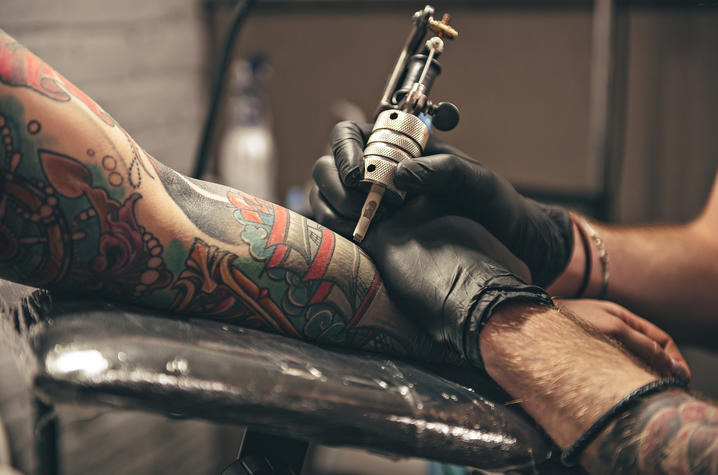
출처: https://medicine.uky.edu/news/tattoos-can-impair-sweating-lead-heat-related-2020-10-28t13-46-05

문신은 발한을 저해하여 열 관련 부상으로 이어질 수 있습니다.
응용생리학 저널(Journal of Applied Physiology)에 발표된 켄터키대학교 의대의 새로운 연구에 따르면, 문신이 있는 피부는 문신이 없는 신체 부위만큼 땀을 많이 흘리지 않는 것으로 나타났습니다. 이는 문신이 많은 사람의 체온을 낮추는 데 영향을 미칠 수 있습니다.
영국 생리학과 태드 윌슨 교수는 텍사스대학교 사우스웨스턴 메디컬센터, 서던메소디스트대학교, 알마 칼리지 연구진과 공동으로 연구를 진행했습니다. 연구팀은 팔에 문신이 있는 자원봉사자들을 대상으로 같은 팔의 문신이 있는 부위와 문신이 없는 부위 모두에서 땀 분비량과 체온을 측정했습니다.
연구 결과, 문신이 있는 팔의 피부는 문신이 없는 인접 부위에 비해 땀 분비량이 감소한 것으로 나타났습니다. 연구진은 문신으로 인한 땀샘 손상이 원인일 수 있으며, 이로 인해 과열 위험이 증가할 수 있다고 결론지었습니다.
윌슨 교수는 "이는 장기적이고 영구적인 문제가 될 수 있습니다."라고 말했습니다. "임상적이든 미용적이든 모든 시술과 마찬가지로, 환자는 모든 잠재적 부작용을 고려해야 합니다. 이러한 발한 관련 부작용은 문신을 하는 사람들에게는 제공되지 않습니다."
작은 문신은 전반적인 체온 조절을 방해할 가능성이 적지만, 문신 피부의 발한 감소는 "특히 문신이 신체 표면적의 더 높은 부분을 덮을 때 열 발산에 영향을 미칠 수 있다"고 연구진은 기술했습니다.
윌슨 박사는 이 연구가 최초의 연구라고 말합니다. "다른 연구들은 문신에 사용되는 잉크에 대한 급성 염증 반응을 조사했지만, 문신 과정에서 지연되고 잠재적으로 더 오래 지속되는 효과에 대한 연구는 부족합니다."
연구진은 이전에 문신 피부의 땀샘에서 더 많은 염분이 손실된다는 사실을 확인했으며, 이제 다양한 잉크와 시술, 그리고 문신으로 덮인 피부의 비율이 높은 사람들을 대상으로 더 많은 연구를 진행할 계획입니다.
"이제 문제의 원인을 파악했으니, 그 정확한 발생 메커니즘을 이해해야 합니다. 이를 통해 궁극적으로 문신 관련 부작용의 양과 정도를 줄이기 위해 업계 관행을 개선하는 방안을 마련할 수 있을 것입니다."
Tattoos Can Impair Sweating, Lead to Heat-Related Injuries
A new University of Kentucky College of Medicine study published in the Journal of Applied Physiology finds that tattooed skin does not sweat as much as non-inked areas of the body, which may have implications for the body’s ability to cool in people with extensive tattooing.
UK Physiology Professor Thad Wilson co-led the study done in collaboration with researchers from University of Texas Southwestern Medical Center, Southern Methodist University, and Alma College. The team studied volunteers with arm tattoos and measured the participants’ sweat rates and body temperatures on both the tattooed and non-tattooed areas of skin on the same arm.
Results showed that skin of the arm containing tattoos has reduced sweat rates compared to the adjacent skin without tattoos. Researchers conclude that damage to the sweat glands caused by tattooing could be the cause and this in turn may increase the risk of overheating.
“This could be a long-term and even permanent problem,” Wilson said. “Just like with any procedure, whether clinical or cosmetic, a person needs to consider all the potential side effects. This sweating related side effect is not being provided to people getting tattoos.”
Although small tattoos are less likely to interfere with overall body temperature regulation, decreased sweating in tattooed skin “could impact heat dissipation especially when tattooing covers a higher percentage of body surface area,” the researchers wrote.
The study is first-of-its-kind, says Wilson. “Other studies have looked into the acute inflammatory responses to the inks used in tattooing, but the delayed and potentially longer-lasting effects of the tattooing process are less studied.”
The research team previously identified that sweat glands in tattooed skin lose more salt and now plans to pursue more studies addressing various inks and procedures used, as well as in people with a higher percentage of skin covered in tattoos.
“Now that we’ve characterized the problem, we need to understand the exact mechanisms of why it occurs. This could ultimately lead to recommendations that change industry practices to decrease the amount and magnitude of tattoo-related side effects.”