太昊 伏羲氏(태호 복희씨)의 蛇身 人首時代(사신 인수시대)는
寅申巳亥(인신사해) 한울의 天尊時代(천존시대)를 象徵(상징)한다.
太昊(태호)란 太初(태초)의 한울이란 뜻이다.
몸은 뱀이고 머리가 사람이라는 말은 造化(조화)를 짓는 龍(용)이 되기 前(전)의 이무기를 表現(표현)함이다.
즉 先天(선천)의 한울 天尊時代(천존시대)는 天地(천지)를 創造(창조)하는 初創機 時代(초창기 시대)로
三段階 發展過程(삼단계 발전과정)에서 첫 단계라 未完熟(미완숙)한 時期(시기)라는 뜻이다.
龍(용)이 龍(용)이 되기 위한 成長時機(성장시기)라는 말이다.
辰戌丑未(진술축미)의 天地(천지)가 完成(완성)되어져야 天地 創造(천지 창조)가 完成(완성) 되어짐을 뜻한다.
地軸(지축)이 定立(정립)되는 未來時代(미래시대)를 짓는 어머니의 바람이었다.
하여 神農氏(신농씨)는 戰爭間(전쟁간)에 소뿔 투구를 썼기에 人身牛首(인신우수)라 했다.
神農(신농)이란 農事(농사) 짓는 神(신)이라는 뜻으로
地上(지상)에서 農事(농사)지음이니 땅을 이른다.
天尊時代(천존시대)와 地尊時代間(지존시대간)의 人間(인간)은
成長過程(성장과정)인 子午卯酉 時代(자오묘유 시대)이니
天地 完成前(천지 완성전)의 마지막 끝인 時節(시절)의 現在(현재)를 살고 있으면서 成長痛(성장통)을 앓고 있는 중이다.
未完成(미완성)의 어린아이 시절은 兄弟間(형제간)의 比肩爭鬪(비견쟁투)로써 牽制(견제)하고
다툼으로 成長(성장)하는 때이기에 相克(상극)의 戰爭時代(전쟁시대)라 한다.
잘난 者(자)가 存在(존재)하는 時節(시절)이기 때문이다. 따라서 선천은 이겨야 살아남는다.
物質(물질)의 核(핵)은 하나인지라 둘이면 반드시 分離(분리)되는 理致(이치)로
一國(일국)에 王(왕)인 아버지는 한 사람인데 王子(왕자)가 여럿이라면 하나의 王權(왕권)을 두고 서로 다투어야 한다.
허니 戰爭(전쟁)은 兄弟間(형제간)의 전쟁이 가장 크고도 무섭다
神農氏(신농씨)와 皇帝軒轅(황제헌원)의 戰爭(전쟁:逐鹿戰축록전)이 天子國(천자국)을 놓고 싸운 전쟁이다.
戰爭(전쟁)은 王權(왕권)을 爭取(쟁취)하기 위한 決戰(결전)이요,
가장 强(강)한 王權(왕권)을 위하여 弱(약)한 王權(왕권)을 滅(멸)하려는 것이었다.
成長 發展(성장 발전)을 爲(위)한 努力(노력)을 채질 함이다.
殘惡(잔악)한 西洋(서양)의 宗敎戰爭(종교전쟁)도
같은 西敎間(서교간)의 戰爭(전쟁)으로써 兄弟間(형제간)의 戰爭(전쟁)으로 始作(시작)되었다.
戰爭(전쟁)이 없다면 사람이 살 수 있는 地球(지구)의 限界値(한계치)에 이르러
人口調節(인구조절)이 不可避(불가피)하게 되니 自然淘汰現狀(자연도태현상)이 곧 戰爭(전쟁)이기도 하였다.
人間(인간)의 完成時代(완성시대)가 이르름에
이제 人間(인간)답지 않은 人間(인간)이 大部分(대부분)인 人口 飽和狀態(인구 포화상태)가 된 까닭에
天地神明(천지신명)이 人間(인간)을 心判(심판)하게 되었다.
天地(천자)도 한울의 未完成(미완성)인 이무기에서 龍化(용화) 되어야 하고
기울어진 地軸(지축)도 定立(정립)되어 完全(완전)해져야 하는 轉換點(전환점)이 開闢(개벽)이라는 法度(법도)요,
神(신)의 心判(심판)이라는 것이다.
허니 때 되었는데도 아직 未完熟(미완숙)한 人間(인간)은 서로 다툰다.
王權(왕권)을 다투는 것은 國家間(국가간)의 戰爭(전쟁)이요,
民心(민심)으로 個人間(개인간)의 다툼은 擊鬪技競技(격투기 경기) 등으로 나타남이다.
女子(여자)들까지 擊鬪技 競技場(격투기 경기장)에 出戰(출전)시켜 코피 터지고
얼굴 깨지도록 싸우게 하는 殘忍(잔인)한 싸움판이 公式化(공식화) 되었으니 세상의 끝판에 다 왔다.
돈이 걸려있고 人氣(인기)를 얻고 있는 理由(이유)이다.
어린아이 精神(정신 ) 그대로이기 때문이다.
觀相學(관상학)에서 귀가 잘 생겨야 福壽(복수)가 함께 하는 相(상)이 되는데
요즘 잘 생겼다는 젊은이들의 귀는 대부분 쭈그러져 奇異(기이)하다.
귓볼도 없다. 輪(륜)을 廓(곽)이 짓누른 꼴이다.
이는 內外(내외)가 바뀐 꼴로써 相克時代(상극시대)를 대변하고 下克上 地尊時代(하극상 지존시대)를 의미한다.
이러한 꼴은 末年(말년)에 福(복)도, 壽命(수명)도 주어지지 않았다는 뜻이다.
즉 末年(말년)이 없다는 徵兆(징조)이다. 開闢(개벽)되기 때문이다.
이무기는 뱀이고 뱀은 사탄의 뜻이며 가죽을 벗어야 成長(성장)한다는 意味(의미)이다.
革新(혁신)이요, 革命(혁명)이다.
이는 西敎(서교)에서 말하는 開闢間(개벽간)에 個人的(개인적)으로는 休居(휴거)로써 復活(부활) 됨의 過程(과정)이요,
宇宙的 次元(우주적 차원)으로써는 새 한울 새 땅으로 轉換(전환) 됨을 말함이다.
이 때는 鷄鳴聲(계명성)이 울린다.
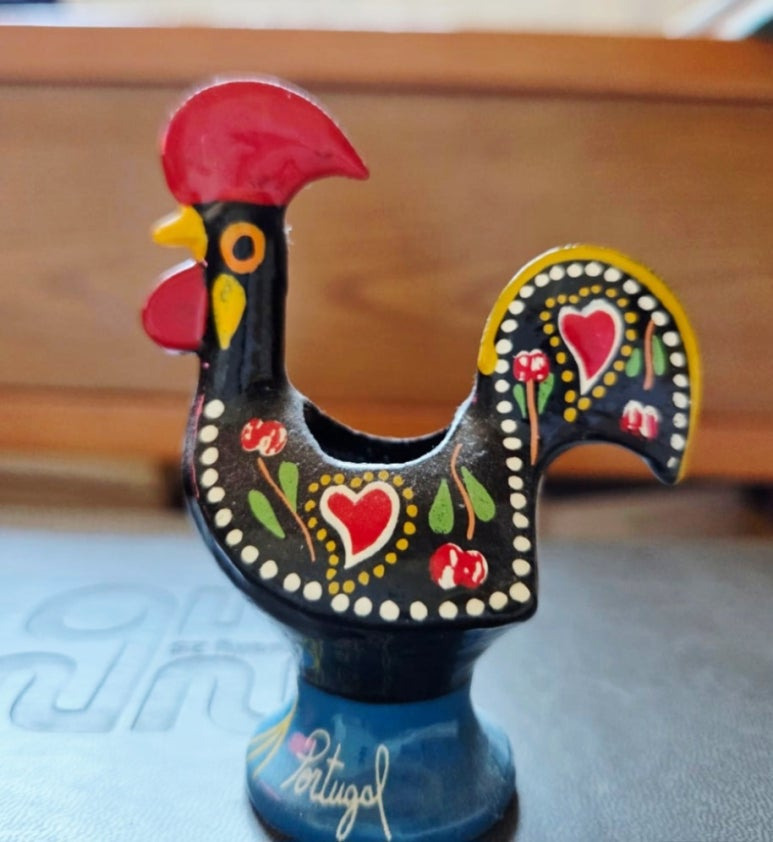
스페인에서 구입한 닭
均太(균태)가 堂主(당주)와 서유럽 스페인을 同行(동행)한 旅程(여정)의 消息(소식)을
뒤늦게 도반들에게 傳(전)하며 覺印(각인)의 댓글을 달고 있는 것이 때가 된 理由(이유)이다.
甑山上帝(증산상제)께서 太昊伏羲氏(태호복희씨) 한울님을 象徵(상징)한다라면
神農氏(신농씨)는 迎新堂主(영신당주) 땅님으로서
복희씨가 신농씨로 再生身(재생신) 되어 天地(천지)가 合德(합덕)함에 天地父母(천지부모) 되심이다.
한울의 理致 河圖(이치 하도)요,
땅의 洛書(낙서)가 이제 后天 正易化(후천 정역화)하는 理致(이치)가 있으니
仙道(선도)의 胞胎(포태)가 佛道(불도)의 養生(양생)으로 하여 儒道(유도)로 나옴이다.
오래 될수록 藥效(약효)가 强(강)한 山蔘(산삼)이 되는 까닭은
天地 山川 精氣(천지 산천 정기)를 오랫동안 穩全(온전)히 받아냈기 때문이니
같은 끝수에 末數(말수)가 마무리를 짓는바라
甑山(증산), 迎新堂主(영신당주)의 天地父母(천지부모)를 代身(대신)한
長子(장자)가 마지막으로 이제 人尊時代 新天地 世上(인존시대 신천지 세상)을 再創造(재창조)한다.
일꾼이 보양물 잔뜩먹고 끝판을 꼬눈다는 天地公事(천지 공사)의 뜻이다.
구도전 8편 67장에 너희들은 손에 살릴 생(生)자를 쥐고 다니니 득의지추(得意之秋)가 아니냐,
삼천(三遷)이라야 일이 이루어지느니라.
2 천하사는 생사양도에서 그치나니 우리의 부단한 노력은 하루에 밥 세 때 벌이 일이니라.
3 나의 일은 남 죽을 때에 살자는 일이요, 남 사는 때에는 영화(榮華)와 복록(福祿)을 누리자는 일이로다.
4 일꾼 된 자 씨름판을 본받을지니
5 씨름판에 뜻하는 자는 판밖에서 보양물(補陽物)을 많이 먹고 기운을 잘 길러 끝판을 꼬느고 있느니라.
6 시속에서 씨름판에 소를 상금으로 거나니
나를 잘 믿어 일을 잘 하는 자에게 익산 삼기산 와우(益山 三箕山 臥牛)를 주리라.
世運(세운)에서 미국 대통령이 中國(중국)에 가는 날에
敎運(교운)의 堂主(당주)는 天台山(천태산)으로 一年 祭需(일년 제수)의 山菜(산채)인 고사리를 꺾으러 오르다.
癸巳月 丁亥日 水曜日(계사월 정해일 수요일)이다.
蛇身人首(사신인수)의 寅申巳亥(인신사해)를 나타낸 月日(월일)이다.
丁癸沖(정계충)하고 巳亥沖(사해충) 되니 沖突(충돌)의 和合(화합)을 指向(지향)함이다.
陽曆(양력)으로는 西敎(서교)에서 가장 꺼리는 13일이요,
열 석자로 上帝(상제)님이 降臨(강림)하는 象數(상수)의 날이다. 先天(선천)을 마무리 짓는 公事(공사)이다.
世運(세운)의 覇權(패권) 놀음을 敎運(교운)으로 마무리 지으려함이니
고사리는 늙어 허리구부린 老人格(노인격)이라 꺾어 없애는 뜻이면서
고사리 손 같은 어린아이를 採掘(채굴)한다는 生死兩端(생사양단)의 일을 상징한다.
한울의 三台星(삼태성) 별을 뜻히는 天台山(천태산)의 東(동)편에는 安國寺(안국사)가 位置(위치)해 있고
西(서)편에는 安身寺(안신사)가 位置(위치)하고 있음이라
國家間 頂上會談(국가간 정상회담)과 民心(민심)의 安寧(안녕)을 위하여
山中(산중)에서 고사리 뜯어 먹으면서 修行(수행)했던 修道子(수도자)가 天祭(천제)를 지내기 위하여
祭需(제수)의 山菜(산채)인 고사리를 採取(채취)함이다.
癸巳生(계사생) 시진핑과 丙戌生(병술생) 트럼프는 巳戌怨嗔(사술원진)의 怨讐間(원수간)이고
長男(장남)과 少女(소녀)의 관계라 六九 五十四(육구 오십사)의 雷澤歸妹格(뇌태귀매격)이 되는지라
누이가 시집가는 卦(괘)로 表面(표면)의 기쁨에 興奮(흥분)이 뒤섞인 性急(성급)한 結合(결합)이니
準備(준비)되지 않은 決定(결정)을 警告(경고)한다는 象徵(상징)이다.
周易 用九 用六(주역 용구 용육)이다.
뒤따르는 通譯士(통역사)가
中國(중국)은 長男格(장남격)인 男子(남자)이고 未國(미국)은 少女格(소녀격)인 女子(여자)이었다.
https://www.canva.com/design/DAHLT38jufA/s5-1lg1GtpZdEaaDxNcvWA/watch
영어(English)
The Era of the Snake-Body, Human-Head of Taeho Fuxi symbolizes the Era of the Heavenly Venerable of the Insin-Sahae Heaven.
Taeho means the Heaven of the Beginning. The description of having a snake's body and a human's head represents the Imugi before it becomes the Dragon that creates creation. In other words, the Pre-Heavenly Era of the Heavenly Venerable is the initial era of creating Heaven and Earth; as the first stage in the three-stage development process, it signifies a period of incompleteness. It means it is the period of growth for a dragon to become a dragon. It implies that the creation of Heaven and Earth is completed only when the Heaven and Earth of Chen, Xu, Chou, and Wei are fully realized. It was the wish of a mother to build a future era in which the Earth's axis is established. Therefore, because Shennong wore a helmet with ox horns during wartime, he was called "Human Body, Ox Head."
Shennong means the god of farming; since he cultivates on the earth, it refers to the land. Humans in the period between the Era of the Heavenly Venerable and the Era of the Earthly Venerable are in the Era of the Rat, Horse, Rabbit, and Rooster, which is the process of growth; thus, they are living in the present of the season that marks the final end of the era before the completion of Heaven and Earth, and are currently suffering from growing pains. The incomplete stage of childhood is called an era of conflict and war because it is a time when growth occurs through strife and checks and balances imposed by sibling rivalry. This is because it is a time when the superior exist. Therefore, in the innate, one must win to survive.
Just as the nucleus of matter is one and the principle dictates that if there are two, they must inevitably separate, if a nation has only one father who is the King but has multiple princes, they must fight each other over a single royal authority. Therefore, war between brothers is the greatest and most terrifying.
The war between Shennong and Emperor Xuanyuan (the Battle of Chasing the Deer) was a battle fought over the Son of Heaven. War is a decisive battle to seize royal power, and it was intended to destroy weak royal power for the sake of the strongest royal power. It serves to spur efforts for growth and development.
The brutal religious wars of the West also began as wars between Western religions, starting as wars between brothers.
Without war, the Earth would reach its habitable limit, making population control inevitable; thus, the phenomenon of natural selection was also war. With the arrival of the era of human completion, the population has become saturated, with the majority of humans now being inhuman; therefore, the gods of heaven and earth have come to judge humanity. It is the law of Gaebyeok and the judgment of God that the turning point, at which even the Son of Heaven must transform from the incomplete Imugi of Hanul into a Dragon, and the tilted Earth's axis must be straightened to become complete, is called Gaebyeok. Therefore, even though the time has come, humans, who are still immature, fight with one another. The struggle for royal power is a war between nations, while the conflict between individuals stemming from public sentiment manifests as combat sports. Since a cruel fighting arena has been formalized where even women are sent into combat arenas to fight until their noses bleed and faces are broken, we have reached the end of the world. This is the reason why money is at stake and popularity is being gained. It is because they retain the spirit of a child. In physiognomy, well-formed ears are considered essential for a countenance that brings both fortune and longevity; however, the ears of most young people considered handsome these days are shriveled and peculiar. They lack earlobes, appearing as if the outer shell is crushing the inner ring.
This represents a reversal of the inner and outer selves, symbolizing an era of conflict and signifying an era of subjugation and supremacy. Such a state implies that neither fortune nor longevity has been granted in one's later years. In other words, it is a sign that there is no end to one's life. This is because a new era is unfolding. The Imugi is a snake, and the snake represents Satan; it signifies that one must shed their skin to grow. It is innovation and revolution. This refers to the process of resurrection through the Rapture on an individual level during the "Gaebyeok-gan" (the period of opening and destruction) spoken of in Western religions, and a transition to a new heaven and new earth on a cosmic level. At this time, the sound of the rooster crowing will ring out. The reason the time has come is that Gyuntae is belatedly conveying news of his journey to Spain in Western Europe, where he accompanied the Dangju, to his fellow practitioners and posting comments of enlightenment. If Jeungsan Sangje symbolizes Taeho Bokhi-shi, the Lord of Heaven, then Shennong-shi is the Lord of the Welcoming Hall, the Lord of Earth; as Bokhi-shi is reborn as Shennong-shi, and Heaven and Earth unite in virtue, Shennong-shi becomes the Parents of Heaven and Earth. There is a principle in which the He Tu, the principle of Heaven, and the Luo Shu, the principle of Earth, now transform into the Jeongyeok of the Later Heaven; thus, the embryo of the Taoist Way emerges into the Confucian Way through the Yangsaeng of the Buddhist Way. The reason wild ginseng becomes more potent the older it ages is that it has sustained the vital energy of heaven, earth, mountains, and rivers for a long time. Just as the final number brings things to a close, the eldest son, who took the place of the Heavenly Parents of Jeungsan and Yeongsindangju, finally recreates the New World of the Era of Human Honor. This signifies the meaning of the Work of Heaven and Earth, where the worker consumes a large amount of nourishing food to bring the final showdown. In Chapter 67 of Volume 8 of the *Gudojeon*, you carry the character for "life" (生) in your hands; is this not the autumn of triumph? It is only after three migrations that the work is accomplished.
2 The affairs of the world cease at the two paths of life and death; our ceaseless efforts are merely work that earns us three meals a day.
3 My work is to live when others are dying, and to enjoy glory and blessings when others are living.
4 Those who are workers must emulate the wrestling arena.
5 Those who set their sights on the wrestling arena consume plenty of nourishing foods outside the arena to cultivate their strength well, and are now twisting the final match.
6 Just as a bull is offered as prize money in the wrestling arena, I will give the "Reclining Bull of Samgisan Mountain in Iksan" to those who trust me well and perform the work well. On the day the U.S. President visits China in the Seun, the Dangju of the Gyowun ascends Mt. Tiantai to gather bracken, the wild vegetable for the year's sacrificial offerings.
It is a Wednesday, the Dinghai day of the Gyesa month. It is a month and day representing the Yin-Shen-Si-Hai combination of the Snake Body and Human Head. Since there is a clash between Ding and Gui and a clash between Si and Hai, it aims for harmony amidst conflict. In the solar calendar, it is the 13th day, the most dreaded day in Western religion; it is the day of symbolic representation of the descent of the Supreme Being. It is a public work that concludes the Pre-Heaven era.
It seeks to bring the games of hegemony of the world's destiny to a close with the destiny of the religion. Since the bracken represents an old man with a bent back, it signifies the act of breaking it off, while also symbolizing the duality of life and death by "excavating" young children with hands like bracken. Since Anguksa Temple is located on the east side of Mt. Cheontae, which represents the Three Stars of Heaven, and Ansinsa Temple is located on the west side, a practitioner who performed ascetic practices in the mountains while eating bracken ferns for the sake of inter-state summits and the peace of the people has gathered bracken ferns, a wild vegetable for the sacrificial offering, to perform a ritual to Heaven. Xi Jinping, born in the Year of the Snake, and Tru
mp, born in the Year of the Fire Dog, are sworn enemies due to the Si-Xu conflict. Since their relationship is that of an eldest son and a young girl, it forms the Lei-Zhe-Gui-Mei pattern of the Six-Nine-Five-Four. As this is a hexagram representing a sister getting married, it signifies a hasty union mixed with superficial joy and excitement, serving as a warning against making decisions without proper preparation. It is a symbol. It is the I Ching, using the Nine and Six. The following interpreters were that China was a man in the form of the eldest son, and the United States was a woman in the form of a girl.
일본어
太昊伏羲氏(テホ・ボクヒ氏)の蛇身人首時代(死神買収時代)は、寅申巳亥(人身死海)ハンウルの天尊時代(天存時代)を象徵(象徴)する。
太昊(テホ)とは、太初のハンウルという意味だ。体はヘビで頭が人という言葉は造化(造化)をする龍(龍)になる前(前)の二武器を表現(表現)する。つまり先天の天鬱天尊時代は天地を創造する創創時代で、三段階發展過程で初段階となって未完熟の時期という意味だ。龍(龍)が龍(龍)になるための成長時期(成長時期)という言葉だ。 辰戌丑未(陳述祝美)の天地(天地)が完成(完成)されてこそ、天地創造(天地創造)が完成(完成)されることを意味する。
地軸(支軸)が定立(正立)される未來時代(未来時代)を建てる母の風だった。そして、神農氏(新農氏)は、戰爭間(戦争間)に小角の兜を書いたので、人身牛首(人身優秀)とした。
神農(新農)とは農事(農業) 作る神(神)という意味で地上(地上)から農事(農業)の地である。 天尊時代(天存時代)と地尊時代間(地存時代間)の人間(人間)は、成長過程(成長過程)である子午卯酉時代(蔵王墓有時代)なので、天地完成前(天地完成前)の最後の終わりである時節(時代)の現在苦しんでいる中だ。
未完成(未完成)の子供時代は、兄弟間(兄弟間)の比肩爭鬪(非堅牢闘)として牽制(牽制)して争いに成長(成長)する時だから相克(常劇)の戰爭時代(戦争時代)という。良くなった者が存在(存在)する時節(時代)だからだ。したがって先天は勝てば生き残る。
物質(物質)の核(核)は一つなのか、二人であれば必ず分離(分離)される理致(一)で、一国に王(王)の父は一人であるが、王子(王子)が何人かならば、一つの王權(王権)を置いて互いに闘わなければならない。
ハニー戰爭(戦争)は兄弟間(兄弟間)の戦争が最も大きくて怖い
神農氏(新農氏)と皇帝軒轅(皇帝憲源)の戰爭(戦争:逐鹿戰縮緑殿)が天子国(天国)をめぐって戦った戦争だ。 戰爭(戦争)は王權(王権)を爭取(争取)するための決戰(決戦)であり、最も强(強)な王權(王権)のために弱(弱)な王權(王権)を滅(滅)しようとしたものだった。 成長發展(成長発展)を爲(上)した努力(努力)を採る。
殘惡(残骸)した西洋(西洋)の宗敎戰爭(宗教戦争)も同じ西敎間(西交間)の戰爭(戦争)として、兄弟間(兄弟間)の戰爭(戦争)として始作(始動)された。
戰爭(戦争)がなければ、人が住むことができる地球(地球)の限界値(限界値)に至り、人口調節(人口調節)が不可避(避けられない)になるので、自然淘汰現狀(自然図太現象)がすぐに戰爭(戦争)。
人間(人間)の完成時代(完成時代)が早いほど、今や人間(人間)らしくない人間(人間)が大部分(ほとんど)である人口飽和狀態(人口飽和状態)になったので、天地神明(天地神名)が人間(人間)を心判(審判)
天地(天子)もハンウルの未完成(未完成)である武器で、龍化(龍化)しなければならず、傾いた地軸(支軸)も定立(正立)され、完全(完全)にならなければならない轉換點(転換点)が開闢(神壁)という法度(法道)。ハニーの時になったのにまだ未完熟(未完熟)な人間(人間)は互いに争っている。
王權(王権)を争うのは国家間(国家間)の戰爭(戦争)であり、民心(民心)で個人間(個人間)の争いは、擊鬪技競技(格闘技競技)などで現れる。 女子たちまで擊鬪技競技場(格闘技スタジアム)に出戰(出場)させてコピッとなって顔が壊れるように戦わせる殘忍(残忍)な戦い版が公式化(公式化)されたので世の終わりに来た。お金がかかっていて人气(人気)を得ている理由(理由)だ。子供の精神のままであるからだ。
觀相學(冠状学)で耳がよくできてこそ、福壽(複数)が一緒にする相(像)になるが、最近ハンサムだという若者たちの耳はほとんど鈍く奇奇(奇異)だ。耳元もない。 輪(輪)を廓(郭)が押しつけた形だ。
これは內外が変わったことで相克時代を表し、下克上地尊時代を意味する。このような形は末年(末年)に福(福)も、壽命(寿命)も与えられなかったという意味だ。つまり、末年(末年)がないという徵兆(兆候)だ。 開闢(開壁)になるからだ。
武器は蛇であり、蛇はサタンの意味であり、革を脱いでこそ成長(成長)するという意味(意味)である。 革新(革新)であり、革命(革命)だ。これは西敎(西教)で言う開闢間(開壁間)に、個人的(個人的)では休居(休居)として復活(復活)されるの過程(過程)であり、宇宙的次元(宇宙的次元)としては新しい韓霜の新しい土地に転換(転換)される。この時は鷄鳴聲(戒明性)が鳴る。
均太(均太)が堂主(当主)と西ヨーロッパスペインを同行(同行)した旅程(旅程)の消息(ニュース)を遅れて、扇盤たちに傳(前)して覺印(刻印)のコメントを付けているのが時となった理由(理由)だ。
甑山上帝が太昊伏羲氏(テホ福祉さん) 韓ウル様を象徵(象徴)するなら神農氏(新農氏)は迎新堂主(永信当主)の地として福祉さんが新農さんに再生身(再生生)されて天地(天地)天地父母(天地親)になる。
ハンウルの理致河圖(イチハド)、地の洛書(落書き)がもう后天正易化(後天正逆化)する理致(イチ)があるので、仙道(先導)のポ胎(ポテ)が佛道(仏道)の養生(養生)。
古くなるほど藥效(ヤクヒョ)が强(強)な山蔘(山参)になる理由は、天地山川精气(天地山泉定期)を長く穩全(完全に)受け取ったため、同じ端数に末數(抸)が終わり迎新堂主の天地父母(天地父母)を代身した長子(長子)が最後に今、人尊時代新天地世上(人存時代新天地世界)を再創造(再創造)する。労働者が保養物をたくさん食べて端板をねじるという天地公事(天地工事)の意味だ。
構図8編67章に、あなたたちは手に生かす生者を握って通うので、得意之秋ではないか、三千でなければ仕事が成し遂げられる。
2 天下寺は生仕様度で止まるので、わたしたちの不断な努力は、一日にご飯を数えるときに罰が起こるからです。
3 わたしの仕事は、人が死ぬ時に生きようということです。
4労働者のシーンを模倣するでしょう。
5 シル板に意味する者は、板の外で保養物をたくさん食べてオーラをよく育てて終板をねじっている。
6時速で、シルパンに牛を賞金にしたり、わたしをよく信じて仕事を上手にする者に益山三箕山臥牛を与えなさい。
世運(セウン)で米国大統領が中國(中国)に行く日に、敎運(教運)の堂主(当主)は天台山(天太山)で一年祭水(一年諸水)の山菜(山菜)であるシダを折り上げる。
癸巳月丁亥日水曜日(戒師月定年日水曜日)である。蛇身人首(死神引数)の寅申巳亥(人身死海)を示した月日(月日)である。 丁癸沖(チョンゲチョン)と巳亥沖(死害虫)になると沖돌(衝突)の和合(和合)を指向(志向)する。 陽曆(揚力)では西敎(西橋)で最も消極的な13日であり、熱修士で上帝さんが降臨(降臨)する象數(定数)の日だ。 先天(先天)を仕上げる公事(工事)だ。
世運(セウン)の覇權(覇権)遊びを敎運(交運)で仕上げようとするので、シダは老いて腰を曲げた老人格(老人格)と破って取り除くことを意味しながらシダの手のような幼児を採掘(採掘)する象徴する。
ハンウルの三台星を意味する天台山の東側には安国寺が位置しており、西側には安身寺が位置しているので国家間の頂上安寧(安寧)のために山中(山中)でシダを食べながら修行(修行)した修道子(首都)が天祭(天帝)を過ごすために、祭水(除水)の山菜(山菜)であるシダを採取(採取)する。
癸巳生(刀師生)習近平と丙戌生(兵術生)トランプは、巳戌怨嗔(術院進)の怨讐間(元首間)であり、長男(長男)と少女(少女)の関係である。雷澤歸妹格になるので、姉が嫁いだ卦で表面(表面)の喜びに興奮(興奮)が混ざった性急(星)な結合(結合)なので、準備(準備)されていない決定(決定)を警告(警告)する。 周易用九用六(主役用具溶肉)だ。続く通譯士(通訳)が中國(中国)は長男格(長男格)の男子(男)、未国(アメリカ)は少女格(少女格)の女子(女)だった。
스페인어
La Era del Cuerpo de Serpiente y Cabeza Humana de Taeho Fuxi simboliza la Era del Venerable Celestial del Cielo Insin-Sahae.
Taeho significa el Cielo del Comienzo. La descripción de tener cuerpo de serpiente y cabeza humana representa al Imugi antes de convertirse en el Dragón creador. En otras palabras, la Era Precelestial del Venerable Celestial es la era inicial de la creación del Cielo y la Tierra; como primera etapa en el proceso de desarrollo de tres etapas, significa un período de incompletitud. Significa que es el período de crecimiento para que un dragón se convierta en dragón. Implica que la creación del Cielo y la Tierra se completa solo cuando el Cielo y la Tierra de Chen, Xu, Chou y Wei se realizan plenamente. Era el deseo de una madre construir una era futura en la que se estableciera el eje de la Tierra. Por lo tanto, debido a que Shennong usaba un casco con cuernos de buey durante la guerra, se le llamaba "Cuerpo Humano, Cabeza de Buey".
Shennong significa el dios de la agricultura. Dado que cultiva en la tierra, se refiere a la tierra misma. Los humanos en el período entre la Era del Venerable Celestial y la Era del Venerable Terrenal se encuentran en la Era de la Rata, el Caballo, el Conejo y el Gallo, que representa el proceso de crecimiento; por lo tanto, viven en el presente de la estación que marca el final de la era antes de la culminación del Cielo y la Tierra, y actualmente experimentan los dolores propios del crecimiento. La etapa incompleta de la infancia se denomina era de conflicto y guerra porque es un tiempo en el que el crecimiento se produce a través de la lucha y los controles y equilibrios impuestos por la rivalidad entre hermanos. Esto se debe a que es un tiempo en el que existe la superioridad. Por consiguiente, en lo innato, uno debe ganar para sobrevivir.
Así como el núcleo de la materia es uno y el principio dicta que si hay dos, inevitablemente se separarán, si una nación tiene un solo padre que es el Rey pero tiene múltiples príncipes, estos deben luchar entre sí por una única autoridad real. Por lo tanto, la guerra entre hermanos es la más grande y aterradora.
La guerra entre Shennong y el emperador Xuanyuan (la Batalla de la Persecución del Ciervo) fue una batalla por el Hijo del Cielo. La guerra es una batalla decisiva para hacerse con el poder real, y su propósito era destruir a los monarcas más débiles en favor de los más poderosos. Sirve para impulsar el crecimiento y el desarrollo.
Las brutales guerras religiosas de Occidente también comenzaron como guerras entre religiones occidentales, originadas a su vez como guerras entre hermanos.
Sin guerra, la Tierra alcanzaría su límite habitable, haciendo inevitable el control de la población; por lo tanto, el fenómeno de la selección natural también fue una guerra. Con la llegada de la era de la plenitud humana, la población se ha saturado, y la mayoría de los humanos ahora son inhumanos; por consiguiente, los dioses del cielo y de la tierra han venido a juzgar a la humanidad. Es la ley de Gaebyeok y el juicio divino que el punto de inflexión, en el que incluso el Hijo del Cielo debe transformarse del incompleto Imugi de Hanul en un Dragón, y el eje inclinado de la Tierra debe enderezarse para completarse, se llama Gaebyeok. Por lo tanto, aunque ha llegado el momento, los humanos, aún inmaduros, luchan entre sí. La lucha por el poder real es una guerra entre naciones, mientras que el conflicto entre individuos, derivado del sentir popular, se manifiesta como deportes de combate. Dado que se ha formalizado una cruel arena de lucha donde incluso las mujeres son enviadas a pelear hasta sangrar la nariz y sufrir fracturas faciales, hemos llegado al fin del mundo. Esta es la razón por la que el dinero está en juego y la popularidad se busca. Es porque conservan el espíritu infantil. En fisonomía, unas orejas bien formadas se consideran esenciales para un semblante que trae fortuna y longevidad; sin embargo, las orejas de la mayoría de los jóvenes considerados atractivos hoy en día están arrugadas y son peculiares. Carecen de lóbulos, dando la impresión de que la capa externa aplasta el anillo interno.
Esto representa una inversión del yo interior y exterior, simbolizando una era de conflicto y significando una era de subyugación y supremacía. Tal estado implica que ni la fortuna ni la longevidad han sido concedidas en los últimos años. En otras palabras, es una señal de que no hay fin para la vida de uno. Esto se debe a que una nueva era se está desplegando. El Imugi es una serpiente, y la serpiente representa a Satanás; significa que uno debe mudar su piel para crecer. Es innovación y revolución. Esto se refiere al proceso de resurrección a través del Rapto a nivel individual durante el "Gaebyeok-gan" (el período de apertura y destrucción) del que se habla en las religiones occidentales, y una transición a un nuevo cielo y una nueva tierra a nivel cósmico. En este momento, resonará el sonido del canto del gallo. La razón por la que ha llegado el momento es que Gyuntae está transmitiendo tardíamente noticias de su viaje a España en Europa Occidental, donde acompañó al Dangju, a sus compañeros practicantes y publicando comentarios de iluminación. Si Jeungsan Sangje simboliza a Taeho Bokhi-shi, el Señor del Cielo, entonces Shennong-shi es el Señor del Salón de Bienvenida, el Señor de la Tierra; Cuando Bokhi-shi renace como Shennong-shi, y el Cielo y la Tierra se unen en virtud, Shennong-shi se convierte en los Padres del Cielo y la Tierra. Existe un principio en el cual el He Tu, el principio del Cielo, y el Luo Shu, el principio de la Tierra, se transforman en el Jeongyeok del Cielo Posterior; así, el embrión del Camino Taoísta emerge en el Camino Confuciano a través del Yangsaeng del Camino Budista. La razón por la que el ginseng silvestre se vuelve más potente con la edad es que ha sostenido la energía vital del cielo, la tierra, las montañas y los ríos durante mucho tiempo. Así como el último número pone fin a todo, el hijo mayor, que tomó el lugar de los Padres Celestiales de Jeungsan y Yeongsindangju, recrea finalmente el Nuevo Mundo de la Era del Honor Humano. Esto significa el significado del Trabajo del Cielo y la Tierra, donde el trabajador consume una gran cantidad de alimento nutritivo para traer el enfrentamiento final. En el capítulo 67 del volumen 8 del *Gudojeon*, llevas en tus manos el carácter de "vida" (生); ¿acaso no es este el otoño del triunfo? Solo después de tres migraciones se completa la obra.
2 Los asuntos del mundo cesan en los dos caminos de la vida y la muerte; nuestros esfuerzos incesantes son simplemente el trabajo que nos proporciona tres comidas al día.
3 Mi trabajo consiste en vivir cuando otros mueren y disfrutar de la gloria y las bendiciones cuando otros viven.
4 Quienes trabajan deben emular la arena de lucha.
5 Quienes se fijan la mirada en la arena de lucha consumen abundantes alimentos nutritivos fuera de ella para cultivar bien su fuerza, y ahora se preparan para la final.
6 Así como se ofrece un toro como premio en la arena de lucha, yo entregaré el "Toro Reclinado de la Montaña Samgisan en Iksan" a quienes confíen en mí y realicen bien su trabajo. El día en que el presidente de Estados Unidos visita China en el Seun, el Dangju del Gyowun asciende al monte Tiantai para recolectar helechos, la verdura silvestre para las ofrendas sacrificiales del año.
Es miércoles, el día Dinghai del mes Gyesa. Este mes y día representan la combinación Yin-Shen-Si-Hai del Cuerpo de Serpiente y la Cabeza Humana. Dado que existe un conflicto entre Ding y Gui, y entre Si y Hai, busca la armonía en medio de la adversidad. En el calendario solar, es el día 13, el más temido en la religión occidental; es el día de la representación simbólica del descenso del Ser Supremo. Es una obra pública que concluye la era precelestial.
Busca poner fin a los juegos de hegemonía del destino mundial con el destino de la religión. Dado que el helecho representa a un anciano con la espalda encorvada, significa el acto de romperla, al tiempo que simboliza la dualidad de la vida y la muerte al "excavar" niños pequeños con manos como helechos. Dado que el Templo Anguksa está ubicado en el lado este del Monte Cheontae, que representa las Tres Estrellas del Cielo, y el Templo Ansinsa está ubicado en el lado oeste, un practicante que realizaba prácticas ascéticas en las montañas mientras comía helechos para el bien de las cumbres interestatales y la paz de la gente ha recolectado helechos, una verdura silvestre para la ofrenda sacrificial, para realizar un ritual al Cielo. Xi Jinping, nacido en el Año de la Serpiente, y Trump, nacido en el Año del Perro de Fuego, son enemigos jurados debido al conflicto Si-Xu. Dado que su relación es la de un hijo mayor y una niña, forma el patrón Lei-Zhe-Gui-
Mei del Seis-Nueve-Cinco-Cuatro. Como este hexagrama representa a una hermana que se casa, significa una unión apresurada mezclada con alegría y emoción superficiales, sirviendo como advertencia contra la toma de decisiones sin la debida preparación. Es un símbolo. Es el I Ching, usando el Nueve y el Seis. Los siguientes intérpretes fueron que China era un hombre en la forma del hijo mayor, y Estados Unidos era una mujer en la forma de una niña.
[출처] # 牧牛堂主 一代記(목우당주 일대기)(400) The biography of Mokwoodangj|작성자 해인1691 HAE IN 1691