(NARATHIWAT, Thailand) -- As the violence-plagued provinces of southern Thailand continue to struggle with a shadowy insurgency, the restive region is battling a new enemy: a drug cocktail made from a local leaf that is seducing the young.
The drug, kratom, is far less debilitating than the methamphetamines and heroin that are trafficked through the area. But its rampant use is enough of a problem that it has caught the attention of the Thai government, and led to increased attempts to stop the trafficking.
"It's an epidemic," said Srisompob Jitpiromsri, the associate dean at Prince of Songkla University in the southern city of Pattani. "Kratom use has spread all over the place."
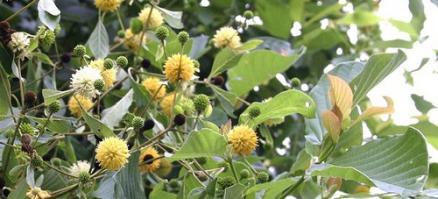
Kratom is a tree that grows in abundance in the tropical jungles here in the south. Chewing the red-veined leaves of the tree, which is in the same family as the coffee tree, was until recently a fading tradition among farmers and rubber tappers who sought an energy boost and stamina under the oppressive sun.
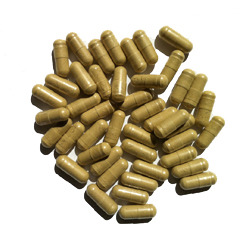
But the spreading popularity of the much stronger narcotic cocktail -- typically made by boiling the leaves and adding cough syrup, Coca-Cola and ice -- has created a sharp increase in demand for the leaf. Young people sneak into protected forests and smuggle out duffel bags stuffed with the feather-shaped leaves.
The demand also appears to be driven in part by the stigma against alcohol among the Muslims who are a majority in the region. "Older people aren't angry if you boil kratom leaves because it's considered medicine," said one 26-year-old user who wanted to be identified only by his nickname, Mung.
The problem, authorities say, is that the cocktail sends users into a sleepy torpor, and contributes to a greater sense among villagers that drugs are a scourge for an area already mired in poverty.
"Drug use and poverty are always at the top of the list of most serious problems," Mr. Srisompob said. "The insurgency is third."
His most recent survey on kratom use, one in a series done on behalf of Thailand's Office of the Narcotics Control Board, was carried out this year among 1,000 teenagers in the three troubled provinces along the border with Malaysia, and found that 94 percent of the respondents used the drug. The drug, which is mainly used in the three provinces, is accessible to teens here in part because it is cheap; 20 leaves, enough to create a kratom cocktail for several people, cost the equivalent of $3.
The forested hills and long sand beaches of Thailand's southernmost provinces are among the most beautiful scenery in the country. But the charm of the limestone cliffs and rice fields are marred by the deep-seated mistrust between Muslims and the Thai state -- and the violence that is fueled by a complex clash of ethnicity, religion and historical resentment.
While Thailand is overwhelmingly Buddhist, most of the 1.9 million inhabitants of the three provinces are Malay Muslims who speak a dialect of Malay used across the border in the Malaysian state of Kelantan.
Some Thai officials draw links between drug trafficking, including kratom, and the insurgency. The Thai-Malaysian border is along a major trafficking route for methamphetamines and heroin that originate in Myanmar. The links between drugs and the insurgency that has killed more than 5,000 people since 2004, however, are disputed by many experts and law enforcement officials.
Maj. Gen. Choti Chavalviwat, the police commander in Narathiwat Province, said if there is a link between drugs and the insurgency, it is weak. "Religion, history and ethnicity drive the insurgency," he said.
The ultimate goals of the insurgency are unclear. And unlike many terrorist acts elsewhere in the world, the nearly daily attacks in the three provinces, many targeting symbols of the Thai state, occur without groups or individuals taking responsibility.
Several years ago, Thai antinarcotics officials sought to quantify the link between drugs and the insurgency, Mr. Srisompob said. They compared a list of about 9,000 people who had gone through drug rehabilitation programs with 8,000 suspected of being involved in the insurgency. "They came up with about 2 or 3 percent on the lists who overlapped," Mr. Srisompob said. Insurgents rarely recruit heavy drug users to their cause, he said, because their addiction makes them unreliable foot soldiers in the war against the Thai state.
But Mr. Srisompob sees other, more subtle interplays between the insurgency and the drugs, poverty and unemployment. "It allows the leaders of the insurgency to say, 'You see what Thai society is doing to us. They are trying to undermine Muslim society,' " he said.
So far, efforts to stop the flow of kratom have fallen short because, local authorities say, the fines for offenders are too lenient.
In recent months, the Thai police have also stepped up their campaign of cutting down trees across the country. But this has created tensions between law enforcement and those charged with protecting the environment.
The largest collection of kratom trees is in a protected forest in nearby Satun Province. Hundreds of kratom trees thrive in a scenic valley surrounded by limestone cliffs, a spot accessible on foot by following a path that travels along a river and then passes through a large cave.
The authorities have ordered the trees felled, but the guardians of the forest are balking.
Narong Kaewsen, a park ranger at the Satun reserve, said destroying the trees, which are spread over about 30 acres, would require large amounts of herbicide. "At the very least it will harm the water, animals and plants," Mr. Narong said. "They will also die." For now, Mr. Narong and other local officials are trying to stop kratom trafficking by intercepting the young people who prowl the forests, often at night, in search of the leaves.
Panya Tonoon, the headman of the local village, intercepts young traffickers several times a month. "They often just run into the jungles," Mr. Panya said. "Sometimes we chase them."