[스크랩] 2026.6.21.일. Pakistan파키스탄/Science1-25/스토리맵발표+버디리딩(ORT+JB3~4+WR41+호랑이와곶감)
작성자요시코작성시간26.06.22조회수21 목록 댓글 0.
■ 일시 (Date): 2026. 6. 21. 일. 오후 1:30- 4:30 (3시간)
■ 장소 (Venue): 코나영어센터(KONA English Center,
광주광역시, 북구, 용봉로 77, 전남대학교 생활관9호관(기숙사) 상가 1층 111호)
https://naver.me/FrAkw5cG
■ 대상 (Participants): 전남대학교 외국인유학생 + 유네스코 코나클럽 회원(아동+외국인)
■ 멘티준비물(Material to bring for Mentees):
1. 스토리맵 수업자료/ 세계명작 원문
2. Oxford Reading Tree 5권이상
3. 스케치북 세계나라 스토리맵 / All About Korea
4. 영문 한국전래동화책과 인형
5. 개인 물병
■ 코나리딩멘토(KONA Reading Mentor) 및 참가자 (Participants)
| 코나리딩멘토 (Reading Mentors) | 참가자 (Mentees, 수혜자_회원 및 비회원) | 비고 | |||||
| 김영임 Nodirabegim(우즈베키스탄) | 조현제(초5) / 노유주(초3) / 이예솔(초3) / 강민서(초2) 정유현(초3) /한수호(초2) / 손채원(초4) | ||||||
| 외국인 유학생 초대 | Mukhabbatkhon (우즈베키스탄) | ||||||
| ※ 외국인 명단 및 조별 명단은 개인 사정에 따라 달라질 수 있습니다. | |||||||
■ 교육내용(Contents) 및 자료 (Resources)
| 교과과목 (커리큘럼) | 세부 내용 | ||
| 그룹 스터디 Group Study | -다청다독기록장 사진 -Note-taking 사진 -스토리맵 녹음, 암기 체크 -동화원문공부: L,R,TR,OTR -Wacky Ricky 41 -Jack & the Beanstalk 3~4 | ||
| 세계문화 | Pakistan 파키스탄 | ||
| Science 1-25 | Rocks and Minerals | ||
| 휴식 Recess | 지구본공놀이, 훌라후프, 캐쳐컵, 줄넘기, 배구, 족구, 축구, 명상 등 | ||
| 스토리맵 발표 Story-map Presentation 2026.6.29 | 조현제-Jack and the Beanstalk 3 노유주-Jack and the Beanstalk 4 이예솔-What Is in the Sea? 강민서-The Food Chant 손채원-Shoes 정유현-The Five Senses 한수호-On the Monster | ||
| ORT Reading 1 ORT 함께읽기 2026.6.26 | 조현제-Jack & the Beanstalk 노유주-The Den 이예솔-The Wedding 손채원-King of the Castle 강민서-Wet Paint 정유현-At the Pool 한수호-Bull's Eye | ||
| ORT Reading 2 ORT 함께읽기 2026.7.3 | 조현제-The Magic Pot 노유주-The Scarf 이예솔-Poor Mom 손채원-At the Pool 강민서-Dad's Jacket 정유현-The Big Egg 한수호-A Sinking Feeling | ||
| 한국전래동화읽기 Korean Folktales | -The Tiger and the Dried Persimmon -The Strange Spring -The Rabbit's Liver -The Magic Pot | ||
| Play 연극 | Wacky Ricky 41 | ||
| 소감 나누기 (Debriefing) Reflection & Sharing Time | -성공을 위한 365일 명상 읽기 -배운 점 나누기 / 간식 나눠 먹기 | ||
| 클로징 세리모니 Closing Ceremony | Dreams Can Come True! 꿈은 이루어질 수 있다! | ||
■ 자료: 세계문화 : Pakistan 파키스탄
【Asia46】 Pakistan 파키스탄
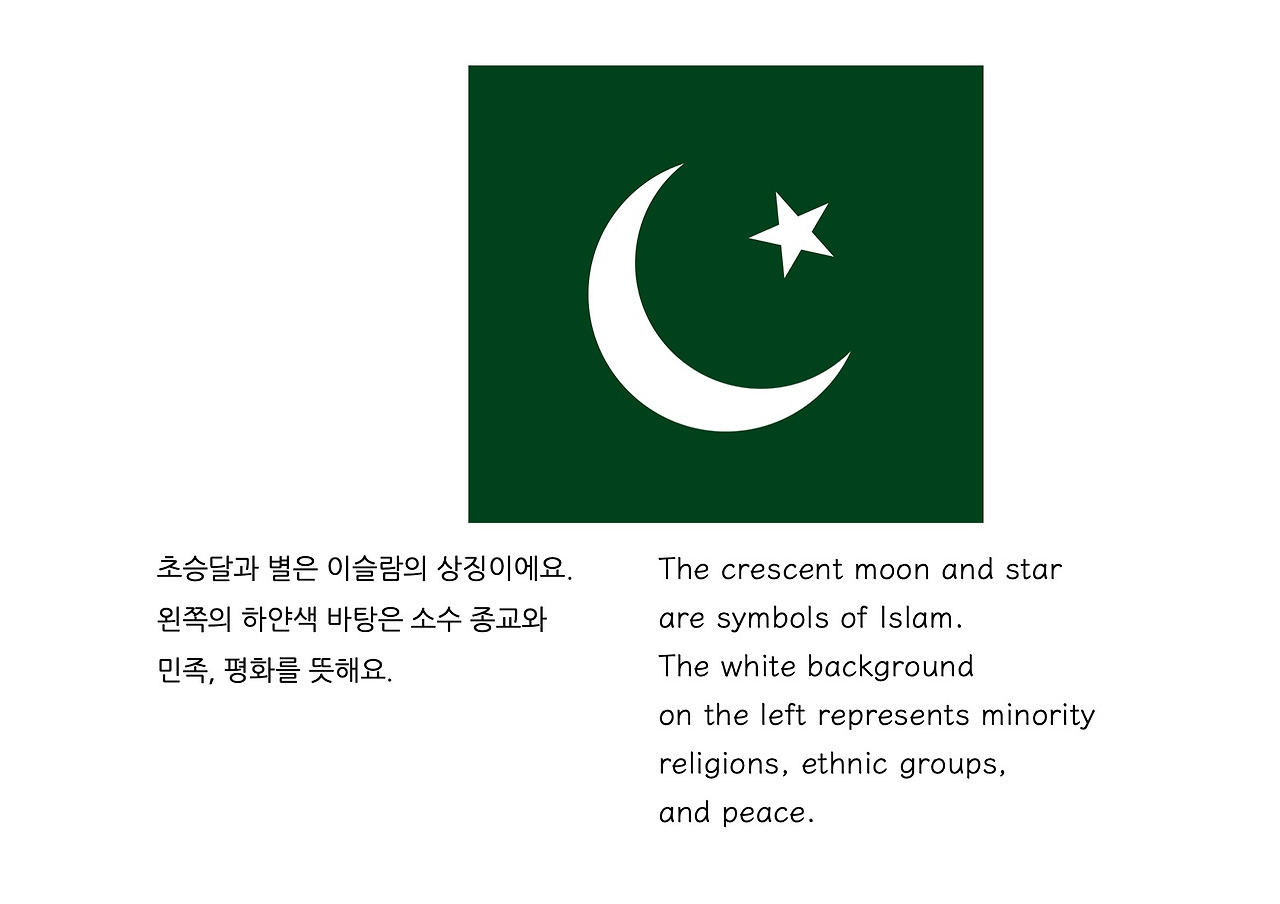
파키스탄 Pakistan
The crescent moon and star are symbols of Islam.
The white background on the left represents minority religions, ethnic groups, and peace.
초승달과 별은 이슬람의 상징이에요.
왼쪽의 하얀색 바탕은 소수 종교와 민족, 평화를 뜻해요.
---
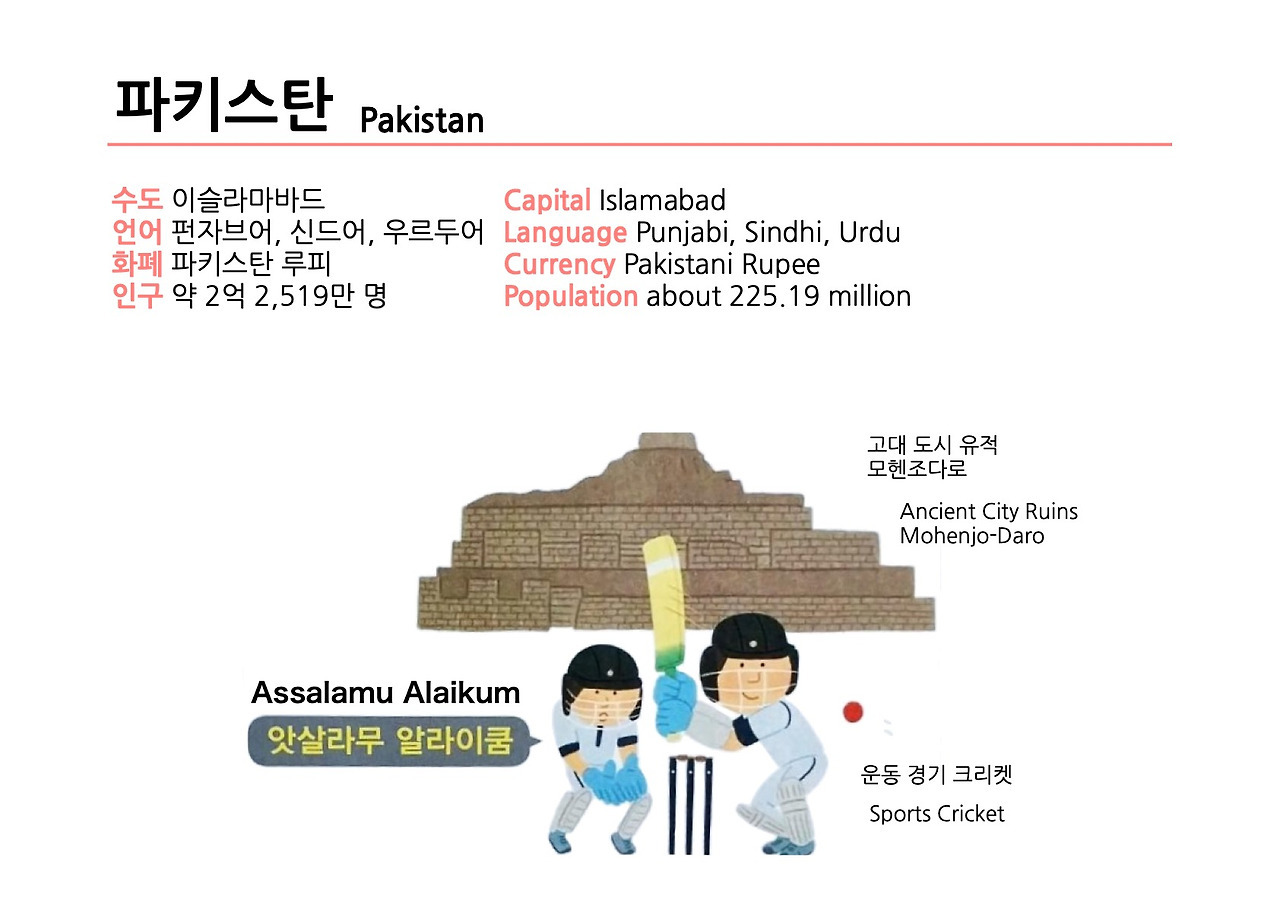
Capital: Islamabad / 수도: 이슬라마바드
Language: Punjabi,Sindhi,Urdu / 언어: 펀자브어,신드어,우르두어
Currency: Pakistani rupee / 화폐: 파키스탄 루피
Population: about 225.19 million / 인구: 약 2억 2,519만 명
---
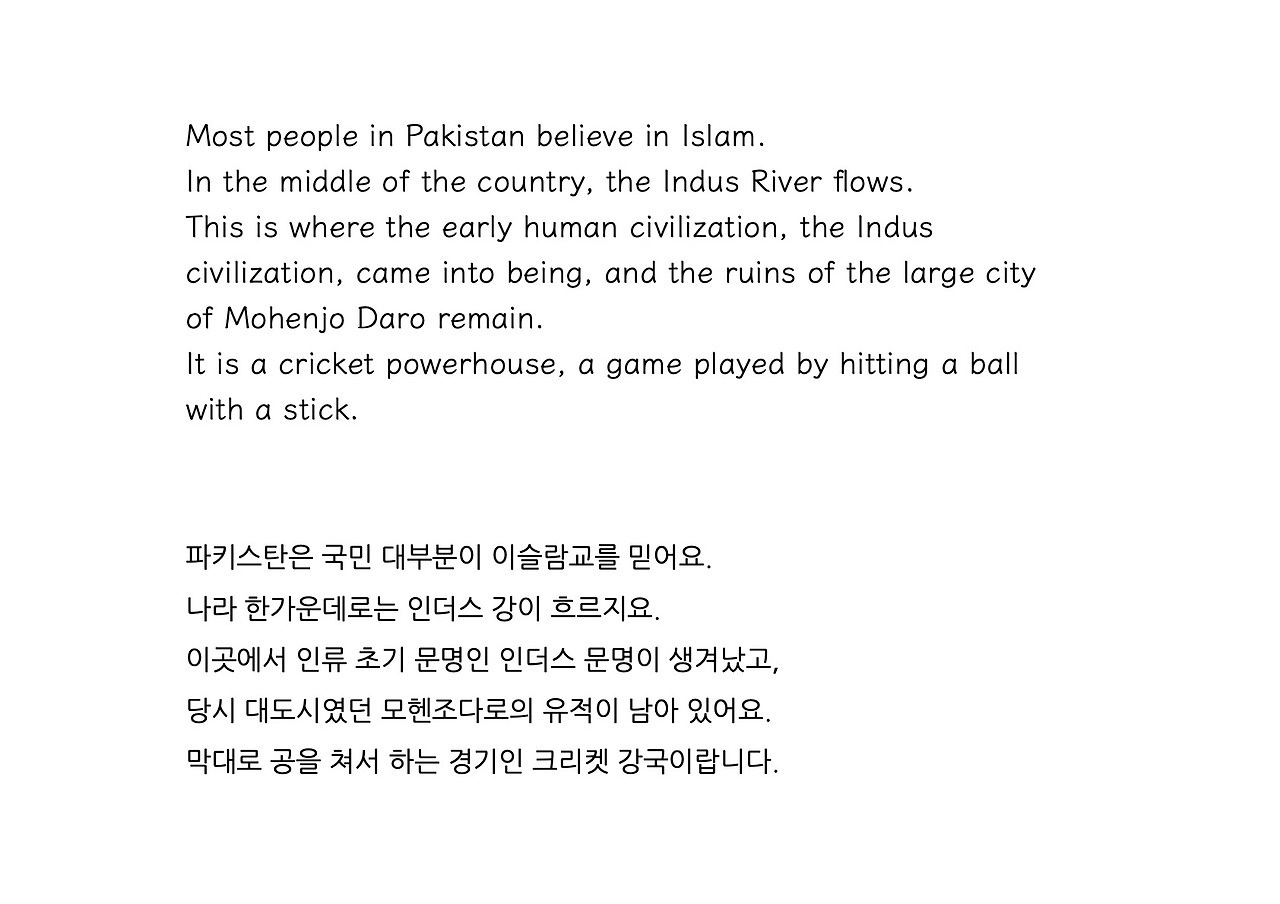
Most people in Pakistan believe in Islam.
In the middle of the country, the Indus River flows.
This is where the early human civilization, the Indus civilization, came into being, and
the ruins of the large city of Mohenjo Daro remain.
It is a cricket powerhouse, a game played by hitting a ball with a stick.
파키스탄은 국민 대부분이 이슬람교를 믿어요.
나라 한가운데로는 인더스 강이 흐르지요.
이곳에서 인류 초기 문명인 인더스 문명이 생겨났고,
당시 대도시였던 모헨조다로의 유적이 남아 있어요.
막대로 공을 쳐서 하는 경기인 크리켓 강국이랍니다.
■ 자료: Science 1-25
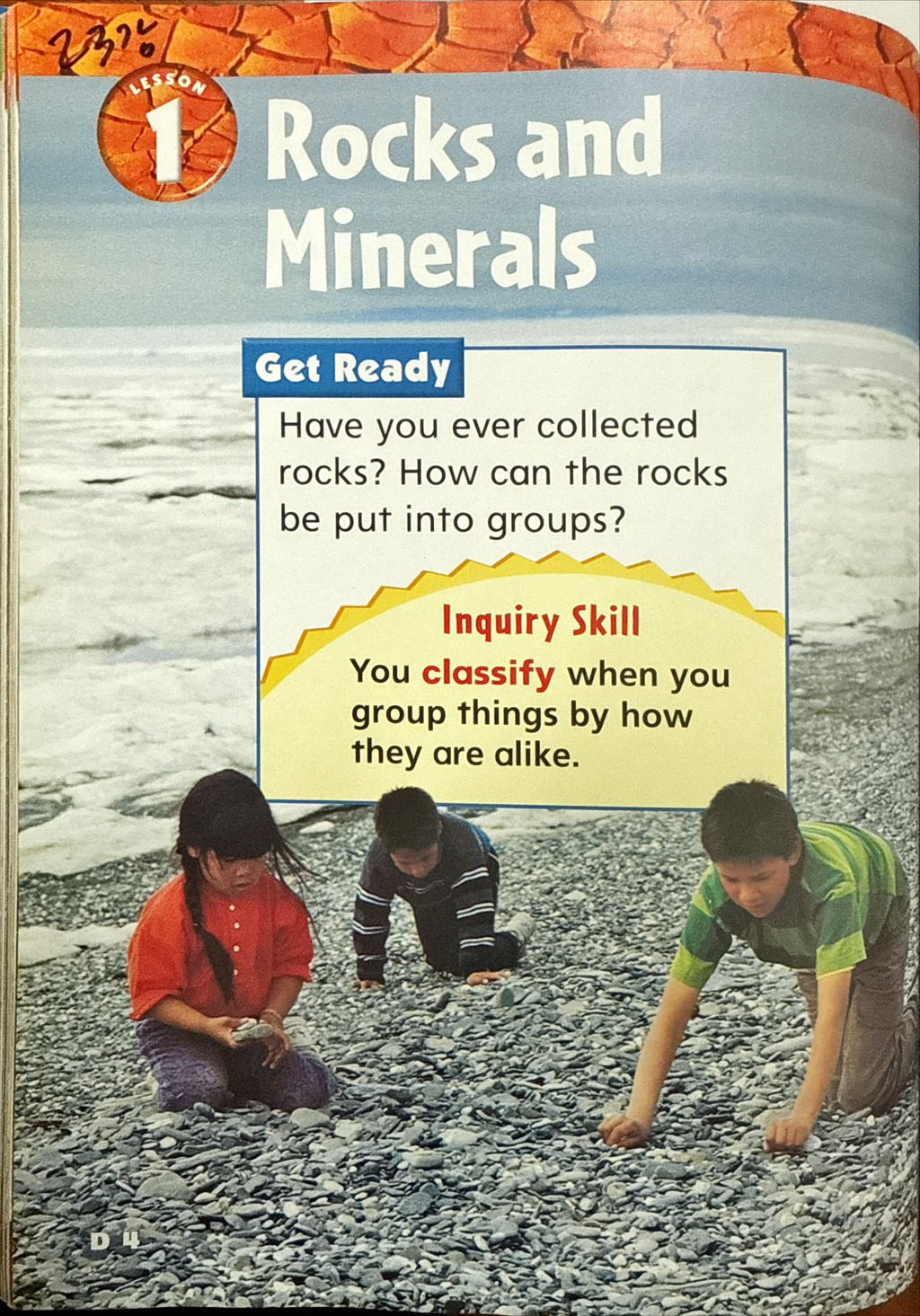
1-25 Rocks and Minerals
What are rocks and minerals?
Rocks are nonliving things.
Earth is mostly rock.
바위과 광물은 무엇인가요?
바위는 생명이 없는 무생물이에요.
지구는 대부분 바위로 이루어져 있어요.
Rocks are made of minerals.
They give rocks their color.
Some rocks are made of many minerals.
Other rocks are made of only one.
바위는 광물로 만들어졌어요.
광물은 바위에 색깔을 입혀 주지요.
어떤 바위는 여러 가지 광물로 되어 있어요.
어떤 바위는 딱 한 가지로만 되어 있어요.
mineral / 광물
---
Rocks may be big or small.
They may be smooth or rough.
They may be different colors, too.
바위는 클 수도 있고 작을 수도 있어요.
매끈매끈할 수도 있고 거칠거칠할 수도 있죠.
색깔도 아주 다양해요.
Tell how these rocks are alike and different.
Children should discuss observed similarities and
differences in color, size, shape, or texture.
이 바위들의 공통점과 차이점을 이야기해 보세요.
관찰한 색깔, 크기, 모양, 그리고 질감이 어떻게 비슷하고 다른지 서로 이야기해 보세요.
granite / marble / sandstone / limestone / obsidians
화강암 / 대리석 / 사암 / 석회암 / 흑요석
---
Why are rocks and minerals important?
Rocks are a natural resource.
So are minerals and land.
A natural resource is something from Earth that people use.
We use rocks to build things.
Roads and buildings can be made from rocks.
바위와 광물은 왜 중요할까요?
바위는 천연자원이에요.
광물과 땅도 마찬가지죠.
천연자원이란 사람들이 사용하는 지구에서 얻는 자원이에요.
우리는 물건을 만들기 위해 바위를 사용해요.
도로와 건물은 바위로 만들 수 있어요.
---
We use minerals to make glass and jewelry.
We use the minerals in sand to make glass.
We use the mineral gold to make rings.
We even eat some minerals. Salt is a mineral that we eat.
Salt is a mineral that we eat.
우리는 유리나 보석을 만드는 데 광물을 사용해요.
모래 속에 있는 광물로 유리를 만들죠.
금이라는 광물로는 반지를 만들어요.
심지어 어떤 광물은 먹기도 해요.
우리가 먹는 소금이 바로 광물이에요.
How are rocks and minerals used?
Rocks are used to build roads and buildings;
minerals are used to make glass and jewelry;
we also eat minerals.
암석과 광물은 어떻게 사용되나요?
암석은 도로와 건물을 만드는 데 사용되고,
광물은 유리 와 보석을 만드는 데 사용되며,
우리는 광물을 먹기도 해요.
■ 자료: 한국전래동화 Korean Folktales
https://www.youtube.com/watch?v=OjVCoXoIEZs&t=183s
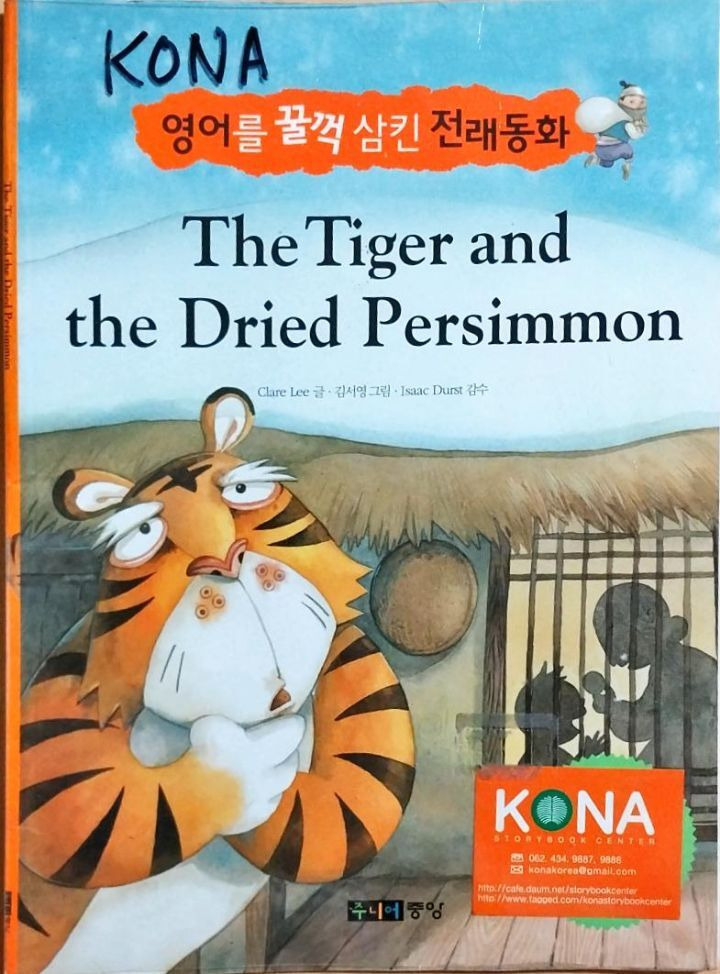
<The Tiger and the Dried Persimmon>
There lived a tiger in a forest.
The tiger was big and scary.
Every animal was scared of him.
숲속에 호랑이 한 마리가 살고 있었습니다.
그 호랑이는 크고 무서웠습니다.
모든 동물들이 그를 무서워했습니다.
He was very hungry.
But he didn't eat anything.
He couldn't find anything to eat.
호랑이는 매우 배가 고팠습니다.
하지만 아무것도 먹지 못했습니다.
먹을 것을 찾을 수 없었기 때문입니다.
"I will go to the town.
There should be some livestock in the town.
I will eat the livestock."
"마을로 가야겠다.
마을에는 가축들이 있을 거야.
그 가축들을 잡아먹어야지."
The tiger found a house.
There was a cow in the house.
He was happy.
호랑이는 한 집을 발견했습니다.
그 집에는 소가 있었습니다.
호랑이는 기뻤습니다.
Then the tiger heard a boy crying.
His grandma was trying to calm him down.
그때 호랑이는 한 아이가 우는 소리를 들었습니다.
할머니는 아이를 달래고 있었습니다.
"Stop crying.
A tiger is outside the house."
The tiger was surprised.
"그만 울어라.
집 밖에 호랑이가 있단다."
호랑이는 깜짝 놀랐습니다.
The boy kept crying.
"Stop crying.
Or the tiger will take you."
하지만 아이는 계속 울었습니다.
"그만 울어라.
그러지 않으면 호랑이가 잡아간다."
His crying became louder.
He was not scared of the tiger.
아이의 울음소리는 더 커졌습니다.
아이는 호랑이를 전혀 무서워하지 않았습니다.
"I am the scariest animal in the forest.
But the boy is not scared of me."
The tiger got upset.
"나는 숲에서 가장 무서운 동물인데,
저 아이는 나를 무서워하지 않는구나."
호랑이는 속이 상했습니다.
"Here is a dried persimmon."
"A dried persimmon?"
The boy stopped crying.
"여기 곶감이 있단다."
"곶감이라고?"
그러자 아이는 울음을 뚝 그쳤습니다.
"What is a dried persimmon?
Is that scarier than me?
It may hurt me."
"곶감이 뭐지?
나보다 더 무서운 건가?
어쩌면 나를 해칠 수도 있겠어."
The tiger got scared.
He tried to run away.
호랑이는 겁이 났습니다.
그리고 도망치려고 했습니다.
Then something sat on the tiger's back.
The tiger was surprised.
He got scared.
그때 무언가가 호랑이의 등에 올라탔습니다.
호랑이는 깜짝 놀랐습니다.
그리고 더욱 무서워졌습니다.
"It may be a dried persimmon.
It could eat me.
What should I do?"
"틀림없이 곶감일 거야.
나를 잡아먹을지도 몰라.
어떡하지?"
It was a thief.
The thief stole something from the house.
Then he looked at the tiger.
사실 그것은 도둑이었습니다.
도둑은 그 집에서 물건을 훔친 뒤
호랑이를 보게 되었습니다.
He got scared.
He climbed up the pole.
But he fell down on the tiger.
도둑은 깜짝 놀랐습니다.
기둥을 타고 올라가려 했지만
그만 호랑이 위로 떨어지고 말았습니다.
The tiger ran and ran.
"Please fall off me, dried persimmon."
But it didn't fall off.
호랑이는 정신없이 달렸습니다.
"제발 내 등에서 떨어져라, 곶감아!"
하지만 떨어지지 않았습니다.
The tiger ran very fast.
The thief was very scared.
He hung on tightly to the tiger.
호랑이는 아주 빠르게 달렸습니다.
도둑도 몹시 무서웠습니다.
그래서 호랑이를 꽉 붙잡았습니다.
The tiger ran under a tree.
The thief grabbed a branch.
He hung on to it.
호랑이는 나무 아래를 지나갔습니다.
도둑은 나뭇가지를 붙잡았습니다.
그리고 거기에 매달렸습니다.
But the tiger didn't know that.
He kept running.
하지만 호랑이는 그 사실을 몰랐습니다.
그는 계속 달렸습니다.
The tiger felt lighter.
"The dried persimmon has fallen off.
I'm safe."
호랑이는 몸이 가벼워진 것을 느꼈습니다.
"곶감이 떨어졌구나.
이제 나는 살았다!"
After that, he never went back to the town.
He didn't go even when he was very hungry.
He was scared of the dried persimmon.
그 후로 호랑이는 다시는 마을에 가지 않았습니다.
아무리 배가 고파도 가지 않았습니다.
곶감이 너무 무서웠기 때문입니다.
Moral (교훈)
Things are often scarier when we don't understand them.
Fear can come from our imagination.
우리가 잘 모르는 것은 더 무섭게 느껴질 수 있습니다.
두려움은 때때로 상상에서 생겨납니다