
■ 일시 (Date): 2026. 6. 8. 월. 2pm~3:30pm
■ 장소 (Venue): 코나영어센터(KONA English Center,
광주광역시, 북구, 용봉로 77, 전남대 생활관9호관(기숙사) 상가 1층 111호)
https://naver.me/FrAkw5cG
네이버지도
코나영어센터
map.naver.com
■ 대상 (Participants): 유네스코 코나클럽회원(성인, 외국인)
■ 멘티준비물(Material to bring for Mentees):
1. 3단계 세계명작동화
(Cinderella / Snow White / Puss in Boots / Jack and the Beanstalk / Rapunzel)
2. Littlefox 4단계 인물편
3. 개인 물병
■ 코나리딩멘토(KONA Reading Mentor) 및 참가자 (Participants)
| 코나리딩멘토(Mentors) | 참가자(수혜자_회원 및 비회원 | 비고 | |||||
| 김영임 Saiana (러시아) | 박혜경 김선미 윤수연 류은영 | 참관: 불참: 김선미(여행) 윤수연, 류은영 | |||||
| ※ 외국인 명단은 외국인 사정에 따라 달라질 수 있습니다. | |||||||
■ 교육내용(Contents) 및 자료 (Resources)
| 날짜 | 전기 Biography What a Life 2 | 세계명작동화 Folktales & Fairy Tales 3단계 | BR(Buddy Reading / Speadking) | |
| 5/4 | Littlefox 4단계 James Abram Garfield | Jack & the Beanstalk 11~12 | ||
| 5/11 | Littlefox 4단계 Theodore Roosevelt (The Story of the Teddy Bear) | Jack & the Beanstalk 13~14 | ||
| 5/18 | Littlefox 5단계 Young Walt Disney | Jack & the Beanstalk 15~16 | ||
| 5/25 | 휴강-Buddha's Birthday 대체공휴일 | |||
| 6/1 | Littlefox 5단계 Charlie Chaplin | Jack & the Beanstalk 17~18 | ||
| 6/8 | Littlefox 6단계 Shin Saim-dang: A Woman Before Her Time 한국화폐와 신사임당, 이이 | Jack & the Beanstalk 19~20 | ||
| 6/15 | Littlefox 5단계 The Shoe That Grows (Kenton Lee) | Jack & the Beanstalk 21~22 | ||
| 6/22 | Littlefox 5단계 Mother Teresa: Changing Lives with Love | Jack & the Beanstalk 23~24 | ||
| 6/29 | Littlefox 6단계 The Great Admiral Yi Sunshin and His Turtle Ship | Rapunzel 1~4 | ||
| 7/6 | Littlefox 6단계 King Sejong the Great and Hangeul | Rapunzel 5~8 | ||
| 7/13 | Littlefox 6단계 Jang Youngsil: The Slave Who Was an Inventor | Rapunzel 9~12 | ||
| 7/20 | Littlefox 6단계 The Legend of the Apple Tree Man: John Chapman | Rapunzel 13~16 | ||
| 7/27 | Littlefox 6단계 Andrew Carnegie: The Richest Man in the World | Rapunzel 17~20 | ||
| [일정변경안내] 이 일정은 코나센터나 북구평생학습관 <월데이클래스> 스케쥴에 따라 일정이 변경될 수 있습니다. (예, 코나센터의 <코나비전토크> 영어특강이나, 북구평생학습관의 <월데이클래스>시 수업 일정 연기) | ||||
■ 자료 (Resources) Littlefox 5단계
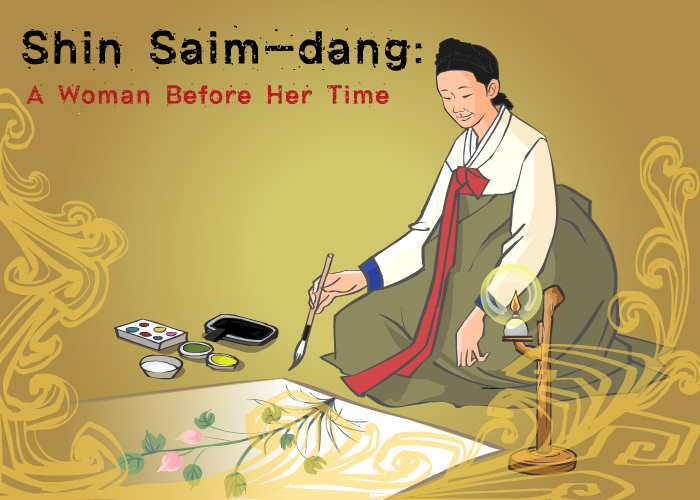
People & History 1, Shin Saim-dang: A Woman Before Her Time
Five hundred years ago, a woman of extraordinary abilities earned respect for her talent as a painter and poet.
She lived in the tradition-bound society of ancient Korea, and her family cherished her as a devoted daughter, mother,
and wife. Today, we recognize her as a woman who pioneered independence and individuality for women.
5백 년 전, 놀라운 능력을 지닌 한 여성이 화가와 시인으로써의 재능으로 존경을 받았었다.
그녀는 옛 한국의 전통에 얽매인 사회에 살았고, 그녀의 가족은 그녀를 헌신적인 딸이자 어머니이며, 그리고 아내로 아꼈다.
오늘날 우리는 신사임당을 여성의 독립과 개성을 위한 선구자 노릇을 한 여인으로 인정하고 있다.
Shin Saim-dang was born in Korea in 1504 during the Chosun Dynasty.
The second of five daughters, she was named In-sun at birth. At a young age,
she chose the pen name Saim-dang, which means "loving mother of the king."
Her inspiration was the mother of King Wen, a ruler in the Zhou Dynasty of ancient China.
신사임당은 1504년 조선 시대에 태어났다. 다섯 딸 중 둘째로, 사임당이 출생했을 때 인선이라 이름 지어졌다.
어린 시절 그녀는 ‘왕의 사랑하는 어머니’라는 뜻의 ‘사임당’이라는 필명을 택했다.
그녀는 고대 중국 주 나라의 통치자였던 문왕의 어머니에서 영감을 얻었다.
During the Chosun Dynasty, most Koreans abided by Confucian teachings,
which held that a son must look after his parents. For this reason,
after a man was married, his wife would leave her family to go and live with her husband’s family.
조선 시대에 대부분의 한국인들은 아들이 부모를 돌보아야 한다고 주장하는 유교의 가르침을 따르고 있었다.
이러한 이유로, 남자가 결혼을 하면, 아내는 자신의 가족을 떠나 남편의 가족에게 가서 함께 살아야 했다.
Although Saim-dang’s family honored Confucian teachings, they did not always follow tradition.
Saim-dang’s mother was an only child, so Saim-dang’s grandparents had no son to take care of them.
With the consent of her husband, Saim-dang’s mother continued to live at home even after she married.
Thus, Saim-dang was born in her mother’s childhood home, called Ojukheon, in the city of Gangneung.
사임당의 가족은 유교의 가르침을 중시하기는 했지만, 전통을 늘 따른 것은 아니었다.
사임당의 어머니는 외동딸이었기 때문에, 사임당의 외조부모에게는 그들을 돌보아 줄 아들이 없었다.
남편의 허락을 받아 사임당의 어머니는 결혼을 한 후에도 자신의 집에서 계속 살았다.
그래서 사임당은 강릉에 있는 오죽헌이라는 자신의 어머니가 자라난 집에서 태어났다.
Saim-dang’s father worked in Seoul, 150 kilometers away, so she did not see him very often.
Her mother and grandfather took on the responsibility of raising her and her sisters.
The five girls all learned to read and write, even though most girls at the time received little education.
사임당의 아버지는 강릉에서 150킬로미터 떨어진 서울에서 일하고 있었기 때문에 사임당은 아버지를 자주 볼 수 없었다.
그녀의 어머니와 외할아버지가 사임당과 그 자매들의 양육을 책임졌다.
당시에는 대부분의 여자들이 교육을 거의 받지 못했지만, 이 다섯 자매들은 모두 읽고 쓰는 법을 배웠다.
In this atmosphere of learning, Saim-dang developed an appreciation for the arts.
She enjoyed practicing calligraphy and composing poetry.
At the age of seven, she studied the works of Ahn Gyeun,
a famous painter who lived during King Sejong’s rule, one hundred years earlier.
Saim-dang imitated Ahn Gyeun’s brushstrokes as she developed her own style of painting.
이러한 학구적인 분위기에서 사임당은 예술을 감상하는 법을 배웠다.
사임당은 서예와 시를 짓는 것을 즐겼다.
일곱 살의 나이에 사임당은 100년 더 앞서 세종대왕이 통치하던 시절에 살았던 유명한 화가인 안견의 작품들을 공부했다.
사임당은 안견의 붓놀림을 모방하면서 자신만의 화풍을 계발했다.
Her favorite subjects were the things she saw every day in the backyard of Ojukheon:
flowers, clusters of grapes, bamboo trees, butterflies, and insects.
It is said that Saim-dang’s drawings were so lifelike they deceived even animals.
One summer day, after completing a painting with an ant in it, she set it aside to dry.
그녀가 즐겨 그리던 정물들은 오죽헌의 뒷마당에서 매일 보던 것들인 꽃과 포도송이, 대나무, 나비 및 곤충들이었다.
사임당의 그림들은 너무도 진짜 같아서 심지어는 동물들도 속았다고 전해진다.
어느 여름 날, 개미가 있는 그림 한 점을 완성한 후 사임당은 그림을 말리기 위해 한쪽에 두었다.
"I’ll just go inside to get a drink," she said to herself.
A chicken in the garden saw the painting and, thinking that the ant was real, started to peck at it with its beak.
When Saim-dang saw what the chicken was doing, she cried, "No! Stop that! It’s not real!"
But it was too late. Her painting was torn to pieces.
"안에 들어가서 물 한잔 마시고 와야지." 이렇게 혼잣말을 했다. 뜰에 있던 닭 한 마리가 그림을 보고는,
개미가 진짜라고 생각해서 부리로 그림 속 개미를 쪼기 시작했다. 사임당은 닭이 쪼고 있는 것을 보고는 외쳤다.
"안 돼! 그만 해! 진짜가 아니란 말이야!" 하지만 너무 늦었다. 사임당의 그림은 갈기갈기 찢겨져 버렸다.
At the age of 19, Saim-dang married a man who lived in Seoul, but only a few months after the wedding,
her father passed away. Having no brothers, Saim-dang felt it was her duty to take care of her widowed mother.
Her new husband was a caring man, and he allowed her to return to Ojukheon.
열 아홉의 나이에 사임당은 서울에 사는 한 남자와 결혼을 했지만, 결혼식 불과 몇 달 후, 아버지가 돌아가셨다.
남자 형제가 없던 사임당은 홀로 된 어머니를 모시는 것이 자신의 의무라고 느꼈다.
갓 결혼한 그녀의 남편은 다정한 사람이었고, 그래서 사임당이 오죽헌으로 돌아가는 것을 허락해주었다.
In those days, it was customary for families to mourn their dead loved ones for three years.
Saim-dang spent this period with her mother.
Then she traveled back to Seoul to be with her husband.
Her eldest child, a son, was born there.
As much as she was a faithful daughter, Saim-dang was also a devoted wife.
그 당시에는 가족들이 사랑하는 사람의 죽음을 3년씩 애도하는 것이 관례였다.
사임당은 이 기간을 어머니와 함께 보냈다. 그러고는 자신의 남편과 지내기 위해 서울로 돌아왔다.
사임당의 장남은 그곳에서 태어났다.
효심 깊은 딸이었던 만큼, 사임당은 헌신적인 아내이기도 했다.
She diligently performed the duties set for her by Confucian tradition in her husband’s home.
"Is the rice warm enough, Mother-in-law?" she would ask at mealtimes.
She treated her husband’s family with the utmost respect,
but she was also kind to those who helped around the house.
"Thank you," she would say with a smile to servants,
그녀는 남편의 집에서 유교 전통에 따라 자신에게 주어진 의무를 성실히 수행했다.
"밥이 따뜻한지요, 어머님?" 이렇게 식사 시간에 묻곤 했다.
사임당은 남편의 가족을 지극한 존경으로 대했고, 집안 일을 돕는 이들에게도 또한 친절했다.
"고마워요." 사임당은 하인들에게 이렇게 미소지으며 말하곤 했다.
Heartbroken that her mother was alone, Saim-dang often returned to Ojukheon. In 1536, during one of her stays there, she gave birth to her fifth child.
She named him Yi Yi, and he spent his childhood in Ojukheon, cared for by his mother and grandmother.
자신의 어머니가 홀로 있다는 것에 상심해서, 사임당은 오죽헌으로 자주 돌아갔다.
1536년 오죽헌에 머무르는 동안 사임당은 다섯 번째 아이를 낳았다.
이 아이를 이이라 이름 지었고, 이이는 어머니와 외조모의 돌봄을 받으며 오죽헌에서 어린 시절을 보냈다.
Yi Yi learned Chinese script at the age of three and composed poems before he reached his seventh birthday.
He grew up to become one of Korea’s greatest Confucian scholars.
Saim-dang had seven children.
Just as her parents had instilled a thirst for knowledge in her, she taught all her children the importance of learning.
이이는 세 살의 나이에 한자를 익혔고, 일곱 번째 생일이 되기 전에 시를 지었다.
이이는 자라서 한국의 가장 위대한 유학자 중 한 명이 되었다.
사임당은 일곱 자녀를 두었다.
그녀의 부모가 지식에 대한 열망을 자신에게 심어주었던 것처럼, 사임당 역시 자녀들 모두에게 학문의 중요성을 가르쳤다.
Despite her busy days looking after her mother and her own family,
Saim-dang always found time to pursue her love of the arts.
As much as she upheld traditions, she was also not afraid to express how she felt.
Her reputation as an artist and poet grew.
어머니와 가족들을 돌보느라 바쁜 나날을 보내면서도,
사임당은 늘 예술에 대한 사랑을 추구할 시간을 찾아냈다.
전통을 지키면서도, 사임당은 자신이 느끼는 바를 표현하는 데에도 그만큼 주저하지 않았다.
화가와 시인으로서의 그녀의 명성은 점점 더해갔다.
"Her strokes are bold yet feminine," one person remarked.
"It’s elegant and beautiful," commented another.
Despite her popularity, Saim-dang was humble and did not draw attention to herself.
Her passion in life was art, but her love was for her family.
"사임당의 필치는 대담하지만 여성스럽소." 한 사람이 지적했다.
"우아하고 아름답소." 다른 사람이 언급했다.
이러한 인기에도 불구하고, 사임당은 겸손하였고, 주목을 받지 않으려고 했다.
그녀의 삶의 열정은 예술이었지만, 그녀의 사랑은 가족이었다
In his writings, Yi Yi credits his success to his mother’s loving upbringing.
Living in a time when a woman’s role was limited,
Shin Saim-dang proved that women had the ability and talents to contribute greatly to art and learning.
She was truly a woman before her time.
이이는 자신의 글에서 자신의 성공을 어머니의 사랑이 깃든 양육으로 공을 돌리고 있다.
여성의 역할이 제한된 시대에 살면서도,
신사임당은 여성들도 예술과 학문에 지대하게 공헌할 수 있는 능력과 재능을 가지고 있음을 입증했다.
신사임당은 정녕 시대를 앞선 여인이었다.