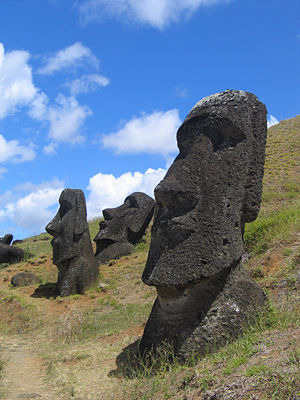
크기 3.5 미터, 무게 20 톤 가량 되는 것이 많지만,
큰 것은 20 미터에 90 톤까지 되는 것도 있다.
섬 전체에 걸쳐 600 개 이상의 모아이 상이 흩어져 있다.
Moai (or mo‘ai) are monolithic human figures carved from rock on the Polynesian island
of Rapa Nui (Easter Island), mostly between 1250 and 1500 CE
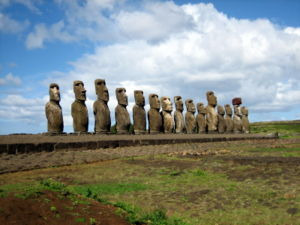
Nearly half are still at Rano Raraku, the main moai quarry, but hundreds were transported
from there and set on Ahu
Almost all have overly large heads three fifths the size of their body.
The Moai are the 'living faces' (aringa ora) and representations of chiefly, deified ancestors.
[1] Sitting on their Ahus with their backs to the sea, these statues were still gazing across
their clan lands when Europeans first visited the island, but most were then cast down
during conflict between different clans on the island.
The production and transportation process required significant intellect, use of resources,
and creativity, and is considered a remarkable feat of human endeavour.[2] The tallest moai
erected, called Paro, was almost 10 metres (33 ft) high and weighed 75 tonnes;[3] the heaviest
erected was a shorter but squatter moai at Ahu Tongariki which weighed 86 tons; while one
unfinished sculpture would have been approximately 21 metres (69 ft) tall with a weight of
about 270 tons.