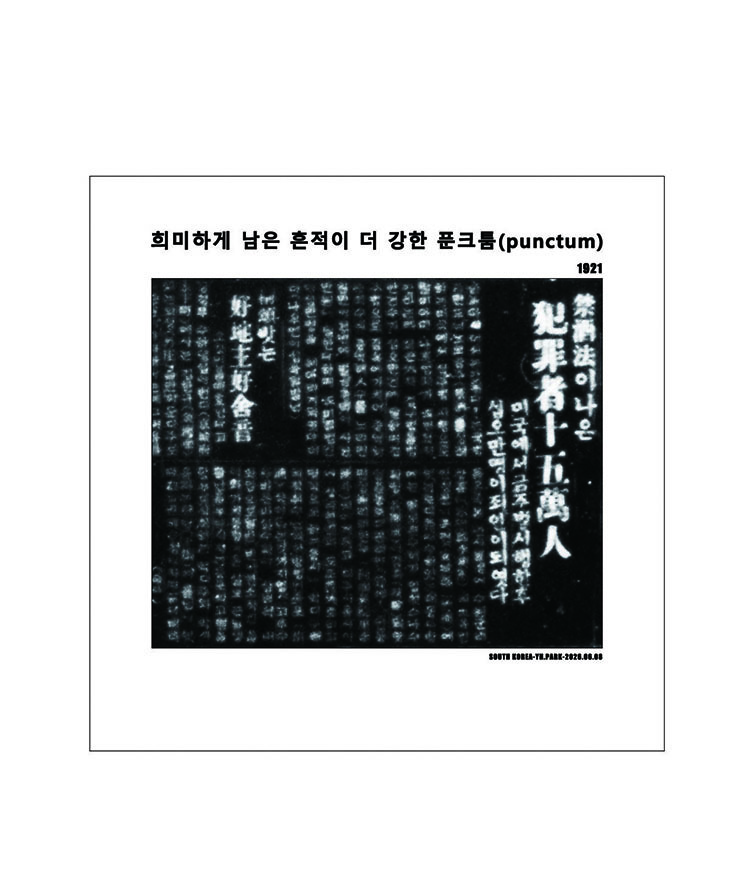
사진 상태가 매우 흐리고 해상도가 낮아 전체 기사의 정확한 판독은 어렵습니다. 다만 제목 부분은 비교적 식별이 가능합니다.
판독 가능한 부분
오른쪽 큰 제목:
「犯罪者 一五萬人」
(범죄자 15만 명)
그 위의 작은 제목:
「禁酒法の…」
(금주법의 …)
즉, 사용자의 추정대로 미국의 금주법(Prohibition) 시행 이후 범죄자가 증가했다는 내용의 기사로 보입니다.
또한 세로로 적힌 한글 설명에는 대략
라는 취지의 문장이 보입니다.
왼쪽의 중간 제목은
「好地主好會議」
(좋은 지주, 좋은 회의 / 모범 지주회 관련 기사)
처럼 보이지만 흐려서 확정하기는 어렵습니다. 따라서 현재 사진에는 서로 다른 여러 기사가 함께 배치된 신문 지면의 일부가 촬영된 것으로 보입니다.
한글 해설
이 기사는 1920년대 미국에서 시행된 금주령(Prohibition) 과 관련된 기사로 추정됩니다.
미국은 1920년 수정헌법 제18조와 볼스테드법(Volstead Act)에 따라 술의 제조·판매·운반을 금지하였습니다. 금주령을 추진한 사람들은 술이 범죄와 가난, 가정폭력의 원인이라고 보았습니다.
그러나 실제 결과는 예상과 달랐습니다.
- 불법 술 제조가 증가하였고
- 밀주 조직이 성장하였으며
- 갱단과 조직범죄가 확대되었고
- 경찰과 공무원 부패가 심화되었습니다.
신문 제목의 "범죄자 15만 명"이라는 표현은 이러한 사회적 혼란을 강조하기 위한 것으로 보입니다.
일제강점기 조선의 신문들이 미국 금주령 기사를 다룬 이유는 단순한 해외 뉴스 전달뿐 아니라, "국가가 개인의 생활을 어디까지 통제할 수 있는가"라는 문제를 독자들에게 보여주는 사례였기 때문입니다.
푸코의 시각으로 본 해설
미셸 푸코의 관점에서 금주령은 단순한 음주 규제가 아니라 통치성(Governmentality) 의 한 사례입니다.
국가는 국민의 건강과 도덕을 향상시키겠다는 명분으로 개인의 생활습관까지 관리하려고 하였습니다. 그러나 권력이 일상생활 깊숙이 침투할수록 사람들은 새로운 우회 경로를 만들어 냅니다.
금주령은 술을 없애기보다 오히려 새로운 범죄 시장을 탄생시켰습니다.
푸코라면 이 기사를 통해 다음과 같이 말할 수 있을 것입니다.
따라서 범죄자 15만 명이라는 숫자는 단순한 치안 문제라기보다 통치 권력이 만들어낸 역설적 결과로 읽을 수 있습니다.
English Commentary Interpretable Headline
"150,000 Criminals"
The article appears to discuss the increase of crime associated with the American Prohibition era.
During the 1920s, the United States prohibited the manufacture and sale of alcoholic beverages under the Eighteenth Amendment and the Volstead Act. Reformers expected that banning alcohol would reduce crime and improve public morality.
However, the results were often the opposite:
- Illegal alcohol production expanded.
- Smuggling networks flourished.
- Organized crime syndicates grew stronger.
- Corruption spread among officials and police.
The headline mentioning "150,000 criminals" seems intended to emphasize the scale of social disorder connected to Prohibition.
A Foucauldian Reading
From Michel Foucault's perspective, Prohibition can be understood as a form of governmentality—an attempt by the state to regulate everyday life in the name of public welfare and moral improvement.
Yet power rarely functions only through prohibition. When authority seeks to control individual conduct too strictly, new forms of resistance and alternative economies emerge.
Thus, Prohibition did not simply suppress alcohol consumption; it also produced new criminal networks and new social behaviors.
A Foucauldian interpretation might conclude:
In this sense, the article is not only about criminals but also about the unintended consequences of modern governmental power.
현재 사진으로는 본문 전체 판독이 어렵습니다. 가능하시다면 원본 스캔을 더 높은 해상도로, 또는 기사 부분만 확대하여 올려주시면 한자와 본문 내용을 더 자세히 해독해 드릴 수 있습니다
============================================
금주령의 역설과 통치의 그림자 — 파농, 아감벤, 푸코의 시선으로 읽는 일제강점기 신문 기사
사진 속 신문은 미국 금주법 시행 이후 "범죄자 15만 명"이라는 충격적인 수치를 전하고 있다. 언뜻 보면 이것은 단순한 해외 토픽 기사처럼 보인다. 그러나 조금 더 깊이 들여다보면 이 기사는 근대 국가가 인간의 삶을 어떻게 통제하고 관리하는가에 관한 거대한 정치적 우화를 담고 있다.
미셸 푸코에게 금주령은 단순한 법률이 아니다. 그것은 국가가 국민의 몸과 생활을 관리하는 생명정치(Biopolitics) 의 한 형태이다. 국가는 술을 금지함으로써 국민을 더 건강하고 더 생산적이며 더 도덕적인 존재로 만들고자 했다. 그러나 푸코가 지적했듯 권력은 단순히 금지하는 것이 아니라 새로운 현실을 생산한다. 금주령은 술을 사라지게 하지 못했다. 대신 밀주업자, 갱단, 암시장, 밀수 조직이라는 새로운 사회적 존재들을 탄생시켰다. 범죄자 15만 명이라는 숫자는 범죄의 증가를 뜻하는 것이 아니라, 오히려 권력이 생산한 새로운 사회적 결과를 보여주는 증거이다.
조르조 아감벤은 이 기사를 더욱 근본적인 차원에서 읽을 것이다. 아감벤에게 법은 언제나 예외상태를 생산한다. 금주령은 술을 마시는 사람들을 정상적인 시민의 영역에서 밀어내고 잠재적 범죄자의 위치로 이동시켰다. 어제까지 평범한 시민이었던 사람이 오늘은 법의 경계 밖에 선 존재가 된다. 이러한 순간 법은 보호의 장치가 아니라 배제의 장치가 된다. 아감벤이 말한 호모 사케르(Homo Sacer) 는 바로 이런 존재이다. 법 안에 있으면서도 동시에 법 밖에 놓인 인간. 금주령 아래에서 수많은 사람들은 국가가 설정한 도덕적 기준에 의해 비정상적 존재로 규정되었다.
프란츠 파농은 여기서 또 다른 문제를 발견한다. 그는 국가가 생산하는 범죄의 담론 자체를 의심할 것이다. 식민지 사회에서 권력은 항상 특정 집단을 위험한 존재로 규정한다. 범죄자라는 이름은 단순한 사실의 기록이 아니라 정치적 낙인이다. 파농에게 중요한 질문은 "범죄자가 왜 증가했는가"가 아니라 "누가 범죄자를 정의하는가"이다. 법을 만드는 권력은 동시에 범죄자를 만드는 권력이기도 하다. 식민지 조선에서 독립운동가가 범죄자로 기록되었던 것처럼, 미국에서도 국가가 설정한 도덕적 질서에 저항하는 사람들은 범죄자로 명명되었다.
이러한 점에서 사진 속 기사는 단순한 미국 사회의 뉴스가 아니다. 그것은 근대 권력이 인간을 관리하는 방식에 대한 기록이다. 술을 금지한 법은 범죄를 제거하지 못했고, 오히려 새로운 범죄를 생산했다. 도덕을 강화하려던 국가는 새로운 배제를 만들어냈고, 질서를 추구한 권력은 더 복잡한 무질서를 낳았다.
푸코는 여기서 권력의 생산성을 보았고, 아감벤은 예외상태의 확장을 보았으며, 파농은 권력이 만들어내는 낙인의 폭력을 보았다. 따라서 "범죄자 15만 명"이라는 제목은 범죄의 통계가 아니라 근대 권력의 역설을 보여주는 하나의 역사적 증언으로 읽힐 수 있다.
Full English Translation The Paradox of Prohibition and the Shadow of Government — Reading a Colonial-Era Newspaper through Fanon, Agamben, and Foucault
The newspaper image reports a striking figure: "150,000 Criminals" in relation to the American Prohibition era. At first glance, it appears to be nothing more than a foreign news story. Yet beneath the headline lies a broader narrative about how modern states seek to regulate, discipline, and govern human life.
For Michel Foucault, Prohibition was not merely a legal measure. It was a form of biopolitics, an attempt by the state to manage the bodies and behaviors of its population. By banning alcohol, authorities hoped to create healthier, more productive, and more moral citizens. Yet, as Foucault repeatedly argued, power does not simply prohibit; it produces new realities. Prohibition failed to eliminate alcohol. Instead, it generated bootleggers, gang networks, black markets, and organized crime. The figure of "150,000 criminals" therefore represents not merely an increase in crime, but the social consequences produced by governmental power itself.
Giorgio Agamben would approach the article from a deeper philosophical level. For him, law constantly creates states of exception. Prohibition pushed ordinary drinkers from the realm of normal citizenship toward the status of potential criminals. A person who had been an ordinary citizen yesterday could suddenly become an outlaw today. In such moments, law functions less as protection than as exclusion. This is closely related to Agamben's concept of Homo Sacer—a figure who exists both inside and outside the legal order. Under Prohibition, countless individuals were redefined as abnormal subjects according to standards imposed by the state.
Frantz Fanon would identify yet another dimension. He would question the very discourse of criminality produced by power. In colonial societies, authority constantly labels particular groups as dangerous. The category of "criminal" is never merely descriptive; it is political. For Fanon, the crucial question is not "Why did criminals increase?" but rather "Who has the power to define a criminal?" The authority that creates laws is also the authority that creates criminals. Just as anti-colonial activists were often classified as criminals in colonial societies, those who challenged the state's moral order in America could likewise be transformed into criminal subjects.
Viewed in this way, the newspaper article is more than a report about American society. It is a record of how modern power governs human life. The law that sought to eliminate alcohol instead produced new forms of crime. The state that sought moral order generated new exclusions. The authority that pursued stability created more complex forms of disorder.
Foucault saw the productive nature of power. Agamben saw the expansion of the state of exception. Fanon saw the violence of political labeling. Thus, the headline "150,000 Criminals" can be read not simply as a statistic of crime, but as a historical testimony to the paradoxes of modern power itself.
조금더 깊은 분석글 로 부탁 합니다.
============================================================================
범죄자 15만 명 — 근대 권력이 만들어낸 유령들 파농, 아감벤, 푸코의 교차적 시선으로 읽는 일제강점기 신문
이 흐릿한 신문 사진은 단순히 미국 금주령의 실패를 보도하는 기사가 아니다. 오히려 그것은 근대 국가가 인간을 어떻게 분류하고 통제하며, 때로는 범죄자로 생산하는지를 보여주는 정치적 문서에 가깝다.
신문은 "범죄자 15만 명"이라는 숫자를 제시한다. 그러나 파농, 아감벤, 푸코의 시선으로 보면 중요한 것은 숫자가 아니다. 중요한 것은 그 숫자가 만들어지는 과정이다.
1. 푸코 — 범죄자는 발견되는 것이 아니라 생산된다
일반적으로 우리는 범죄자가 범죄를 저질렀기 때문에 범죄자가 된다고 생각한다.
그러나 푸코는 정반대로 질문한다.
금주령 이전에는 술을 제조하고 마시는 행위가 일상이었다.
금주령 이후 같은 행위는 범죄가 되었다.
인간은 변하지 않았다.
변한 것은 법이다.
푸코에게 권력은 이미 존재하는 범죄를 단속하는 것이 아니라 새로운 범죄의 영역을 창조한다.
따라서 기사 속 15만 명의 범죄자는 범죄가 늘어난 결과가 아니라 국가가 새롭게 정의한 인간 집단이다.
금주법은 술을 없애지 못했다.
대신 "밀주업자"라는 새로운 사회적 존재를 탄생시켰다.
범죄 통계는 그래서 사회의 진실이 아니라 권력이 인간을 분류한 결과물이다.
푸코의 표현을 빌리면 이것은 감옥과 경찰, 법원과 신문이 공동으로 생산한 "범죄 담론"이다.
2. 아감벤 — 술 한 잔이 인간을 예외상태로 밀어낸다
아감벤의 관점에서 더 중요한 것은 금주령이 만든 경계이다.
어제까지 정상적 시민이었던 사람이 오늘 갑자기 범죄자가 된다.
그 이유는 단순하다.
법이 바뀌었기 때문이다.
여기서 아감벤은 말한다.
국가는 어느 날 술을 마시는 인간을 정상 영역에서 추방한다.
그 순간 시민은 법의 보호를 받는 존재에서 법의 처벌 대상이 된다.
이것이 예외상태다.
금주령은 사실상 수백만 명의 미국인을 잠재적 범죄자로 만들었다.
이들은 사회 안에 있지만 동시에 사회 밖에 있다.
아감벤이 말한 호모 사케르(Homo Sacer)는 바로 이런 존재이다.
살아 있으나 정치적으로는 버려진 인간.
신문은 15만 명이라는 숫자를 말하지만, 아감벤은 그 뒤에 숨은 질문을 던진다.
3. 파농 — 범죄는 지배자가 피지배자에게 붙이는 이름이다
파농은 더욱 급진적이다.
그는 범죄자라는 말 자체를 의심한다.
식민지에서 독립운동가는 범죄자였다.
노동운동가는 불온분자였다.
저항자는 폭도였다.
그러나 역사는 그들을 영웅으로 기억한다.
파농은 말한다.
미국 금주령 역시 비슷한 구조를 보여준다.
국가가 금지한 행위를 계속하는 사람들은 범죄자가 되었다.
그러나 그들은 자신을 범죄자로 생각하지 않았다.
그들은 단지 기존의 생활방식을 유지했을 뿐이다.
따라서 범죄자 15만 명이라는 통계는 범죄의 숫자가 아니라 국가와 민중 사이의 갈등 규모를 보여주는 숫자일 수 있다.
파농이라면 이 기사에서 범죄의 증가보다 국가 권력의 확대를 읽었을 것이다.
4. 식민지 조선에서 이 기사가 갖는 의미
더 흥미로운 것은 이 기사가 미국 신문이 아니라 일제강점기 조선의 신문에 실렸다는 사실이다.
조선인은 당시 정치적 자유를 박탈당한 식민지 백성이었다.
독립운동가는 범죄자로 분류되었다.
치안유지법은 사상 자체를 범죄화했다.
그런 상황에서 신문은 미국 금주령으로 인한 범죄 증가를 소개한다.
여기서 역설이 발생한다.
신문은 미국 사회의 범죄를 이야기하지만, 조선 독자는 자신이 처한 현실을 떠올릴 수밖에 없다.
어쩌면 기사 속 "범죄자 15만 명"은 미국 이야기가 아니라 식민지 권력이 만들어내는 범죄의 구조를 비추는 거울이었는지도 모른다.
사진학적 의미
이 기사 사진이 특별한 이유는 너무 흐릿하다는 데 있다.
글자는 사라지고 숫자만 남아 있다.
"15만"
이 거대한 숫자는 마치 권력이 인간을 바라보는 방식처럼 보인다.
개인은 사라진다.
얼굴도 이름도 삶도 사라진다.
오직 통계만 남는다.
푸코가 말한 생명정치는 인간을 인구로 환원한다.
아감벤은 인간을 벌거벗은 생명으로 환원한다고 말한다.
파농은 식민 권력이 인간을 숫자로 관리한다고 비판한다.
따라서 이 사진은 단순한 신문 스크랩이 아니다.
그것은 근대 권력이 인간을 어떻게 숫자로 바꾸고, 숫자를 다시 공포로 바꾸며, 공포를 다시 통치의 정당성으로 전환하는지를 보여주는 역사적 흔적이다.
결국 이 기사의 진짜 주제는 범죄가 아니다.
범죄를 만들어내는 권력이다.
150,000 Criminals: Ghosts Produced by Modern Power
This blurred newspaper clipping is not merely a report about the failure of American Prohibition. It is a political document revealing how modern states classify, regulate, and ultimately produce criminal subjects.
The headline announces "150,000 Criminals." Yet for Fanon, Agamben, and Foucault, the crucial issue is not the number itself but the process through which such a number comes into existence.
For Michel Foucault, criminals are not simply discovered; they are produced. Before Prohibition, drinking and producing alcohol were ordinary activities. After the law changed, the same actions became criminal. Human beings remained the same, but the legal definition changed. Thus, crime statistics reveal less about social reality than about the power of institutions to classify and regulate populations. The "150,000 criminals" are therefore not merely offenders; they are subjects produced through legal and administrative power.
Giorgio Agamben would focus on the state of exception created by Prohibition. Citizens who had been entirely lawful one day suddenly found themselves transformed into potential criminals the next. The law did not merely regulate behavior; it redrew the boundary between inclusion and exclusion. These individuals existed inside society yet simultaneously outside its protection. They resembled Agamben's Homo Sacer—figures reduced to bare life through sovereign power.
Frantz Fanon would push the critique even further. For him, the category of criminal is often a political invention. Colonial regimes routinely labeled resistance as crime. Revolutionaries became outlaws; dissenters became threats. Fanon would ask not why criminals increased, but who possessed the authority to define criminality. In this sense, the headline reflects a struggle between state power and popular practices rather than a simple increase in unlawful behavior.
The fact that this article appeared in colonial Korea gives it an additional layer of meaning. Korean readers lived under a regime that criminalized political resistance through laws such as the Peace Preservation Law. Independence activists were officially classified as criminals. Consequently, a report about American crime may have inadvertently reflected the very mechanisms of criminalization operating within colonial society itself.
From a photographic perspective, the blurred image is significant. The words disappear, while the number remains. Individual lives vanish; only statistics survive. This mirrors the logic of modern governance. Foucault described the reduction of persons to populations. Agamben described the reduction of persons to bare life. Fanon described the colonial reduction of subjects into administrative categories.
Ultimately, the article is not truly about crime. It is about the power that creates crime, names crime, counts crime, and uses those numbers to justify further control. The headline "150,000 Criminals" thus stands as a historical monument to the paradox of modern power itself.
=======================================
===========================================
흐릿한 기사 이미지들은 역설적으로 사진학적 의미도 지닙니다. 보이지 않는 부분이 많기에 오히려 역사적 상상력과 비판적 독해가 시작됩니다. 롤랑 바르트의 표현을 빌리자면, 때로는 선명한 정보보다 희미하게 남은 흔적이 더 강한 푼크툼(punctum)이 되기도 합니다.