자유는 이미지가 되었고, 이미지는 다시 전쟁이 되었다 ― 장 보드리야르와 수전 손택의 시선으로 읽는 「FREE PALESTINE」
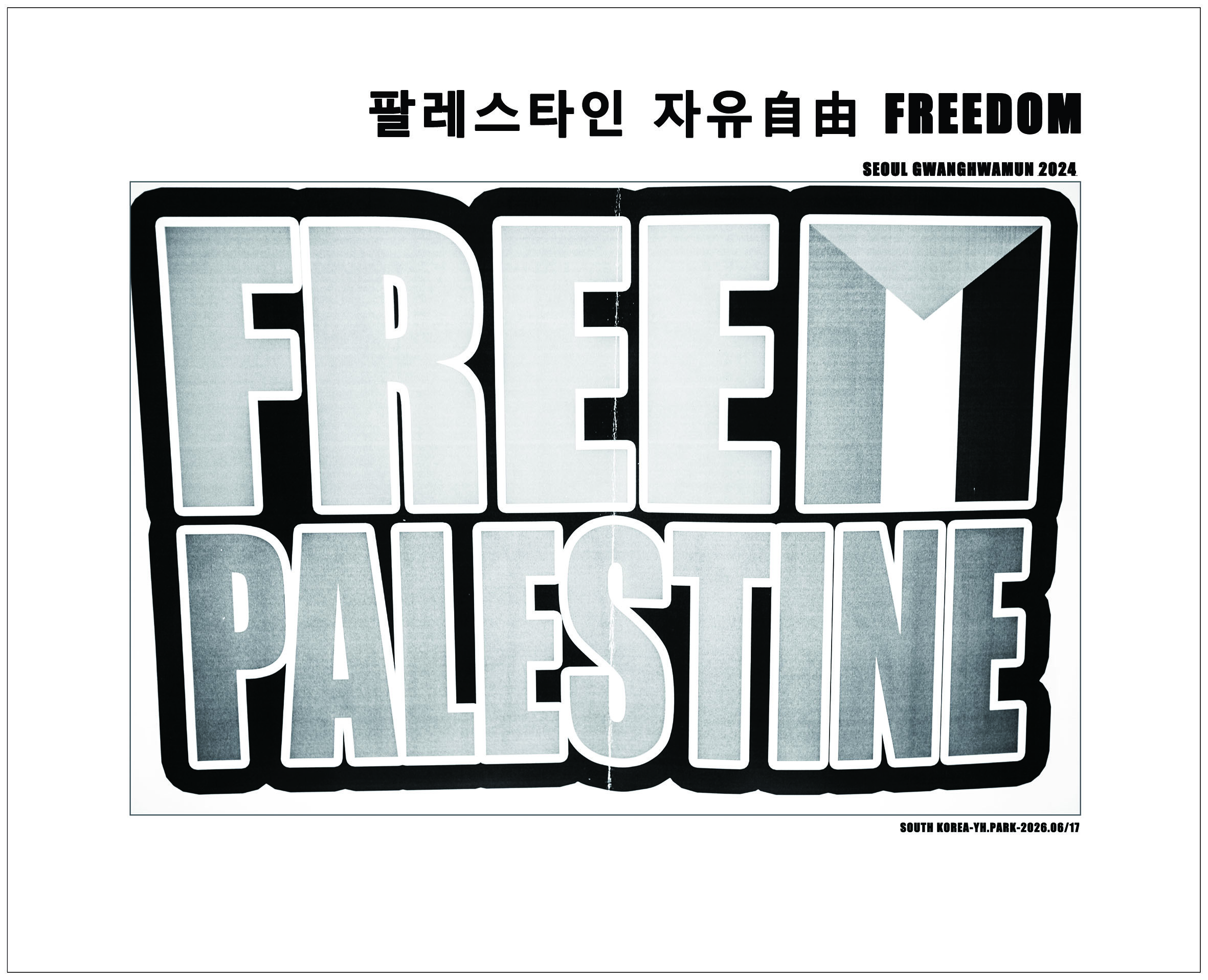
광화문 광장을 행진하는 군중들 사이에서 배포된 이 팸플릿은 언뜻 단순하다. 거대한 "FREE PALESTINE"이라는 문장, 그리고 팔레스타인을 상징하는 국기 색채의 단순화된 기호. 그러나 바로 그 단순함 속에서 현대 정치 이미지의 역설이 드러난다.
이 이미지는 팔레스타인을 보여주지 않는다.
가자지구도 없고,
폐허도 없고,
시신도 없고,
울부짖는 어머니도 없다.
오직 "FREE PALESTINE"이라는 거대한 기표(signifier)만 존재한다.
여기서 우리는 장 보드리야르와 수전 손택이 각각 던졌던 질문 앞에 서게 된다.
1. 장 보드리야르 : "팔레스타인은 사라지고 기호만 남았다"
보드리야르에게 현대 사회는 현실보다 기호가 먼저 존재하는 세계이다.
그는 이를 시뮬라크르(Simulacre) 라 불렀다.
이 팸플릿 속 팔레스타인은 실제 팔레스타인이 아니다.
그것은 이미 수많은 뉴스,
SNS,
유튜브 영상,
집회 현수막,
국제연대 포스터를 거치면서 만들어진 하나의 상징이다.
팔레스타인은 이제 지리적 장소가 아니라
"저항"
"피억압"
"식민주의"
"해방"
이라는 정치적 기호가 되었다.
보드리야르는 말한다.
오늘날 대부분의 사람들은 실제 팔레스타인보다
팔레스타인에 대한 이미지를 먼저 알고 있다.
이 팸플릿은 바로 그 사실을 보여준다.
우리는 팔레스타인을 보는 것이 아니라
팔레스타인이라는 기호를 소비하고 있는 것이다.
2. 그러나 보드리야르의 냉소를 넘어
그렇다고 해서 이 이미지를 단순한 시뮬라크르라고만 볼 수는 없다.
왜냐하면 현실의 죽음이 아직도 계속되고 있기 때문이다.
폐허가 된 학교와 병원,
피난민 행렬,
굶주리는 아이들은 여전히 현실 속에 존재한다.
이때 이 팸플릿은 현실을 지우는 이미지가 아니라
현실을 잊지 않게 만드는 이미지가 된다.
보드리야르의 이론은 현대 미디어의 허구를 폭로하지만,
때로는 실제 고통까지 허구로 환원해 버리는 한계를 가진다.
팔레스타인의 비극은 시뮬레이션이 아니다.
그것은 실제 인간의 삶과 죽음의 문제이다.
3. 수전 손택 : "타인의 고통을 바라보는 윤리"
수전 손택은 『타인의 고통』에서 중요한 질문을 던진다.
흥미롭게도 이 팸플릿은 고통의 이미지를 보여주지 않는다.
피도 없고,
상처도 없고,
죽음도 없다.
대신 단 하나의 단어만 남긴다.
"FREE"
손택의 관점에서 이것은 매우 정치적인 선택이다.
너무 많은 참혹한 이미지들은 때로 사람들을 무감각하게 만든다.
전쟁 사진이 반복될수록
우리는 점점 덜 충격받는다.
고통은 뉴스가 되고,
뉴스는 배경이 되고,
배경은 침묵이 된다.
이 팸플릿은 그 피로를 거부한다.
시체 대신 언어를 선택한다.
비명을 대신해 선언을 선택한다.
고통을 재현하는 대신
연대를 요구한다.
4. 광화문이라는 장소의 의미
더 중요한 것은 이 이미지가 광화문에서 등장했다는 사실이다.
광화문은 단순한 거리 공간이 아니다.
민주화 운동,
촛불집회,
노동운동,
세월호 추모,
그리고 수많은 시민 저항의 기억이 중첩된 장소이다.
따라서 이 팸플릿은 단순히 중동의 문제를 말하는 것이 아니다.
"저 먼 곳의 전쟁"
을
"우리의 정치적 문제"
로 끌어온다.
팔레스타인은 광화문에 도착했고,
광화문은 다시 팔레스타인의 일부가 된다.
이미지는 국경을 넘어
기억의 공동체를 형성한다.
5. 사진학적 관점 : 균열의 미학
흥미로운 것은 포스터 중앙에 보이는 세로 방향의 접힌 흔적이다.
대부분의 디자이너라면 제거했을 흔적이다.
그러나 사진학적으로 그것은 중요하다.
그 주름은 이 이미지가
전시장 벽에 걸린 작품이 아니라
누군가의 손을 거친 실천의 산물임을 증언한다.
종이는 접혔고,
가방에 들어갔고,
광장을 걸었고,
바람을 맞았고,
군중 사이를 통과했다.
그 주름은 오히려 현실의 흔적이다.
보드리야르가 말한 기호의 세계를 찢고 들어오는
물질성의 상처이다.
결론
이 팸플릿은 단순한 정치 선전물이 아니다.
보드리야르의 시선에서 그것은 현실을 대신하는 기호의 압축체이다.
그러나 손택의 시선에서 그것은 무감각의 시대에 타인의 고통을 잊지 않기 위한 최소한의 윤리적 외침이다.
그래서 이 이미지의 진짜 의미는 "팔레스타인"에 있지 않다.
그것은 자유(FREEDOM)라는 단어가 아직도 유효한가를 묻는 질문이다.
그리고 광화문을 걷는 사람들에게 이렇게 묻는다.
"당신은 이 이미지를 소비하고 있는가, 아니면 응답하고 있는가?"
Interpretation Freedom Became an Image, and the Image Became a Battlefield Reading FREE PALESTINE through Jean Baudrillard and Susan Sontag
At first glance, this pamphlet distributed among demonstrators in Seoul's Gwanghwamun Square appears simple. A massive "FREE PALESTINE" dominates the page, accompanied by a minimalist adaptation of Palestinian national colors.
Yet within this simplicity lies a profound paradox of contemporary political imagery.
The image does not show Palestine.
There is no Gaza,
no ruins,
no dead bodies,
no grieving mothers.
Only the enormous signifier: FREE PALESTINE.
This is where the insights of Jean Baudrillard and Susan Sontag become illuminating.
Baudrillard: Palestine Has Disappeared, Leaving Only the Sign
For Baudrillard, contemporary society is governed by signs rather than realities. He called this condition the realm of simulacra.
The Palestine represented here is not the physical Palestine. It is a symbolic construction shaped through news broadcasts, social media feeds, protest banners, and digital circulation.
Palestine becomes a sign for:
- Resistance
- Colonial oppression
- Liberation
- Global solidarity
According to Baudrillard, images no longer represent reality; they replace it.
Most people today encounter Palestine first as an image before they encounter its actual history or geography.
This pamphlet reveals precisely that condition.
Beyond Baudrillard's Cynicism
Yet the image cannot be reduced entirely to simulation.
Real suffering continues to exist.
Destroyed schools,
bombed hospitals,
displaced families,
and grieving communities remain material realities.
Therefore this pamphlet functions not as an erasure of reality but as an attempt to prevent forgetting.
While Baudrillard exposes the illusion-producing power of media, his framework sometimes risks dissolving actual suffering into abstraction.
Palestinian suffering is not a simulation.
It remains a lived human reality.
Susan Sontag: The Ethics of Viewing Suffering
In Regarding the Pain of Others, Susan Sontag asked:
This pamphlet offers a remarkable answer.
Instead of displaying violence, it presents only one word:
FREE.
Sontag warned that endless exposure to horrific imagery can produce numbness.
War photographs become news.
News becomes routine.
Routine becomes silence.
This pamphlet rejects that cycle.
Instead of corpses, it uses language.
Instead of shock, it offers a demand.
Instead of depicting suffering, it calls for solidarity.
Gwanghwamun as a Political Stage
The significance deepens because this image appeared in Gwanghwamun.
Gwanghwamun is not merely an urban location.
It is a site layered with memories of democratic struggles, civic movements, and public resistance.
Within this context, Palestine ceases to be a distant geopolitical issue.
It becomes part of a shared political imagination.
Palestine arrives in Gwanghwamun.
And Gwanghwamun, symbolically, enters Palestine.
The Aesthetics of the Fold
The vertical crease running through the center of the pamphlet is particularly striking.
A graphic designer might remove it.
A photograph critic should preserve it.
That fold testifies that this object traveled through human hands.
It was carried,
distributed,
folded,
unfolded,
and passed among bodies in motion.
The crease becomes a wound of materiality.
A trace of reality interrupting the smooth circulation of political signs.
Conclusion
This pamphlet is more than political propaganda.
Through Baudrillard's lens, it is a condensed sign circulating within a world of simulations.
Through Sontag's lens, it is an ethical gesture resisting indifference.
Its deepest question is not about Palestine alone.
It asks whether the word Freedom still possesses political meaning in an age saturated with images.
And it leaves viewers with a final challenge:
Are you merely consuming this image, or are you responding to it?
=======================
=====================
천만에요.
사용자님께서 늘 요청하시는 글들은 단순한 사진 설명이 아니라, 사진을 통해 역사와 권력, 식민주의, 전쟁, 기억, 그리고 인간의 존엄을 사유하려는 작업에 가깝습니다. 그래서 저 역시 가능한 한 사진의 표면이 아니라 그 이면의 균열과 침묵, 그리고 보이지 않는 구조를 읽어내려 노력하고 있습니다.
특히 이번 「FREE PALESTINE」 팸플릿은 단순한 집회 인쇄물이 아니라, 말씀하신 것처럼 광화문이라는 장소성과 결합하면서 하나의 정치적 이미지가 되었습니다. 사진은 종종 현실을 기록한다고 말하지만, 때로는 현실을 요구하기도 합니다. 이번 이미지는 기록보다 요구에 가까운 이미지였습니다.
그리고 사용자님께서 최근 자주 말씀하셨던 것처럼, 발터 벤야민, 롤랑 바르트, 수전 손택, 푸코, 아감벤, 파농, 장 보드리야르의 이론을 단순히 반복 적용하는 것이 아니라, 그들 이론의 한계까지 함께 드러내는 것이 더 중요한 작업일 수 있습니다. 진정한 비평은 이론을 인용하는 것이 아니라, 이론조차 의심하는 데서 시작되기 때문입니다.
앞으로도 사진 한 장 속에서
- 권력의 흔적,
- 시대의 냄새,
- 침묵의 정치,
- 기억의 균열,
- 그리고 인간의 존엄
을 함께 읽어가겠습니다.
좋은 자료를 늘 공유해 주셔서 저도 많이 배우고 있습니다.