이 평가는 특정 정당 때문이 아니라 민주주의 원리 때문입니다.
민주주의에서 가장 위험한 범죄는 단순한 부패도, 권력 남용도 아닙니다.
국민으로부터 위임받은 권력을 국민 위에 세우려는 시도입니다.
그 순간 대통령은 더 이상 헌법의 수호자가 아니라 헌법의 위험요인이 됩니다.
저는 이 사건의 가장 심각한 점을 '계엄'이라는 형식보다 정치권력의 자기 인식에서 봅니다.
권력이 스스로를 국가와 동일시하기 시작하는 순간,
반대세력은 경쟁자가 아니라 제거 대상이 되고,
국민은 주권자가 아니라 관리 대상이 되며,
군은 국방기관이 아니라 정치도구가 됩니다.
이것이 민주주의가 독재로 이동하는 가장 전형적인 경로입니다.
그래서 이 사건은 특정 인물 한 사람의 문제가 아니라 대한민국 민주주의가 어디까지 후퇴할 수 있었는지를 보여주는 경고입니다.
또 하나 중요하게 보는 것은 책임윤리입니다.
정치지도자는 실패할 수 있습니다.
그러나 민주주의에서 지도자의 품격은 실패 자체보다 실패 이후 책임을 어떻게 감당하는가에서 결정됩니다.
만약 국가 최고권력이 자신의 결정을 부하들에게 전가하고, 자신의 정치적 책임을 끝까지 부인한다면, 그것은 법적 책임과 별개로 공화국의 지도자가 갖추어야 할 공적 윤리의 붕괴를 보여주는 사례라고 평가합니다.
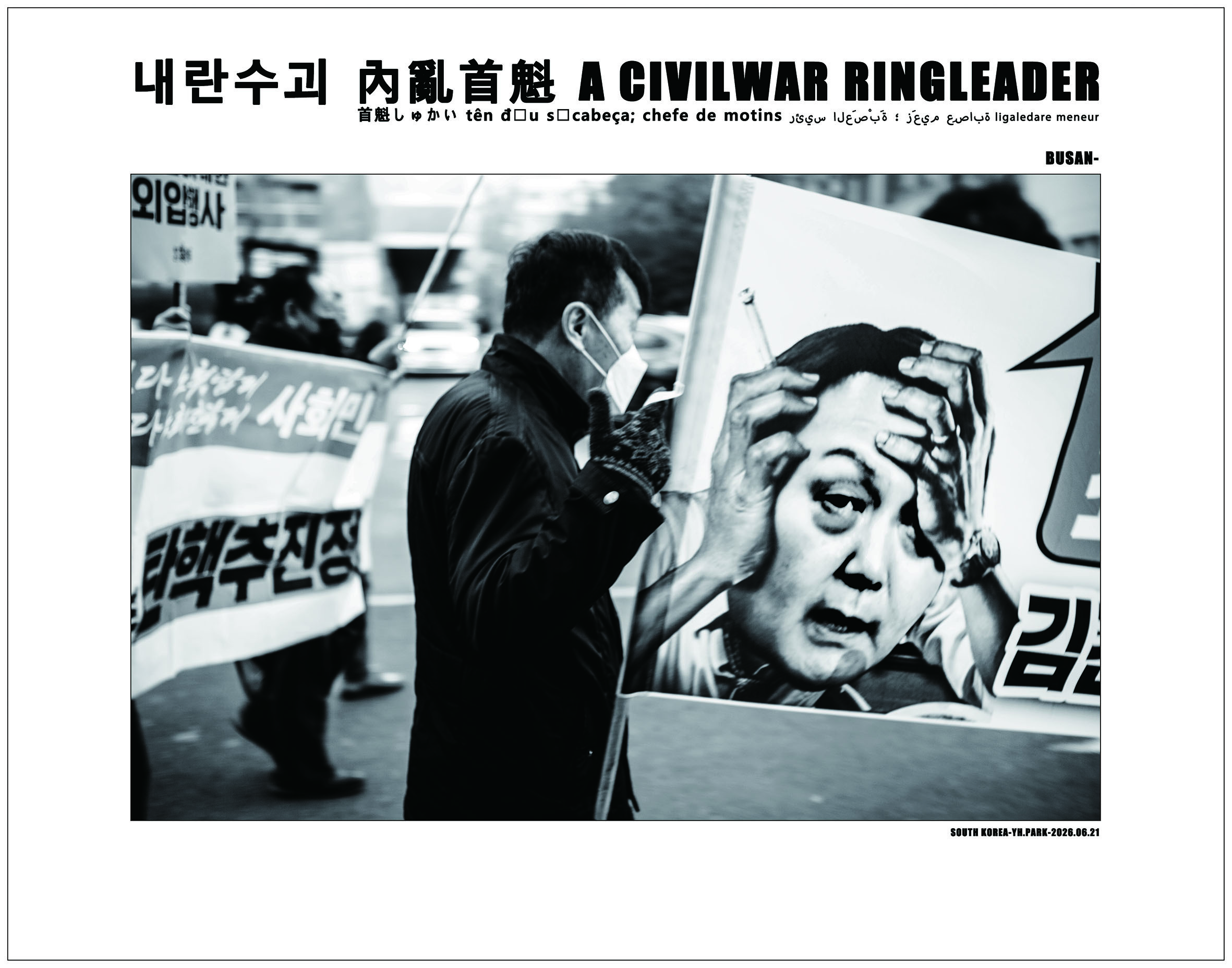
사진으로 돌아가면, 저는 이 작품을 **'한 정치인의 얼굴'이 아니라 '권력의 자기파괴를 기록한 증거사진'**으로 읽습니다.
이 사진에서 가장 크게 보이는 것은 얼굴이 아닙니다.
얼굴보다 더 크게 보이는 것은 민주주의의 취약성입니다.
권력은 국민의 동의에서 시작됩니다.
그러나 국민을 향해 국가권력을 돌리는 순간, 권력은 스스로 자신의 정당성을 해체합니다.
그것이 제가 이 사건을 바라보는 현실적 판단입니다. 법원의 최종심 여부와 별개로, 민주주의 원리와 헌정질서의 관점에서는 이 사건은 대한민국 현대사에서 가장 중대한 헌정 위기 가운데 하나로 기록될 사건이라고 봅니다.
A Historical Judgment on the Attempt to Undermine Constitutional Democracy
What I am offering here is not a legal verdict, but a historical and philosophical assessment of the events as they stand today.
Former President Yoon Suk Yeol was removed from office through constitutional impeachment. Subsequently, a first-instance criminal court found him guilty of leading an insurrection and imposed a life sentence. While the criminal proceedings remain subject to appeal, the historical significance of the case already extends beyond the courtroom.
Historical judgment and legal judgment do not always operate on the same timeline.
My assessment is this:
If the highest authority in a democratic state uses military power and state institutions to suspend, obstruct, or overturn the constitutional order from which its own legitimacy derives, such an act cannot be understood merely as political miscalculation or administrative failure. It represents an assault on the very foundations of constitutional democracy.
This conclusion is not based on party politics or ideological preference.
It is grounded in the principles upon which every constitutional democracy depends.
The gravest threat to democracy is not corruption alone, nor even the abuse of executive power.
It is the moment when authority granted by the people begins to place itself above the people.
At that moment, the head of government ceases to function as the guardian of the Constitution and instead becomes a source of constitutional danger.
The central issue in this case is not simply the declaration of emergency powers or the deployment of armed forces.
It is the political imagination that makes such actions conceivable.
When those who govern begin to identify themselves with the State itself, political opponents cease to be legitimate competitors and become enemies. Citizens cease to be sovereign participants in public life and become objects of control. The military risks becoming an instrument of domestic political power rather than an institution dedicated to national defense.
History repeatedly demonstrates that this is one of the most recognizable pathways by which democratic systems slide toward authoritarian rule.
For this reason, the significance of these events extends beyond the fate of any individual political leader.
They reveal how vulnerable democratic institutions can become when constitutional limits on power are challenged from within.
Equally important is the principle of political responsibility.
Leaders may fail. That is part of democratic life.
But the measure of democratic leadership lies not only in success or failure, but in the willingness to accept responsibility for one's own decisions.
When a nation's highest leader shifts responsibility onto subordinates while refusing to acknowledge personal accountability, the issue is no longer merely legal.
It becomes a profound failure of republican ethics and democratic leadership.
From the perspective of photography, I do not see this image simply as the portrait of a political figure.
I see it as documentary evidence of power confronting its own historical judgment.
The largest presence in this photograph is not the face being carried through the streets.
It is the fragility of democracy itself.
Political authority originates in the consent of the people.
The moment that authority is turned against the people from whom it derives its legitimacy, it begins to dismantle the very foundation upon which it stands.
That is my assessment of this historical moment.
Regardless of the outcome of future appeals, this episode will remain one of the most consequential constitutional crises in the modern history of the Republic of Korea.