www.dailymotion.com/.../xsb6rb_football-and-fascism...
2012. 7. 21.
Shows, movies, and trailers from Hulu, The WB, Fox, HBO and more. Catch some of the hottest shows shortly ...
Tags: football | world cup 2010
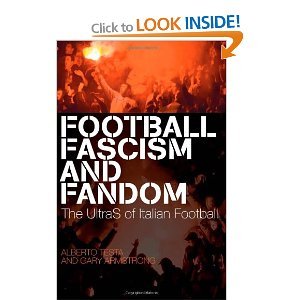
Several people have asked about fascism and football. The key figure here was Mussolini, who saw soccer as a key tool for creating national unity and international prestige. He created the Serie A as the first national league in 1929 and, once the World Cup had been launched in 1930, he made Fifa an offer it couldn’t refuse to hold the 1934 Cup in Italy. It was, of course, essential that Italy should win (they had already won the first European Cup), so Mussolini himself invited a favoured Swedish referee to run the semi-final between Italy and Austria, in which the Italians were allowed to barge the Austrian goalkeeper into his net from three metres out. The ref duly gave a goal. Mussolini naturally selected the same ref for the final, Italy v. Czechoslovakia, and the ref again failed to notice a rather prominent Italian handball, so Italy won.
Mussolini had already emphasised to Hitler the political uses of sport. This did not come naturally to Hitler, who, arriving in Munich as a pasty-faced youth, had been recommended to take up soccer for his health. He declined on the grounds that he didn’t like sports in which one might lose. Nonetheless, he got the point, not only attracting the Olympics to Berlin but supporting the German team which came third at the 1934 World Cup. However, somewhat disappointed by some of the athletics results at the Berlin Olympics (Jesse Owens etc), Hitler was told by his staff to go and watch the German soccer team annihilate Norway. He went along, Norway triumphed and Hitler never went to another soccer game in his life. But, of course, Germany came top of the medals table in 1936 – especially the medals tables run by the German press, for they refused to count any medals won by Untermenschen (Jews or blacks) and simply ‘awarded’ the medal to the next-best Aryan (this helped a lot with the Jesse Owens problem). And Italy won the World Cup again in 1938, completing a golden era for Fascist sport. Hitler was in negotiation with Fifa to stage the 1942 World Cup when war broke out.
The British, of course, were generally seen – certainly by themselves – as the kings of soccer but they had made it easy for the Fascists by withdrawing all British teams from Fifa in 1920, partly so as to avoid having to play countries who had recently been enemies in war, but also as a protest against the encroachment of foreign influence over the British game of soccer. They didn’t rejoin till 1946, and as late as 1953 the English FA were still organising games of England v. Rest of Europe. Nonetheless, it has to be said that Mussolini’s all-conquering Italian team repeatedly played England and repeatedly lost.
General Franco also got the message from Mussolini. He knew that Catalonia was the heart of Republican resistance and that Barcelona FC was the heart of Catalonia. Accordingly, within a month of the start of the civil war fascist troops assassinated the chairman of Barcelona, Joseph Garriga, and in 1938 fascist planes bombed Barcelona FC’s social club. Once he won, Franco banned the Catalan flag and language, forcing Barcelona FC to change its name and remove the flag from its shield. Even so, Barcelona stadium was one of the few places in Spain where people freely spoke Catalan. Franco did all he could to build up Real Madrid as a Catholic, conservative rival and personally intervened in the transfer market to ensure that the great Alfredo di Stéfano signed for Real. As Franco aged, his power waned, a key sign being in 1974 when Barcelona took back its old name and signed Johan Cruyff, who publicly said that he could have gone to Real but would never go to a club associated with Franco.
Lazio S.S. of Rome are the only remaining throwback to that era. They were Mussolini’s own team and still play in the stadium he built for them. They try not to sign black players and their supporters are famous for their racism and anti-semitism. One of their players, Paolo di Canio, had Fascist emblems tattooed on himself and gave the Fascist salute whenever he scored. Happily those days are gone. It’s bad enough that so much money rests on who wins and loses but fascist regimes also had to win for political reasons. In 1938 Mussolini sent a telegram to the Italian World Cup team saying: ‘Win or die!’ This was actually a standard Fascist slogan but when the Hungarians lost 4-2 to Italy in the final it gave the Hungarian goalkeeper, Antal Szabo, an excuse which other keepers can only envy. ‘I may have let in four goals,’ he said, ‘but I saved their lives.’
http://www.lrb.co.uk/blog/2010/07/11/hsfbilliafrica-com/football-and-fascism/
Football, fascism and the British
Sunder Katwala 4 April 2013
Subjects:
• Italy
• UK
Sunderland manager Di Canio has apparently finally distanced himself from fascism. What can we learn from the furore, about power and sport, politics and the personal, and the UK's relationship to fascist ideology?
Sunderland could hardly have mishandled the surprise appointment of Paolo Di Canio as their manager more catastrophically, seemingly not at all anticipating the storm which would result from appointing a man who had given fascist salutes on the pitch in Rome and spoken of himself as a “fascist, not a racist”. Despite being appointed to lead the city’s most important civic institution, Di Canio was stubbornly unwilling to utter the words “I am not a fascist” in a fractious press conference on Tuesday morning, before finally succumbing to the need to reject fascism as well as racism yesterday. The club’s initial statement had been evasive nonsense. The claim that it was “insulting to the integrity of this football club” to question whether the player had “fascist sympathies” insulted the intelligence of reasonable critics, who rightly feel that pictures of fascist salutes and the personal statement “I am a fascist, not a racist” would seem to rather place the burden of proof on the club and new manager on the issue of “fascist sympathies”.
The co-author of Di Canio’s biography and his friend, the leading Italian sports journalist Gabriele Marcotti, told me in a twitter conversation on Monday night on this subject that:
“Its something he said eight years ago in a different country in a different context with a different meaning. I’d agree it would be easier and more convenient to repudiate it. But he’s not going to repudiate what he believes, which is how he sees it … I agree it’s a risk. But he’s a stubborn guy on certain issues. And one he’s willing to take”.
That proved untenable. The second attempt at a statement, yesterday, did finally repudiate fascism as well as racism, with Di Canio saying: "I am not political, I do not affiliate myself to any organisation, I am not a racist and I do not support the ideology of fascism. I respect everyone."
This was welcomed by the Durham Miners and the Dean of Durham, Michael Sadgrove, a Sunderland supporter and the son of a Jewish war refugee, who had written a pained and constructive open letter to the club, pointing to the necessity of Di Canio renouncing fascism.
Should Di Canio’s views about fascism matter to his fitness to manage a Premiership football club? Three main objections have been made: that sport should never be mixed with politics; that, if the issue was not raised as loudly earlier in his time in British football, it is hypocritical to make it an issue now he is at Sunderland; that personal beliefs are irrelevant to the ability to do this job anyway. Each of these arguments is worth considering, but is flawed.
The cultural and economic power of sport means that sport and politics always, inevitably, do mix. Franco’s Foreign Minister Fernando Maria Castiella called Real Madrid “the best Embassy we ever had”. Sport has been targeted as a forum for political extremism – and has done much to counter it too. In Britain, football was the most important public space in which a strong social consensus on an anti-racist norm was forged over the last thirty years. This issue was both contested – with some intense arguments around the national team, and at particular clubs including Chelsea, Leeds and my own team Everton – and then resolved. As a result, overt public racism, at the very least, is taboo in Britain, as it was not a generation ago (and rather more so than it is in southern Europe, where the same goal remains more a work in progress). These arguments played some role in protecting Britain from an extremist political breakthrough. The National Front’s best ever Parliamentary performance in the West Bromwich West seat in the 1973 by-election, next to Smethwick, site of a notoriously racist campaign in 1964. Nothing else did quite so much as West Bromwich Albion’s pioneering black trio of players – the electrifying ‘Three Degrees’ of Laurie Cunningham, Remi Moses and Cyrille Regis – to transform local attitudes to race as the ‘seventies ended.
The question “why now?” over the Di Canio row raises a reasonable point, but not a decisive one. A centre-forward is not at all the same type of club ambassador as a football manager. Sunderland is not Swindon Town. There were protests in Swindon – including the withdrawal of the GMB as a club sponsor, and a boycott by some supporters - but the level of media interest is always different for a Premiership club. The politics of the north-east are different to those of Swindon. The Sunderland ground is called the “Stadium of Light” to evoke pride in a labour tradition which is clear about its incompatibility with fascism, symbolised in the request from the Durham Miners Association to remove the symbolic Wearmouth Miners’ banner from the club. The coincidence of a former Foreign Secretary on the club board also raised the profile. David Miliband’s decision to resign over Di Canio’s “past political statements” is perfectly understandable. His own parents fled to Britain as Jewish refugees from fascism, while Mussolini’s earlier responsibility for the imprisonment and murder of socialist and trade union leaders could have offered Miliband another reason to be unable to work with a man who has given the public impression of venerating the Duce. The amateurish response suggests each of these developments took the club by surprise.
Should personal political views be private? Almost nobody takes an absolutist version of this position. It was Di Canio who made fascist salutes inside a football stadium. And few of those who argue that Di Canio’s politics shouldn’t matter would still defend him if he had said “I am a fascist and a racist”. A football manager needs to be able to treat players equally, and to be trusted to do so. He needs to be able to act as an ambassador for a club committed to anti-racism. So a racist can not manage an English Premiership club, as Di Canio and his supporters would appear to acknowledge.
The question is not, then, whether all personal political views are irrelevant – if there is broad agreement that expressing actively racist views could not be tenable – but of where to draw the line. If racism is out, could fascism still be in? The Sunderland statement suggested not, but then failed to substantiate the claim that this condition has been met.
There does appear to me to be a good deal on the public record to substantiate Di Canio’s defence that he is not a racist. He has reportedly taken a full part in anti-racist activities in England, when with Charlton Athletic and West Ham, and in his Italian football columns. (He faced one allegation at Swindon, and was cleared, though the club also apologised to the player slighted). In his biography, published in 2000 (and so unlikely to have been influenced by what would be politic in taking a management role in England) the views which Di Canio articulates about race and integration in Britain fit within the mainstream liberal integration consensus: that a successful multi-ethnic society depends on a shared identity and integration, and that the rejection of racism being an important foundation which makes that possible.
“Both Italy and Britain are multicultural countries, with immigrants from all over the globe. In many parts of London, there are more blacks and Asians than whites. Yet those blacks and Asians feel British. They have integrated into this country, they are as English, Scottish or Welsh as the next guy, without giving up their own culture”, he writes.
Di Canio is more worried about Italy – seeing too little effort by either immigrants or “to be fair”, by Italians either to try to make integration work. This leads him to express the somewhat lurid fear that “If we’re not careful, in ten years time, Italy could be a Muslim country” – something which was not in evidence, over a decade later, as the new Pope was invested. These are, again, fairly mainstream anxieties across the culturally conservative mainstream right, particularly in continental Europe, but within Britain too.
*** So, should a non-racist with some fascination for fascism have been allowed to get on with it?
“I am a fascist, not a racist” does not translate into English, except in more rarified academic debates. And there are important reasons why we should maintain that incomprehension.
“No fascism, please, we’re British” is an increasingly important part of the shared identity of a multi-ethnic Britain.
Of course, there is some element of mythology in this. Appeasement was rather more popular in the 1930s than is now remembered, and Churchill rather less so. But the shared commitment to anti-fascism is one of the important aspects of the glue which helps to bridge old and new Britain, as increasingly inclusive commemorations of Remembrance over recent years capture. Sunderland is no hub for immigration. It was one of those few places where the population fell over the last decade, down by just over 3% from 2001. Sunderland remains 93% white British, only a shade over the north-east average of 92.4%. Yet the strength of its commitment to anti-fascism offers a significant point of connection between the labour traditions of the region – encompassing their internationalist commitment to the anti-fascists of the Spanish civil war as well as to the national effort in the second world war itself – to the idea of Britain as a place of inclusive pride which was on show during London 2012.
Tuesday’s media coverage also spoke to the breadth of the British consensus on the illegitimacy of fascism. The Daily Star and Sun front-pages shows how anti-racism has moved from “political correctness” to “tabloid common sense” in Britain The Daily Mail ran a rather old Labour headline ‘Proud Sunderland fans never dreamt they’d see a ‘fascist’ on Keir Hardie way’ on Michael Walker’s balanced report on the controversy. As The Sun’s level-headed editorial put it: “Di Canio’s notorious straight-arm salute to extremist Lazio fans was vile and his politics are repugnant to most in a nation which fought a World War against fascism. The Italian firebrand is no racist, but a minority of idiots in football crowds, and a majority among fascists like the English Defence League, need no extra encouragement to sow hatred and division”.
It is true that Italian politics are rather different. The Federal Republic of Germany has very fully come to terms with the holocaust and its Nazi period, but the situation in Italy, like Austria, Greece and Spain, is considerably more complex. The attempts to rehabilitate ‘good fascism’ from ‘bad fascism’, are often about trading the status of co-perpetrators to early victims of Hitler’s Nazism. Di Canio’s past expressions suggest a good deal of sympathy with that strand of Italian thought which sees Benito Mussolini as a good patriot, led astray by the extremism of Adolf Hitler, though he has also criticised Mussolini too.
Of course, Mussolini’s regime, though a less totalitarian form of fascist authoritarianism than Nazism, was racist as well as fascist, if more strongly motivated by invoking the imperial glories of the Holy Roman Empire through the one-sided conquest of Abyssinia than in the genocidal anti-semitism which motivated Hitler. The politics of the post-fascist Italian right are complex – and this is a more mainstream debate there. But that does not require us to, in effect, now rehabilitate fascism in our public culture here too.
My elder sister married an Italian in the mid-1990s. Though his English was a bit shaky at first (though much superior to my lack of Italan), I did establish that his sympathies were to the political right, though in his case most closely with the populist separatists of the Lega Nord. So Enrico was quite happy marrying a half-Asian girl from Essex in England, yet it was generally safer to steer clear of talking about politics or, especially, the virtues or vices of Naples. Fortunately, there was football. He was the kind of fanatical supporter who can reassure me that my own sporting obsessions remain, in relative terms, healthily in perspective. He once embarked on a touching pilgrimage to Nottingham, simply to get a photograph with a road sign while wearing the famous black and white striped top which Juventus first borrowed from Notts County more than a century before. Even sticking to football didn’t always work out: my admiration for the Dutch-influenced AC Milan came up against the intensely-held irrationality with which even a Juventus supporter could hold the conspiracy theory that other clubs, especially Milan, had bought the referees. (My sister and he had split up by the time Juventus were finally relegated for match-fixing).
Di Canio has become the manager of Sunderland, not Lazio. There is little point complaining about what has been lost in translation, even if something probably has been, if it remained a point of personal honour that he should not publicly repudiate fascism.
This age of English football is very much open to foreign players and managers. There are some basic foundations for success. Understand and love the English game – as Arsene Wenger and Jose Mourinho clearly do (and former England boss Fabio Capello didn’t ever seem to). Speak the language. (Another Capello failure). Di Canio is well placed in these respects; he was a sublime player, much loved at West Ham for both his commitment and skill. He was responsible, at Goodison Park, for the most surprising act of gallant fair play that any of us can remember, stopping play, rather than scoring a goal against a prostrate and injured goalkeeper.
“Don’t be a fascist” has a reasonable claim to be a basic requirement of fair play in English football and society too. Finally recognising that can be seen as a foundational part of respecting the host culture of the club that he ought to be proud to manage, though Di Canio’s sense of grievance about being asked the question have fallen shot of understanding why, in Sunderland, as across Britain, people’s sense of pride in the defeat of fascism means that they would find those pictures of their new manager saluting Lazio’s fans offensive.
So Sunderland became famous this week not for the old glories of 1973 – when they won perhaps the greatest of all Wembley FA Cup finals – but for being the club with the pro-fascist manager. Di Canio may now have just about done enough to try to get on with the job. But football fans are nothing if not superstitious as we head for the season’s final furlongs of April and May. What Sunderland fan will not fear that the vengeance of the fearsome football Gods may have marked the club down for relegation at season’s end?
http://www.opendemocracy.net/ourkingdom/sunder-katwala/football-fascism-and-british-0
Paulo di Canio: the faith and fascism of football
From Brother Ivo:
Football is, as Jimmy Greaves used to say is 'a funny old game'.
Never was this better illustrated than this week when David Miliband resigned his recently-acquired £75k pa non-executive directorship of Sunderland Football club on hearing of the appointment of Paolo Di Canio as their new manager.
That decision has attracted huge publicity and comment. Some approve his 'principled stand' against Mr Di Canio’s apparent fascist politics, though it has to be said many of those would now be crying 'McCarthyism' if his politics had been of the left. Others, like
Paul Goodman of ConservativeHome, used the occasion to revisit the debate 'Is Fascism of the Left or the Right?', whilst
Iain Dale pointed out that nobody took much notice when Mr Di Canio plied his trade in the lower ranks of football at Swindon Town.
Brother Ivo doubts this controversy will end soon, however, for there are rich layers of contrast and irony and he predicts that such a story will continue to attract comment for some time.
Yesterday it was revealed that the BBC, which has run enthusiastically with this story, was not unduly troubled by the politics when they signed Mr Di Canio as a monthly pundit for its own
website, where they were happy to describe him as 'one of football's most controversial and colourful characters'.
This is plainly a target-rich environment, and as we appear to have have a national obsession for both the game and the cultural politics of left/right, no doubt
Question Time and
Any Questions will keep the story alive.
Brother Ivo’s own two pennyworth might as well be added here.
Nobody is unduly troubled that Sir Alex Ferguson played for Glasgow Rangers Football Club when it refused to sign Roman Catholic players, or that former defence secretary John Reid is now Chairman of Celtic, whose repertoire of terrace songs and chants periodically praises the IRA. In fairness, the club does disapprove but seemingly cannot extricate itself from its historical roots.
Rather more interesting is Brother Ivo’s realisation that football fans (usually men) will desert their spouses, abandon their children, change their religion, betray their country and even alter their sex; it is, however, extraordinarily rare for such a fan to cross the rubicon and support a bitter rival, whether that be Spurs/Arsenal, Manchester United/Liverpool, or Lazio/Roma.
He understands that it will be a major news story when a Lazio-supporting priest is appointed to work at the Vatican, where AS Roma is the team of choice.
Such is the obsession of fans, that when US fast-food franchise TGI Friday first opened in Newcastle, it was troubled to find that it was attracting few clients, until locals pointed out that their staff were wearing the hated red and white stripes of Sunderland. It is the only such outlet in the world whose staff wear black shirts, which is perhaps rather ironic in the circumstances.
What is this all telling us? It was the late Bill Shankley who said: “Some people say football is a matter of life and death - but it's much more serious than that.”
There is perhaps a hidden truth in this: the game's adopted language and metaphors are those of religion.
Football has its saints, sinners, scapegoats and martyrs. It has its quasi-liturgical year, but when disaster strikes in the form of relegation or elimination, its adherents speak to one another of renewal and resurrection. Disaster attracts the building of makeshift shrines with votive offerings.
Fans encourage each other to keep the faith - and they do.
The late Danny Blanchflower observed that 'It’s not about winning - its about glory'.
An equalising goal can be transformative; a new manager is hailed as a messiah; a crafty opposition striker can be castigated as the Devil incarnate, until such time as he signs for the team, at which point he is welcomed as a repentant sinner.
It also serves as a social glue.
Dr Samuel Johnson once said that he encouraged his dinner guests to 'talk bawdy', for on that subject all men could discourse on an equal footing. Modern society is not averse to salacious talk, but soccer talk especially crosses boundaries of class, race, religion, politics, and even gender.
When the BBC offers six and even seven-figure contracts to its pundits, it is not to provide certainty but to identify talking points. With replays and the internet, each of us may have his or her own opinion and share it. Controversies can be prolonged for days in a way that old print journalism never could. Once, a reporter could record that there was a debatable decision; now it can be instantly replayed and then slowed, digitally examined with computer-generated graphics, and reviewed from virtual camera angles.
The football culture is removed from, but related to, our religious world view. This is both dispiriting and yet strangely encouraging. It may not quite be the subject for a sermon on Intelligent Design, but it does suggest that human beings are hard-wired for hope, transformation and triumph over adversity, however unlikely in many parts of the footballing and non-footballing universe.
These cultural inclinations are not limited to football. In Constantinople, the Charioteer rivalry between the Blues and the Greens was fierce and at times murderously violent. We can see a similar rivalry in the
Siennese Palio. One may even find it in the rivalry between the great Opera Houses, where a similar religious language of triumph, character, tragedy or resolution is to be found.
In many forms, mankind is seeking to assuage a thirst for meaning and to receive the satisfaction of his ill-defined longing; the need to belong and a deep desire to feel accepted as part of a worthwhile endeavour.
Those of us proritising a true religion rather than a dim reflection need to learn how to work with that grain of humanity, which is perhaps why God sent us a carpenter to show us how it may be done.
(Posted by Brother Ivo)
http://archbishop-cranmer.blogspot.kr/2013/04/paulo-di-canio-faith-and-fascism-of.html

