이것이 3명의 프로(프로??...)들이 운영하는 투자(투기) 전문 유트브랍니다.
이들이 대선 후보들을 초빙하여 대담을 햇다고 하는데..
다른소린 이재명 편과 심상정 편을 보앗습니다....그리고 관련글을 올렷습니다.
다른것은 안 볼 겁니다.(필요성은 못 느낍니다)
이 유트브에 보인 사람들의 반응을 보고는....기겁을 햇습니다..
이 사람들과 다른소린 이렇게 차이가 잇구나.
한동안 이런 사람을(물론 지금은 아니지만) 같은 진영으로 생각을 하엿쓰니
진실로 다른소린 얼마나 찌질한 것이냐??.......그런 생각 때문에....
지가요.
새해에는 글을 확 바꿀라고 합니다..
나는 던저주면 되고...소화 하는 쪽은 어차피 저쪽이다.....그런 생각이엇는데
이젠 안 그럴라고...
던저주고 싶은 것들이 너무 많아요.....
이것도 참을라고
브레든 우드 50년
다른소리추천 1조회 5821.08.17 16:09댓글 0
북마크공유하기기능 더보기
| 꼭 읽어 봣쓰면 하는 ...잘 정리된 글이라서 올렷습니다. 50 years since the end of the Bretton Woods monetary system Nick Beams Fifty years ago, on the evening of Sunday, August 15, 1971, President Richard Nixon went on national television to announce that henceforth the US would no longer honour the agreement it had made at the Bretton Woods, New Hampshire, conference of July 1944 to redeem US dollars for gold at the rate of $35 per ounce. 이때가 다른소리 고등학교 다닐때입니다....똑똑한 선생님 께옵서 은행 입사 시험에 충분히 나올 수 잇는 시사문제라며...설명을 하는데..그땐 그게 뭔 소린지 몰랏습니다. 금태환??.........이게 대체 뭔 소리야? 그땐 피아트 머니 라는 단어 자체가 없엇습니다....닉슨의 금태환 파기 선언 이후 에야 만들어진 용어입니다. 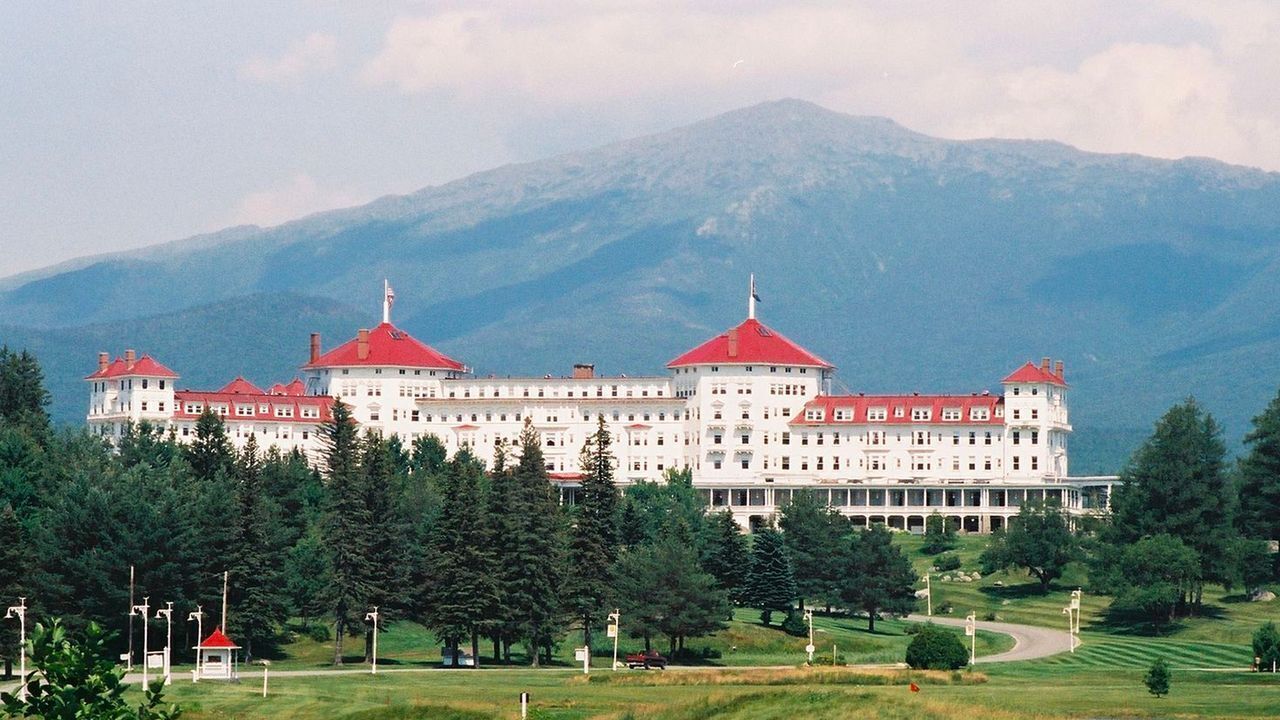 이런 사진이 주는 느낌이 어떤가요?? 인터넷을 뒤지기 시작되면....궁금햇던 것들을 참 많이 검색해 보앗는데. 보지 사진 말고,,이런것들을 참 많이 뒤져 보앗습니다....지금도 계속되고 잇는 이런 호기심의 종착점이 어디 인지는 다른소리 자신도 모르겟습니다.. 요즘엔 너무 많은 자료들이 올라와 잇써 ....뭔가 검색 시작하면 꼬리에 꼬리를 물어 끝날줄을 모릅니다.. 공부를 이렇게 열씸히 햇더라면.............다른소리 팔짜가 바꿧을 성 싶습니다. The decision to close the gold window shattered the international monetary system which, together with the Marshall Plan of 1948 and the General Agreement on Tariffs and Trade( GATT 의미) of 1950, had been a key foundation of the postwar capitalist boom. Capitalism emerged from the Second World War discredited on every front. Its economy, driven by the profit motive, had created untold misery for hundreds of millions of people in the Great Depression of the 1930s. Two imperialist world wars,(양차 대전은 제국주의 전쟁입니다...에제는 이런것으로 싸우지들 마세요...그냥 FACT 로 암기 하세요..) fought for colonies and resources, had produced unspeakable barbarism, such as the Holocaust. The Second World War concluded with the dropping of two atomic bombs on Japan by the US. The ruling classes of Europe had ripped off the mask of “democracy” as they collaborated with the fascist regime of Nazi Germany. When the heads of the soon-to-be-victorious powers gathered at Bretton Woods, as the war drew to a close—largely as a result of the heroic sacrifices of the armies of the Soviet Union(이런것도 싸우지 마시고...2차 대전은 공산주의 체체 소련과 자본주의 체체 독일과의 싸움이엿습니다...여기에 미국와 영국이 끼어 이해관계가 복잡해 진 것이지요)—they were acutely aware that any return to prewar economic conditions would spark social revolution not only in Europe but potentially in the US as well.(2차대전 이전의 자본주의로의 복귀는 ...유럽(사실상의 당시의 전 세계) 뿐만 아니라 미국 자신의 사회주의 혁명을 초래 할수 잇다는 것을 정확히 알고 잇엇습니다....마살 플랜 GATT IMF 브레든우드 협정 따위의 2차 대전 이후의 경제질서는 이 사회주의 혁명에 대한 두려움이 만들어 낸 작품이라고 생각 하면 됩니다.. 미국의 보수주의자들은 지금도 플랭클린루스벨트의 뉴딜정책을 사회주의 정책이다며 극단적인 거부감을 감추지 않습니다..특히 학계 언론계 문화계의 주류 지배 계급들은 ...조금이라도 진보적인 정책이다 생각하면 뉴딜의 악몽을 들먹 거립니다..그들은 미국 사회에서 뉴딜 정책이란 존재 해서는 안되엇던 정책인 것이지요. 우리로 치면 조금이라도 진보적인 정책에 대해서는 거품 처 물고 뒤집어 지는 반공주의자들의 모습이라 생각하면 됩니다. At the end of the war, the economies of the combatants lay in ruins, except for the United States, which had undergone a rapid expansion. It now turned out more than 50 percent of the world’s industrial production and held more than 75 percent of the world’s gold stocks.(혹자는 아편전쟁의 원인도 중국에 대한 경제적집중으로 설명하기도 합니다..) The basis of the Bretton Woods monetary system, under which the dollar became the global currency, backed by gold, was that the economic strength of US capitalism would provide the foundation for the reconstruction of postwar capitalism. But none of these plans could be put into effect without the restoration of the bourgeois political order, under conditions of developing revolutionary ferment. The mouthpiece of British imperialism, The Economist, noted at the end of 1945 that the defeat of the Nazi regime and the end of its “New Order” had “imparted a great revolutionary momentum to Europe. It had stimulated all the vague and confused but nevertheless radical and socialist impulses of the masses. Significantly, every program with which the various Resistance groups throughout Europe emerged from the Underground contained demands for nationalisation of the banks and large-scale industries; and these programs bore the signatures of Christian Democrats as well as Socialists and Communists.” Such had been the integration of the European bourgeoisie into the structure of the Nazi “New Order” that it had become completely discredited, prompting The Economist to note that whereas the maxim of French socialism during the 19th century had been “property is theft,” it was now “property is collaboration.” In revolutionary conditions, time is always of the essence. The decisive factor in providing the bourgeoisie with the time first to contain the postwar “revolutionary momentum” and then derail it was the role played by the Stalinist Communist parties, with the assistance of social democracy. At the wartime conferences of the “Big Three”—the US, Britain and the Soviet Union—at Tehran, Yalta and Potsdam, the Moscow Stalinists agreed to the suppression of revolution in the West in return for imperialist recognition of Soviet spheres of influence in Eastern Europe. Carrying out this agreement, the Stalinist parties blocked the revolutionary upsurge of the working class, above all, in Italy and France, where they entered capitalist governments. 이런것 분명하게 알아 두시기 바랍니다...... 다른소리 세대는 전후 공산주의가 왜 서 유럽에서는 성공하지 못 햇느냐??.....를 일부러 배웟습니다...그것은 동구권은 몰쌍하고 찌지리 국가들이라서 공산화가 되엇지만,,,서구권 영국 프랑스등은 초 선진국이라서 우수한 국민들이 공산주의를 허용하지 않앗다...........고 배웟습니다.... 당연히 해방후 쉽게 공산화된 북쪽의 찌지리들과 자유 민주주의 체체를 지켜온 남쪽의 우수한 종들과 비교는 기본이엇지요.. 이 또한 사깁니다....동구권 보다는 프랑스 이틸아 영국들의 공산주의가 훨씬 강력햇고...국민들의 폭팔적인 지지도 받앗습니다.. 그들은 선거를 통해서던, 민중 혁명을 통해서던 집권 가능 하엿지만...정작이들의 힘을 억 누른 쪽은 소련이엇습니다..스탈린은 유럽으로 부터의 주기적인 침략에 대한 영구적인 방법으로 동구권 전체를 공산화, 위성국가화 시키려 햇고, 영국과 미국은 이런것에 대한 충분한 이해가 잇엇습니다....그런데 프랑스 이탈리아 독일등 서구 유럽에선 자신들의 지분을 요구 하엿지요.. 이것입니다.. 이것이 서구권 공산화 실퍠의 결정적인 요인입니다.. With the stabilisation of bourgeois political rule, the postwar economic arrangements created the framework for the longest boom in the history of global capitalism,(45년 종전 부터 70년 중반대 까지를 자본주의 르네상스 시대라고 부릅니다..이때 가장 많은 중산층이 생겻습니다..) generated by an upturn in the rate of profit resulting from the extension of the more productive methods of American capitalism to the other advanced capitalist countries. 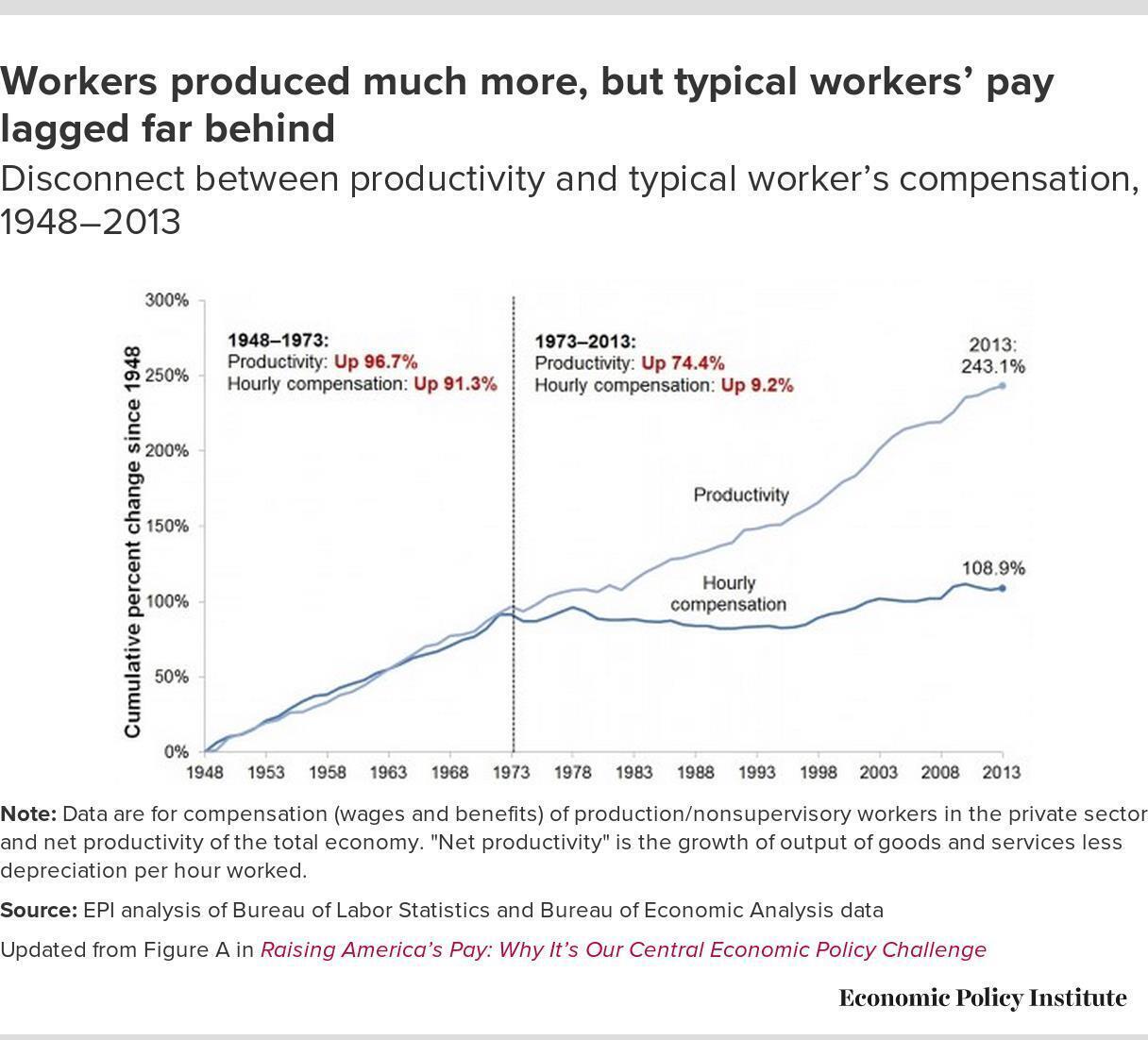 이른바 자본주의 르네상스 시절의 생산성과 노동자 소득의 증가는 함께 햇음을 보여줍니다...그런데 70년대 이후 부터 이것이 벌어지기 시작 햇습니다.. 2021년 지금은 어떤 모습을 보이고 잇는지 짐작해 볼 수 잇고....쉽게 뭔가 크게 문제가 잇엇다는 것을 알수 잇습니다... But contrary to the illusions so assiduously promoted during this period, that somehow capitalism could now be regulated through Keynesian demand management and other forms of state intervention, its contradictions had not been overcome but only temporarily suppressed. Moreover, the very development of the boom was to bring them to the surface once again. Even as the Bretton Woods monetary system was becoming fully operational at the end of the 1950s, when full currency convertibility was restored, the contradictions within it started to emerge and were pointed out in an analysis published by the Belgian-American economist Robert Triffin.  What became known as the Triffin paradox (트리핀 모순) was the following: The functioning of the world economy, its need for international liquidity, depended on a continuous outflow of dollars from the US, and the greater the expansion of the world economy, the greater this dollar pool had to be. But this growth, so necessary for the expansion of trade and investment, meant that the ability of the US to redeem these dollars for gold at the rate of $35 per ounce was undermined. To some extent, this divergence could be managed so long as the US maintained a large balance of trade surplus. But that too was being undermined by the very development of the postwar boom. The economic revival of the advanced economies, particularly Germany and Japan, which the US had promoted in order to provide an outlet for its own industrial production, undermined the position of US capitalism within the global market. This was reflected in a sharp decline in the US balance of trade surplus. It fell from $6.8 billion in 1964 to just $600 million in 1968, before moving to a deficit of $2.71 billion in 1971. Gold and foreign reserves fell, and by 1971 they were $13.91 billion, compared to US liabilities of $67.81 billion. In the preceding years, attempts had been made to maintain the system, but they proved to be of no avail, and after a top-level weekend meeting at Camp David, Nixon announced the cutting of the Gordian knot. The ending of dollar-gold convertibility meant that paper currency no longer had a foundation in real value. Consequently, inflation rapidly ensued in the 1970s, as the value of the dollar in international currency markets declined. There was another process at work. In the final analysis, the boom had been sustained not by the measures of capitalist governments but by an upswing in the 1950s and 1960s in the rate of profit. But from the middle to late 1960s, it began to decline in line with the analysis made by Marx of this lawful tendency.(이익률 하락의 원칙) The capitalist class responded with a stepped-up offensive against the working class to increase the rate of exploitation. But this produced only a growing upsurge of the working class, whose strength and militancy had increased as a result of the postwar boom. Nixon’s decision on the dollar was accompanied by the declaration of a wage limit of 5.5 percent. It failed. Inflation fueled the development of militant wages struggles in the US and around the world. In 1974, the British miners strike brought down the Heath Tory government. In Australia, 1974 saw the biggest strike wave since 1919 and the largest wage rises in history. This period was one of intense political turmoil: the resignation of Nixon in 1974 as a result of Watergate, the downfall of the Greek junta in 1974, and the end of the Salazar regime in Portugal(카네이션 혁명으로 40여년의 독제 종결), which had come to power in the 1930s, to name but some examples. The upsurge of the working class in the US was not quelled by the recession of 1974–75—to that point the deepest since the 1930s—nor even by the subsequent stagflation, the combination of high unemployment and rising prices. In 1977–78, US miners defied the anti-strike Taft-Hartley Act invoked by the Carter government, and in 1979 the British working class was embroiled in a winter of discontent against the Callaghan Labour government. By the end of the 1970s it had become clear to ruling circles in the US that it was impossible to overcome falling profit rates and counter the militancy of the working class within the industrial and political framework of the postwar period, and nothing less than a complete restructuring of the US economy and class relations was necessary. This was the significance of the appointment of Paul Volcker as the head of the Federal Reserve in 1979 by Democratic President Jimmy Carter. Volcker’s essential mandate was to carry out a purge of the American economy, coupled with an offensive against the working class. The vehicle for this was the raising of US interest rates to historically unprecedented levels. They reached 20 percent at one point in the early 1980s. This program, resulting in the destruction of whole swaths of US industry, was conducted under the banner of a war against inflation. That war was above all directed against the working class, as Volcker himself acknowledged when he said that the mass sacking of the air traffic controllers by Reagan in August 1981 and the smashing of their union, PATCO, was of crucial assistance in the fight against inflation. The smashing of the air traffic controllers union, the starting point of an offensive that was to continue relentlessly over the next decade, was made possible only by the collaboration of the trade union bureaucracy. In the crucial PATCO struggle, the leadership of the AFL-CIO(미국 최대의 노조) told Reagan it would not raise a finger in opposition, a position it maintained in every conflict that followed.............이 글은 WSWS에서 뽑은 것입니다...노동조합에 대한 트로츠키주의자들의 반감을 여지없이 들어내 보입니다) The restructuring of the American economy involved two main components. In the first place, it drove forward the reconstruction of American industry on a global basis, forcing the development of new technologies and management methods to take advantage of the cheaper sources of labour available internationally, initially in places such as Mexico and East Asia and then extending further. A second aspect was the increasingly prominent role of finance capital in the American economy as a source of profit accumulation. (이는 삼성의 앞잽이 노무현 정권의 소망이기도 합니다.... 노무현은 한미 FTA를 체결 하엿고, 아세아 금융허브를 꿈꿧습니다............ 삼성의 서울대 나온 우수한 두뇌들은 ....고졸생으로 법률공부만 존나게 한 자의 지적 사상적 한계와 아웃사이더의 열들을 정확하게 꾀 뚫어 보고 완벽하게 이용한 것이지요... 노무현 정권때 삼성은 대한민국이 되엇습니다....노무현 죽마고우를 자처하는 문재인이 이건희 회장님의 아들인 이재용을 풀어준것은 ...개나 소나 쥐쇄끼들도 예측할수 잇엇던 너무나 당연한 조치 입니다.. -기회는 평등하고, 과정은 공정할 것이고 결과는 정의로울 것이다... -씨봘놈들아........................................................문재인.. This involved to an ever-increasing degree the accumulation of profit through so-called financial engineering, that is, the use of parasitic financial methods rather than the previous road of profit accumulation via investment in the underlying economy. (미국은 전쟁이 아니면 죽엇다 깨어나도 중국을 이길수 없다고 하엿지요......그들이 그렇게 만든겁니다.. 중국은 미국을 비롯한 자본주의 국가들이 먼저 달성 햇던 산업자본주의를 자신들의 방식으로 발전 시켯을 뿐입니다... 중국의 경제가 그렇게 커지는 그 동안 미국을 비롯한 선진자본주의 국가들은 산업자본주의를 버리고 랜탈 자본주의로 바뀐것입니다......바닥이 사라지고 거품만 작동하는 기이한 자본주의 체체이지요. 이것은 그들이 스스로 자초한 것이고.....마이클 허드슨은 이것을 새로운 봉건체제 라고 빈정거렷습니다. 이런 거품만 작동하는 자본주의 체체를 버팅기게 해 주는 것이 글로발 금융체제와 전쟁입니다...미국은 강력한 파괴 무기가 이것을 지탱시켜 주는 것이지요.) Beginning under the Reagan administration, this rising mode of profit accumulation reached a crucial turning point in the stock market crash of October 1987, when the Dow recorded its largest one-day fall in history of more than 22 percent. The intervention of the Federal Reserve into the crisis signaled the alignment of the central financial arm of the capitalist state with the new mode of profit accumulation. Responding to the stock market collapse, newly installed Fed Chair Alan Greenspan issued the following statement: “The Federal Reserve, consistent with its responsibilities as the Nation’s central bank, affirmed today its readiness to support the economic and financial system.” 이 금융체제는 자체로는 절대 견딜수 없습니다....1987년 붕괴가 왓고 본격적으로 미 정부가 시장에 끼어 들기 시작 햇습니다.. 이른바 그린스펀 PUT 이 시작된 것이지요...그들이 말하는 시장은 더 이상 존재 하지 않습니다...FED의 개입없이는 금융시장은 지탱되지 못 합니다....그들은 이것을 시장 자본주의라고 하며...국가의 개입을 반대 합니다......개가 웃겟습니다.. FED에 찍어 뿌린 달러 없이는 단 하루도 버틸수 없는 시장이....국가의 개입을 반대 한는 시장주의라는 것입니다.. 미국이 시장 자본주의 나라 라는 것입니다.....허.. 그런데.....이런 회괴망칙한 개 소리는 이젠 일반론이 되엇습니다.. -우리 교주님이 처 드신 640만불은 뇌물이 아니고 생계형 범죄다...취지지지ㅣㅣㅣㅣㅣ 어 허허허... It was brief, but its implications were far reaching. Previously, the policy of the Fed had been, in the words of its longtime postwar chair, William McChesney Martin Jr., to take away the punchbowl as the party was getting underway. Now it was to pour in more vodka. The new orientation was elaborated by Greenspan in the years that followed. He insisted that the task of the Fed was not to prevent the formation of financial bubbles but to clean up the mess when they burst through the supply of ultra-cheap money to allow the speculation to expand still further. The period since 1987 has seen a series of financial crises, each one more serious than the last, followed by further injections of money by the central bank: from the Mexican bond crisis of 1992, to the dot.com crash of 2000–2001, the global financial crisis of 2008 and the market freeze of March 2020 at the onset of the coronavirus pandemic, which went to the very foundation of the American and global financial system, the $21 trillion(이는 매우 보수적인 추정 숫치입니다) US Treasury market. 시장 어디 잇습니까?? 그 잘난 자본가놈들은 어디서 무엇을 하여 돈을 법니까? 지금은 생산과 소비가 경제를 움직이지 않습니다.....정부가 찍어 뿌린 돈이 경제를 움직입니다. 최소 아담스미스가 말한 자본주의 체체는 아닌 것이고 이것이 정부의 개입을 극단적으로 싫어 한다는 시장론자들이 말하는 자본주의 체체는 더욱 아닌 것이지요. In the latter crisis, the Fed expanded its asset holdings from $4 trillion to $8 trillion virtually overnight and at one point was pumping in money at the rate of a million dollars a second. It became the backstop for every area of the financial system. These measures have now created a mountain of financial assets, that is, fictitious capital. The term “fictitious” means that these assets do not embody value in and of themselves. 하루밤 사이에 4TRILLIONS 달러가 찍어 뿌려지는 경제...그런데 이 돈은 아무런 가치가 없습니다...단지 종이일 뿐입니다. 수요는 물론 공급도 없습니다..그냥 숫치상으로 그래 만들어 집니다...죶 골리는 데로...갈보 빨고 싶은 죶 대가리 처럼 지 멋대로.. 이것을 현대 경제학은 학문이라고 가르치고 수강료를 받아 처 먹고 잇습니다. 아니....이런 개 쐤끼들이 어디 잇습니까??? 목사놈들이야 천국을 약속 하기라도 하지만...이 경제학자라는 쐣끼들은 대체 뭘 팔아 처 먹고 잇는 것입니까?? Rather, in the final analysis, they are a claim on both the present and future surplus value to be extracted from the working class in course of capitalist production. 막스는 150년전에 이미 이런 작동원리를 보앗다는 것이지요....달래 천재라고 하겟습니까.. 눙깔 속에 처 집어 넣어 주어도 모르는 자본주의 경제학에 미친개들에 비하면 신과 같은 존재 엿던 것이지요. Herein lies the objective origin and driving force of the homicidal drive to reopen the economy by every capitalist government, even as the COVID-19 pandemic continues to spread death. Any measures that would impede the vampire-like demands of finance capital—meaningful measures to halt the pandemic, such as a lockdown of nonessential production with full compensation to those affected, combined with the closure of schools—are ruled out. The entire society and its fundamental needs are subordinated to the demands of the financial oligarchy. “Let the bodies pile high,” as British Prime Minister Boris Johnson declared, so that the flow of surplus value is sustained and the stock market can continue its rise. The question that arises at the end of this historical review is: Where does this now leave us? The past is but prologue. What are the implications of the crisis at the very centre of the global financial system 50 years after the ending of the Bretton Woods system? 여기에 분명한 닶을 줄수 잇다면....세상은 이미 변해 잇겟지요.. 그 닶이 무엇인지를 찾는 것은....막스와 같은 탁월한 사상가도 아니고 마오나 체 게바라 같은 혁명가도 아니고 바로 우리들 자신입니다....우리 자신이 남들의 말만 존나 처 듣는 찌지리들인 한....그들은 절때 경제학 사기질을 놓치 않을 것입니다... 놓을 이유가 없지요....그것이 지들만 배 부르는 길인데.. 아래는 당연히 막스주의자들의 통찰입니다... 기성의 경제학으로는 닶이 없습니다....MMT나 이들의 주장에 귀를 귀울일 수 밖에 없습니다.. The answer is to be found only by considering the fundamental issues rooted in the very DNA of the commodity capitalist economy. The necessity for a material base of the monetary system in the form of gold arises from the very nature of commodity production. Money is not a technical device that was invented at some point in time to overcome the difficulties encountered in barter, and which can be constantly reinvented as circumstances change. It is rooted in the commodity, the cell-form of capitalism. The value of each commodity is determined by the amount of homogeneous abstract human labour it contains(노동 가치설). But this abstract social labour is not perceptible to the senses. Twist and turn a commodity as much as one likes, not an atom of value can be discerned. The commodity reveals the value embodied in it only when it stands in relation to another commodity. The equation x Commodity A = y Commodity B is the germ of the money form, in which the value of Commodity A is represented by the bodily material form of Commodity B. The development of the commodity exchange system proceeds until one commodity, historically gold, becomes the universal representative of the value of the world of commodities. When Nixon confronted the crisis of the Bretton Woods system, the only way he could have retained the existing monetary order was to crash the economy, winding back the growth that had taken place over the preceding quarter-century. Fearing the economic and revolutionary consequences of such a move, he sought to dodge the law of value and initiated the fiat currency system—paper dollars not backed by gold—which has been in place for the past 50 years. This has led many, including some who consider themselves Marxists, to conclude that Marx’s analysis of the centrality of gold to the value system has been refuted by events, that it may have applied in the 19th century or even up to 1971 but no longer because of the massive expansion of credit. But closer consideration reveals that the law of value that Nixon attempted to push aside 50 years ago is reasserting itself. Marx did not discount the role of credit in the money system. He explained that the expansion of credit was the way “capitalist production constantly strives to overcome this metallic barrier [gold], which is both a material and imaginary barrier to wealth and its movement, while time and again breaking its head on it.” Credit, he wrote, constantly usurps the role of gold as the basis of the value system, and “enlightened economics looks down on gold and silver with the utmost disdain.” That is, until confidence in the credit system is shaken, as inevitably takes place. Gold performs a vital function as the ultimate measure and store of value. This role cannot perpetually be replaced by credit and paper money. Enormous amounts of fiat money can be created by the press of a computer button. But the capitalist state, the central bank cannot conjure up value out of thin air. It can be created only by the labour of the working class. It is acknowledged, even by bourgeois economists who maintain that Marx’s analysis has no relevance to the present day, that there are limits to the expansion of fiat money, that if it is expanded too greatly, it will no longer be socially acceptable as a measure and store of value. But this very acknowledgement indicates that lurking in the background there is a question of what the ultimate store of value is. Thrown out the front door, the value question comes back in through the windows. Meanwhile, the continued expansion of fiat currency results in the development of the most fantastic expedients as the attempt is made to turn money into more money by means of speculation. The stock market continues to rise to record highs amid death and social devastation, while new forms of speculation are developed in the form of bitcoin, dogecoin and a myriad of other cryptocurrencies. Then there are non-fungible tokens, NFTs, images that are stored, with a supposed valuation sometimes running into millions of dollars. There are meme stocks, generally based on companies whose business model has reached a dead-end, but whose market valuation is boosted through the number of “likes” they receive on social media platforms. And earlier this year there was the case of the New Jersey restaurant Hometown International, which had a market capitalisation of $100 million with sales of just over $37,000 in two years. As one comment put it, “the pastrami must be wonderful.” This craziness, in which the monetary worth of so-called assets with no intrinsic value can leap into the stratosphere, recalls nothing so much as the saying: “Those whom the gods wish to destroy they first make mad.” 2년간 매출이 37,000 인 레스토랑 회사의 가치가 100 MILLIONS 이 되는 시장... 이런것을 자본주의라고 합니까???.....이것을 시장이라고 합니까??....이것을 투자 라고 합니까?? 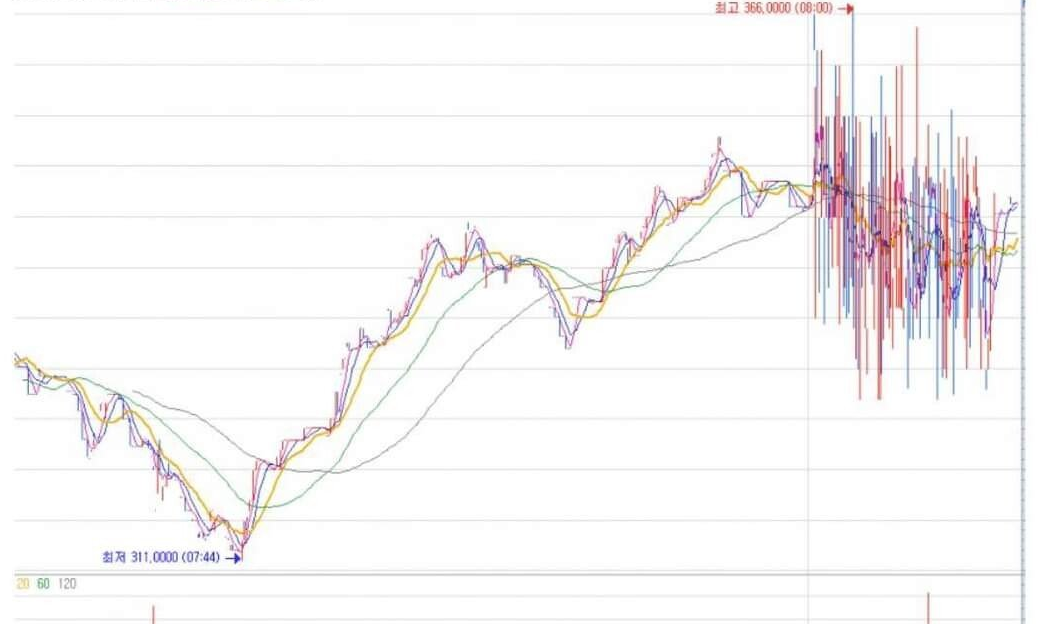 전세계가 실 시간으로 보앗던 게임스탑 주가입니다.. 이게 가능한 일인가요??.......... 그런데 실제로 일어낫습니다. 이게 시장입니까?? 미친개들의 광란입니까??? 경제는 정부가 찍어 뿌린 돈이 아니면 굴러가지 못 합니다....수요 공금 따위나 따지는 것은 이미 전설인 것이지요. 시장??.........니기미 죡 구멍이고.....시장의 기능??....니 딸 죶구멍이다.. 정부가 찍어 뿌린 돈으로 하는 짓이....바로 저런 투기질입니다... 자본주의?? 지상?? 정부의 규제가 없는 자율적인 시장?? 뭐 개소리들을 이리도 열씸히 지저되는 지를 모를일입니다.... Bourgeois analysis gets itself into all kinds of tangles when it confronts the crucial question of value. In a comment published in the New York Times during the March 2020 crisis, the economic historian Adam Tooze wrote: “As panic has swept through financial markets in the past two weeks investors have begun seeking safety in cash—above all, in dollars. The American economy itself may look weak, but the dollar is still the most universally accepted means of payment and a store of value.” 이게 대채 무슨 소립니까?? This is, in essence, a circular argument.(이것은 근본적으로 순환논리이다) The dollar is sought out as a means of payment because it is a store of value, and it is a store of value because it is the universally accepted means of payment. Fifty years on from the demise of the Bretton Wood system, we are approaching another decisive turning point in the death agony of capitalism and the crisis of value that erupted in 1971. 이미 위에서 언급 되엇듯이 .....위기는 극복되어 온 것이 아니고...더 증폭되어 온 것입니다.. There are two major developments that terrify the central banks as they pump out ever greater quantities of fiat money in order to sustain the mass of fictitious capital that their actions have created. The first is the fear that inflation will rise, and this will produce major struggles by the working class that can rapidly assume ever more powerful forms, including a direct clash with the state itself, sparking a crisis of confidence throughout the entire financial system. This is not a matter of speculation but of the most recent historical record. The eruption of wildcat strikes and walkouts by workers in March 2020 and the fear that this would extend was a significant factor in the market meltdown that month. More than 160 years ago, amid a speculative orgy in France that preceded the 1848 revolution, Marx noted that any serious development of the class struggle calls into question the confidence, based on a belief in the supposed permanence of the capitalist system, on which the entire credit system rests. This is the real concern of those, like former Treasury Secretary Lawrence Summers, who have warned that the stimulus packages of the Biden administration, combined with the actions of the Fed, can have dire inflationary consequences. That is, inflation can propel an eruption of class struggle under conditions where the entire financial system has time and again revealed its extreme fragility, going back to 1971.(인플레이션 자체가 문제인것이 아닙니다...인프레이션이 사회의 불안정을 야기 시키고...종국은 혁명이 될수 잇다는 전통적인 공포심입니다..) The second fear is that the price of gold, the only stable store of value within the capitalist economy, will rapidly rise, leading to a collapse of confidence in the US dollar and setting off another crisis.(이 또한 금값의 폭등이 문제가 아니고 그것이 미국의 달러에 대한 신뢰를 흔들고 또 다른 위기를 야기 할수 잇다는 염려입니다) Over the past year and more, the price of every asset has been rising as a result of the expansion of fiat money, with the sole exception of gold. This points to intervention in the gold market from the highest levels, aimed at keeping its price down lest a significant rise set off a dollar crisis. The Fed and other central banks keep their operations in the gold market behind closed doors, but as long ago as July 1998 in testimony before Congress, Fed Chair Alan Greenspan admitted that “central banks stand ready to lease gold in increasing quantities should the price rise.” Leased gold forms the basis of futures contracts(선물 거래) based on sell orders that depress the market. In August 2020, the price of gold rose to a record high of $2,067. Since then, its price has been kept to a range around $1,800. But the more the Fed pumps out fiat money, the more the value question arises, even drawing the attention of financial journalists. Financial Times editorial board member Rana Foroohar noted that the policies of the Biden administration depend on low interest rates and “the power of the dollar to enable US borrowing.” But, she continued, should “the current paradigm break quickly and unexpectedly both the dollar and any dollar-based assets could be rapidly devalued.” Another FT columnist, Gillian Tett, noted in a recent comment that the crisis to which Nixon responded 50 years ago raised a “bigger question that always stalks finance: what is the basis on which money commands value and trust?”(혹자는 미국의 핵 무기라도 빈정거리기도 합니다) Since 1971, global debt has inexorably expanded and is now three times the size of the global economy. This will not be repaid by growth, she wrote, but sooner or later “will probably cause a direct or indirect restructuring or a social or financial implosion.” Or, to put it another way, as Marx did, the law of value asserts itself in the same way as the law of gravity does when a house collapses around our ears. No one has a crystal ball that can predict exactly when and in what form this will take place. 결론입니다. 이것을 암도 모른다는 것이지요....다른소리가 언제, 무엇을 말 할수 잇다면...여기서 여자 보지 이야기 곁들이며 이런글이나 처 올리고 자빠져잇지 않겟지요.. 그런데 2007년 붕괴를 예언한 많은 학자들과 연구기관이 잇엇고, 놀랍게도 이들의 붕괴시기는 달의 차이 박에 나지 않앗습니다.. 언젠가 터진다는 것은 분명한데.... 혹자는 ...사람은 언젠가 되진다....그것과 대체 무슨 차이가 잇냐??....라고 빈정 거립니다.. 대게는 자본주의에 미친것들이지요...돈 쫌 갖고 잇어 보이는.. 이런 사람에겐 태희와의 죶질과 영자와의 죶질이 어떤 차이가 잇는지 함 경험해 보라고 합니당.. 영자 뵤지만 뵤지가 아니다...응?? But two things are certain: first, that it is inevitable, because the crisis of value is rooted in the very cell-form of capitalism, the commodity; and, second, that it will bring an historic eruption of the class struggle, in which the contradictions of the capitalist mode of production are always fought out. There is already a growing resurgence of the working class, after decades of suppression by the trade union bureaucracy, under conditions of a deepening economic crisis, for which the bourgeoisie is making its preparations. That is why in the US and around the world, it is making frantic efforts to totally integrate the trade unions into the apparatus of a corporate state, to better serve as the policeman for the suppression of the working class, while at the same the bourgeoisie seeks to organise a fascist movement. The working class must now organise its struggle through the development of its own organisations, rank-and-file committees, to develop the struggle for its independent interests against the trade union bureaucracy and its backer, the capitalist state. Above all, the crucial task is the building of the revolutionary party to lead the working class in the struggles now developing to take political power into its own hands. This must be done to ensure that the crisis of capitalism, already seen in the social murder policy pursued in response to the pandemic, is resolved through the establishment of socialism—a society in which the productive forces, developed by the labour of billions of workers, are utilised to meet human need, not profit. 늘 반복되는 트로츠키파들의 결론입니다.. 마르꾸제는 프랑크푸르트 학파의 대표적인 학자입니다.. 나찌를 피해 독일에서 도망나온 사람들은 전쟁이 끝나자 독일도 돌아 갓습니다. 그런데 독일 아닌 다른 나라나, 망명지인 미국에서 정착한 사람들도 많습니다. 마르쿠제는 미국에 남앗습니다.. 전쟁이 끊나기 무섭게 마치 도망치듯 미국을 빠져나와 독일로 돌아간 아도르노와는 비교가 됩니다.. 마르쿠제는 철학자나 현자를 보지 않앗습니다....니체가 말하는 대중들을 본 것입니다.. 마르꾸제는 노동자들이 정말 자본주의를 싫어 하는가....에 대해 생각해 보앗고...어렵지 않게 그렇지 않다는 것을 알앗습니다. 파업을 할때 노동자들의 모습은 꼼짝없이 혁명전사의 모습입니다...그런데 파업이 끝나면 남들과 달라지는 것을 죽어라고 싫어하는 꼭 같은 대중이 됩니다.. 그들은 자본주의를 싫어 하는 것이 아니고...자본주의에 편입시켜 달라고 악다구니를 쓰고 잇다고 생각 하엿습니다. 자본주의 주류에 편입되지 못한 외로움과 불안을 파업이나 공산주의 이념으로 달레고 잇다는 것이지요. WSWS가 주장하는 세상이 가능한지는 모르겟습니다. 다른소리가 노무현정부와 문재인 정부를 격고 나오면서 알게 된것은 ...그들 노동자들이, 그들 노조원들이, 그들 민주화 투쟁을 햇다는 사람들이, 그들 진보라고 말 하는 사람들이, 그들 노무현을 사랑 한다며 -내가 조국이다- 때거지 꼴깝질을 떨어 됫던 사람들이 막스가 말한 혁명적인 노동자도 아니고, 사회 변혁을 이끌어낼 민주시민도 아니고.... 도무지 남들과 달라지는 꼴을 견디지 못하는 꼭 같은 대중들이다는 것입니다.. 이런 대중들은 남들과 자신의 생각, 자신의 철학, 자신의 양심을 갖는 것을 가장 싫어 합니다.. 도망치듯 미국을 빠저나와 독일로 되 돌아온 아도르노가 봣던 것도...이런 독일 대중들이엇습니다.. 600만에 이르는 유태인 학살에도, 3000만 여명이 희생된 참혹한 전쟁에 대해서도 남들과 다른 자신만의 죄의식 따위를 전혀 느끼지 못하는 너무나 평화롭고 온화한 독일 대중들이엇습니다. 이런 나라에 신 나찌주의자들의 등장은 필연입니다.. 그런데 독일인들만 그런 것일까요?? 다른소린 다른소리가 틀렷다면 참 좋겟습니다...그런데 다른소리가 틀릴 일은 없을 것입니다. |
다음검색