인륜에 대한 범죄다.....
북한 외무성의 발표입니다...
돌연 으시시해 지는 것이..
박통 전통 때 같앗다면...
-후크시마 방유에 반대 하는 것들은 북괴와 중공 빨갱이들과 한패다
-왜 미국과 케나다는 가만잇는데...니들만 시끄럽냐??....이 빨갱이 쇗끼드라..
-이것들 다 국가 보안법으로 조자라.................고 햇을 것인데
이런것도 민주화의 덕택인지...
아님, 노무현교 미친개때들의 토착왜구 사냥질의 효과인지 모르겟습니다.
‘Crime against humanity’ – North Korea on Japan’s Fukushima move
Pyongyang has urged Tokyo to immediately halt wastewater releases into the ocean
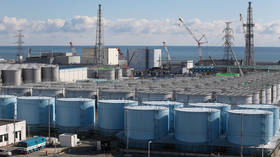
Radiation contaminated water tanks and the damaged reactors at Fukushima Daiichi nuclear power plant © Getty Images / Christopher Furlong
North Korea has called on Japan to immediately stop the release of radioactive wastewater from the destroyed Fukushima nuclear power plant into the Pacific Ocean, according to a statement shared by the KCNA news agency on Thursday.
The Japanese move “seriously threatens the lives, safety and the future of humanity,” the Foreign Ministry in Pyongyang said.
North Korea further accused Japan of committing an “unforgivable crime against humanity”(용서할 수 없는 인륜범죄--나찌들의 홀로코스트나...미국놈들의 인디언 사냥질 따위와 같은 것이다...그런 의미 이지요) and demanded that it be held accountable.
The statement comes after Japan announced on Thursday that it had started the release of treated radioactive water from the site of the 2011 Fukushima Daiichi nuclear disaster into the Pacific Ocean. Japanese Prime Minister Fumio Kishida previously announced that plans include the discharge of about 1.3 million metric tons of wastewater.
Tokyo has stressed that the move has been approved by the International Atomic Energy Agency (IAEA). The UN’s nuclear watchdog greenlit the Japanese plan last month, stating that independent on-site testing had shown that the tritium concentration in the water was far below the operational limit, and that the impact the move would have on people and the environment would be “negligible.”
Fukushima plant operator Tokyo Electric Power (TEPCO) also published test results on Thursday claiming that the water contained up to 63 becquerels (a unit of radioactivity) of tritium per liter – far below the WHO drinking water limit of 10,000 becquerels per liter.
Nevertheless, some of Japan’s neighbors have not been convinced of the safety of the wastewater release. China responded to the move by issuing a blanket ban on all Japanese seafood products, with Beijing insisting that Tokyo had not proven that the discharged water would be safe.
Earlier this week, China’s Foreign Ministry released a statement calling the plan “extremely selfish and irresponsible,”(극단적으로 이기적이고 무책임한 행위) and urged Japan not to cause “secondary harm to the local people and even the people of the world out of its own selfish interests.”
On Thursday, China’s special administrative regions of Hong Kong and Macau also announced import bans on Japanese seafood from 10 prefectures. South Korea, which already had restrictions in place, said it would not lift them despite vouching for the safety of the Japanese plan.
Greenpeace activists have also accused Tokyo of “deliberate pollution of the Pacific Ocean,”(고의적인 태평양 오염) and insisted that storing the water would have been a better course of action.
아래는 WILPF 의 기시다에 보네는 공개서안입니다.
미국과 케네다의 반응이 미적지근한 이유는 분명합니다.
정치적으로 판단 하기 때문이지요.
만약에 일본이 아닌 중국에서 저런식의 방유가 잇엇다면 그들은 온 인류의 안전과 지구의 생존을 나비효과를 들먹이며 거품 물고 뒤집어졋을 것입니다....
그들의 그런 반응에 ...갱상도 쥐쇗끼들+ 수구 꼴통 개 쇗끼들+ 할렐루야 돼야지 쇗끼들 ..다그리 기어 나와 때려잡자 짱꼴라 악악 거렷을 것이고..
지겨워...
Open Letter From WILPF.
Mr. Fumio Kishida, Prime Minister of Japan
Stop the release of waste water from TEPCO’s Fukushima Daiichi Nuclear Power Station into the ocean: Protect our people and environment – do not further contaminate our “Blue Pacific”!
After the Fukushima Daiichi Nuclear Power Plant accident in March 2011, the Japanese government and plant owner TEPCO failed to take countermeasures to protect groundwater, resulting in large amounts of radioactive contaminated water. This radioactively contaminated water has been treated by a multinuclide removal system (ALPS) and stored in more than 1,000 tanks on the power plant site. The Japanese government and TEPCO, making promises to the Fukushima Prefectural Fisheries Federation, the National Federation of Fisheries, and the people of Fukushima Prefecture, have previously stated that this ALPS treated water will not be disposed of in any way without the consent of the concerned parties, and will be stored on land.
Now, in complete contradiction to these assurances, the Japanese government and TEPCO are about to release this ALPS treated water into the Pacific ocean. These actions could have damaging and lasting consequences for the people and the environment in the Pacific region. We, women of Asia-Pacific, strongly oppose risking further radioactive contamination of our “Blue Pacific,” which has nurtured life since ancient times and is the source of lives and livelihoods!
The release of this contaminated water is in direct violation of Japanese domestic law, which prohibits exceeding 1 mSv/year at the plant’s site boundary. It also conflicts with the London Convention, ratified by Japan in 1980, which strictly regulates the dumping of radioactive waste into the ocean. This action will damage the trust between Japan and its neighbors and the Pacific Islands countries.
The vast amounts of radioactive materials that flowed into the air from the Fukushima nuclear power plant following the accident already fell mostly into the ocean, and continue to leak into the air and into the ocean to this day. This latest release of radioactive materials through nuclear waste water is an act of harm that will adversely impact the people and marine life in and around the Pacific nations.
Based on precautionary principles, radioactive waste should be stored on land for a long period of time under strict safety control to prevent any unforeseen health hazards and ecological disturbances in the future. The ALPS treated water contains tritium, which cannot be removed, as well as many other radioactive materials that remain in the water. Even if the water is diluted below the “standard value” before being released, the absolute amount of radioactive materials will not be reduced. Tritium will be dumped into the ocean for several decades in an amount approximately 10 times that before the accident. Can we really be sure that there will be no impact on people’s health or the marine ecosystem?
The IAEA’s recent summary report on the matter was a review of plans that had already been decided by the government, not a thorough assessment taking into account the aforementioned future biological impacts and the interests of all people sharing the Pacific Ocean who might be affected. Nor has there been an “optimization” review that includes other less expensive and safer alternatives, so it cannot be said to be a comprehensive assessment. Yet, the Japanese government is misleading the Japanese people and the rest of the world by promoting the IAEA report as if it were an international endorsement. Meanwhile, experts have proposed various concrete alternatives to ocean release.
The Japanese government and TEPCO should give priority to the human rights perspective of protecting the global environment and the health, lives, and livelihoods of all human beings. Abandon the ocean release plan, and reconsider other alternatives that do not risk further radioactivity in the environment.
Once released, it cannot be undone.
It is not too late. Now is the time to be courageous and stop the plan to release radioactive water into the ocean.
– WILPF International Secretariat on behalf of WILPF Sections and allies in the Asia-Pacific region