요방형근...
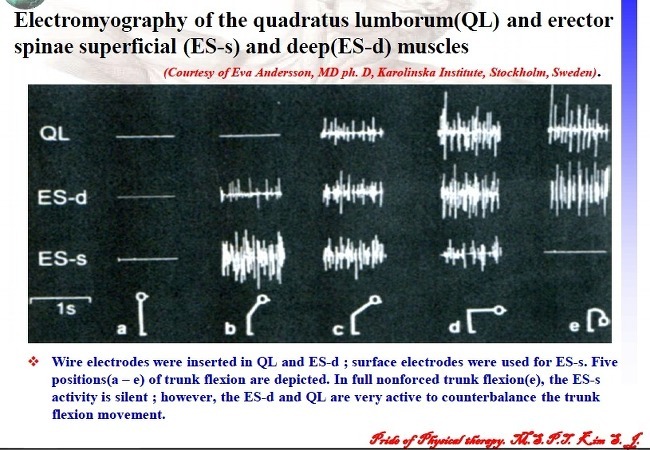
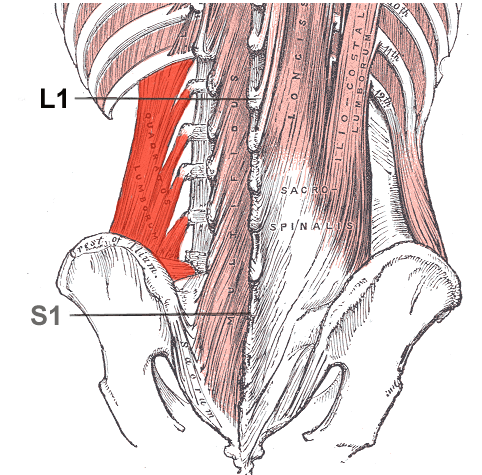
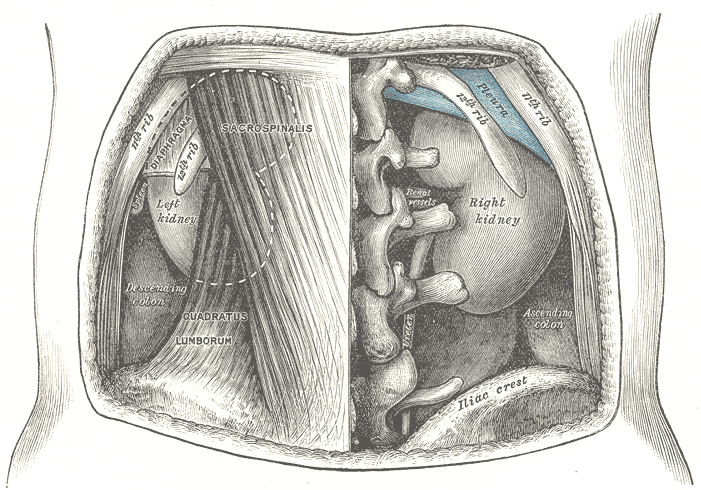
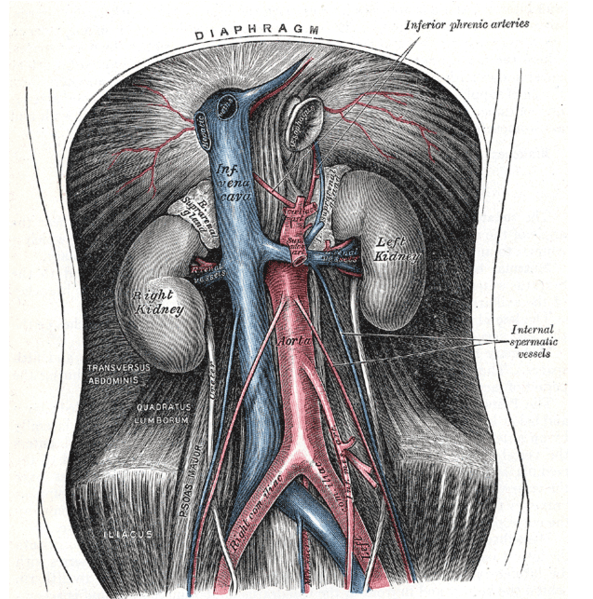
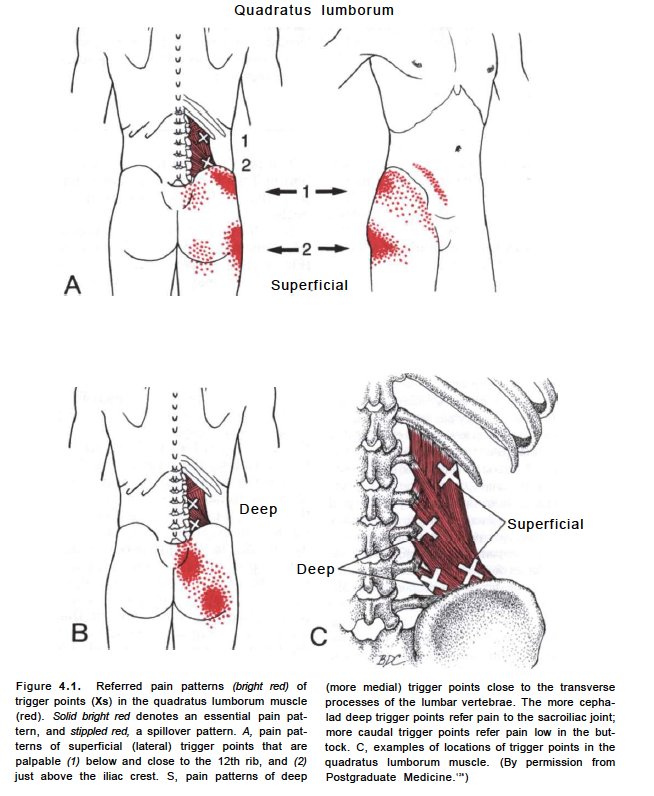
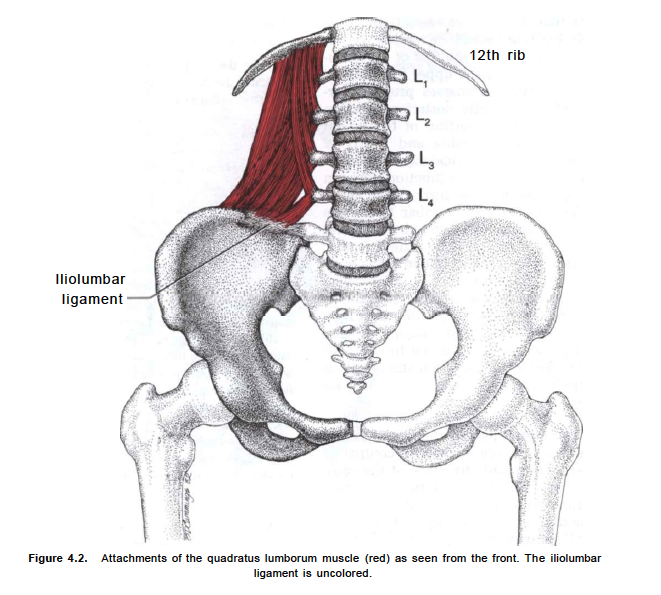
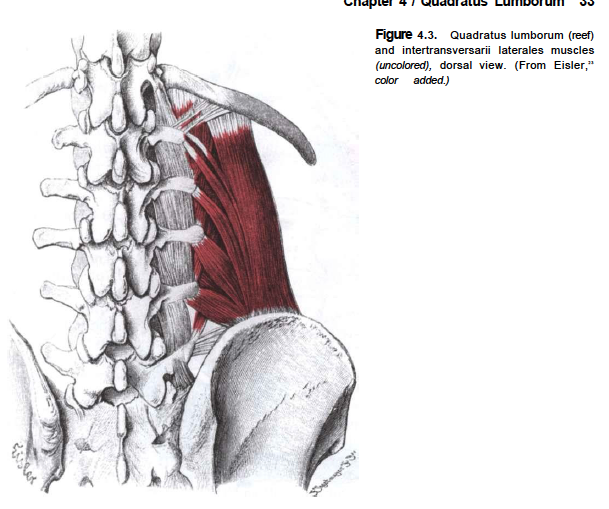
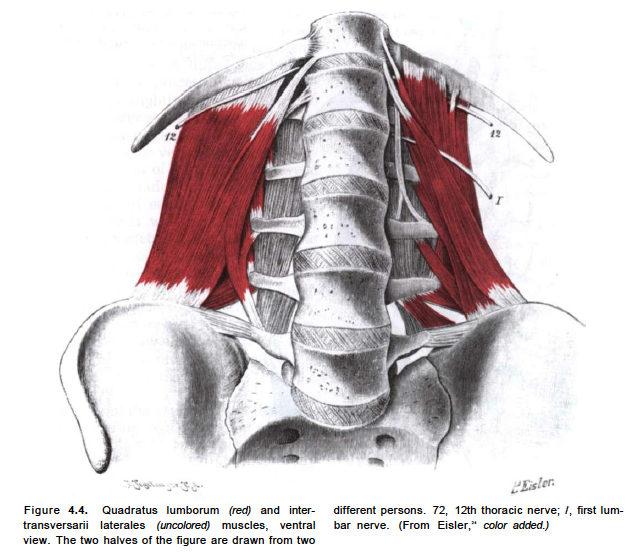
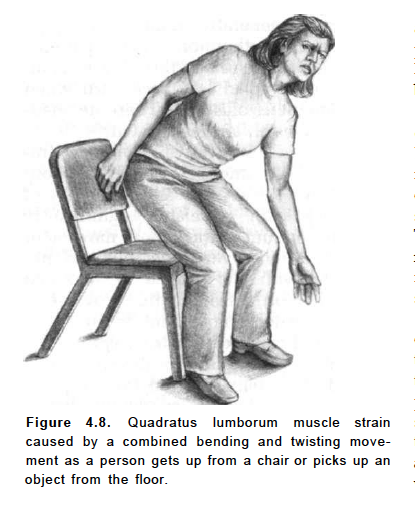
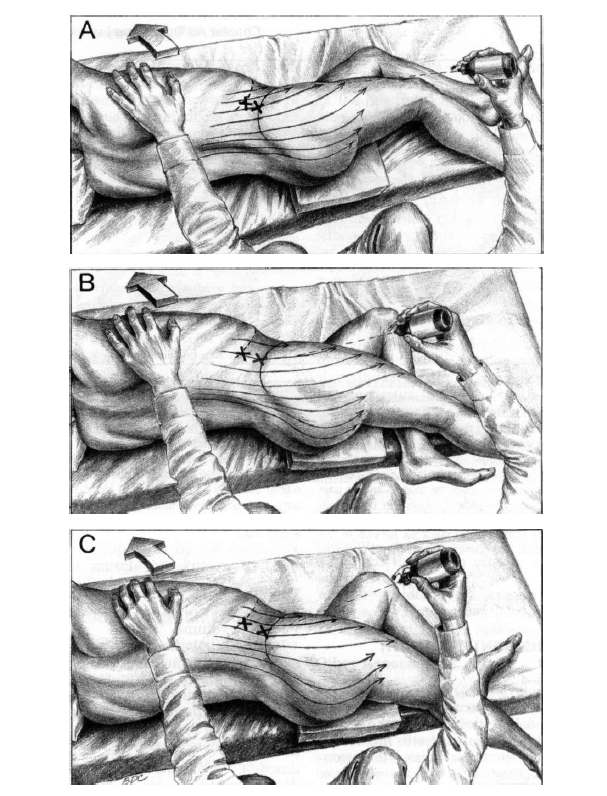
Figure 4.27. Intermittent cold with stretch of the right quadratus lumborum muscle, clinician seated. The uppermost lower limb (involved right side) is placed behind the other limb. Ice or spray patterns (thin arrows)
cover the muscle and the distribution of pain referred from its trigger points (Xs). Three progressive stretch
positions are shown. In all positions, the operator exerts pressure on the chest upward and forward, as indicated by the thick arrows. A, starting position in patients with severe involvement of the muscle. The right
knee and leg (treatment side) rest on the table, and the uppermost arm is elevated in front of the head. S,
increased stretch with the right thigh resting on the left leg to increase adduction at the hip and to enhance
the downward pull on the pelvis. C, full stretch with no support under the right knee. The clinician hand pressure elevates the rib cage and increases the stretch on the quadratus lumborum muscle. If there is no hip
dysfunction, the right lower limb hanging over the edge of the table may be pressed gently distalward to
ensure taking up all the slack by further pulling the pelvis away from the 12th rib on that side. An intermittent
cold pattern not shown here, see Figure 4.28B, also covers the skin representation of the iliopsoas muscle
next to the midline over the abdomen. The foam rubber pad was placed under the hip to relieve pressure
on the patient's tender greater trochanter. Positioning is better with a pillow placed as shown in Figure 4.28.
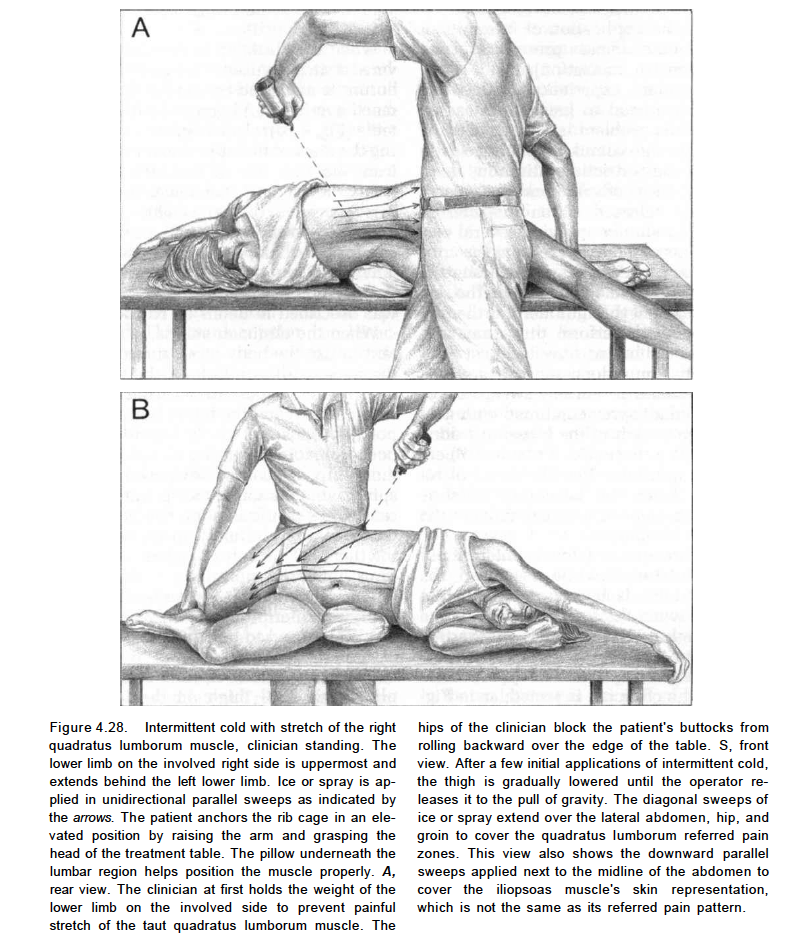
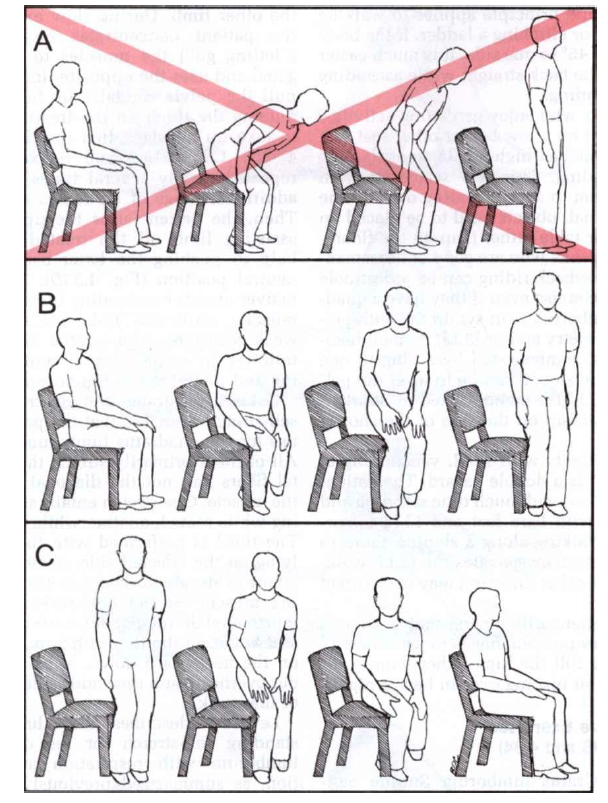
Figure 4.32. The Sit-to-stand and Stand-to-sit Techniques (reading from left to right) minimize strain on
the neck and back muscles and on the intervertebral fibrocartilaginous discs while rising up from, or sitting
down in a chair. A, back-threatening way (red X) of getting up from a chair by starting to rise with the buttocks
at the rear of the seat. This sequence places the back in a strained "leaning-over" posture, with strain of the quadratus lumborum muscle. 6, Sit-to-stand Technique with buttocks moved to the front of the seat and the body rotated at a 45° angle. This positioning permits one to keep the spine erect and with a normal lumbar lordosis throughout, between sitting and standing; it loads the hip and knee extensors instead of the
thoracolumbar and cervical paraspinal and other extensor muscles. C, the reverse, Stand-to-sit Technique,
is accomplished by first turning the body, by keeping the trunk erect while sitting down on the front of the seat, and then by sliding the buttocks backward, still keeping the spine erect.
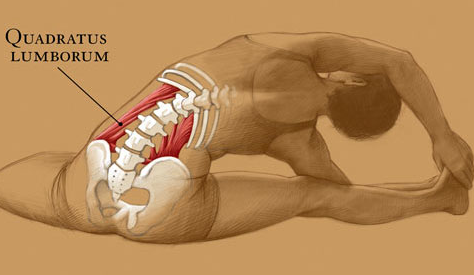
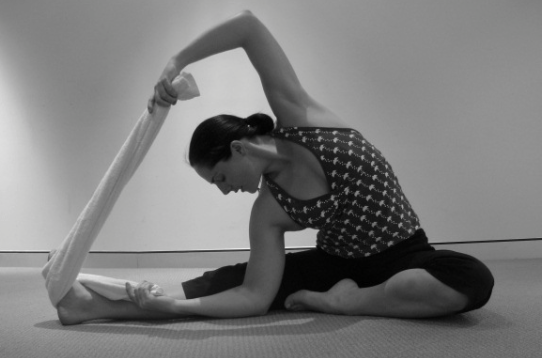
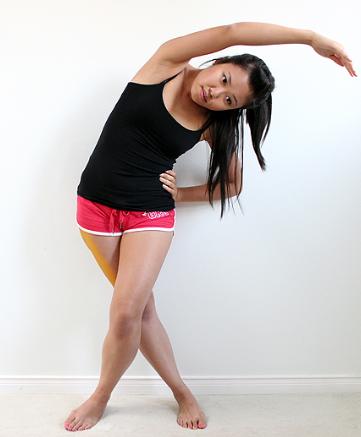
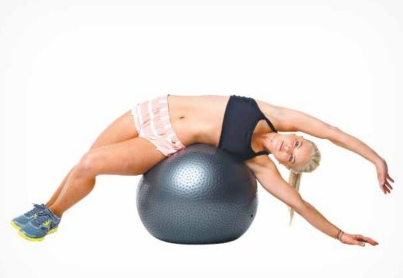
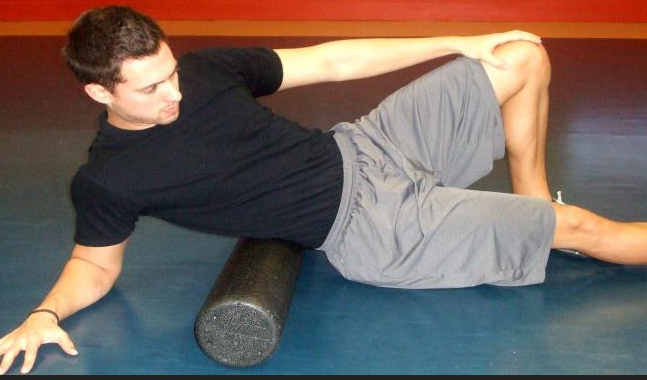
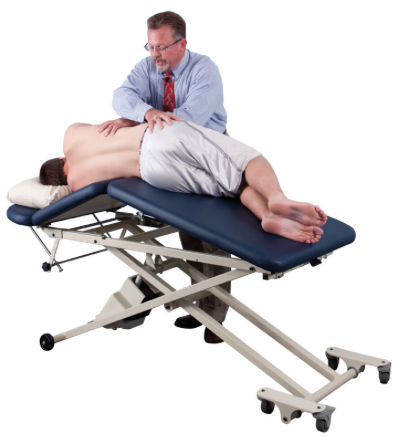
요방형근 isolation exercise