tendon and ligament healing의 PRP 작용.
 PRP role of growth factors tend lig heal in Sport Med.pdf
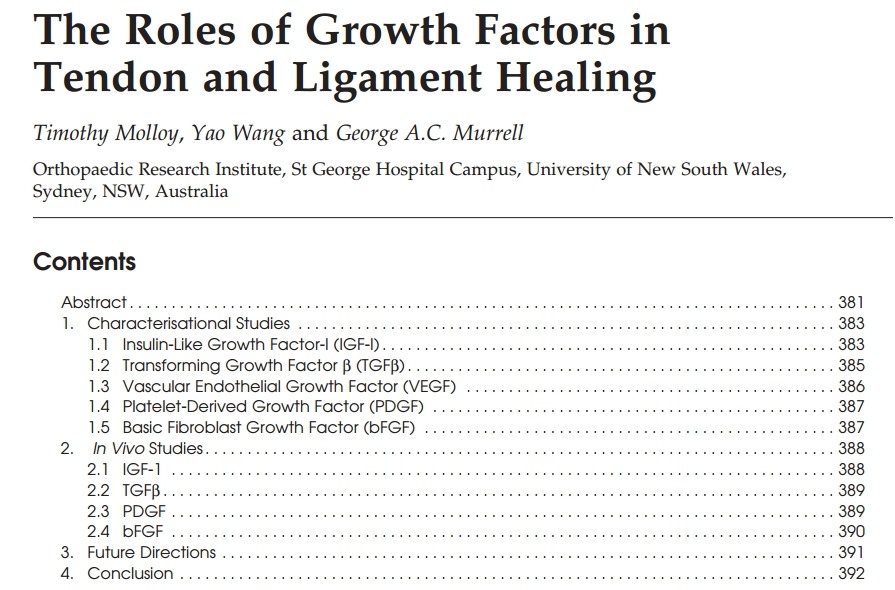
Abstract
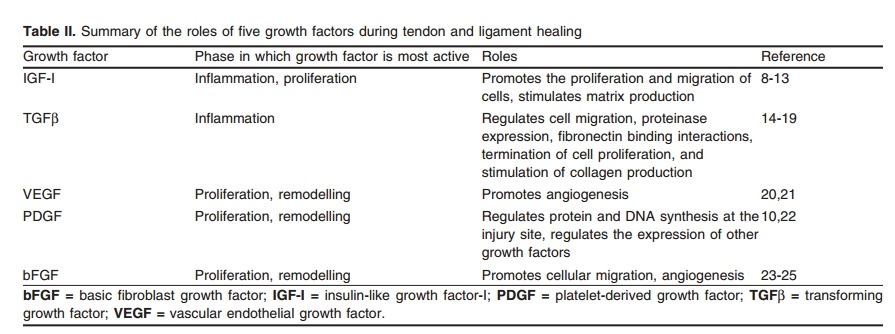
Tendon healing is a complex and highly-regulated process that is initiated, sustained and eventually terminated by a large number and variety of molecules. Growth factors represent one of the most important of the molecular families involved in healing, and a considerable number of studies have been undertaken in an effort to elucidate their many functions. This review covers some of the recent investigations into the roles of five growth factors whose activities have been best characterised during tendon healing: insulin-like growth factor-I (IGF-I), transforming growth factor β (TGFβ), vascular endothelial growth factor (VEGF), platelet-derived growth factor (PDGF), and basic fibroblast growth factor (bFGF).
- 건의 치유는 복잡하고, 매우 조절된 과정
- 성장인자는 건의 치유에 가장 중요한 치유물질을 대표함.
- 인슐린유사생장인자, 형질전환생장인자 베타, 혈관내피성장인자, 혈소판유래생장인자, 염기성섬유아세포생장인자
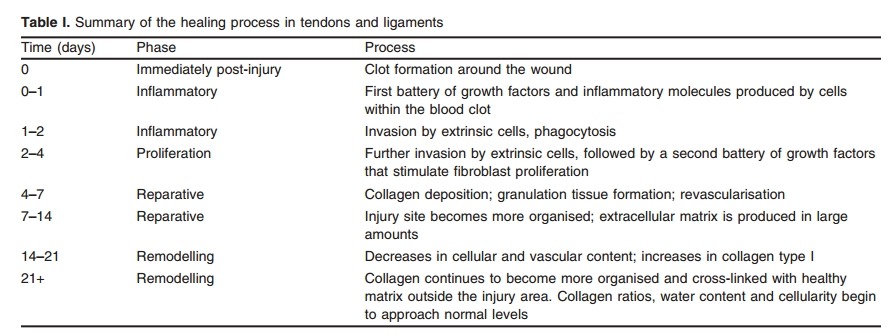
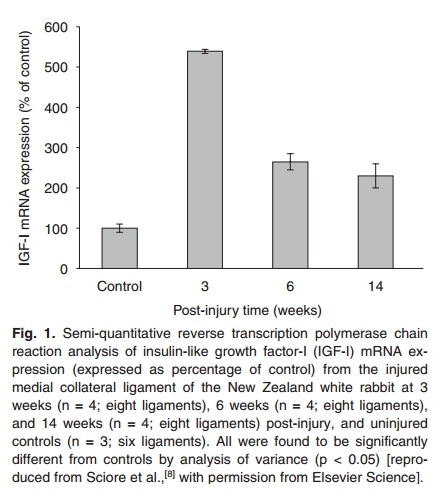
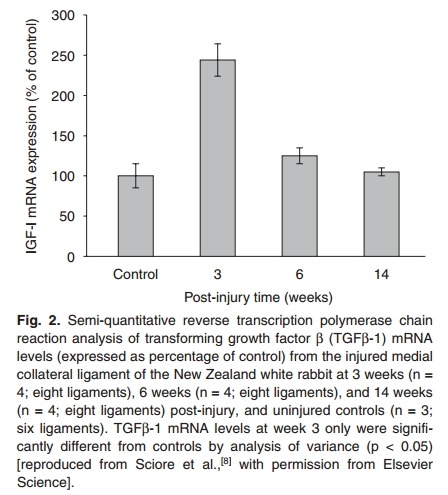
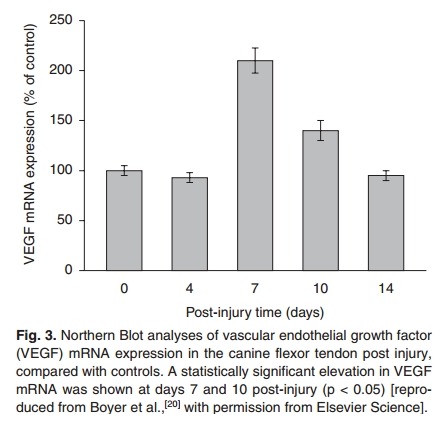
All five are markedly up-regulated following tendon injury and are active at multiple stages of the healing process. IGF-I has been shown to be highly expressed during the early inflammatory phase in a number of animal tendon healing models, and appears to aid in the proliferation and migration of fibroblasts and to subsequently increase collagen production. TGFβ is also active during inflammation, and has a variety of effects including the regulation of cellular migration and proliferation, and fibronectin binding interactions. VEGF is produced at its highest levels only after the inflammatory phase, at which time it is a powerful stimulator of angiogenesis. PDGF is produced shortly after tendon damage and helps to stimulate the production of other growth factors, including IGF-I, and has roles in tissue remodelling.
- 다섯가지 생장인자는 건손상 치유과정에 중요한 역할을 수행
- 인슐린유사생장인자는 염증초기에 높게 표현되어 기능하고, 섬유아세포의 이주, 증식에 도움을 주고, 콜라겐 생성증가를 유도함.
- 형질전환생장인자는 염증기 동안 활성화되고, 세포 이주와 증식 조절에 다양한 효과를 보임.
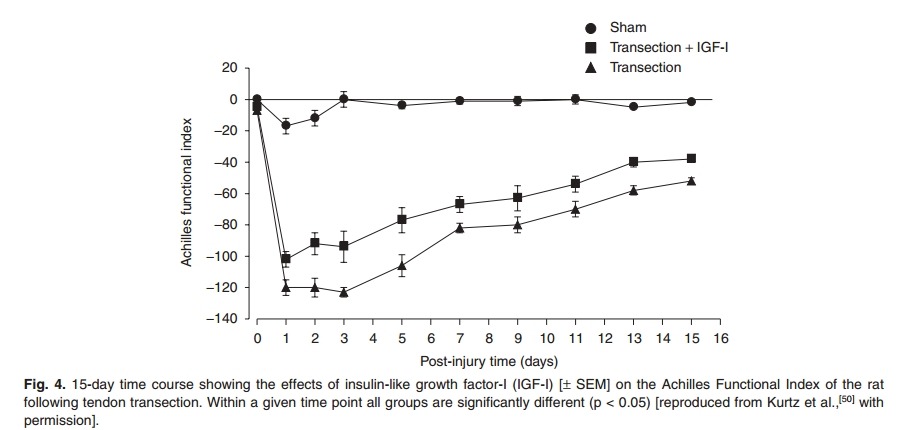
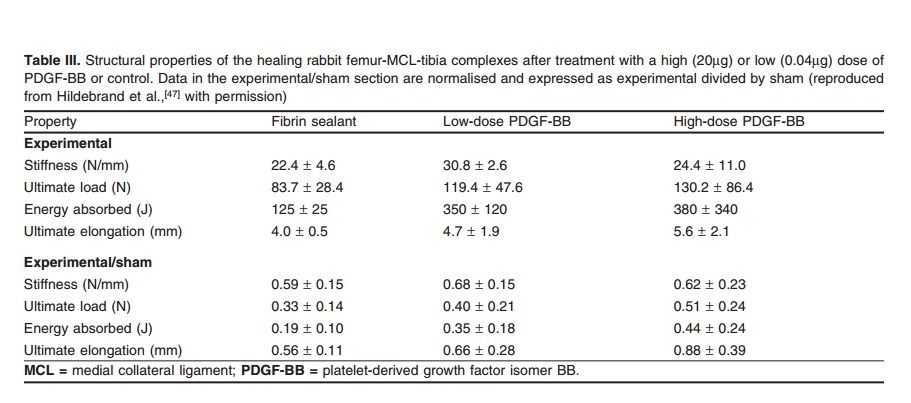
In vitro and in vivo studies have shown that bFGF is both a powerful stimulator of angiogenesis and a regulator of cellular migration and proliferation. This review also covers some of the most recent studies into the use of these molecules as therapeutic agents to increase the efficacy and efficiency of tendon and ligament healing. Studies into the effects of the exogenous application of TGFβ, IGF-I, PDGF and bFGF into the wound site singly and in combination have shown promise, significantly decreasing a number of parameters used to define the functional deficit of a healing tendon. Application of IGF-I has been shown to increase in the Achilles Functional Index and the breaking energy of injured rat tendon. TGFβ and PDGF have been shown separately to increase the breaking energy of healing tendon. Finally, application of bFGF has been shown to promote
cellular proliferation and collagen synthesis in vivo.
댓글
댓글 리스트-
작성자tommyjung 작성시간 12.06.25 1. 마지막 저자들의 코멘트. futrure of cytokine-based therapies 어쩌구....솔직히 이런 발상을 하고 있다는 것이 저는 안타깝습니다.
부분의 합이 전체가 아닐텐데 아무리 좋은, 정확한 기전을 알아내서 가장 알맞는 substance를 넣은들 과연 그것이 제대로 작동할까?
지금까지 많은 학자들이 나름 노력한다는 발상으로 얼마나 많은 complication을 많들어 냈는가?
대표적인 예가 항암제 개발을 molecular level에서 targetting한다는게 무슨 의미가 있을까요?
2. 그 좋은 것들이 몸에 들어와도 집이 있어야죠. 먹고 살수 있는 환경을.