흉추와 흉곽의 생체역학과 촉진은 다른 관절에 비해서 탐구가 소홀히 되고 있다.
한번 정도는 진지하게 탐구할 필요가 있는 듯
흉추와 흉곽 관절의 문제는 대개 Hypomobile임을 잊지말고..
수없이 많은 hypomobile한 관절을 어떻게 찾아내고, 해결할 것인지를 상상해보자.
먼저 흉추와 흉곽의 생체역학(클릭)을 읽고
반드시 원문까지 번역해야...
panic bird...
The exact palpation of the cervicothoracic junction is equally as important as the correct localization of the posterior sacroiliac spine (PSIS) on the pelvis or the C2 spinous process in the upper cervical spine. It enables thoracic structures to be reliably accessed from a superior position and the lower cervical spine from an inferior position.
The aim is to precisely visualize the C6-T1 spinous processes as well as the position of the first rib from posterior. This is followed by the localization of all thoracic spinous processes and their relationship to their transverse processes and the corresponding ribs. This section concludes with several examples of assessment and treatment of the thoracic spine and the ribs that demonstrate how useful hands-on palpation is.
Cervicothoracic Junction in the Sitting Starting Position
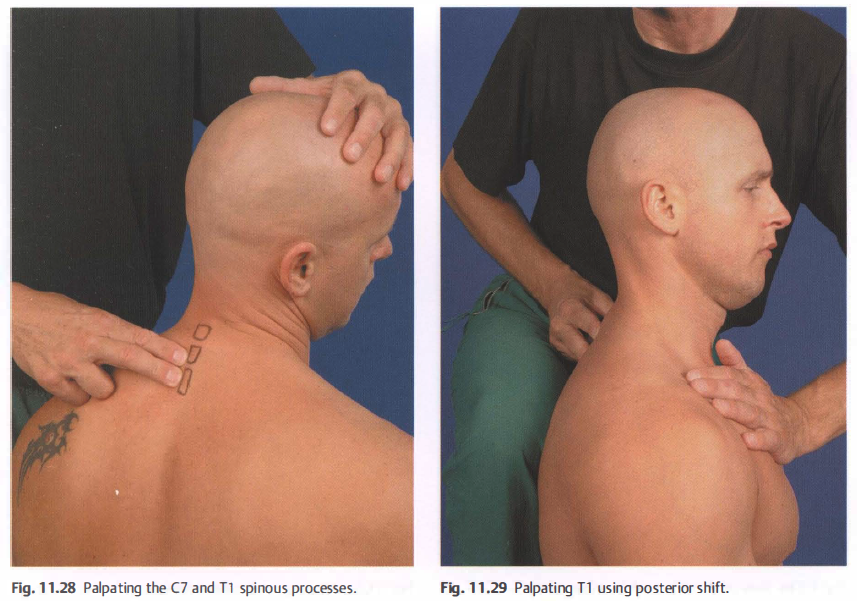
The following technique aims to differentiate the thoracic and the cervical spines from one another. This cannot be done by locating the longest spinous process. The presumption that the longest spinous process corresponds to the vertebra prominens ((7) is misleading. The T1 spinous process is often the longer of the two.
Several of the following techniques require extensive cervical spine movement, which is not possible with
every patient. They are only helpful when a certain amount of movement is available in the cervicothoracic
region. When there are enormous restrictions in mobility in this region, differentiation is almost impossible. The only option that remains for differentiation is the palpation of the different contours felt on the spinous processes (e.g., (5 and (6).
Localization of the Spinous Processes Using Cervical Extension
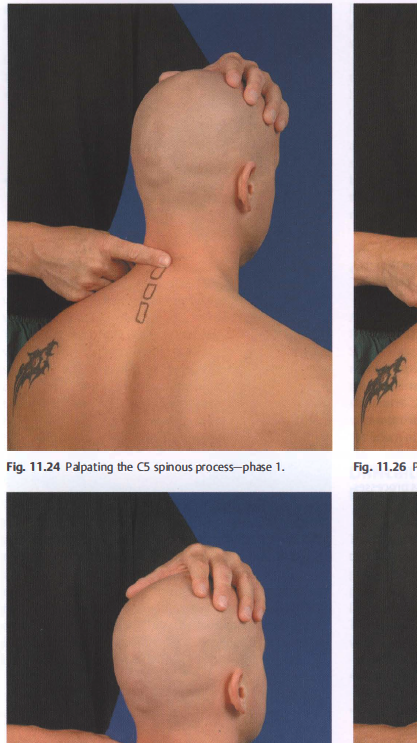
One or two finger pads are placed over the middle of the posterior lower cervical spine. The anterior hand controls the position of the head (Fig. 11.22).
cervico-thoracic junction 탐구
1) 앉은 자세에서 cervicothoracic junction
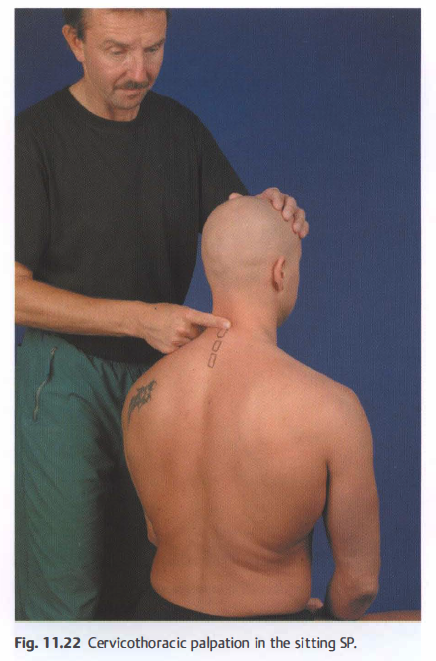
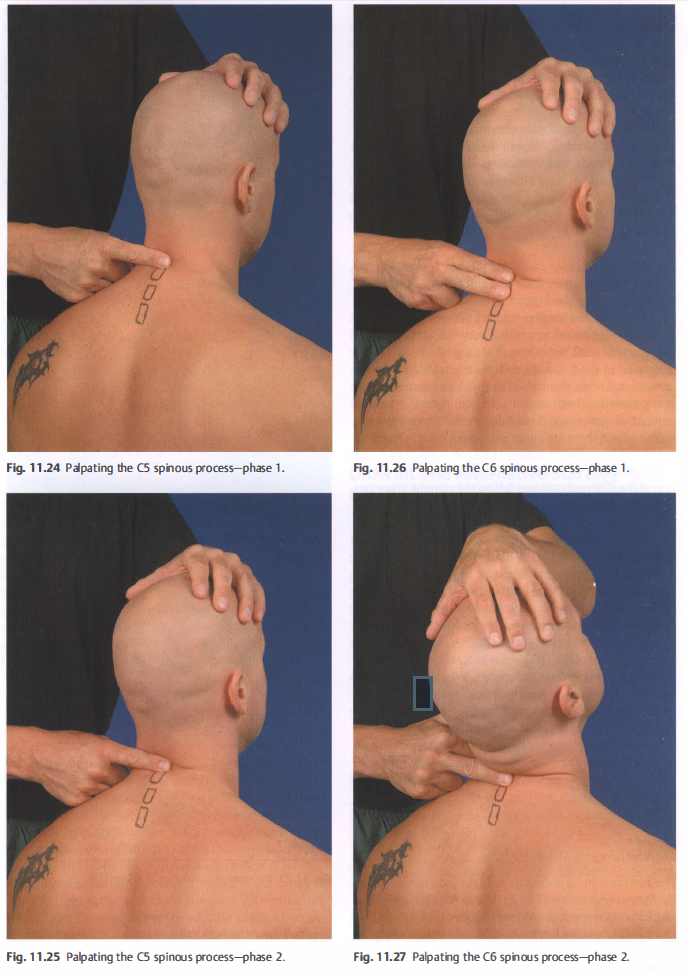
The position of the C6 spinous process can often be recognized by simply feeling its shape. When using moderate pressure to palpate from superior to inferior along the cervical mid-line, the therapist often feels the finger pads moving down onto a type of platform. The sides of the fingers come from a superior position and encounter the C6 spinous process. The finger pads are then lying on top of the (5 spinous process. As this method of localization is not reliable enough, another aid is needed to confirm that it is correct.
Confirmation with Movement
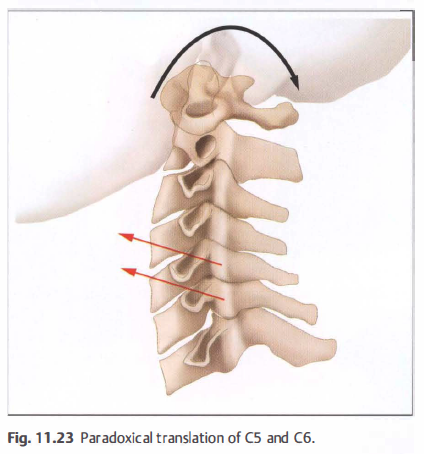
The anterior hand is in contact with the patient's head and facilitates cervical extension by tilting the head backward. The C5 and C6 spinous processes behave typically during this movement. The upper cervical vertebrae move posteriorly during cervical extension. C5 and C6 shift anteriorly (Fig. 11.23). (5 starts moving when extension is minimal, (6 at the end of the extension. These movements are clearly perceived as a spinous process disappears beneath the palpating finger pads.
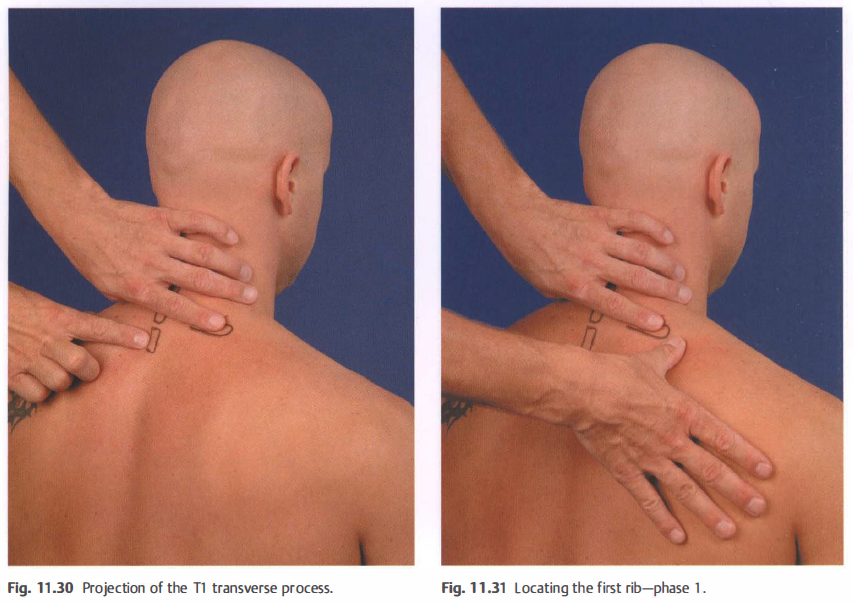
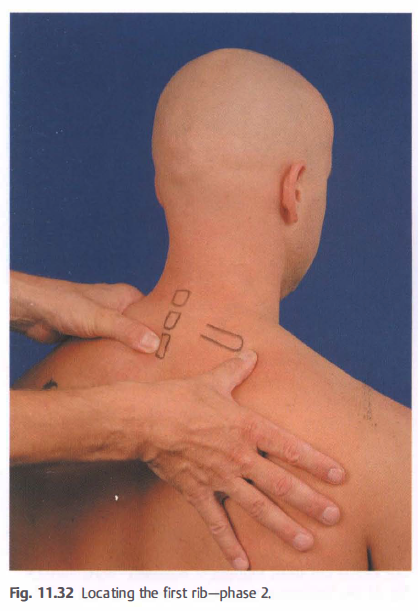
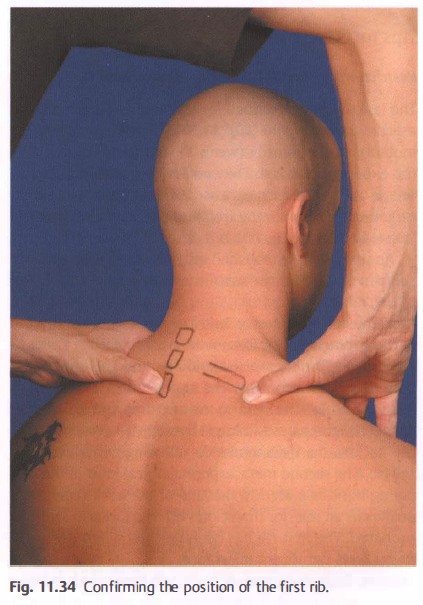
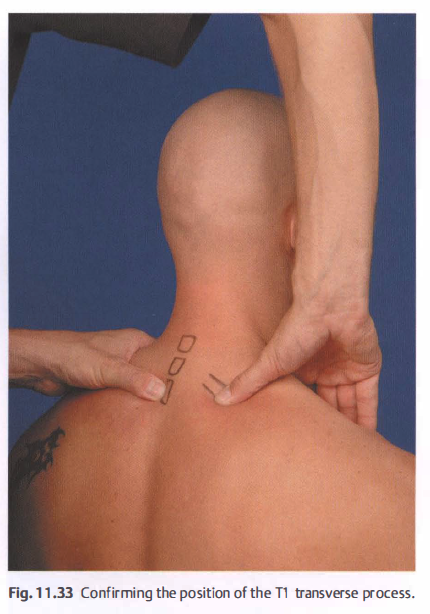
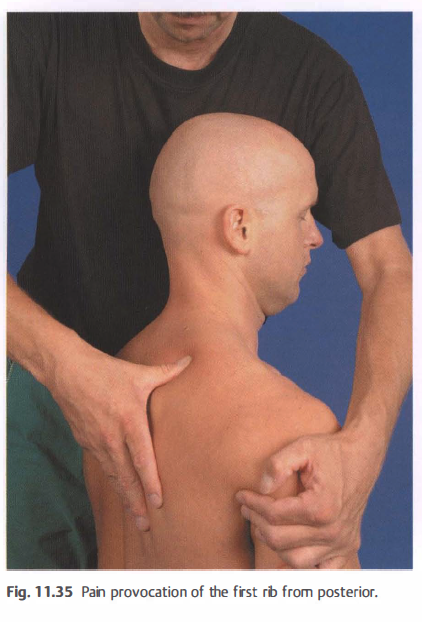
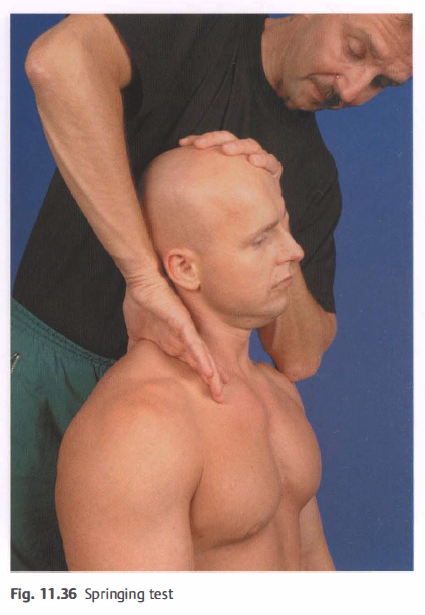
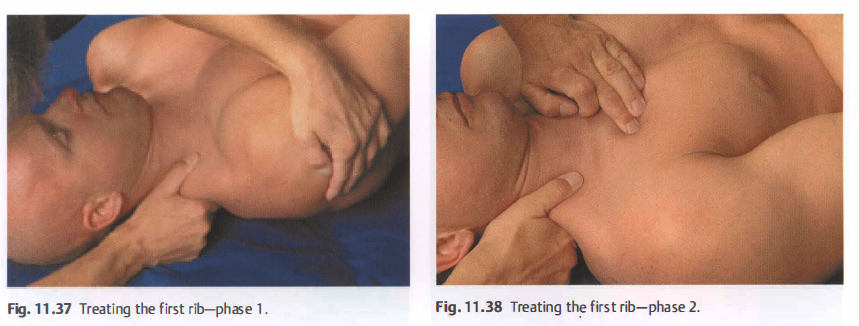
first rib dysfunction을 joint mobilizing하는 방법.
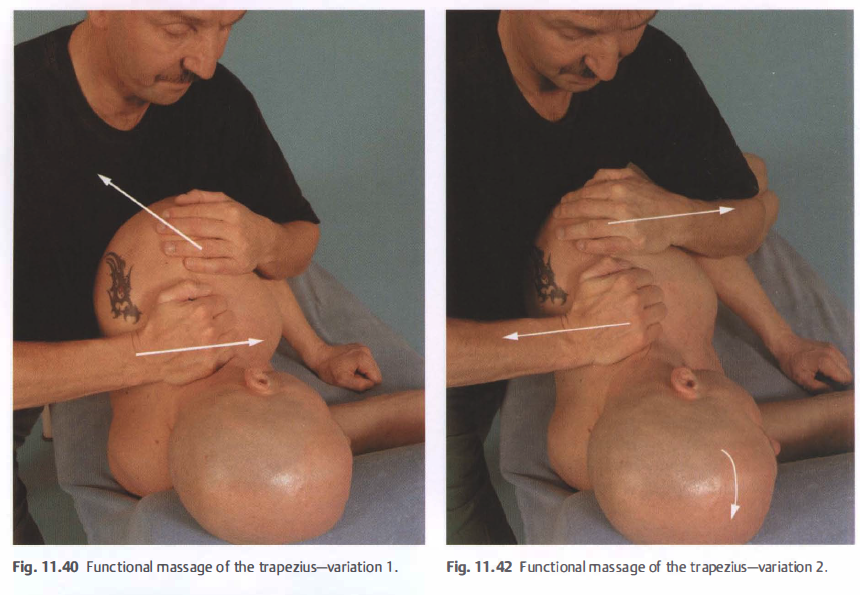
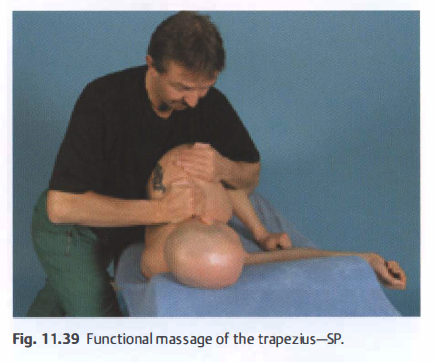
상부승모근의 기능적 마사지 방법.
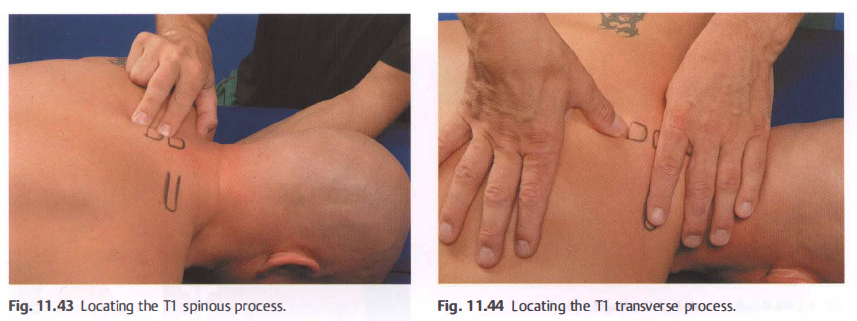
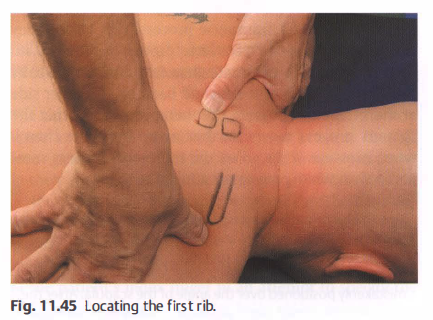
엎드린 자세에서 cervicothoracic junction
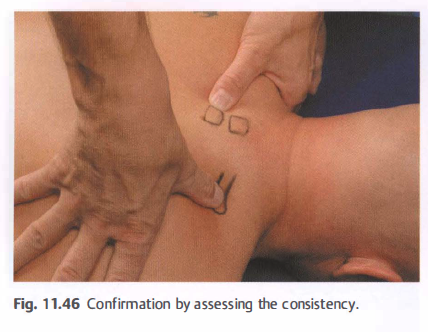
견갑골의 중립위치
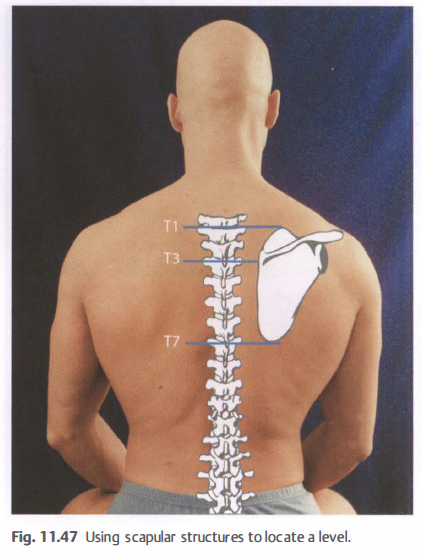
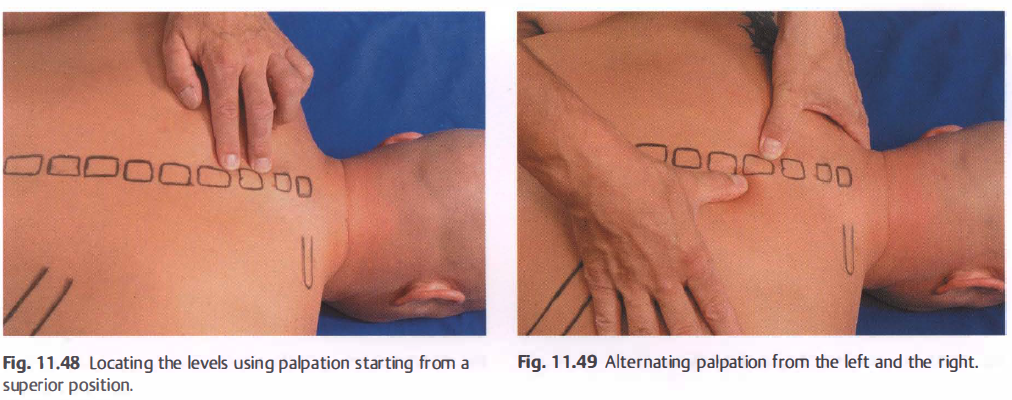
중간 흉추의 촉진
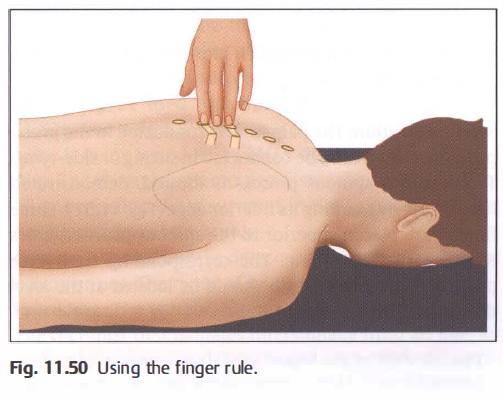
흉추진단의 finger rule
흉추 8번 극돌기와 늑골
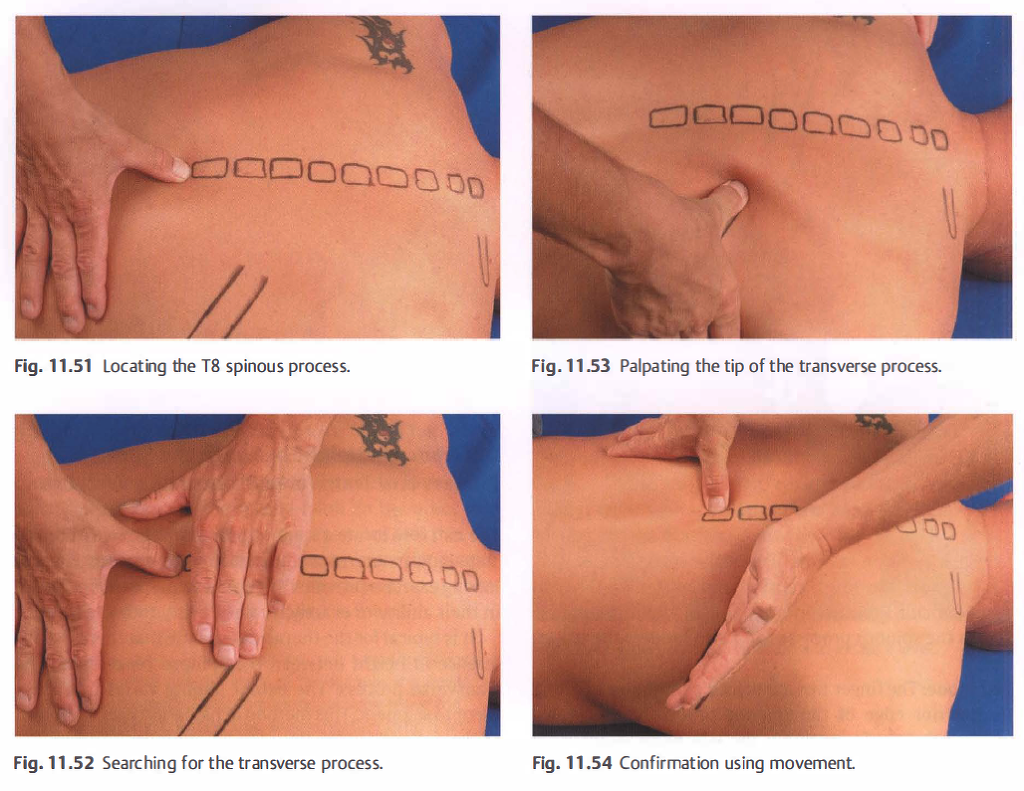
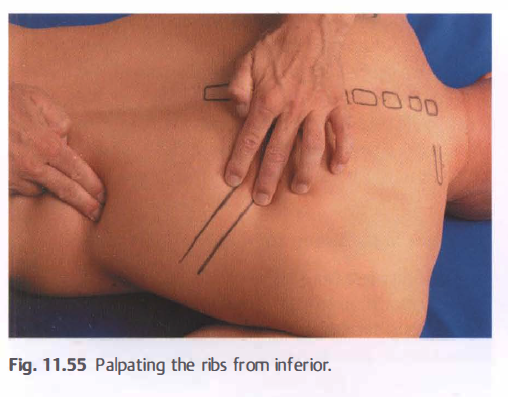
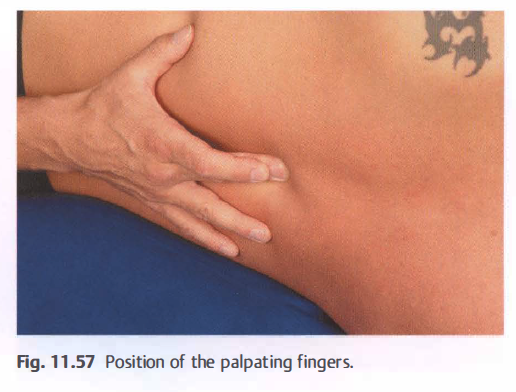
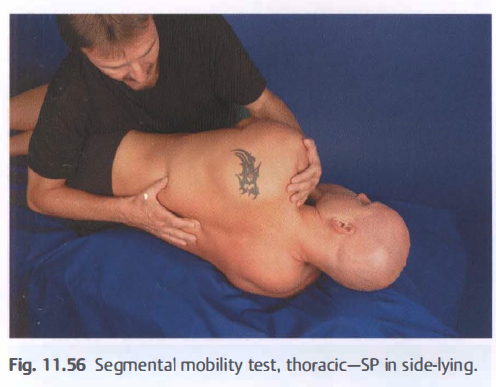
흉추 움직임 검사법
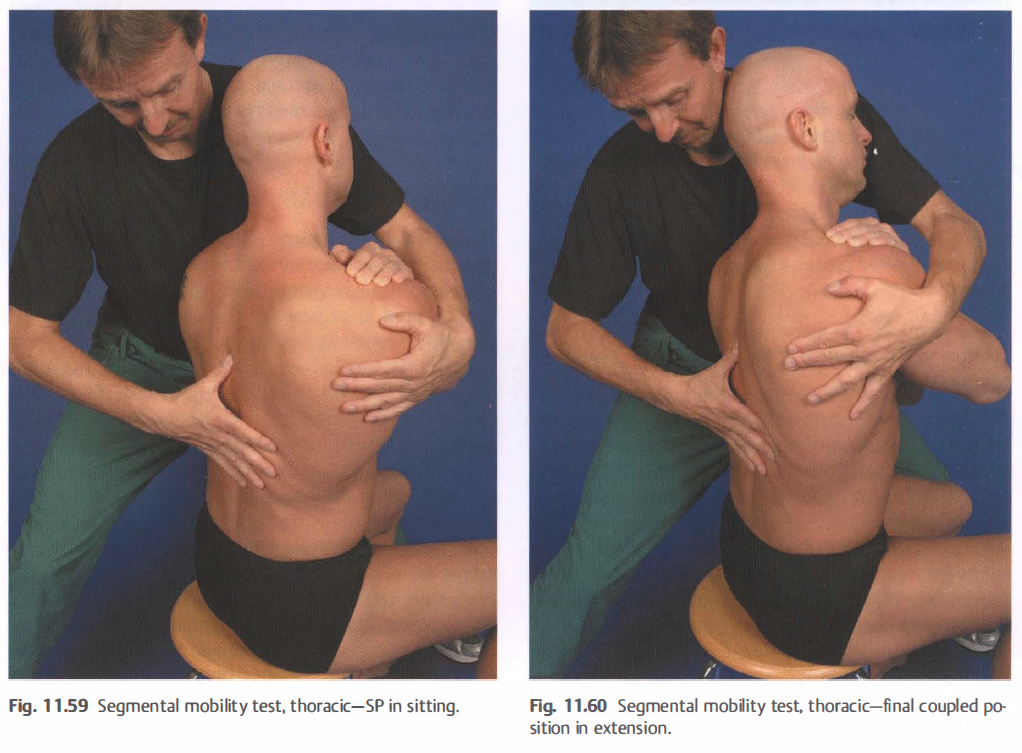
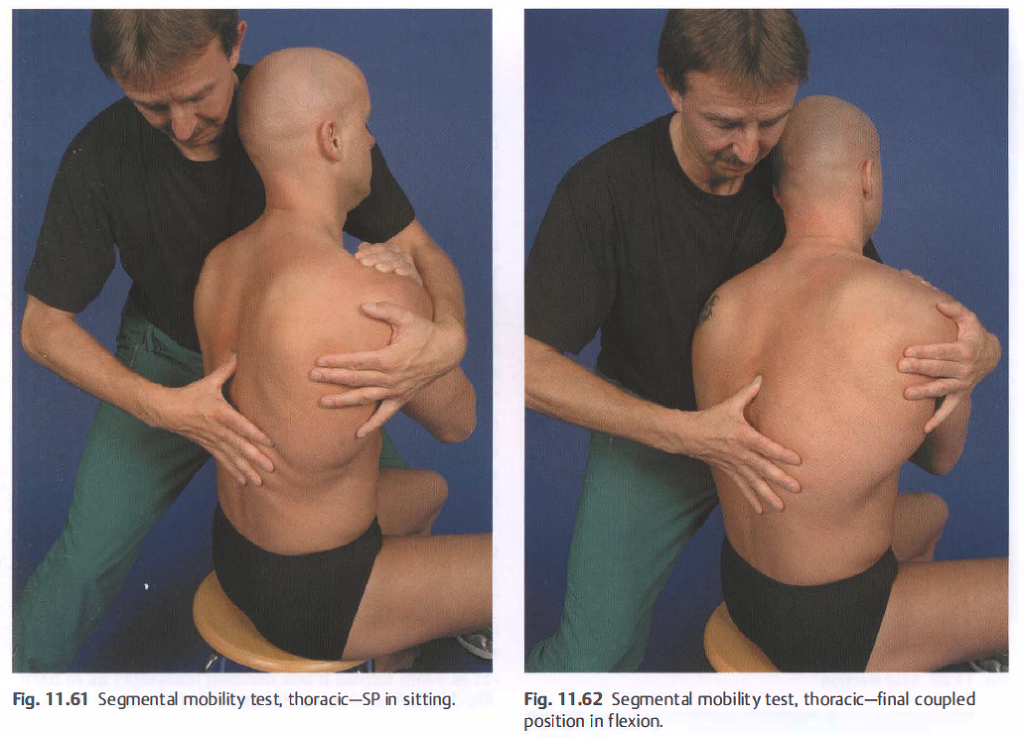
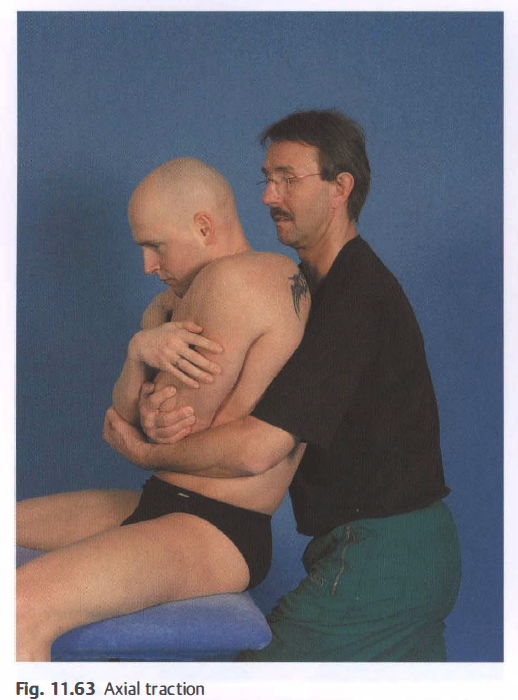
흉추 axial traction
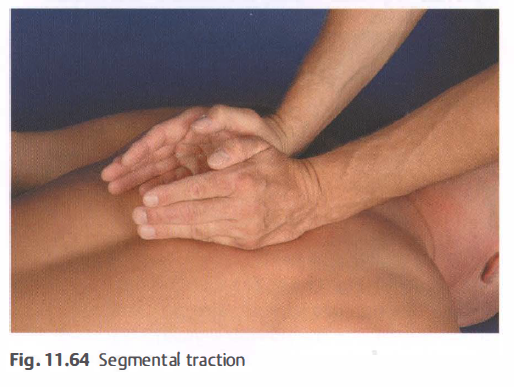
segmental traction
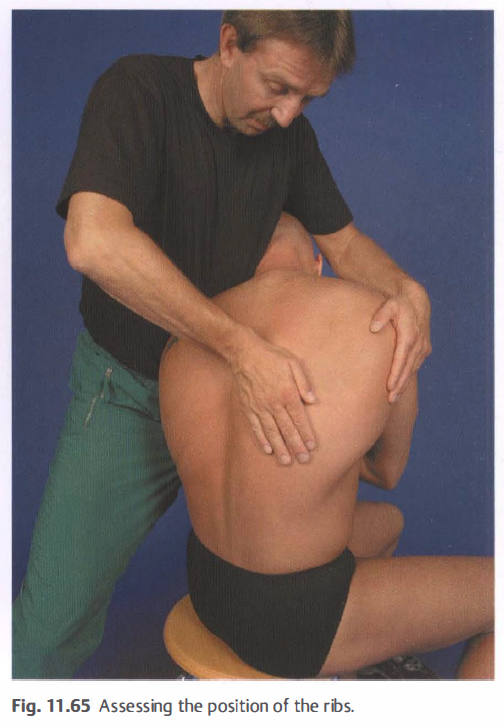
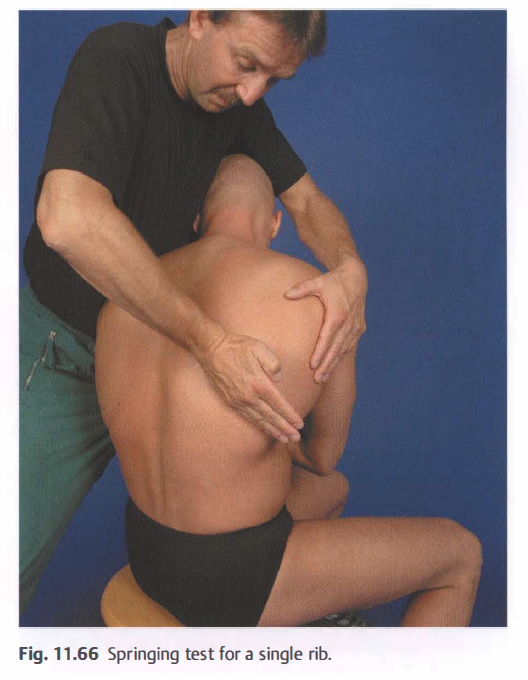
늑골의 sprining test
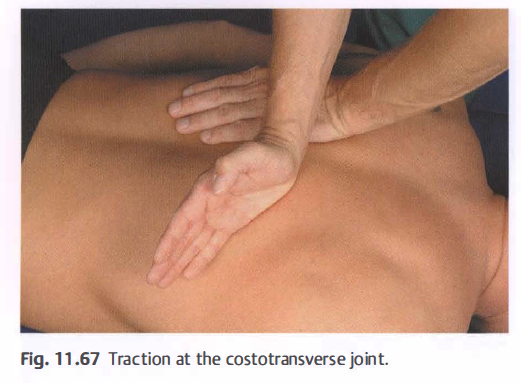
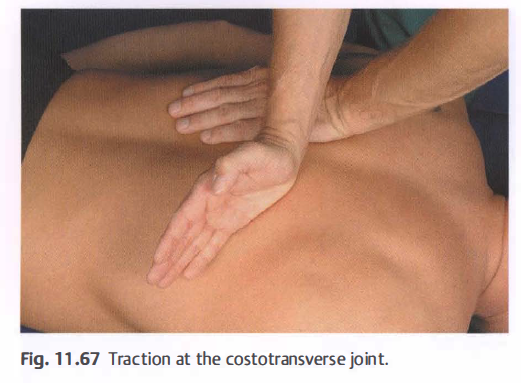
costotransverse joint 견인치료
흉추, 흉곽 전면부 촉진
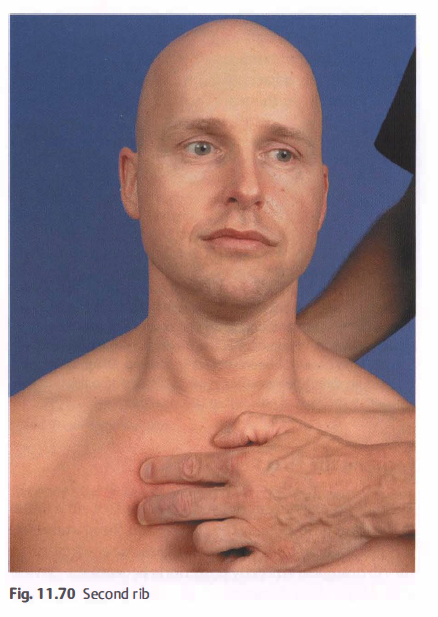
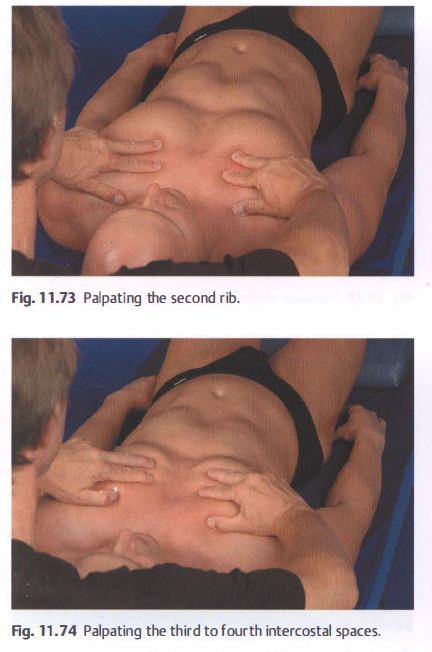
전면부의 두번째 늑골
전면부 첫번째 늑골
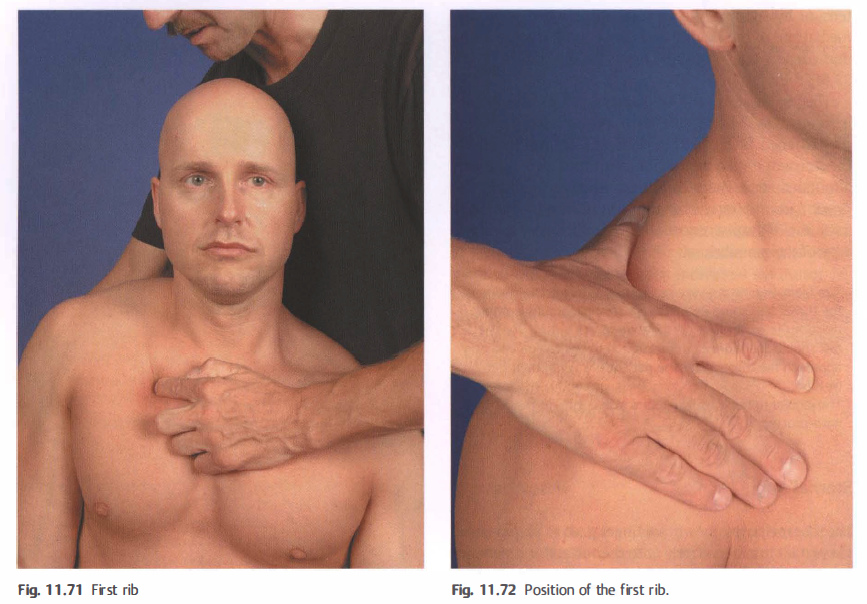
전면부 3, 4번째 늑골
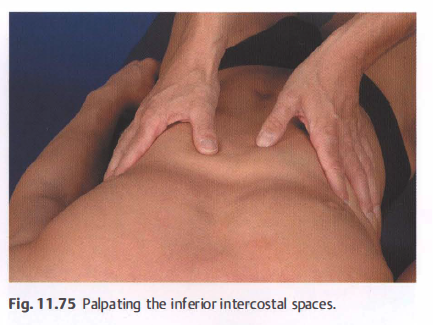
전면부 하부늑골 촉진
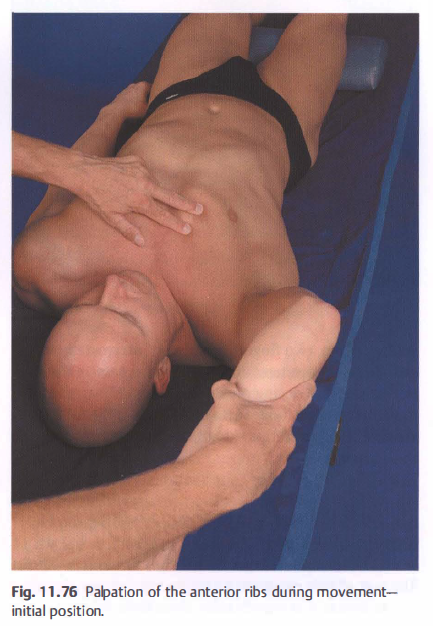
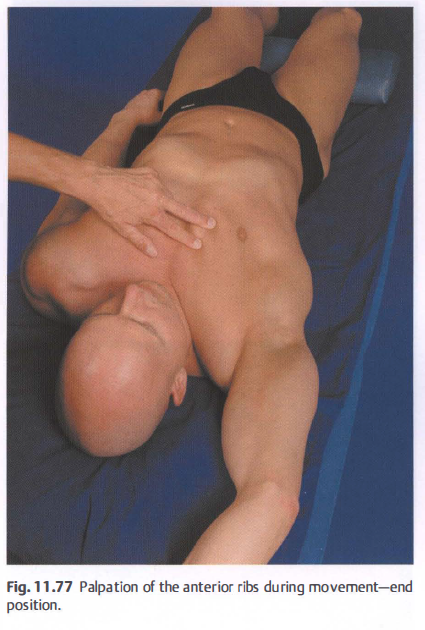
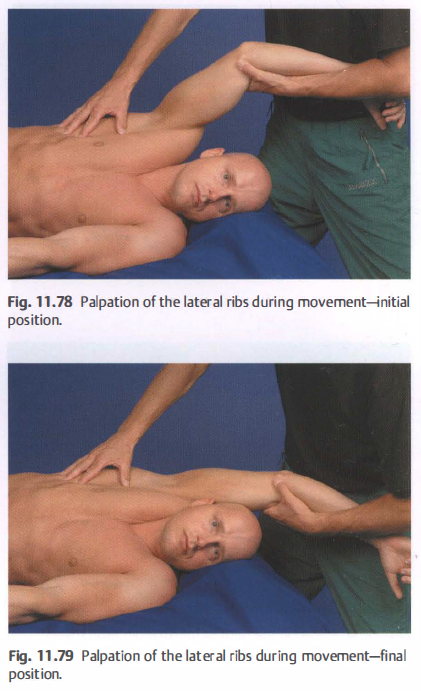
팔 움직임을 통한 늑골의 가동법
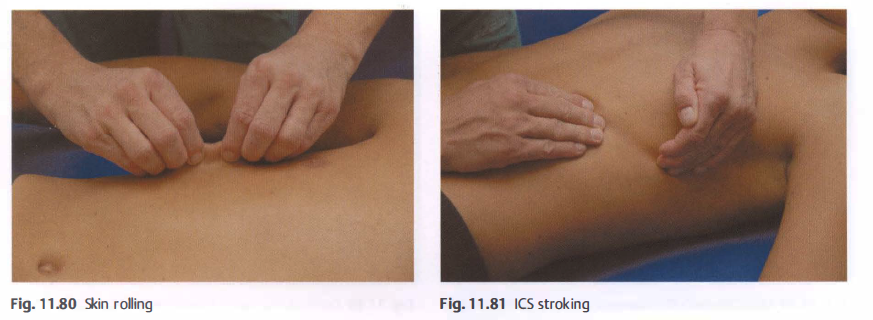
skin rolling
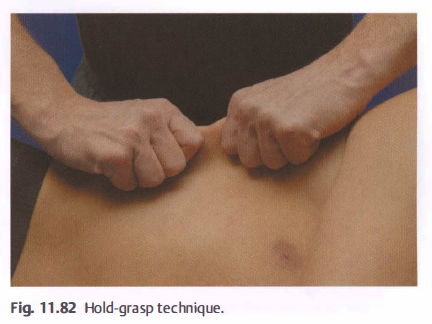
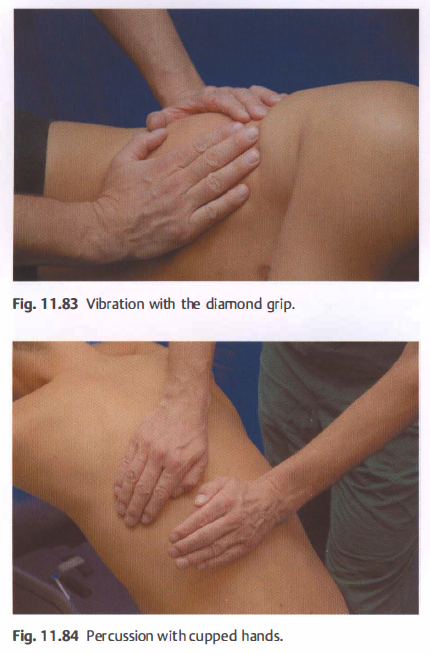
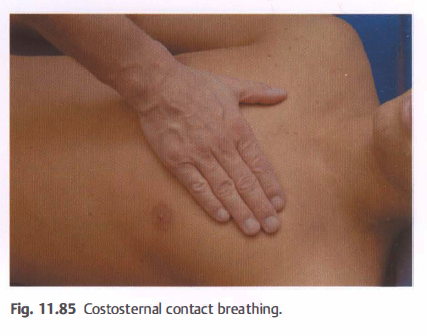
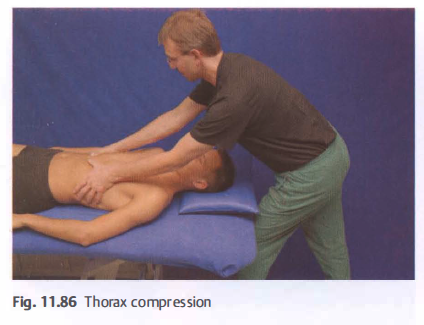
흉곽 압박
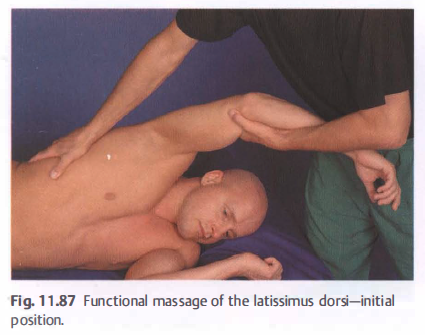
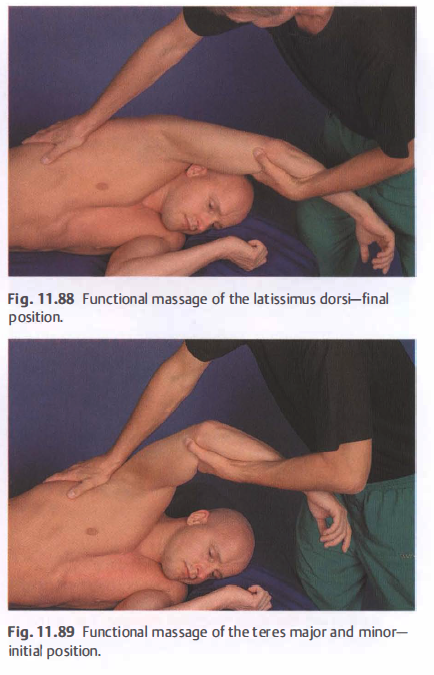
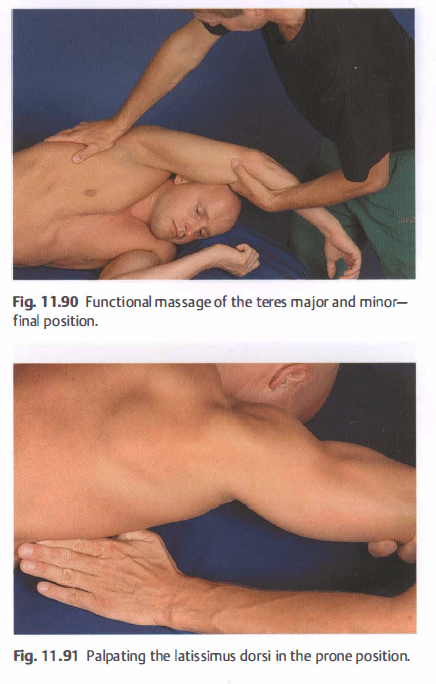
광배근 기능적 마사지
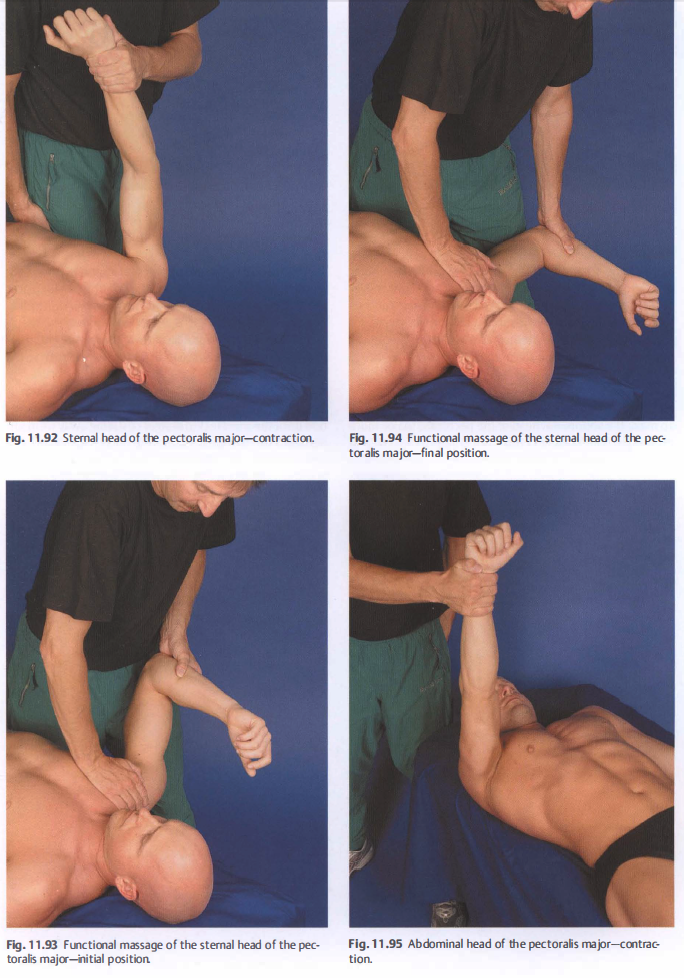
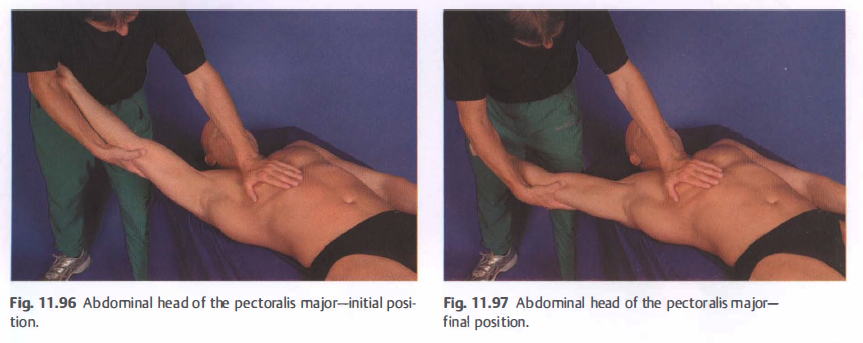
대흉근 기능적 마사지