Foods
. 2021 Jun 7;10(6):1314. doi: 10.3390/foods10061314
Current Knowledge on Beetroot Bioactive Compounds: Role of Nitrate and Betalains in Health and Disease
Iñaki Milton-Laskibar 1,2,*, J Alfredo Martínez 1,2, María P Portillo 2,3,4
Editor: Isabel Hernando
- Author information
- Article notes
- Copyright and License information
PMCID: PMC8229785 PMID: 34200431
Abstract
An increase in the prevalence of noncommunicable chronic diseases has been occurring in recent decades. Among the deaths resulting from these conditions, cardiovascular diseases (CVD) stand out as the main contributors. In this regard, dietary patterns featuring a high content of vegetables and fruits, such as the Mediterranean and the DASH diets, are considered beneficial, and thus have been extensively studied. This has resulted in growing interest in vegetable-derived ingredients and food-supplements that may have potential therapeutic properties. Among these supplements, beetroot juice, which is obtained from the root vegetable Beta vulgaris, has gained much attention. Although a significant part of the interest in beetroot juice is due to its nitrate (NO3−) content, which has demonstrated bioactivity in the cardiovascular system, other ingredients with potential beneficial properties such as polyphenols, pigments and organic acids are also present. In this context, the aim of this review article is to analyze the current knowledge regarding the benefits related to the consumption of beetroot and derived food-supplements. Therefore, this article focuses on nitrate and betalains, which are considered to be the major bioactive compounds present in beetroot, and thus in the derived dietary supplements.
요약
최근 수십 년 동안 비전염성 만성 질환의 유병률이 증가하고 있습니다. 이러한 질환으로 인한 사망 원인 중 심혈관 질환(CVD)이 가장 큰 비중을 차지합니다. 이러한 맥락에서, 지중해식 식단과 DASH 식단과 같이 채소와 과일의 함량이 높은 식습관이 유익한 것으로 간주되어 광범위하게 연구되고 있습니다. 그 결과, 잠재적인 치료 효과가 있을 수 있는 식물성 성분과 식품 보조제에 대한 관심이 높아지고 있습니다.
그 중에서도 뿌리채소인 비트(Beta vulgaris)에서 추출한 비트 주스가 많은 관심을 받고 있습니다.
비트 주스에 대한 관심의 상당 부분은
심장혈관계에 생체활성을 보이는 질산염(NO3-) 함량 때문이지만,
폴리페놀, 색소, 유기산과 같은 잠재적인 유익한 성분을 가진 다른 성분들도 존재합니다.
이러한 맥락에서, 이 리뷰 기사의 목적은
비트 뿌리와 그 파생 식품 보조제 섭취와 관련된 이점에 관한
현재의 지식을 분석하는 것입니다.
따라서 이 기사에서는
비트 뿌리와 그 파생 식품 보조제에 존재하는
주요 생체 활성 화합물로 간주되는 질산염과 베타라인에 초점을 맞춥니다.
Keywords: beetroot, dietary supplement, nitrate, betalains
1. Introduction
The prevalence of noncommunicable chronic diseases has been on the rise in recent decades. It is estimated that noncommunicable disease-related deaths account for more than 70% of all deaths that occur worldwide each year [1]. Among them, cardiovascular diseases (CVD), which are strongly related to obesity, stand out as the main contributors. Indeed, obesity is considered a major risk factor for the development of arterial hypertension, myocardial infarction or stroke, as well as other chronic metabolic disorders (diabetes and dyslipidemia) that may have an influence on CVD mortality [1]. In this line, the benefits of dietary patterns characterized by a high intake of vegetables and fruits in CVD have been extensively studied. The Mediterranean and the Dietary Approaches to Stop Hypertension (DASH) diets are the most widely studied ones [2,3,4,5]. This relationship between vegetable-rich diets and CVD has resulted in growing interest in vegetable-derived ingredients and plant-food based supplements that may have potential therapeutic properties [6].
One of these food supplements is beetroot juice, which is obtained from the root vegetable Beta vulgaris. Much of the interest in beetroot juice derives from its nitrate (NO3−) content, which is known to have bioactivity in the cardiovascular system [7]. However, beetroot juice also contains further ingredients such as polyphenols, pigments and organic acids that may well be of benefit [6]. Nitrate has also been reported to improve performance in sport, and this has led to the use of beetroot juice as a common food supplement as an ergogenic aid [8]. The aforementioned effects attributed to beetroot juice have contributed to an increase in its popularity, and therefore, in its consumption. It has been reported that the global market of beetroot juice increases by 5% every year, a trend that is estimated to remain steady in the following years [9].
In this scenario, the aim of this review article is to analyze the current knowledge regarding the benefits related to the consumption of beetroot and derived food-supplements or formulations, as well as the involved mechanisms of action. To this end, the present article focuses on nitrate and betalains, which are considered to be the major bioactive compounds present in beetroot, and thus, also in the derived dietary supplements.
1. 서론
최근 수십 년 동안 비전염성 만성 질환의 유행이 증가하고 있습니다. 비전염성 질환과 관련된 사망이 전 세계에서 매년 발생하는 모든 사망의 70% 이상을 차지하는 것으로 추정됩니다 [1]. 그 중에서도 비만과 밀접한 관련이 있는 심혈관 질환(CVD)이 주요 원인으로 꼽히고 있습니다. 실제로, 비만은 동맥성 고혈압, 심근경색 또는 뇌졸중, 그리고 CVD 사망률에 영향을 미칠 수 있는 기타 만성 대사 장애(당뇨병 및 이상지질혈증)의 주요 위험 요인으로 간주됩니다 [1]. 이와 관련하여, CVD에 있어 채소와 과일의 섭취가 많은 식습관의 이점이 광범위하게 연구되어 왔습니다. 지중해식 식단과 고혈압 예방 식단(DASH) 식단은 가장 널리 연구된 식단입니다 [2,3,4,5]. 채소가 풍부한 식단과 심혈관 질환의 관계에 대한 연구 결과, 잠재적인 치료 효과가 있는 것으로 보이는 식물성 원료와 식물성 식품 기반 보충제에 대한 관심이 높아지고 있습니다 [6].
이러한 식품 보조제 중 하나는 뿌리채소인 비트(Beta vulgaris)에서 추출한 비트 주스입니다. 비트 주스에 대한 관심은 주로 비트에 함유된 질산염(NO3-) 성분에서 비롯되는데, 이 성분은 심혈관계에 생체활성을 갖는 것으로 알려져 있습니다[7]. 그러나 비트 주스에는 폴리페놀, 색소, 유기산과 같은 다른 성분도 함유되어 있어 건강에 도움이 될 수 있습니다[6].
질산염은
스포츠 경기력 향상에도 효과가 있는 것으로 알려져,
근력 강화 보조제로서 비트 주스를 흔히 먹는 경우가 있습니다 [8].
앞서 언급한
비트 주스의 효능 덕분에 그 인기가 높아졌고,
따라서 소비량도 증가했습니다.
비트 주스의 세계 시장은 매년 5%씩 성장하고 있으며,
이러한 추세는 앞으로도 계속될 것으로 예상됩니다 [9].
이 글의 목적은 비트 뿌리 및 그 파생 식품 또는 제제의 섭취와 관련된 이점과 관련된 작용 메커니즘에 대한 현재의 지식을 분석하는 것입니다. 이를 위해, 이 글은 비트 뿌리 및 그 파생 식품 또는 제제에 존재하는 주요 생체 활성 화합물로 간주되는 질산염과 베타라인에 초점을 맞춥니다.
2. Nitrate
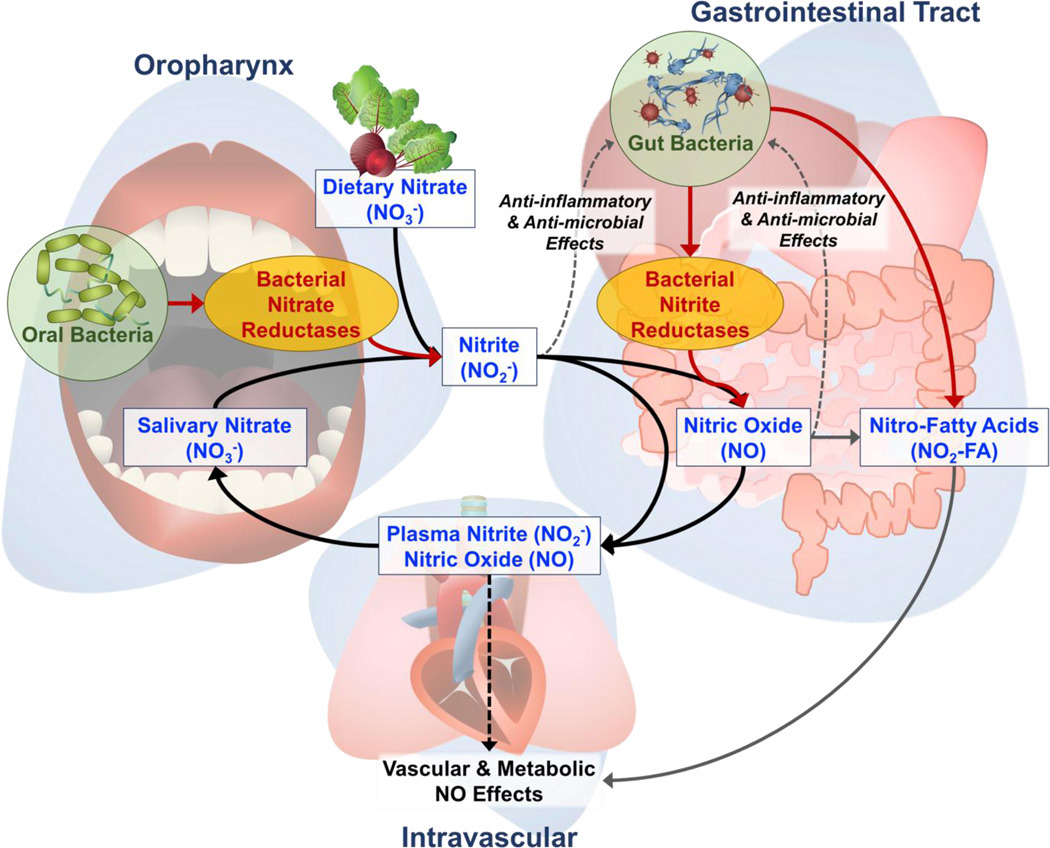
The main sources of nitrate in mammals are diet (especially leafy green vegetables) and endogenous synthesis (the majority of cells in our body can synthetize nitrate) [10]. At first, nitrate, as well as nitrite (NO2−), were thought to be an inert derivative of the metabolism of nitric oxide (NO). Nowadays, it is well-known that both nitrate and nitrite can be NO precursors (Figure 1) through the nitrate–nitrite–NO synthase pathway [11]. This conversion mainly takes place in conditions of hypoxia and/or acidosis, as occurs in muscle contraction or tissue ischemia [12]. It has also been described that this metabolic pathway is triggered when nitrate comes from dietary sources, i.e., after consuming leafy green vegetables [13].
2. 질산염
포유류에서 질산염의 주요 공급원은
식단(특히 잎이 많은 녹색 채소)과
체내 합성(우리 몸의 대부분의 세포가 질산염을 합성할 수 있음)입니다[10].
처음에는
질산염과 아질산염(NO2-)이
산화질소(NO) 대사의 비활성 유도체라고 생각되었습니다.
요즘에는
질산염과 아질산염이
질산염-아질산염-질소 합성 경로를 통해
NO의 전구물질이 될 수 있다는 사실이 잘 알려져 있습니다(그림 1) [11].
이러한 전환은
주로 근육 수축이나 조직 허혈에서 발생하는
저산소증 및/또는 산증의 조건에서 발생합니다 [12].
또한,
이 대사 경로는 질산염이 식이 공급원,
즉 잎이 많은 녹색 채소를 섭취한 후에 발생한다는 사실이 밝혀졌습니다 [13].
Figure 1.
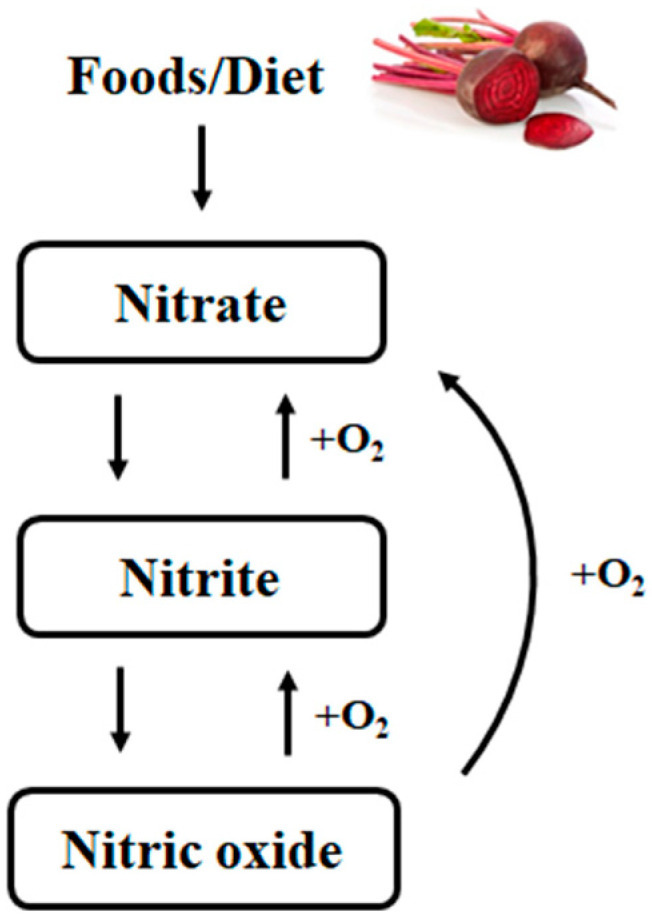
Nitrate–nitrite–nitric oxide pathway. Adapted from Niayakiru et al., 2020 [11].
As stated before, the main dietary sources of nitrate are leafy green vegetables (lettuce, spinach or arugula) and beetroot, providing 50–85% of the total dietary nitrate intake [7]. Nitrate is also present in fruits and fruit juices, being especially abundant in beetroot juice. As far as foods and foodstuffs of animal origin are concerned, since nitrate is commonly used to preserve foods such as sausages, cold meat and cured meat (as nitrite), it will also be present in these products [14].
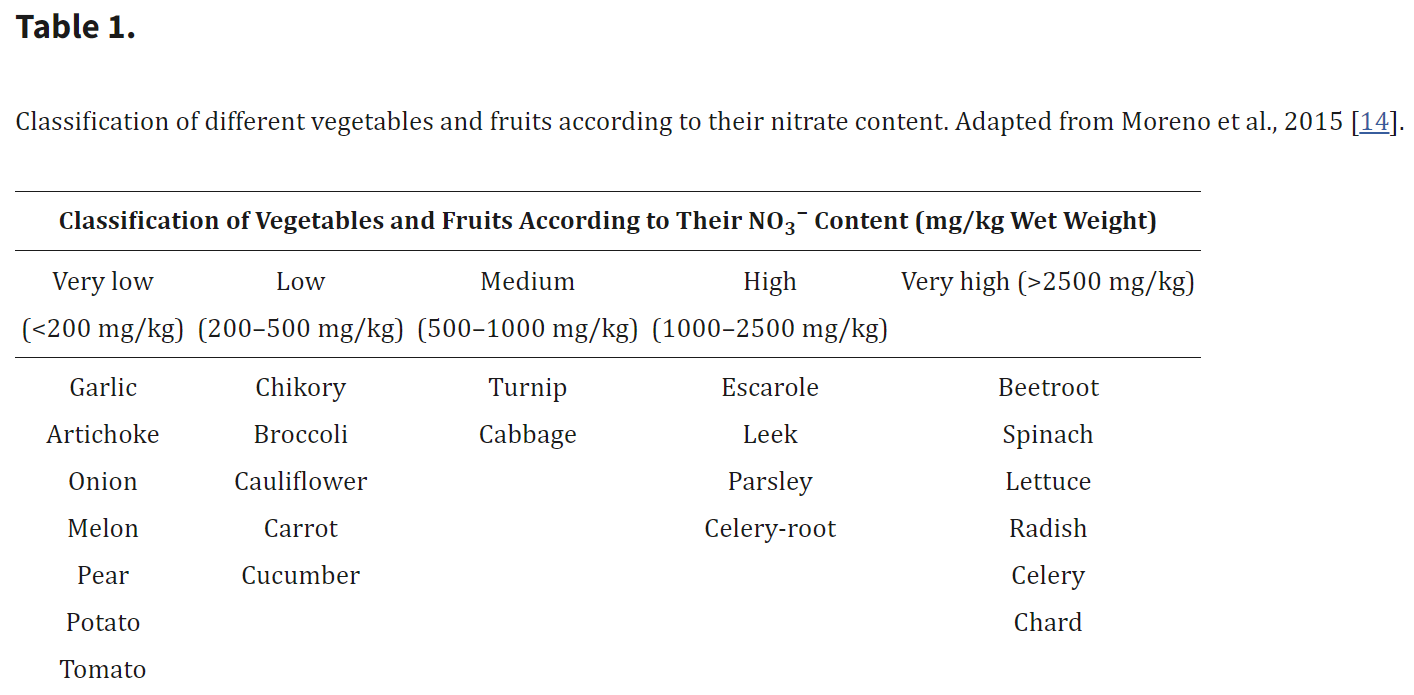
The nitrate content in different vegetables and fruits has already been reported (Table 1). However, the array of factors that are known to affect this parameter makes it difficult to provide accurate information [15]. For instance, the growing conditions (i.e., the fertilizers used and/or light exposure), as well as the processing of the vegetables (storage, cleaning, peeling or boiling), are some of the factors that may affect the nitrate content. Additionally, the nitrate content in a given vegetable is not homogeneous. Therefore, if some parts are discarded (such as the leaves), the amount of consumed nitrate will be reduced [15].
앞서 언급한 바와 같이,
질산염의 주된 공급원은
잎이 많은 녹색 채소(상추, 시금치, 아루굴라)와 비트 뿌리이며,
이 두 가지가 전체 식이 질산염 섭취량의 50-85%를 차지합니다 [7].
질산염은
과일과 과일 주스에도 존재하며,
특히 비트 뿌리 주스에 풍부하게 함유되어 있습니다.
동물성 식품과 식품의 경우,
질산염은 소시지, 냉육, 경화육(아질산염)과 같은 식품의 보존에 일반적으로 사용되기 때문에,
이러한 제품에도 존재할 것입니다 [14].
다양한 채소와 과일의 질산염 함량은 이미 보고된 바 있습니다(표 1). 그러나, 이 매개 변수에 영향을 미치는 것으로 알려진 다양한 요인으로 인해 정확한 정보를 제공하는 것이 어렵습니다 [15]. 예를 들어, 성장 조건(사용된 비료 및/또는 빛 노출)과 채소의 가공(저장, 세척, 껍질 벗기기 또는 끓이기)은 질산염 함량에 영향을 미칠 수 있는 요인들입니다. 또한, 특정 채소의 질산염 함량은 균일하지 않습니다. 따라서 일부 부분(잎 등)을 버리면 섭취하는 질산염의 양이 줄어듭니다 [15].
Table 1.
비트 시금치 상추 무 샐러리 근대
Interestingly, the intake of foods that are rich in nitrate differs among countries, as well as among regions within the same country, and therefore, may influence the average nitrate intake of a given individual [15]. It is estimated that the average nitrate intake in the United States is of 40–100 mg/day, while in Europe it is of 50–180 mg/day [15]. According to data reported in different studies, nitrate intake tends to be lower in European countries of northern latitudes such as Norway (31 mg/day), Sweden (48 mg/day) or Denmark (50 mg/day), while it is higher in more southern countries such as France (121 mg/day). In all of these cases, the majority of nitrate (80–85% of the total) is provided by vegetables [16]. In addition, other authors have suggested that in vegetarians, a two to four fold increase in nitrate intake may occur in comparison to subjects not following such diets [17]. As far as the Mediterranean countries are concerned, the nitrate intake through fruits and vegetables is thought to be higher due to the composition of the Mediterranean diet [15].
흥미롭게도, 질산염이 풍부한 식품의 섭취는 국가마다, 그리고 같은 국가 내의 지역마다 차이가 있기 때문에, 특정 개인의 평균 질산염 섭취량에 영향을 미칠 수 있습니다 [15]. 미국의 평균 질산염 섭취량은 하루 40-100mg인 반면, 유럽에서는 하루 50-180mg인 것으로 추정됩니다 [15]. 여러 연구에서 보고된 자료에 따르면, 질산염 섭취량은 북위 55도 이상의 북유럽 국가(노르웨이(하루 31mg), 스웨덴(하루 48mg), 덴마크(하루 50mg))에서 더 낮은 경향이 있는 반면, 프랑스(하루 121mg)와 같은 남부 국가에서는 더 높은 경향이 있습니다.
이 모든 경우에, 대부분의 질산염(전체 질산염의 80-85%)은 채소에서 공급됩니다 [16].
또한 다른 연구자들은 채식주의자의 경우,
비채식주의자에 비해 질산염 섭취량이 2~4배 증가할 수 있다고 제안했습니다 [17].
지중해 국가들의 경우,
지중해 식단의 구성으로 인해 과일과 채소를 통한
질산염 섭취량이 더 많을 것으로 생각됩니다 [15].
2.1. Bioavailability
Once nitrate-rich foods (such as beetroot juice) are consumed and the nitrate is absorbed, plasma levels increase. Then, salivary glands uptake 25% of the nitrate present in the circulation while the rest undergoes renal excretion [18]. The nitrate absorbed by salivary glands is concentrated and excreted into the saliva. Subsequently, it is reduced to nitrite by the commensal bacteria present in the dorsal side of the tongue [19]. The nitrite is then swallowed and absorbed in the gastrointestinal tract, reaching circulation. Finally it is transported to different locations within the body where it can be further reduced in order to synthesize NO or other compounds [11]. The existence of this enterosalivary pathway has been demonstrated in studies in which patients were asked not to swallow saliva after having ingested nitrate. Under these conditions, it was observed that the characteristic increase of nitrate levels in the blood did not occur [20]. In addition, studies conducted in rodent models and humans have demonstrated that as well as in blood, nitrate also occurs in the liver and muscle [21]. Indeed, it has been reported that the basal levels of both nitrate and nitrite in skeletal muscle are higher than those found in plasma [22]. Similarly, it has been observed that after beetroot ingestion, nitrate and nitrite contents are increased in plasma and muscle. Therefore, it has been suggested that muscle may act as a reservoir of dietary and endogenous nitrate [23].
According to the available data, the ingestion of dietary nitrate produces an increase in nitrate and nitrite levels in blood that can last up to 24 h. In these conditions, it is believed that NO availability is increased through the nitrate–nitrite–NO synthase pathway. In addition, studies conducted in humans revealed that after consuming either nitrate supplements or a diet containing nitrate-rich foods (leafy green vegetables), plasma nitrate and nitrite increased [13].
2.1. 생체 이용률
질산염이 풍부한 식품(비트 뿌리 주스 등)을 섭취하고
질산염이 흡수되면
혈장 농도가 증가합니다.
그런 다음,
침샘이 순환계에 존재하는 질산염의 25%를 흡수하고
나머지는 신장을 통해 배설됩니다 [18].
침샘에 흡수된 질산염은
농축되어 타액으로 배출됩니다.
그 후,
혀의 등쪽에 있는
공생 박테리아에 의해 아질산염으로 환원됩니다 [19].
아질산염은 삼켜져서
위장관에서 흡수되어 순환계에 도달합니다.
마지막으로,
NO 또는 다른 화합물을 합성하기 위해 더 환원될 수 있는 신체 내의 다른 위치로 운반됩니다 [11].
이 장-타액 경로가 존재한다는 사실은
환자에게 질산염을 섭취한 후 침을 삼키지 말 것을 요청하는 연구에서 입증되었습니다.
https://pmc.ncbi.nlm.nih.gov/articles/PMC5401802/
이러한 조건에서
혈액 내 질산염 수치의 특징적인 증가가 발생하지 않는다는 사실이 관찰되었습니다 [20].
또한
설치류 모델과 인간을 대상으로 한 연구에서 혈액뿐만 아니라
간과 근육에서도 질산염이 발생한다는 사실이 입증되었습니다 [21].
실제로,
골격근의 질산염과 아질산염의 기초 수준이
혈장보다 더 높다는 보고가 있었습니다 [22].
마찬가지로,
비트 뿌리를 섭취한 후
혈장과 근육의 질산염과 아질산염 함량이 증가하는 것으로 관찰되었습니다.
따라서,
근육이 식이 및 내인성 질산염의 저장소 역할을 할 수 있다는 주장이 제기되었습니다 [23].
이용 가능한 데이터에 따르면,
식이성 질산염을 섭취하면
혈액 내 질산염과 아질산염 수치가 최대 24시간 동안 증가합니다.
이러한 조건에서
질산염-아질산염-질소 합성 경로를 통해
NO 가용성이 증가한다고 여겨집니다.
또한,
인간을 대상으로 한 연구에 따르면
질산염 보충제나 질산염이 풍부한 식품(잎이 많은 녹색 채소)을 섭취한 후
혈장 내 질산염과 아질산염이 증가하는 것으로 나타났습니다[13].
2.2. Beneficial Health Effects of Nitrate
2.2.1. Antihypertensive Effects
The administration/consumption of nitrate for the prevention and/or management of CVD is based on its capacity to be converted into NO, which is known to regulate blood flux (Table 2). Thus, in young subjects, the supplementation of nitrate salts or beetroot juice (in dietary doses of nitrate) effectively reduces systolic and/or diastolic arterial pressure [24,25,26]. Moreover, the effect of the intake of a 500 mL dose of beetroot juice (containing 1400 mg of nitrate) on arterial tension is similar to that produced by antihypertensive drugs. Interestingly, these effects are known to be present for up to 24 h after beetroot juice ingestion [27]. In general terms, it has been suggested that the effect exerted by nitrate supplementation on arterial pressure is more marked in subjects that exhibit greater impairments of this parameter at baseline [28]. In addition, the age of the subjects seems to affect the outcome of nitrate supplementation concerning arterial pressure, being greater in younger subjects. In this scenario, changes in the oral microbiota and the lowered acid production in the stomach in older subjects may result in a decreased conversion of nitrate into nitrite and nitrite into NO; these changes may explain the lower response identified in these subjects [28]. However, there are also studies showing that the supplementation of 140 mL/day of beetroot juice (≈595 mg nitrate/day) for three days resulted in a significant decrease in systolic and diastolic arterial pressures in subjects whose age ranged from 60 to 70 years [29].
2.2. 질산염의 유익한 건강 효과
2.2.1. 항고혈압 효과
심혈관 질환의 예방 및/또는 관리를 위한 질산염의 투여/섭취는 혈액 흐름을 조절하는 것으로 알려진 NO로 전환될 수 있는 능력에 기반합니다(표 2).
따라서,
젊은 피실험자들에게 질산염이나 비트 주스(식이용량의 질산염)를 보충하면
수축기 및/또는 이완기 동맥압을 효과적으로 감소시킬 수 있습니다 [24,25,26].
또한, 500mL 용량의 비트 주스(1400mg의 질산염 함유)를 섭취했을 때의
동맥 긴장도 감소 효과는 항고혈압제 복용 시의 효과와 유사합니다.
흥미롭게도, 이러한 효과는
비트 주스를 섭취한 후 최대 24시간 동안 지속되는 것으로 알려져 있습니다 [27].
일반적으로,
기준선에서 동맥압의 장애가 더 큰 피실험자에게서 질산염 보충이 미치는 효과가 더 뚜렷하다는 것이 제안되었습니다 [28].
또한,
피실험자의 나이가 동맥압과 관련된 질산염 보충의 결과에 영향을 미치는 것으로 보이며,
젊은 피실험자일수록 그 영향이 더 큽니다.
이 시나리오에서
구강 미생물총의 변화와
노년층 피험자의 위산 생성 감소는
질산염이 아질산염으로, 아질산염이 NO로 전환되는 것을 감소시킬 수 있습니다.
이러한 변화는 이 피험자에서 확인된 낮은 반응을 설명할 수 있습니다 [28].
그러나
3일 동안 하루에 140mL의 비트 주스(하루에 질산염 595mg)를 보충한 결과,
60세에서 70세 사이의 피실험자의 수축기 및 이완기 동맥압이 현저하게 감소했다는 연구 결과도 있습니다 [29].
Table 2.
Selected studies addressing the antihypertensive effects of nitrate that have been included in this article (PICO format).
ReferencePopulationInterventionComparisonOutcome
| [24] | 25 healthy, physically active adults (15 m and 10 w): - mean age 36 ± 10 years - BMI < 18.5 | Consumption of a Japanese diet for 10 days (providing 18.8 mg/kg bw/day nitrate) | The controls received a non-Japanese diet (providing ≤3.7 mg/kg bw/day nitrate) for the same period | Increased plasma and saliva nitrate and nitrite levels. Significant decrease in DBP (4.5 mmHg). |
| [25] | 30 healthy adults (15 m and 15 w) with a SBP > 120 mmHg | Single intake of 500 g BJ (containing 15 mmol nitrate/L) | Single ingestion of 500 g PL (apple juice concentrate) | Significant reduction of SBP (4–5 mmHg) in men 6 h. |
| [26] | 18 normotensive healthy adults (18 m) | Single administration of 100, 250 or 500 g BJ diluted in mineral water (total weight of the mixture 500 g) | The controls were administered the same dose (500 g) of mineral water | SBP and DBP significantly reduced (dose dependently) over a period of 24 h. |
| [26] | 14 normotensive healthy adults (14 m) | Single ingestion of 200 g of bread enriched with red or white beetroot (50% of the total weight) | The controls received 200 g of white bread | Significant DBP reduction over a period of 24 h. |
| [29] | 12 old healthy adults (6 m, 6 w) | Prescription of 140 mL/d BJ (containing ≈ 9.6 mmol nitrate) during 2.5 days followed by a three-day washout period (this protocol was repeated during 6 weeks) | The controls received PL (nitrate depleted BJ) under the same conditions | A significant reduction in resting SBP, DBP and VO2 was found. |
BJ: beetroot juice, BMI: body mass index, DBP: diastolic blood pressure, m: men, PL: placebo, SBP: systolic blood pressure, w: women.
With regard to the effect of dietary nitrate on arterial pressure, the evidence is not as clear as that for supplements. Traditionally, diets rich in vegetables (such as the DASH diet) have been considered beneficial in reducing arterial pressure [3,30]. However, the antihypertensive effects that these diets may exert cannot be solely attributed to their nitrate contribution [4]. Thus, the macronutrient composition, as well as the fiber and antioxidant content found in these dietary patterns, may well influence the improvement in arterial pressure. Additionally, the growing conditions and the time of the year in which vegetables are harvested can also influence their nitrate content. Consequently, at present, there is not enough scientific evidence to state that the dietary intake of nitrate can reduce the risk of CVDs [4].
식이성 질산염이 혈압에 미치는 영향에 관한 증거는 보충제에 관한 증거만큼 명확하지 않습니다. 전통적으로, 채소가 풍부한 식단(DASH 식단 등)은 혈압을 낮추는 데 도움이 되는 것으로 여겨져 왔습니다 [3,30]. 그러나 이러한 식단이 발휘할 수 있는 항고혈압 효과는 질산염의 기여만으로 설명할 수 없습니다 [4]. 따라서, 이러한 식습관에서 발견되는 다량 영양소 구성과 섬유질, 항산화제 함량은 동맥압의 개선에 영향을 미칠 수 있습니다. 또한, 채소를 재배하는 조건과 채소를 수확하는 시기도 질산염 함량에 영향을 미칠 수 있습니다. 따라서, 현재로서는 질산염의 식이 섭취가 심혈관 질환의 위험을 감소시킬 수 있다는 것을 증명할 수 있는 과학적 증거가 충분하지 않습니다 [4].
2.2.2. Effects on Cognitive Function
One of the mechanisms involved in the deterioration of cognitive function is cerebral hypoperfusion. This results in reduced blood flux in the brain that is related to NO activity impairment [31]. According to the available literature, a diet rich in nitrate (including beetroot juice) effectively increases regional cerebral blood flux (mainly in the frontal cortex) in older adults (≈75 years) [32]. Similar results have also been reported in studies in which acute doses of beetroot juice (450 or 500 mL, providing 342 or 750 mg of nitrate, respectively) were given to healthy young adults [33,34]. Interestingly, in one such study, an increase in prefrontal cortex perfusion was described when subjects receiving the beetroot juice were performing cognitive tasks [33].
These data suggest that the consumption of nitrate-rich foods may be a useful approach to enhance the blood flux in specific cerebral areas that control executive function. However, more studies are warranted in order to elucidate whether the increase in regional cerebral blood flux is indeed accompanied by improvements in cognitive function [35].
2.2.2. 인지 기능에 미치는 영향
인지 기능 저하의 원인 중 하나는 대뇌 저관류입니다. 이로 인해 뇌의 혈액 흐름이 감소하게 되는데, 이는 NO 활동 장애와 관련이 있습니다 [31].
이용 가능한 문헌에 따르면,
질산염이 풍부한 식단(비트 뿌리 주스 포함)은
노년층(75세 이상)의 대뇌 혈액 흐름(주로 전두엽 피질)을 효과적으로 증가시킵니다 [32].
비트 뿌리즙(450 또는 500mL, 각각 342 또는 750mg의 질산염 제공)을
건강한 젊은 성인에게 급성 투여한 연구에서도
흥미롭게도,
이러한 연구 중 하나에서,
비트 뿌리즙을 투여받은 피험자가 인지 과제를 수행할 때
전두엽 피질의 관류가 증가하는 것으로 나타났습니다 [33].
이 데이터는 질산염이 풍부한 음식을 섭취하는 것이 집행 기능을 제어하는 특정 뇌 영역의 혈액 흐름을 향상시키는 데 유용한 접근 방식일 수 있음을 시사합니다. 그러나, 지역 뇌 혈액 흐름의 증가가 실제로 인지 기능의 개선을 동반하는지 여부를 밝히기 위해서는 더 많은 연구가 필요합니다 [35].
2.2.3. Nitrate as an Ergogenic Aid to Improve Exercise Performance
Nitrate supplements (salts and beetroot juice) can produce NO enhancement. This, in turn, affects muscle function, resulting in the improvement of exercise performance [36]. Remarkably, when nitrate is consumed along with polyphenols (e.g., when beetroot juice is consumed), the effects on exercise performance are enhanced. It has been proposed that polyphenols may protect nitrate (as well as the derived NO) from the damage induced by reactive oxygen species, thus enhancing its bioavailability [37]. This fact would explain the greater effects observed in exercise performance when consuming beetroot juice, compared to that achieved by the consumption of an equivalent dose of sodium nitrate (NaNO3). Interestingly, the effects induced by beetroot/nitrate supplementation seem to be greater in untrained subjects than in athletes [37].
Different studies have reported that acute or chronic supplementation of beetroot juice results in decreased oxygen demands during exercise. Therefore, several beneficial effects have been described regarding the parameters related to cardiovascular and respiratory systems. Interestingly, improvements in economy (greater power generated or distance travelled with the same oxygen consumption), maximum strength, time-to-exhaustion and time trials have been reported [13]. These effects have been described both in trained subjects (cyclists, swimmers and athletes) and untrained ones, as well as under different supplementation protocols. For instance, the observations mentioned above were made in protocols where participants ingested significantly different amounts of beetroot juice (70 to 500 mL), resulting in different nitrate intakes (300–600 mg/day). Moreover, the aforementioned effects were observed under acute (2–3 h) and chronic (3–15 days) supplementation protocols [36]. It should be noted that some studies have suggested that the effects described for beetroot juice supplementation may be achieved by the consumption of a diet which is rich in nitrate. In this sense, the improvements in different parameters related to exercise performance (reduced oxygen consumption during aerobic bike exercise, higher muscle work and strength peak) were described in cyclists who consumed a diet rich in nitrate (8.6 mmol/day) compared to cyclists on a control diet (2.9 mmol/day) [38].
Finally, there is no evidence to support that beetroot juice/nitrate supplementation improves exercise performance under conditions of hypoxia [36].
2.2.3. 운동 능력을 향상시키는 에르고제닉 보조제로서의 질산염
질산염 보충제(소금과 비트 주스)는
NO를 증가시킬 수 있습니다.
이것은 차례로 근육 기능에 영향을 미쳐 운동 능력을 향상시킵니다 [36].
놀랍게도,
질산염을 폴리페놀과 함께 섭취할 때(예를 들어, 비트 주스를 섭취할 때)
운동 능력에 미치는 영향이 향상됩니다.
폴리페놀은 반응성 산소 종에 의해 유발되는 손상으로부터
질산염(및 그로부터 유도된 NO)을 보호하여 생체 이용률을 향상시킬 수 있다고 제안되었습니다 [37].
이 사실은 같은 양의 나트륨 질산염(NaNO3)을 섭취했을 때보다
비트 뿌리 주스를 섭취했을 때
운동 수행 능력이 더 크게 향상되는 현상을 설명할 수 있습니다.
흥미롭게도,
비트 뿌리/질산염 보충제가 유발하는 효과는
운동선수보다 훈련을 받지 않은 사람에게서 더 큰 것으로 보입니다 [37].
여러 연구에 따르면, 비트 주스를 급성 또는 만성적으로 보충하면 운동 중 산소 요구량이 감소한다고 합니다. 따라서, 심혈관 및 호흡기 시스템과 관련된 매개변수에 대해 여러 가지 유익한 효과가 설명되어 왔습니다. 흥미롭게도, 경제성(동일한 산소 소비량으로 더 큰 힘을 내거나 더 먼 거리를 이동하는 능력), 최대 강도, 피로감에 도달하는 시간, 시간 제한 시험에서 개선이 보고되었습니다 [13]. 이러한 효과는 훈련된 피실험자(사이클리스트, 수영 선수, 운동선수)와 훈련되지 않은 피실험자 모두에게서, 그리고 다양한 보충 프로토콜 하에서 설명되었습니다.
예를 들어, 위에서 언급한 관찰은 참가자들이 상당히 다른 양의 비트 주스(70~500mL)를 섭취하여 다른 질산염 섭취량(300~600mg/일)을 초래하는 프로토콜에서 이루어졌습니다. 또한, 앞서 언급한 효과는 급성(2-3시간) 및 만성(3-15일) 보충 프로토콜 하에서 관찰되었습니다 [36]. 일부 연구에서는 비트 주스 보충제의 효과를 질산염이 풍부한 식단을 섭취함으로써 얻을 수 있다고 제안한 바 있습니다. 이런 의미에서, 질산염이 풍부한 식이요법(하루 8.6mmol)을 섭취한 사이클리스트와 대조군(하루 2.9mmol)의 사이클리스트를 비교했을 때, 운동 수행과 관련된 다양한 변수(유산소 자전거 운동 중 산소 소비량 감소, 근육 활동량 증가, 근력 피크 증가)의 개선이 나타났습니다 [38].
마지막으로, 저산소 상태에서 비트 주스/질산염 보충제가 운동 능력을 향상시킨다는 증거는 없습니다 [36].
2.3. Interactions and Adverse Effects of Nitrate Consumption
Several dietary components, as well as nondietetic agents, have been shown to interact with nitrate and/or nitrite, interfering with their antihypertensive effects. One such compound is thiocyanate, which competes with nitrate to be absorbed by salivary glands [39]. Higher levels of thiocyanates in the blood have been related to the consumption of vegetables from the Brassica family (cauliflower, cabbage, broccoli, etc.). Cigarette smoke may also impair the metabolism of nitrate, and hence, blunt its effects on arterial pressure. By contrast, it has been described that the consumption of foods and foodstuffs rich in polyphenols (such as berries, nuts or wine) can enhance nitrite reduction in the stomach, which, in turn, may boost the effect of nitrate on arterial pressure [39]. Similarly, different studies have demonstrated that ascorbate can influence the nitrite-derived NO production. Actually, low doses of ascorbate can increase gastric NO production and thus enhance the antihypertensive effect of nitrate supplementation. In contrast, high ascorbate doses may impair NO synthesis, thus reducing the beneficial effects of nitrate supplementation on arterial pressure [39].
Several drugs such as gastric acid-suppressing agents (proton pump inhibitors) or drugs developed to treat gout (inhibitors of xanthine oxidoreductase) have also been linked with lower nitrate-derived NO availability [39]. In the case of gastric acid-suppressing agents, the reduction produced in gastric secretion decreases the NO activation mediated by chlorhydric acid. Indeed, it has been reported that the antihypertensive effect of nitrate supplementation disappears in healthy subjects under this kind of treatment. Regarding the drugs used to treat gout, it must be taken into account that their mechanism of action is based on xanthine oxidoreductase inhibition. This enzyme converts the nitrite that has not been reduced in the stomach into NO; therefore, its inhibition has been related to a lower production of NO [39].
Additionally, antiseptic mouthwashes may eliminate up to 94% of the oral commensal bacteria that reduces nitrate to nitrite. Indeed, clinical trials have demonstrated that the effects of antihypertensive drugs are diminished or even inhibited (totally or partially) in subjects using this type of mouthwash [39].
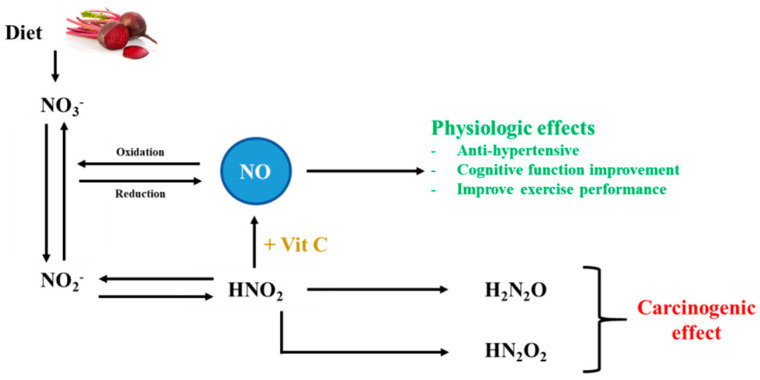
Another issue that has gained much attention is the potential formation of nitrosamines, which have carcinogenic potential, as a result of nitrate consumption (from dietary sources or supplementation). When nitrite is ingested (directly or as nitrate), it can be converted into nitrosating agents in the stomach. This conversion is mediated by the effect of chlorhydric acid and bacteria-mediated enzymatic activities. It is worthy of note that nitrosating agents and nitrosamine can also form from NO due to autoxidation, as well as due to the activity of different NO synthases (Figure 2) [15].
2.3. 질산염 섭취의 영향과 상호작용
여러 가지 식이성 성분과 비식이성 물질이
질산염 및/또는 아질산염과 상호 작용하여
항고혈압 효과를 방해하는 것으로 나타났습니다.
이러한 화합물 중 하나는
티오시안산염으로,
타액선에 흡수되는 질산염과 경쟁합니다 [39].
혈액 내 티오시안산염 수치가 높으면
십자화과 채소(콜리플라워, 양배추, 브로콜리 등)를 섭취한 것과 관련이 있습니다.
담배 연기는 또한 질산염의 대사를 방해할 수 있으며,
따라서 동맥압에 미치는 영향을 약화시킬 수 있습니다.
이와는 대조적으로,
폴리페놀이 풍부한 식품(베리류, 견과류, 와인 등)을 섭취하면
위장에서 아질산염의 감소가 촉진되어,
결과적으로 동맥압에 미치는 질산염의 영향을 강화할 수 있다고 합니다 [39].
이와 유사하게,
여러 연구에서 아스코르브산이
아질산염에서 유래된 NO 생성에 영향을 미칠 수 있다는 사실이 밝혀졌습니다.
사실,
저용량의 아스코르브산은
위에서 NO 생성을 증가시켜 질산염 보충제의 항고혈압 효과를 향상시킬 수 있습니다.
반대로,
고용량의 아스코르브산은 NO 합성을 저해하여
질산염 보충제가 동맥압에 미치는 유익한 효과를 감소시킬 수 있습니다 [39].
위산 억제제(양성자 펌프 억제제)나
통풍 치료제로 개발된 약물(크산틴 산화 환원 효소 억제제)과 같은 여러 약물이
질산염에서 유래된 NO 가용성을 감소시키는 것과 관련이 있는 것으로 밝혀졌습니다 [39].
위산 억제제의 경우,
위 분비물 감소로 인해 염산에 의해 매개되는
NO 활성화가 감소합니다.
실제로,
이러한 종류의 치료 하에서 건강한 피험자에게서
질산염 보충제의 항고혈압 효과가 사라진다는 보고가 있었습니다.
통풍 치료에 사용되는 약물의 작용 기전은
크산틴 옥시도레듀라아제 억제에 기반한다는 점을 고려해야 합니다.
이 효소는
위장에서 환원되지 않은 아질산염을 NO로 전환시키므로,
이 효소의 억제는 NO의 생산 감소와 관련이 있습니다 [39].
또한,
구강 세정제는
질산염을 아질산염으로 환원시키는 구강 공생 박테리아의 최대 94%를 제거할 수 있습니다.
실제로,
임상 시험에서 이러한 유형의 구강 세정제를 사용하는 피험자에서
항고혈압제의 효과가 감소되거나 심지어 억제된다는 사실이 입증되었습니다 [39].
또 다른 관심사는
질산염 섭취(식이 공급원 또는 보충제)로 인해
발암 가능성이 있는 니트로사민의 잠재적 형성입니다.
아질산염을 섭취하면(직접 또는 질산염으로 섭취),
위장에서 니트로사이드로 전환될 수 있습니다.
이 전환은 염산과 박테리아 매개 효소 활성의 영향에 의해 매개됩니다.
주목할 만한 점은 니트로사이드와 니트로사민은 또한 자가 산화뿐만 아니라
다양한 NO 합성 효소의 활동으로 인해 NO로부터 형성될 수 있다는 것입니다(그림 2) [15].
Figure 2.
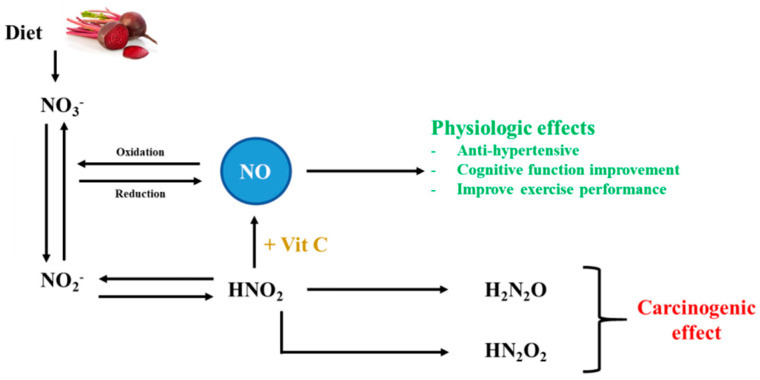
Conversion of nitrate and nitrite into nitrosamines. NO3−: nitrate, NO2−: nitrite, NO: nitric oxide, HNO2: nitrous acid, H2N2O: nitrosamines, HN2O2: nitrosamides, Vit C: vitamin C. Adapted from Berends et al., 2019 [40].
Taking into account the risk associated to nitrosamine formation, the potential relationship between dietary nitrate ingestion and the development of certain types of cancer (stomach and bladder cancer among them) has been widely investigated [7]. Many of these studies have been focused on the relationship between the consumption of red meat and processed meat and cancer development. According to the available data, there is no scientific evidence to support the hypothesis that the consumption of nitrate from dietary sources/drinking water increases the risk of developing cancer [7]. In the case of supplements, a recent study has found enhanced levels of nitrosating agents with carcinogenic potential in athletes supplemented with beetroot juice (providing 400 mg of nitrate) [40]. Nevertheless, studies conducted to date in humans addressing the potential effect of long-term nitrate supplementation on the development of cancer are scarce and inconclusive.
Remarkably, further metabolic and endocrine adverse effects due to nitrate consumption have been described. In this line, nitrate negatively affects thyroid function, since nitrate anions and iodine compete for thyroid gland uptake. In addition, several authors have indicated that nitrate may inhibit steroid hormone synthesis due to the binding of nitrite-derived NO with the hemoglobin in cytochrome P450 enzymes [7].
Finally, it must be noted that few studies have addressed the effect of chronic high-intake of nitrate on arterial pressure. Despite the fact that a diet rich in vegetables is considered to be beneficial for arterial pressure, this effect cannot be attributed solely to nitrate consumption. Studies conducted in animals have demonstrated that the effect of nitrate consumption in arterial pressure tends to diminish when the treatment is maintained over time [41]. Therefore, further studies in humans are necessary to determine whether the effects observed in animals also occur in human beings.
니트로사민 형성과 관련된 위험을 고려하여, 식이성 질산염 섭취와 특정 유형의 암(그 중에서도 위암과 방광암) 발병 사이의 잠재적 관계에 대한 광범위한 연구가 이루어졌습니다 [7]. 이러한 연구의 대부분은 붉은 육류와 가공육의 섭취와 암 발병 사이의 관계에 초점을 맞추고 있습니다. 이용 가능한 데이터에 따르면, 식이 공급원/음용수로부터의 질산염 섭취가 암 발병 위험을 증가시킨다는 가설을 뒷받침하는 과학적 증거는 없습니다 [7]. 보충제의 경우, 최근 연구에 따르면, 비트 뿌리 주스(질산염 400mg 제공)를 보충제로 섭취한 운동선수들의 경우, 발암 가능성이 있는 니트로사이드 화합물의 수치가 증가하는 것으로 나타났습니다 [40]. 그럼에도 불구하고, 암 발병에 대한 질산염의 장기적인 섭취가 미치는 잠재적 영향에 대해 지금까지 인간을 대상으로 수행된 연구는 드물고 결정적이지 않습니다.
놀랍게도,
질산염 섭취로 인한 추가적인 대사 및 내분비계 부작용이 보고되었습니다.
이 라인에서,
질산염 음이온과 요오드가 갑상선 흡수를 위해 경쟁하기 때문에
질산염은 갑상선 기능에 부정적인 영향을 미칩니다.
또한, 여러 저자들은
아질산염에서 유래된 NO가 시토크롬 P450 효소의 헤모글로빈과 결합하기 때문에
질산염이 스테로이드 호르몬 합성을 억제할 수 있다고 지적했습니다 [7].
마지막으로, 만성적으로 높은 수준의 질산염을 섭취할 때 동맥압에 미치는 영향에 대한 연구는 거의 없다는 점을 주목해야 합니다. 채소가 풍부한 식단이 동맥압에 유익한 것으로 여겨지기는 하지만, 이러한 효과는 질산염 섭취에만 기인하는 것은 아닙니다. 동물 실험을 통해 질산염 섭취가 동맥압에 미치는 영향은 시간이 지남에 따라 감소하는 경향이 있음을 입증했습니다 [41]. 따라서 동물 실험에서 관찰된 효과가 인간에게도 나타나는지 확인하기 위해서는 인간을 대상으로 한 추가 연구가 필요합니다.
3. Betalains
Along with nitrate, betalains are another class of major bioactive compounds which are naturally present in beetroot. Betalains are hydrophilic nitrogenous pigments that are widely used in the food industry as natural colorants for products such as processed meat, ice creams or baked goods [42]. Betalains are classified into two main groups according to their color: betacyanins have a red-violet color, while betaxanthins are yellow-orange. With regard to their chemical structure, betacyanins are made up of betalamic acid linked to a cyclo-3,4-dihydroxyphenylalanine. By contrast, betaxanthins feature an amino acid or amine linked to betalamic acid [43]. Although the presence of betalains is limited in vegetables, prickly pear (Opuntia ficus-indica), amaranthus, pitaya (Hylocereus undatus) and strawberry blite have been shown to contain significant amounts [44]. Among the different pigments categorized as beetroot betalains (Figure 3), betanin (a betacyanin) is the most abundant. Nevertheless, the betalain content may vary depending on factors such as beetroot variety, growing and postharvest storage conditions. In this regard, the usual betacyanin:betaxanthin content of beetroot is 1:3, while the average betalain content in beetroot is 120 mg/100 g of fresh weight [45]. Moreover, betalain content also varies within the beetroot itself, with the peel containing the most [43].
3. 베타레인
질산염과 함께, 베타레인은 비트 뿌리에 자연적으로 존재하는 또 다른 종류의 주요 생체 활성 화합물입니다.
베타레인은
친수성 질소 색소로, 가공육, 아이스크림, 제과류 등의 제품에 천연 착색제로 식품 산업에서 널리 사용되고 있습니다 [42].
베타시아닌은 색깔에 따라 두 가지 주요 그룹으로 분류됩니다:
베타시아닌은 적자색을 띠고, 베타크산틴은 노란색-주황색을 띱니다.
화학 구조에 관해서는, 베타시아닌은 사이클로-3,4-디하이드록시페닐알라닌에 연결된 베타알라믹산으로 구성되어 있습니다. 반면에, 베타크산틴은 베타알라믹산에 연결된 아미노산 또는 아민을 특징으로 합니다 [43]. 베타인의 존재는 채소에 제한적이지만, 가시배(Opuntia ficus-indica), 아마란투스, 용과(Hylocereus undatus), 딸기 블라이트에는 상당한 양이 함유되어 있는 것으로 나타났습니다 [44]. 비트 뿌리 베타인으로 분류되는 다양한 색소들 중에서 베타닌(베타시아닌)이 가장 풍부합니다(그림 3). 그럼에도 불구하고, 베타인 함량은 비트 품종, 재배 및 수확 후 저장 조건과 같은 요인에 따라 달라질 수 있습니다. 이와 관련하여, 비트의 일반적인 베타시아닌:베타크산틴 함량은 1:3이고, 비트에 함유된 평균 베타레인 함량은 신선한 무게 100g당 120mg입니다 [45]. 또한, 베타닌의 함량은 비트 뿌리 자체 내에서도 다양하며, 껍질에 가장 많이 함유되어 있습니다 [43].
Figure 3.
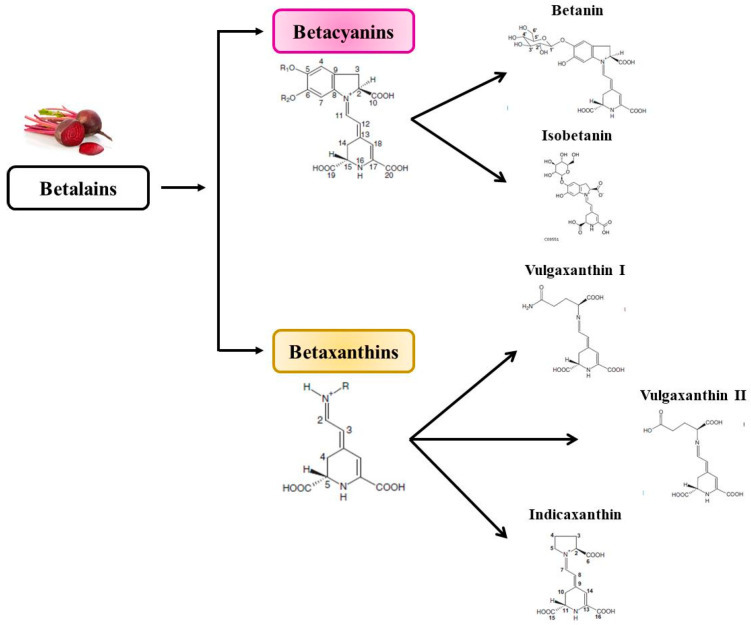
Classification of the two main groups of betalains present in beetroot. All the chemical structures included in this figure were obtained from Khan et al., 2015 [46].
Much attention has been paid to betalains in recent years due to their antioxidant capacity [43]. However, since crude betalain extracts may also contain further compounds with potential bioactive activity (e.g., phenolic acids), much care is needed when interpreting the beneficial effects of these kinds of preparations [42].
3.1. Bioavailability
Oral bioavailability of betalains is considered to be relatively low, representing an important issue with regard to their potential health effects. Since betalains are not metabolized by hepatocytes, these pigments reach the systemic circulation without structural modifications [47]. In vitro studies designed to mimic the human gastrointestinal tract (Caco-2 cell monolayer) have demonstrated that betalains are absorbed in their unchanged form through paracellular absorption. This suggests that their molecular activity may be maintained when reaching the systemic circulation [48]. Betalains are also detected in this form in urine, and thus, this approach has been used to investigate the bioavailability of these compounds [47]. According to previous studies, ≈0.3–0.9% of ingested betalains (after consumption of 300–500 mL beetroot juice) are eliminated in the first 12–24 h after the ingestion of the bolus [49,50]. Taking into account that the renal excretion of betalains is low, the existence of other pathways that may contribute to their elimination (such as biliary excretion, bacterial degradation or enterohepatic metabolism) cannot be ruled out [50]. Moreover, further investigations are required to elucidate whether betalains undergo structural transformation which results in the formation of secondary metabolites [6].
3.2. Beneficial Health Effects of Betalains3.2.1. Effects on CVD
Although much of the interest in the use of beetroot juice for the prevention of CVD is due to its nitrate content and antihypertensive effects, some studies have addressed the potential use of betalain-rich beetroot supplements to treat CVD. It has been reported that a two-week regime of a betalain-rich extract (50 mg/day) decreased the levels of total cholesterol (TC), triglycerides and non-high-density lipoprotein cholesterol (non-HDL-c), as well as TC/HDL-c and low-density lipoprotein cholesterol (LDL-c)/HDL-c ratios in the plasma of nonsmoking adults with coronary artery disease [51]. Moreover, significant reductions in systolic and diastolic blood pressure were also observed in this study in subjects treated with the betalain-rich supplement [51]. The authors suggested that the antihypertensive effect exerted by the tested betalain-rich beetroot supplement may have been mediated by the reductions observed in plasma homocysteine levels [51]. In this respect, a positive association between plasma homocysteine levels and hypertension was reported. Thus, elevated homocysteine levels can lead to endothelial cell damage, a reduction in vessel flexibility and impairment in vasodilator factor synthesis, resulting in hypertension [52].
Despite the fact that the aforementioned observations could be considered promising for the usage of betalains/betalain-rich supplements as antihypertensive agents, further studies are warranted. Furthermore, additional or synergic antihypertensive effects of nitrate and betalains cannot be ruled out, since both compounds can be present in the same product, as occurs with beetroot juice.
3.2.2. Antioxidant Effects
Betalains, due to their ability to scavenge reactive oxygen species, as well as to induce antioxidant defense, are well-known antioxidants [53]. According to data obtained in in vivo studies, betalains proved to be effective at protecting against the oxidation of LDL molecules due to their radical-scavenging activity [47,54]. Similar results were reported in humans when the effect of a beetroot-derived, solid, betalain-rich formulation was tested for three consecutive days at a dose of 90 mg of betalain/day. In this case, not only reduced LDL-c oxidation and incremented HDL-c/LDL-c ratio values were reported, but also an increased inhibition of nuclear factor κB (NF-κB), which is a well-known oxidative stress responsive transcriptional factor [55]. In addition, it has been suggested that the protective effect of LDL molecules described for betalains may also be mediated through the activation of the hepatic antioxidant enzyme paraoxonase 1 [56].
Besides the aforementioned observations, hepatoprotective effects have also been attributed to betalains and betalain-rich beetroot preparations, which occur through antioxidant mechanisms. For instance, the toxic effect of 7,12-dimethylbenz(a)anthracene (DMBA) in the liver of female Sprague-Dawley rats was alleviated by the administration of 500–600 mL/day of a betalain-rich beetroot juice (providing 79.3 mg betaxanthins and 159.6 mg per 100 mL juice). This intervention improved the overall antioxidant status and enhanced the expression of quinone oxidoreductase [57]. Moreover, improved hepatic redox status and enhanced mitochondrial function were also described in a similar animal model (male Sprague-Dawley rats) that underwent hepatic injury by paraquat administration and received a betanin extract containing 25 or 100 mg betanins for five days (three days before and two days after paraquat administration) [58]. Similarly, reduced lipid peroxidation was observed in rodents exposed to several toxicants (paraquat, paracetamol, diclofenate and carbon tetrachloride) and then treated with betanins, as suggested by the lowered malondialdehyde (MDA) levels found in liver and kidney [59,60,61].
Some of the antioxidant effects described for betalains are mediated by their capacity to modulate the expression and activity of different antioxidant enzymes. Thus, betanins have the ability to increase the expression of nuclear factor erythroid 2-related factor 2 (Nrf2), as well as its levels in the nucleus. In addition, betanins also enhance the binding of Nrf2 and antioxidant response element (ARE) sequences, resulting in the upregulation of genes encoding antioxidant and phase II enzymes [62]. Interestingly, it has been proposed that betanin-mediated Nrf2-ARE binding may result from the modifications induced by betanins in different cysteine residues of Kelch-like repressor protein ECH-associated protein 1 (Keap1), leading to Nrf2-Keap1 complex dissociation. Moreover, betanins are also thought to be involved in mitogen-activated protein kinase (MAPK) activation. This results in the phosphorylation and stabilization of Nrf2, thereby enhancing its nuclear translocation (Figure 4) [62].
Figure 4.
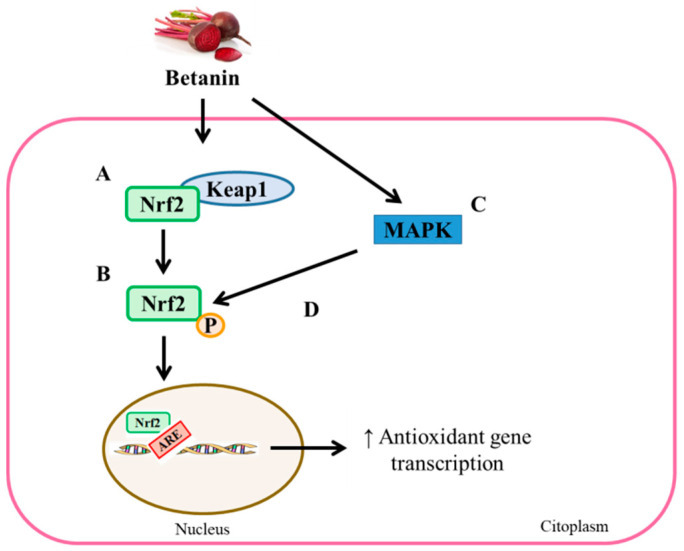
Antioxidant effects induced by betanins through Nrf2. Betanins enhance the Nrf2-Keap1 complex dissociation (A) and enhance Nrf2 nuclear translocation (B). Additionally, betanins can also activate MAPK (C), which, in turn, phosphorylates and stabilizes Nrf2 (D), contributing to its nuclear translocation. As a result, nuclear Nrf2-ARE binding is increased, resulting in enhanced transcription of genes encoding antioxidant and phase II enzymes. ARE: antioxidant response element, Keap1: Kelch-like repressor protein ECH-associated protein 1, MAPK: mitogen-activated protein kinase and Nrf2: nuclear factor erythroid 2-related factor 2.
In summary, the available data supports the antioxidant capacity attributed to betalains (especially betanin). Current knowledge highlights the ability of these compounds to not only scavenge or suppress oxidant production, but also to modulate the endogenous antioxidant system. In addition, it must be noted that depending on the preparation employed (beetroot juice or betalain extracts), additional compounds (mainly phenolic compounds) may also contribute to the total antioxidant effect.
3.2.3. Anti-Inflammatory Effects
Anti-inflammatory capacity has also been reported for betalains [63]. According to data obtained in in vitro studies, betalains were shown to effectively repress intercellular cell adhesion molecule-1 (ICAM-1) in endothelial cells treated with cytokines [64]. Moreover, betalains have also demonstrated the ability to inhibit lipoxygenase (LOX) and cyclooxygenase (COX) enzymes. These enzymes are known to mediate the conversion of arachidonic acid in pro-inflammatory mediators [65]. In this line, in vivo studies have revealed that these effects occur through the interactions of betalains with different serine and tyrosine residues (in the case of COX), or with substrate-binding amino acids (in the case of LOX) [66].
In addition, some of the anti-inflammatory properties attributed to betalains derive from their ability to interact with NF-κB, which plays a major role in the activation and transcription of gene targets that regulate the inflammatory response. In this respect, betalains have the ability to suppress NF-κB binding with DNA, and thus, to downregulate the transcription of inflammatory cytokines. This effect has been reported in different in vivo studies. In one such study, the administration of betanin extracts (25 or 100 mg/kg/day for three days) blunted NF-κB binding with DNA in a rat model of paraquat-induced renal injury [67]. Similarly, the administration of a beetroot extract (250 or 500 mg/kg/day for 28 days) in nephrotoxic rats reduced nuclear NF-κB protein expression and NF-κB-DNA binding activity, as well as renal inflammatory cytokines interleukin 6 (IL-6) and tumor necrosis factor α (TNF-α) [68]. Interestingly, Nrf2 is also involved in the NF-κB derived anti-inflammatory effects described for betanins. In this regard, the enhanced Nrf2-Keap1 complex dissociation induced by betanins was shown to result in greater amounts of free Keap1 in the cytosol. It must be noted that NF-κB is bonded with the KB inhibitor (IKB) kinase, constituting a complex. In order to allow NF-κB nuclear translocation to occur, the NF-κB-IKB complex needs to be dissociated by ikB kinases (IKK) [63]. IKK phosphorylates IKB by binding to the ETGE sequence, which is one of the sequences used by Keap1 to bind Nrf2. Thus, betanins induce greater availability of free Keap1, thereby enhancing IKK-Keap1 interactions (more free ETGE sequences). This, in turn, results in lower NF-κB-IKB dissociation. Consequently, betanins may reduce nuclear NF-κB translocation, and thus, prevent inflammatory gene transcription (Figure 5) [61].
Figure 5.
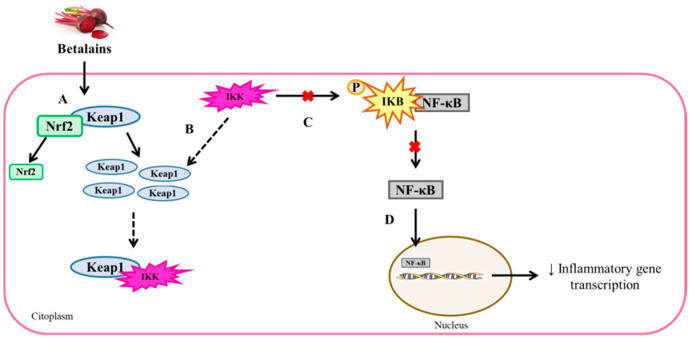
Anti-inflammatory effects of betanins through the modulation of Nrf2-Keap1 and NF-κB-IKB complex dissociation. IKB: KB inhibitor, IKK: ikB kinase, Keap1: Kelch-like repressor protein ECH-associated protein 1, NF-κB: nuclear factor κB and Nrf2: nuclear factor erythroid 2-related factor 2.
Although data concerning the anti-inflammatory effects of betalains in humans are scarce, oral administration of beetroot-derived betalain-rich capsules (providing 35, 70 or 100 mg betalains/day) for 10 days has been demonstrated to be an effective approach to reducing pain and inflammation in patients suffering from osteoarthritis [69]. According to the authors, a beetroot-derived extract was shown to alleviate inflammation by decreasing levels of inflammatory cytokines like TNF-α and IL-6. It also inhibited the activity of growth regulated oncogene-alpha (GRO-alpha) and Regulated upon Activation, Normal T cell Expressed and presumably Secreted (RANTES), both considered pro-inflammatory chemokines [69].
3.3. Interactions and Adverse Effects of Betalains
Overall, betalain consumption (in the form of extracts or beetroot preparations) is considered to be safe. In this regard, no major adverse effects or allergic events have been reported. This may be due to their poor absorption and extensive gut metabolization [65]. Indeed, due to its safety, betanin, which is the most abundant betalain in red beetroot, is a widely used pigment in the food industry. Its usage as a red colorant has been approved by the European Food Safety Authority (EFSA) and the United Stated Food and Drug Administration (FDA) [65]. It should be noted that the consumption of products containing betalains (mainly betanin) may produce beeturia. This results in a typical coloration of urine that varies according to the quantity consumed, which is considered a consequence of the consumption of such foods and not a sign of physiological dysfunction [70].
4. Conclusions
The numerous studies that have been included in this comprehensive review article clearly demonstrate the health benefits, mainly regarding cardiovascular health, of the consumption of nitrate and betalains. It should be noted that when using certain formulations such as beetroot juice, both functional ingredients may well be consumed at the same time. Therefore, the health benefits attributed to nitrate and betalain consumption that have been separately described in this review article may occur concomitantly. Consequently, potential additive or synergistic effects cannot be ruled out. Although further research is still required to better understand the mechanisms underlying the beneficial effects described for nitrate and betalain consumption, the results reported to date are promising.
Additionally, since the consumption of beetroot juice is regarded as safe, future endeavors devoted to enhancing the nitrate and/or betalain content of such preparations may be expected. As such, the already well-documented health benefits and properties attributed to these compounds may be obtained/enhanced while preventing potential adverse effects that may result from the consumption of certain supplements.
Acknowledgments
Iñaki Milton-Laskibar acknowledges financial support from the Juan de la Cierva Programme-Training Grants of the Spanish State Research Agency of the Spanish Ministerio de Ciencia e Innovación y Ministerio de Universidades (FJC2019-038925-I). Iñaki Milton-Laskibar, J. Alfredo Martínez and María P. Portillo are CIBERobn researchers.
Author Contributions
Conceptualization, I.M.-L. and M.P.P.; methodology, J.A.M. and M.P.P.; investigation, I.M.-L.; writing—original draft preparation, I.M.-L.; writing—critically review and editing, J.A.M. and M.P.P.; funding acquisition, M.P.P. All authors have read and agreed to the published version of the manuscript.
Funding
This research was funded by The Basque Government under Grant PA20/04, the University of the Basque Country under Grant GIU18-173 and CIBEROBN under Grant CB12/03/30007.
Conflicts of Interest
The authors declare no conflict of interest.
Footnotes
Publisher’s Note: MDPI stays neutral with regard to jurisdictional claims in published maps and institutional affiliations.
References
- 1.Blüher M. Obesity: Global epidemiology and pathogenesis. Nat. Rev. Endocrinol. 2019;15:288–298. doi: 10.1038/s41574-019-0176-8. [DOI] [PubMed] [Google Scholar]
- 2.Appel L.J., Moore T.J., Obarzanek E., Vollmer W.M., Svetkey L.P., Sacks F.M., Bray G.A., Vogt T.M., Cutler J.A., Windhauser M.M., et al. A clinical trial of the effects of dietary patterns on blood pressure. N. Engl. J. Med. 1997;336:1117–1124. doi: 10.1056/NEJM199704173361601. [DOI] [PubMed] [Google Scholar]
- 3.Rees K., Hartley L., Flowers N., Clarke A., Hooper L., Thorogood M., Stranges S.N. “Mediterranean” dietary pattern for the primary prevention of cardiovascular disease. Cochrane Database Syst. Rev. 2013;8:CD009825. doi: 10.1002/14651858.CD009825.pub2. [DOI] [PubMed] [Google Scholar]
- 4.Gee L.C., Ahluwalia A. Dietary Nitrate Lowers Blood Pressure: Epidemiological, Pre-clinical Experimental and Clinical Trial Evidence. Curr. Hypertens. Rep. 2016;18:17. doi: 10.1007/s11906-015-0623-4. [DOI] [PMC free article] [PubMed] [Google Scholar]
- 5.Papadaki A., Martínez-González M.A., Alonso-Gómez A., Rekondo J., Salas-Salvadó J., Corella D., Ros E., Fitó M., Estruch R., Lapetra J., et al. Mediterranean diet and risk of heart failure: Results from the PREDIMED randomized controlled trial. Eur. J. Heart Fail. 2017;19:1179–1185. doi: 10.1002/ejhf.750. [DOI] [PubMed] [Google Scholar]
- 6.Clifford T., Howatson G., West D.J., Stevenson E. The Potential Benefits of Red Beetroot Supplementation in Health and Disease. Nutrients. 2015;7:2801–2822. doi: 10.3390/nu7042801. [DOI] [PMC free article] [PubMed] [Google Scholar]
- 7.Lundberg J.O., Carlström M., Weitzberg E. Metabolic Effects of Dietary Nitrate in Health and Disease. Cell Metab. 2018;28:9–22. doi: 10.1016/j.cmet.2018.06.007. [DOI] [PubMed] [Google Scholar]
- 8.Arciero P.J., Miller V.J., Ward E. Performance enhancing diets and the PRISE Protocol to optimize athletic performance. J. Nutr. Metab. 2015;2015:715859. doi: 10.1155/2015/715859. [DOI] [PMC free article] [PubMed] [Google Scholar]
- 9.Zamani H., de Joode M.E.J.R., Hossein I.J., Henckens N.F.T., Guggeis M.A., Berends J.E., de Kok T.M.C.M., van Breda S.J.G. The benefits and risks of beetroot juice consumption: A systematic review. Crit. Rev. Food Sci. Nutr. 2021;61:788–804. doi: 10.1080/10408398.2020.1746629. [DOI] [PubMed] [Google Scholar]
- 10.Lidder S., Webb A.J. Vascular effects of dietary nitrate (as found in green leafy vegetables and beetroot) via the nitrate-nitrite-nitric oxide pathway. Br. J. Clin. Pharmacol. 2013;75:677–696. doi: 10.1111/j.1365-2125.2012.04420.x. [DOI] [PMC free article] [PubMed] [Google Scholar]
- 11.Nyakayiru J., van Loon L.J.C., Verdijk L.B. Could intramuscular storage of dietary nitrate contribute to its ergogenic effect? A mini-review. Free Radic. Biol. Med. 2020;152:295–300. doi: 10.1016/j.freeradbiomed.2020.03.025. [DOI] [PubMed] [Google Scholar]
- 12.Hoon M.W., Johnson N.A., Chapman P.G., Burke L.M. The effect of nitrate supplementation on exercise performance in healthy individuals: A systematic review and meta-analysis. Int. J. Sport Nutr. Exerc. Metab. 2013;23:522–532. doi: 10.1123/ijsnem.23.5.522. [DOI] [PubMed] [Google Scholar]
- 13.Van der Avoort C.M.T., Van Loon L.J.C., Hopman M.T.E., Verdijk L.B. Increasing vegetable intake to obtain the health promoting and ergogenic effects of dietary nitrate. Eur. J. Clin. Nutr. 2018;72:1485–1489. doi: 10.1038/s41430-018-0140-z. [DOI] [PubMed] [Google Scholar]
- 14.Moreno B., Soto K., González D. Nitrate consumption and potential beneficial effect on cardiovascular health. Rev. Chil. Nutr. 2015;42:199–205. [Google Scholar]
- 15.Weitzberg E., Lundberg J.O. Novel aspects of dietary nitrate and human health. Annu. Rev. Nutr. 2013;33:129–159. doi: 10.1146/annurev-nutr-071812-161159. [DOI] [PubMed] [Google Scholar]