Open AccessReview
Obtaining Antioxidants and Natural Preservatives from Food By-Products through Fermentation: A Review
발효를 통한 식품 부산물로부터 항산화제 및 천연 방부제 획득: 리뷰
by
1
Department of Preventive Medicine and Public Health, Food Sciences, Toxicology and Forensic Medicine, Faculty of Pharmacy, Universitat de València, Avda. Vicent Andrés Estellés, s/n, 46100 Burjassot, València, Spain
2
Food Engineering and Nutrition, Center of Innovative and Applied Bioprocessing, Mohali 140306, India
3
SPO, Univ La Réunion, Univ Montpellier, INRAE, Institut Agro, 34060 Montpellier, France
4
Faculty of Agriculture, University of Belgrade, 11080 Belgrade, Serbia
*
Author to whom correspondence should be addressed.
Fermentation 2021, 7(3), 106; https://doi.org/10.3390/fermentation7030106
Submission received: 28 April 2021 / Revised: 28 June 2021 / Accepted: 2 July 2021 / Published: 7 July 2021
(This article belongs to the Special Issue Fermentation and Bioactive Metabolites 3.0)
Downloadkeyboard_arrow_down
Abstract
Industrial food waste has potential for generating income from high-added-value compounds through fermentation. Solid-state fermentation is promising to obtain a high yield of bioactive compounds while requiring less water for the microorganism’s growth. A number of scientific studies evinced an increase in flavonoids or phenolics from fruit or vegetable waste and bioactive peptides from cereal processing residues and whey, a major waste of the dairy industry. Livestock, fish, or shellfish processing by-products (skin, viscera, fish scales, seabass colon, shrimp waste) also has the possibility of generating antioxidant peptides, hydrolysates, or compounds through fermentation. These bioactive compounds (phenolics, flavonoids, or antioxidant peptides) resulting from bacterial or fungal fermentation are also capable of inhibiting the growth of commonly occurring food spoilage fungi and can be used as natural preservatives. Despite the significant release or enhancement of antioxidant compounds through by-products fermentation, the surface areas of large-scale bioreactors and flow patterns act as constraints in designing a scale-up process for improved efficiency. An in-process purification method can also be the most significant contributing factor for raising the overall cost. Therefore, future research in modelling scale-up design can contribute towards mitigating the discard of high-added-value generating residues. Therefore, in this review, the current knowledge on the use of fermentation to obtain bioactive compounds from food by-products, emphasizing their use as natural preservatives, was evaluated.
초록
산업적 식품 폐기물은 발효를 통해 고부가가치 화합물로 수익 창출 가능성이 있다. 고체 발효는 미생물 성장에 필요한 물 사용량을 줄이면서 생리활성 화합물의 높은 수율을 얻을 수 있는 유망한 방법이다. 다수의 과학적 연구에서 과일 또는 채소 폐기물로부터 플라보노이드나 페놀성 화합물의 증가, 그리고 곡물 가공 잔여물과 유제품 산업의 주요 폐기물인 유청으로부터 생리활성 펩타이드의 증가가 입증되었다. 가축, 어류 또는 갑각류 가공 부산물(피부, 내장, 비늘, 농어 대장, 새우 폐기물) 역시 발효를 통해 항산화 펩타이드, 가수분해물 또는 화합물을 생성할 가능성이 있다. 박테리아나 곰팡이 발효로 생성된 이러한 생리활성 화합물(페놀류, 플라보노이드, 항산화 펩타이드)은 흔히 발생하는 식품 부패 곰팡이의 성장을 억제할 수 있으며 천연 방부제로 사용될 수 있다.
부산물 발효를 통해 항산화 화합물이 상당량 방출되거나 증강되지만,
대규모 생물반응기의 표면적과 유동 패턴은 효율 향상을 위한
공정 확대 설계에 제약 요인으로 작용한다.
공정 중 정제 방법 또한 전체 비용 상승의 가장 큰 요인이 될 수 있다.
따라서 향후 공정 확대 설계 모델링 연구는
고부가가치 생성 잔류물의 폐기 감축에 기여할 수 있다.
본 리뷰에서는
식품 부산물로부터 발효를 이용해 생리활성 화합물을 얻는 현재의 지식,
특히 천연 방부제로서의 활용에 중점을 두고 평가하였다.
Keywords:
fermentation; food by-products; antioxidant; antifungal
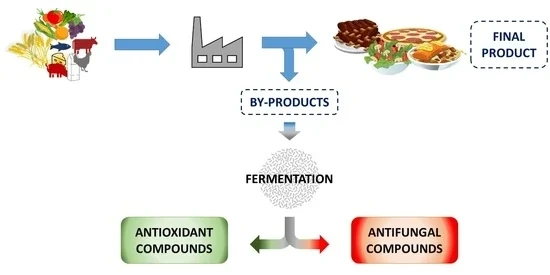
Graphical Abstract
1. Introduction
The processing of food by the industry generates a large amount of by-products that are generally discarded. In some cases, these by-products are reused for animal feed or as fuel for energy, but they still have a low economic value. It has been estimated that 88 million tons of by-products are generated from the agri-food industry, at a cost of 143,000 million euros [1]. These by-products can be converted into a wide variety of compounds with high added value, such as biofuels or bioactive compounds [2].
Fermentation has been used for thousands of years to preserve food or produce compounds of interest such as ethanol. Over time, this process has been gaining importance in research related to nutrition and health, because through fermentation, bioactive compounds of interest are obtained, such as antioxidant compounds [3]. It also raises interest at an industrial level since it allows the reuse of waste to obtain the desired compounds from them. In this way, it contributes to protecting the environment by reducing the environmental impact caused by these wastes [4].
Finally, societal demand increasingly tends toward foods with additives of natural origin and the avoidance of those of chemical origin. An important part of the compounds added to a food are preservatives, since they allow the extension of its shelf-life and reduces economic losses. Therefore, through fermentation, natural compounds can be obtained to replace the chemical products currently used for this purpose. Thus, the present review aimed to evaluate the current knowledge on the use of fermentation to obtain bioactive compounds from food by-products, emphasizing their use as natural preservatives.
1. 서론
식품 산업의 가공 과정에서는 일반적으로 폐기되는 대량의 부산물이 발생합니다. 일부 경우 이러한 부산물은 동물 사료나 에너지 연료로 재사용되지만 여전히 경제적 가치는 낮습니다. 농업 식품 산업에서 발생하는 부산물은 연간 8,800만 톤에 달하며, 그 비용은 1,430억 유로로 추산된다[1]. 이러한 부산물은 바이오연료나 생리활성 화합물과 같은 고부가가치 화합물로 전환될 수 있다[2].
발효는
수천 년 동안 식품 보존이나
에탄올과 같은 유용한 화합물 생산에 활용되어 왔습니다.
시간이 지남에 따라 이 과정은
영양 및 건강 관련 연구에서 중요성을 더해가고 있는데,
발효를 통해 항산화 화합물과 같은 유용한 생리활성 화합물을 얻을 수 있기 때문입니다[3].
또한 폐기물을 재활용하여 원하는 화합물을 얻을 수 있다는 점에서
산업적 차원에서도 관심을 끌고 있습니다.
이러한 방식으로 발효는
폐기물로 인한 환경적 영향을 줄여 환경 보호에 기여한다[4].
결국 사회적 수요는
화학 기원 첨가제를 피하고
천연 기원 첨가제를 포함한 식품을 점점 더 선호하는 방향으로 기울고 있다.
식품에 첨가되는 화합물 중 중요한 부분은 보존제로,
유통기한을 연장하고 경제적 손실을 줄여주기 때문이다.
따라서
발효를 통해 현재 이 목적으로 사용되는 화학 제품을 대체할 천연 화합물을 얻을 수 있습니다.
따라서 본 리뷰는 식품 부산물로부터 발효를 이용해 생리활성 화합물을 얻는 데 관한
최신 지식을 평가하는 것을 목표로 하며,
특히 천연 방부제로서의 활용에 중점을 두었습니다.
2. Fermentation Processes
Although fermentation has been used since ancient times, techniques have been improved to increase productivity, developing increasingly efficient processes. Currently, to carry out the fermentation process, two different strategies are usually used depending on the type of substrate: submerged fermentation or solid-state fermentation. The first process is submerged fermentation (SmF). To perform this, a liquid substrate can be used or water can be added to a solid substrate (Figure 1).
2. 발효 공정
발효는 고대부터 사용되어 왔지만, 생산성을 높이기 위한 기술이 개선되어 점점 더 효율적인 공정이 개발되었습니다.
현재 발효 공정 수행에는
기질 유형에 따라 일반적으로 두 가지 다른 전략이 사용됩니다:
침지 발효(submerged fermentation) 또는
고체 상태 발효(solid-state fermentation).
첫 번째 공정은 침지 발효(SmF)입니다.
이를 수행하기 위해
액체 기질을 사용하거나 고체 기질에 물을 첨가할 수 있습니다(그림 1).
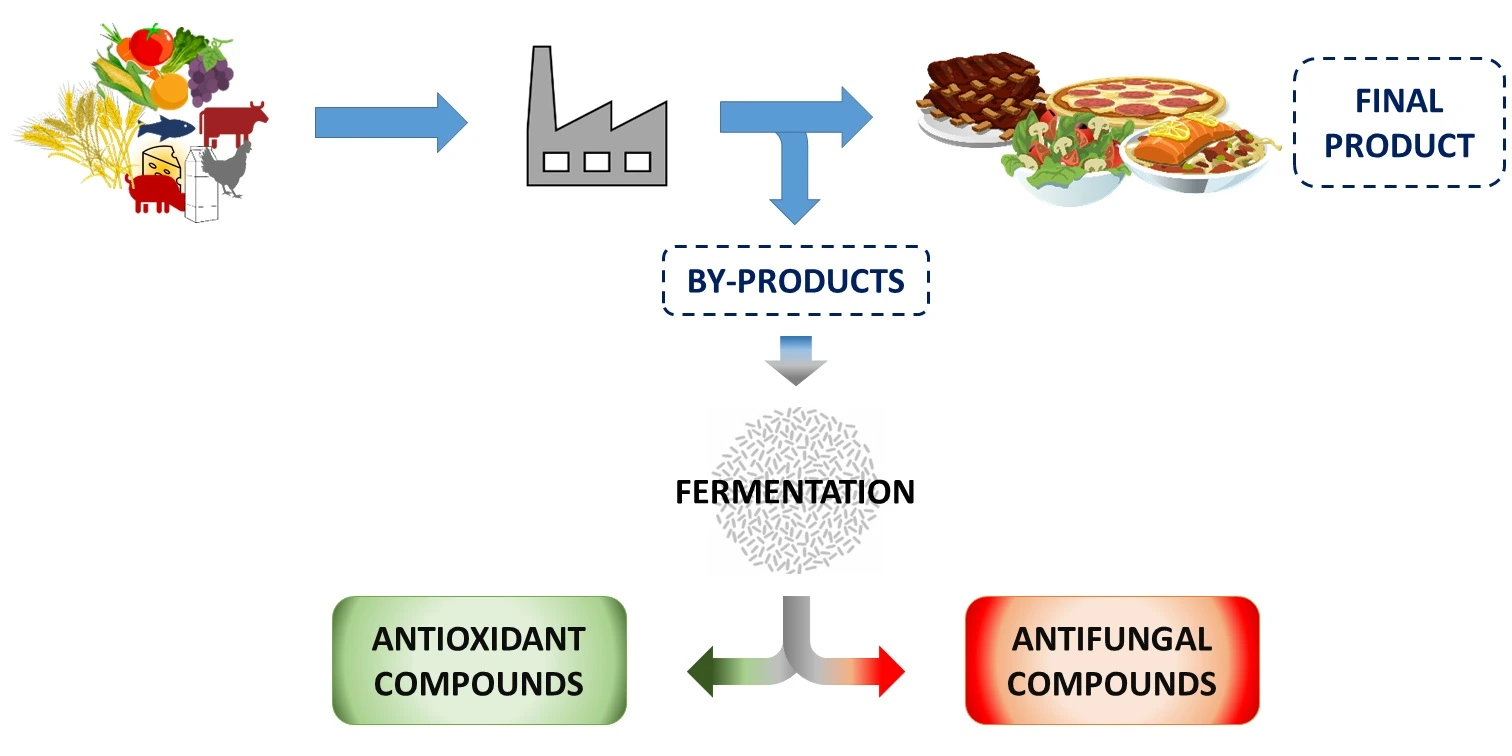
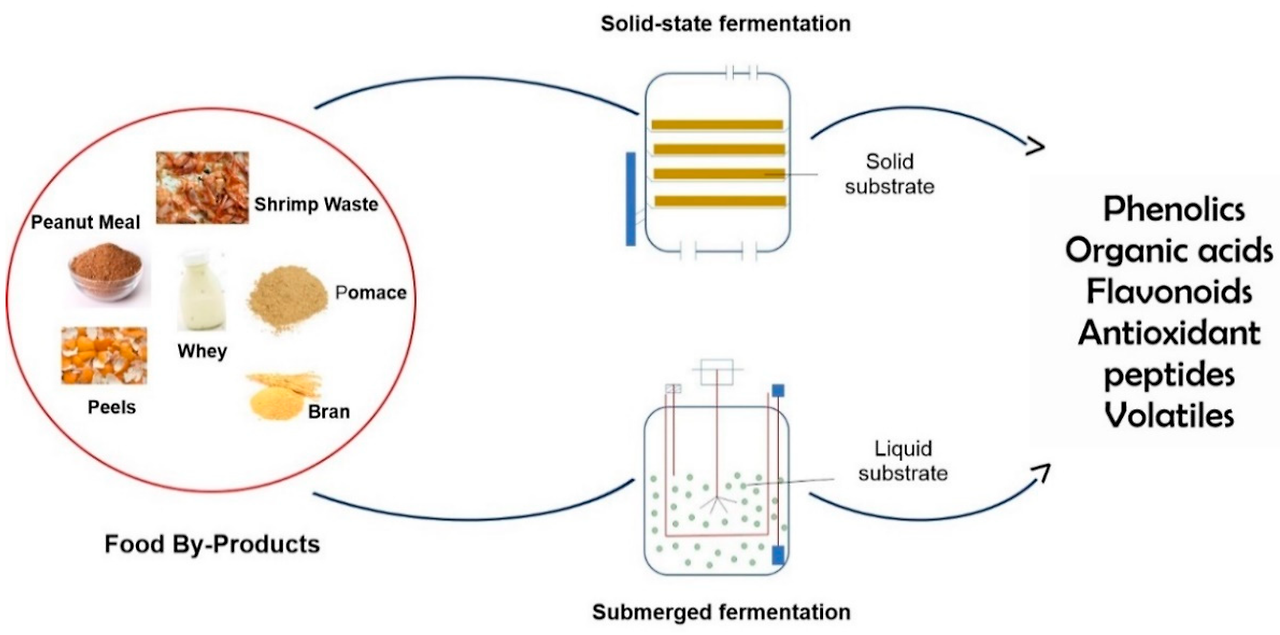
Figure 1. Overview of food by-product fermentation to produce antioxidant compounds or natural preservatives.
This fermentation method is the one chosen when bacteria or yeasts are used to ferment, since they need high humidity [5]. The bioactive compounds produced by microorganisms during fermentation are secreted into the liquid medium. Therefore, SmF is commonly used for the production of secondary metabolites in the liquid state [6]. Among its main advantages we can highlight the production of compounds on a large scale, a good transfer of mass and heat during the process, and a better diffusion of microorganisms. However, its drawbacks are low performance, high energy consumption, and that it is not environmentally friendly due to the high volume of waste water that is generated [5].
이 발효 방법은
박테리아나 효모를 사용하여 발효할 때 선택되는 방식입니다.
이는 해당 미생물들이
높은 습도를 필요로 하기 때문입니다[5].
발효 과정에서 미생물이 생성하는 생리활성 화합물은
액체 배지로 분비됩니다.
따라서
SmF는 액체 상태의 2차 대사산물 생산에 일반적으로 사용됩니다[6].
주요 장점으로는
대규모 화합물 생산,
공정 중 우수한 물질 및 열 전달,
미생물의 효과적인 확산 등을 꼽을 수 있다.
그러나 단점으로는
낮은 생산성, 높은 에너지 소비, 그리고
대량의 폐수 발생으로 인한 환경 친화성 부족이 있다 [5].
Although SmF is not the most widely used technique for the reuse of food by-products, some authors have explored its use to obtain bioactive compounds (Table 1). In this sense, Zhang et al. [7] used shrimp by-products as substrate to obtain chitin and chitosan using SmF. Mucor sp. strains produced gamma-linolenic acid and beta-carotene after SmF fermentation of agro-industrial waste (brans, spent malt grains, distiller grains, etc.) [8]. On the other hand, Bartkiene et al. [9] used SmF to obtain different antioxidant and antimicrobial compounds by fermenting barley by-products with the bacterium Pediococcus acidilactici. In addition, Zou et al. [10] also used SmF to enhance antioxidant activity of ginkgo seeds suspension through fermentation with Eurotium cristatum. Finally, agri-food waste cannot only serve as a substrate, but also as a support for fermentation. In this sense, Das et al. [11] used the eggshell as a support for the fermentation of wastewater from a brewery with the Rhizopus oryzae fungus, obtaining fumaric acid.
SmF는 식품 부산물 재활용에 가장 널리 사용되는 기술은 아니지만,
일부 연구자들은 생리활성 화합물 생산을 위해 이 기술을 탐구해왔다(표 1).
이러한 맥락에서 Zhang 등[7]은
새우 부산물을 기질로 사용하여
SmF를 통해 키틴과 키토산을 생산하였다.
Mucor sp. 균주는
농업 산업 폐기물(겨, 맥아 잔여물, 증류 잔여물 등)의 SmF 발효 후
감마-리놀렌산과 베타-카로틴을 생산하였다[8].
한편 Bartkiene 등[9]은
Pediococcus acidilactici 균으로 보리 부산물을 발효시켜
다양한 항산화 및 항균 화합물을 얻기 위해 SmF를 사용하였다.
또한 Zou 등[10]은 Eurotium cristatum을
이용한 발효를 통해 은행나무 씨 현탁액의 항산화 활성을 증진시키기 위해
SmF를 사용했다.
마지막으로,
농식품 폐기물은 기질뿐만 아니라 발효의 지지체 역할도 할 수 있다.
이러한 의미에서
Das 등[11]은 양조장 폐수를 Rhizopus oryzae 균으로 발효시키기 위한 지지체로
달걀 껍질을 사용하여 푸마르산을 얻었다.
[11]은
맥주 양조장 폐수를 Rhizopus oryzae 균으로 발효시키는 지지체로
달걀 껍질을 사용하여 푸마르산을 얻었다.
Table 1. Antioxidant and antifungal compounds obtained from food processing by-products.

The other fermentation process is known as solid-state fermentation (SSF). In this case, a solid substrate is used in the absence of water and the fermentating microorganisms grow on it [44]. For this fermentation technique, microorganisms that do not require a high water level in the medium are used, such as fungi [6]. With this method, the nutrients in the solid substrate are used to the maximum. The advantages of SSF over SmF are a high yield, obtaining a final product with high activity, low water consumption, being more environmentally friendly, and greater resistance to contamination. Another advantage of this method is the possibility of using agricultural by-products as substrate for fermentation, allowing the recovery of compounds of biological interest and reducing the waste generated. Through this process, products of high economic value can be obtained. The main drawbacks are the difficulty to scale-up the process, the accumulation of heat, and the difficulty to correctly control the process parameters [5]. In fact, the main compounds produced from agricultural by-products by SSF are enzymes [45]. Agricultural residues contain all the necessary nutrients for the good growth of the microorganisms used for fermentation; therefore, a very good process performance is obtained. Some of the most commonly used by-products in this process are molasses, pomace, bagasse, roots, seeds, husks, peels, stems, stalks, and leaves [46]. Therefore, SSF is considered a promising and ecological process with significant future prospects for obtaining compounds of interest [47].
Several authors have investigated the use of this process to obtain different bioactive compounds from agro-industrial by-products. SSF is very useful to that aim, since through the action of bacterial enzymes the hydrolysis of the cell walls is achieved, releasing different compounds such as polyphenols, vitamins, organic acids, or bioactive peptides [48]. In this sense, Fang et al. [49] used SSF to obtain poly-γ-glutamic acid with Bacillus amyloliquefaciens and a natural complex microbial community from corn stalk and soybean meal. One of its main uses is to obtain antioxidant compounds, although it can also be used for other compounds of interest in the food industry, such as antifungals (Table 1). Lastly, food by-products can be also used to obtain different enzymes, which are used later to obtain bioactive compounds. In this sense, Teles et al. [50] used grape pomace and wheat bran as a substrate for the production of several hydrolytic enzymes through fermentation with Aspergillus niger, which were later applied to grape pomace to recover polyphenols.
다른 발효 공정은
고체 상태 발효(SSF)로 알려져 있다.
이 경우 물 없이
고체 기질을 사용하며
발효 미생물이 그 위에서 성장한다[44].
이 발효 기술에는
배지에서 높은 수분 수준을 필요로 하지 않는 미생물,
예를 들어 균류가 사용된다[6].
이 방법을 통해
고체 배지 내 영양소를 최대한 활용할 수 있다.
SSF가 SmF에 비해 갖는 장점은
높은 수율, 활성도가 높은 최종 제품 생산,
낮은 물 소비량, 환경 친화성, 오염에 대한 높은 저항성 등이다.
이 방법의 또 다른 장점은
농업 부산물을 발효 배지로 사용할 수 있어
생물학적 가치가 있는 화합물을 회수하고 발생하는 폐기물을 줄일 수 있다는 점이다.
이 공정을 통해 경제적 가치가 높은 제품을 얻을 수 있다.
주요 단점은
공정 확대의 어려움, 열 축적, 공정 매개변수 제어의 어려움이다[5].
실제로 SSF로 농업 부산물에서 주로 생산되는 화합물은
효소이다[45].
농업 잔여물은
발효에 사용되는 미생물의 양호한 성장에 필요한 모든 영양소를 함유하고 있으므로
매우 우수한 공정 성능을 얻을 수 있다.
이 공정에서 가장 흔히 사용되는 부산물로는
당밀, 포도 찌꺼기, 사탕수수 찌꺼기, 뿌리, 씨앗, 껍질, 줄기, 줄기, 잎 등이 있다[46].
따라서 SSF는
관심 화합물 획득을 위한 유망하고 생태적인 공정으로 간주되며 상당한 미래 전망을 가지고 있다 [47].
여러 연구자들은 농업 산업 부산물로부터 다양한 생리활성 화합물을 얻기 위해 이 공정의 활용을 조사해왔다.
SSF는
박테리아 효소의 작용을 통해 세포벽의 가수분해를 달성하여
폴리페놀, 비타민, 유기산 또는
생리활성 펩타이드와 같은 다양한 화합물을 방출하므로
이러한 목적에 매우 유용하다[48].
이와 관련하여 Fang 등[49]은
옥수수 줄기와 대두박을 원료로
Bacillus amyloliquefaciens 및 자연 복합 미생물 군집을 이용해
SSF를 통해 폴리-γ-글루탐산을 생산하였다.
이 화합물의 주요 용도 중 하나는 항산화 화합물 생산이지만,
항진균제 등 식품 산업에서 관심 있는 다른 화합물 생산에도 활용될 수 있다(표 1).
마지막으로, 식품 부산물은 다양한 효소 생산에도 활용될 수 있으며,
이 효소들은 이후 생리활성 화합물 생산에 사용됩니다.
Teles 등[50]은
포도 찌꺼기와 밀기울을 기질로 사용하여
Aspergillus niger 발효를 통해
여러 가수분해 효소를 생산했으며,
이 효소들을 포도 찌꺼기에 적용하여 폴리페놀을 회수했습니다.
3. Preservative Compounds Obtained from Food By-Products Fermentation
3.1. Antioxidants
As mentioned above, some of the main products obtained after fermentation are antioxidant compounds. Antioxidant compounds are interesting from a health point of view, since, as it is known, oxidative stress is related to a wide variety of diseases such as cancer, cardiovascular diseases, diabetes, and neurodegenerative diseases [51]. However, these compounds are also interesting for industry, specifically the food industry, since they can be used as natural preservatives in processed foods to prevent their oxidation [52]. The main antioxidant compounds obtained from plant matrices are phenolic compounds, like phenolic acids or flavonoids, which have a remarkable antioxidant activity. Moreover, other vegetal compounds such as carotenoids or vitamins are also important antioxidants [53]. Fermentation processes can increase the extraction of antioxidant molecules from food matrices, including vegetable by-products. Moreover, fermentation can also modify the profile and types of antioxidant bioactive compounds, or even produce new compounds with biological activities of interest. Fermentation can also act on the activity of the compounds or on their bioaccessibility/bioavailability [54,55,56,57,58]. Bioaccessibility is primarily modulated during fermentation by deaggregation and deglycosylation of phenolic compounds or carotenoids and even by the release of monomeric phenolic compounds, or by isomerization as in the case for lycopene. However, the bioavailability of dietary polyphenols in the human body remains unclear. Extensive glycosylation of these compounds causes a poor intestinal absorption. Hence, increased bioaccessibility resulting from fermentation is seen as a positive factor for bioavailability, which depends on numerous factors related to diet composition and also relies on the metabolic activity of large intestine microbiota able to release aglycones.
Regarding animal by-products, the main source of antioxidant compounds are bioactive peptides, originated after the fermentation process, or a chemical or enzymatic hydrolysis of proteins. Finally, fermentation processes can also release antioxidant compounds which were not present before, like exopolysaccharides, which are produced by microorganisms using sugars as substrate [59].
The main substrates used to obtain antioxidant compounds come from by-products of plant matrices. The industrial processing of fruits and vegetables generate by-products such as skin, peel, pomace, and seeds, which represent around 30% of the weight of the product. These by-products are rich in bioactive compounds such as vitamins, pigments (chlorophylls, carotenoids, lycopene, etc.), flavonoids, and phenolic compounds, as well as containing dietary fibers. This, together with the presence of water in these by-products, makes them a perfect substrate to carry out SSF (Figure 2), as can be seen in the existing literature. In this sense, Tian et al. [12] observed an increase in the presence of flavonoids after fermentation of grapefruit peels with F33 activated yeast. Larios-Cruz et al. [13] also observed that grapefruit by-products could be used as a source of antioxidant compounds after fermentation with A. niger. Yepes-Betancur et al. [14] used SSF to ferment hass avocado seed with A. niger GH1 to release bioactive compounds with antioxidant capacity. They reported an increase in antioxidant activity measured by DPPH and ABTS due to the release of phenolic compounds by the activities of the enzymes cellulase and xylanase. Dulf et al. [15] also used generally recognized as safe (GRAS) fungi, specifically A. niger and Rhizopus oligosporus, to ferment different plum by-products (pomaces, spent fruit pulp, and peels). These authors reported an increase in phenolic compounds (mainly isoquercitrin, cinnamic acids, and rutin) and flavonoids after the fermentation process, which was correlated with an increase in the antioxidant capacity of the fermented samples. In another study, Dulf et al. [16] also reported an increase in the extraction of polyphenols and flavonoids after the fermentation of chokeberry pomace with A. niger and R. oligosporus, improving antioxidant activity. Zambrano et al. [17] fermented grape, apple, and pitahaya by-products with Rhizomucor miehei NRRL5282, increasing the recovery of polyphenolic compounds and antioxidant activity (measured by DPPH and FRAP). Lastly, the production of other compounds such as carotenoids has been also explored. In this sense, Dulf et al. [18] used Actinomucor elegans and Umbelopsis isabellina to obtain higher production of γ-linolenic acid and carotenoids, like lutein or β-carotene, from grape pomace. Moreover, the fermentation of this by-product with A. elegans increased the total flavonoid and phenolic content, and then improved antioxidant activity.
3. 식품 부산물 발효로부터 얻어지는 방부제 화합물
3.1. 항산화제
앞서 언급한 바와 같이,
발효 후 얻어지는 주요 산물 중 일부는
항산화 화합물이다.
항산화 화합물은 건강 측면에서 주목할 만하다.
알려진 바와 같이,
산화 스트레스는 암, 심혈관 질환, 당뇨병, 신경퇴행성 질환 등
다양한 질병과 관련이 있기 때문이다 [51].
그러나 이러한 화합물은
가공 식품의 산화를 방지하는 천연 방부제로 활용 가능하다는 점에서
산업계, 특히 식품 산업에도 중요합니다[52].
식물 매트릭스에서 얻어지는 주요 항산화 화합물은
페놀산이나 플라보노이드 같은 페놀성 화합물로,
탁월한 항산화 활성을 지닙니다.
또한 카로티노이드나 비타민 같은
다른 식물성 화합물 역시 중요한 항산화제입니다 [53].
발효 공정은 식물 부산물을 포함한 식품 매트릭스에서
항산화 분자의 추출을 증가시킬 수 있습니다.
또한 발효는
항산화 생리활성 화합물의 프로필과 유형을 변경하거나,
심지어 관심 있는 생물학적 활성을 지닌 새로운 화합물을 생성할 수도 있습니다.
발효는
화합물의 활성이나 생체 이용률/생체 가용성에도 영향을 미칠 수 있습니다 [54,55,56, 57,58].
생체접근성은
주로 페놀 화합물이나 카로티노이드의 응집 해체 및 탈당화, 단량체 페놀 화합물의 방출,
또는 라이코펜의 경우와 같은 이성질화를 통해
발효 과정에서 조절됩니다.
그러나
인체 내 식이 폴리페놀의 생체이용률은 여전히 불분명합니다.
이러한 화합물의 광범위한 당화 작용은
장 흡수율을 저하시킵니다.
따라서 발효로 인한 생체접근성 증가는
생체이용률에 긍정적 요인으로 간주되며,
이는 식이 구성과 관련된 다수 요인에 의존할 뿐만 아니라
아글리콘을 방출할 수 있는 대장 미생물군의 대사 활동에도 달려 있습니다.
동물 부산물의 경우,
항산화 화합물의 주요 공급원은 발효 과정 후 생성되거나
단백질의 화학적/효소적 가수분해로 유래된 생리활성 펩타이드입니다.
마지막으로,
발효 과정은 또한 이전에 존재하지 않았던
항산화 화합물,
예를 들어 당을 기질로 사용하여 미생물이 생성하는
외다당류(exopolysaccharides)를 방출할 수 있습니다[59].
항산화 화합물 획득에 사용되는 주요 기질은
식물 매트릭스의 부산물에서 유래합니다.
과일과 채소의 산업적 가공은
껍질, 껍질, 찌꺼기, 씨앗과 같은 부산물을 생성하며,
이는 제품 중량의 약 30%를 차지합니다.
이러한 부산물은
비타민, 색소(엽록소, 카로티노이드, 라이코펜 등),
플라보노이드, 페놀 화합물과 같은 생리활성 화합물이 풍부할 뿐만 아니라
식이섬유도 함유하고 있습니다.
이러한 생리활성 화합물과 함께 이 부산물들에 함유된 수분은
기존 문헌에서 확인할 수 있듯이 SSF(그림 2)를 수행하기에
완벽한 기질로 만듭니다.
이러한 맥락에서 Tian 등[12]은
F33 활성화 효모로 자몽 껍질을 발효시킨 후
플라보노이드 함량이 증가하는 것을 관찰했습니다.
Larios-Cruz 등[13]은 또한 A. niger로 발효한 후
자몽 부산물이 항산화 화합물의 공급원으로 사용될 수 있음을 관찰했습니다.
Yepes-Betancur 등[14]은
항산화 능력을 가진 생리활성 화합물을 방출하기 위해 SSF를 사용하여
A. niger GH1로 하스 아보카도 씨앗을 발효했습니다.
그들은
셀룰라아제와 자일라나아제 효소 활성에 의한 페놀 화합물 방출로
DPPH 및 ABTS 측정 항산화 활성이 증가했다고 보고했다.
Dulf 등[15]은 또한 일반적으로 안전하다고 인정되는(
GRAS) 곰팡이, 특히 A. niger와 Rhizopus oligosporus를 사용하여
다양한 자두 부산물(포도 찌꺼기, 과즙 찌꺼기, 껍질)을 발효시켰다.
이 연구자들은
발효 과정 후 페놀 화합물(주로 이소케르시트린, 신남산, 루틴)과 플라보노이드의 증가를 보고했으며,
이는 발효된 시료의 항산화 능력 증가와 상관관계가 있었습니다.
또 다른 연구에서 Dulf 등[16]은
A. niger 및 R. oligosporus를 이용한
초크베리 찌꺼기 발효 후 폴리페놀 및 플라보노이드 추출량이 증가하여
항산화 활성이 향상되었다고 보고했습니다.
Zambrano 등[17]은
Rhizomucor miehei NRRL5282를 사용하여
포도, 사과, 피타하야 부산물을 발효시켜
폴리페놀 화합물 회수율과 항산화 활성(DPPH로 측정)을 증가시켰습니다.
[17]은 Rhizomucor miehei NRRL5282로
포도, 사과, 피타야 부산물을 발효시켜
폴리페놀 화합물 회수율과 항산화 활성(DPPH 및 FRAP 측정)을 증가시켰다.
마지막으로
카로티노이드와 같은 다른 화합물의 생산도 탐구되었다.
이와 관련하여 Dulf 등[18]은
Actinomucor elegans와 Umbelopsis isabellina를 사용하여
포도 부산물로부터 γ-리놀렌산과 루테인 또는 β-카로틴과 같은 카로티노이드의 생산량을 높였다.
[18]은 포도 찌꺼기에서 γ-리놀렌산과 루테인 또는
β-카로틴과 같은 카로티노이드의 생산량을 높이기 위해
Actinomucor elegans와 Umbelopsis isabellina를 사용했다.
또한, 이 부산물을
A. elegans로 발효시키면
총 플라보노이드 및 페놀 함량이 증가하여 항산화 활성이 향상되었다.
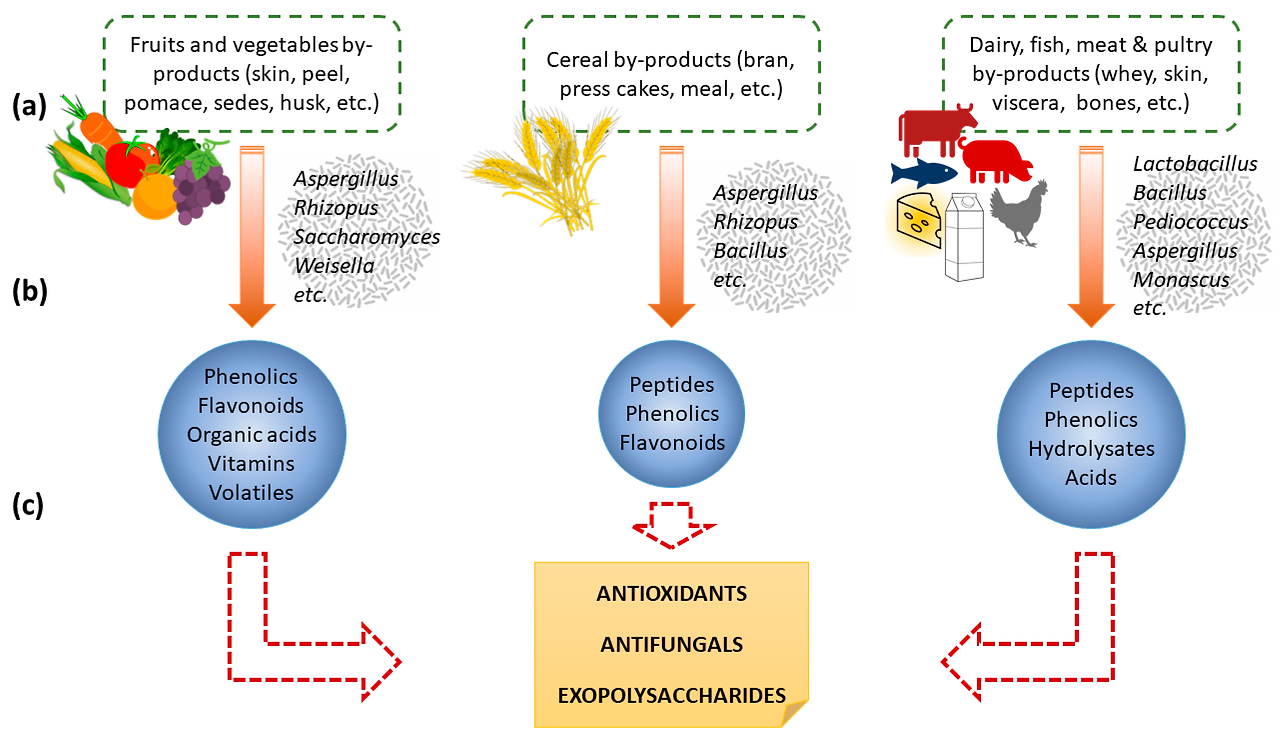
Figure 2. Flow-chart for antioxidants, antifungals, and exopolysaccharides from food by-products sources using fermentation:
(a) categories of food by-products;
(b) major microbes involved in fermentation;
(c) fermentative microbial metabolites acting as antifungals or antioxidants.
그림 2. 발효를 이용한 식품 부산물 원료로부터 항산화제, 항진균제 및 외다당류 생산 흐름도:
(a) 식품 부산물 분류;
(b) 발효에 관여하는 주요 미생물;
(c) 항진균제 또는 항산화제로 작용하는 발효 미생물 대사산물.
On the other hand, by-products from industrial cereal processing also represent an inexpensive and abundant source of bioactive compounds. Regarding this, Călinoiu et al. [19] studied the fermentation of wheat and oat bran by Saccharomyces cerevisiae using solid-state yeast fermentation. They found the highest levels of total polyphenols after 3 (0.84 ± 0.05 mg of gallic acid equivalents (GAE)/g dry weight (DW)) and 4 (0.45 ± 0.02 mg GAE/g DW) days of fermentation for wheat and oat bran, respectively. Sadh et al. [21] reported an increase in antioxidant compounds such as phenols and flavonoids when fermenting peanut press cake with Aspergillus awamori. Da Costa Maia et al. [22] applied SSF to brewer’s spent grain, using several fungi strains to increase the recovery of phenolic compounds. The most effective fungus was Aspergillus oryzae, and the main extracted polyphenols were ferulic, p-coumaric, and caffeic acids. Bangar et al. [23] also used A. oryzae to ferment barley bran, showing after fermentation a significant increase in phenolic compounds, specially gallic acid (from 12.75 to 405.5 µg/g), catechin (from 9.9 to 88.3 µg/g), and ascorbic acid (from 20.44 to 107.15 µg/g), among others. As a result, antioxidant activity was enhanced significantly. Wheat bran was fermented by Mao et al. with Enterococcus faecalis M2, increasing the total phenolic compounds, flavonoids, and antioxidant capacity significantly. These authors reported an increase of gallic acid (1.5-fold), p-coumaric acid (1.4-fold), ferulic acid (2.6-fold), and cinnamic acid (1.4-fold) after the fermentation process compared with raw wheat bran content [24]. Lactic acid bacteria (LAB) are known to be capable of producing bioactive peptides after fermentation of high-protein plant by-products. It has been observed that after fermenting peanut meal with Bacillus subtilis, peptides with an antioxidant capacity of 63.28% were obtained, in comparison with BHT, whose antioxidant activity was 99.16% [20]. It has also been seen that after fermentation of rice starch extraction by-product with Bacillus spp., bioactive peptides with antioxidant activity are obtained [25].
Another food by-product with great nutritional value is whey, which is estimated to contain around 55% of the nutrients originally present in milk and can represent 90% of the weight of the milk used to make cheese. Through fermentation, bioactive compounds of interest with antioxidant capacity can be obtained [60] (Figure 2). The compounds obtained, as well as their antioxidant activity, vary depending on the substrate and the microorganism used for fermentation [61]. Among the compounds obtained, we can highlight lactobionic acid, which has antioxidant capacity, or exopolysaccharides, some of which also have antioxidant properties [62,63]. Production of exopolysaccharides by LAB, especially Leuconostoc pseudomesenteroides, Leuconostoc mesenteroides, or Weissella cibaria, can reach several tens of g/L [64].
Bioactive peptides with antioxidant activity derived from whey proteins can also be obtained. An example is the study carried out by Alvarado Perez et al. [26], in which whey proteins were fermented with Bacillus subtilis, obtaining peptides less than 3 kDa which had significant antioxidant capacity. Rochín-Medina et al. [27] used the whey resulting from the manufacture of cheese as a substrate for the growth of the bacterium Bacillus clausii. They reported the generation of peptides with antioxidant activity capable of inhibiting the ABTS and DPPH radicals by 95% and 80%, respectively. Finally, Gammoh et al. [28] reported an increase in antioxidant activity after fermenting camel milk whey with Lactobacillus delbrueckii subsp. lactis.
Finally, by-products from animal origin, coming from the livestock and fishery industries, are also good substrates. Due to the high protein content of these by-products, the use of fermentation allows the release of bioactive peptides.
Regarding meat by-products, Yu et al. [29] fermented porcine liver proteins with Monascus purpureus. They reported a high antioxidant capacity of the obtained hydrolysate, even more than those obtained with enzymes. However, there are not many more studies related to obtaining bioactive peptides with antioxidant activity from by-products of the meat industry, so future research in this regard would be interesting [63].
Another by-product of animal origin is the eggshell. It represents 11% of the total weight of the egg, and contains essential nutrients for microorganisms, such as Fe, Mg, Zn, and Ca2+ [65,66]. Jai and Anal [30] fermented chicken eggshell membrane with Lactiplantibacillus plantarum, obtaining a hydrolyzate with significant antioxidant power (70.5% inhibition of the DPPH radical).
Finally, the fishing industry and aquaculture also generate a large quantity of by-products, representing a great environmental and economic problem. Therefore, revaluing these by-products would help to make the fish industry more ecological, sustainable, and efficient. Fish waste usually includes the head, skin, viscera, bones, and scales, and they represent around 60% of the total weight of the product [67]. On the other hand, shellfish by-products are mainly the exoskeleton, shells, and heads, and represent 75% of the product weight.
Regarding fish by-products, Marti-Quijal et al. [31] reported high antioxidant activity after fermentation of fish by-products broth by L. plantarum isolated from sea bass colon (6.502 mM Trolox equivalents (TE)) and stomach (4.797 mM TE). The main antioxidant compounds obtained from the fermentation process of fish by-products are bioactive peptides with antioxidant capacity. In this sense, Fang et al. [32] fermented discarded turbot skin with A. oryzae to obtain bioactive antioxidant peptides. Ruthu et al. [33] also obtained protein hydrolysates with high antioxidant capacity by fermenting carp heads with P. acidilactici and Enterococcus faecium. Finally, Choksawangkarn et al. [34] found antioxidant peptides in fermented fish sauce by-product.
On the other hand, concerning shellfish by-products, we can highlight the production of antioxidant chitooligosaccharides when shrimp waste (cephalothoraxes and carapaces) was fermented. The chitooligosaccharides obtained had an antioxidant activity of 55.89 μg TE/mg measured by DPPH assay [35]. Sachindra and Bhaskar [36] also obtained compounds with antioxidant activity by fermenting shrimp waste with P. acidolactici. The extracts obtained showed strong radical scavenging of ABTS and DPPH radicals. At a concentration of 0.5 mg/mL, ABTS radical scavenging was 95%, while at a concentration of 1 mg/mL DPPH radical scavenging was 40%.
한편, 산업용 곡물 가공 부산물 역시 생리활성 화합물의 저렴하고 풍부한 공급원이다. 이와 관련하여 Călinoiu 등[19]은 고체 상태 효모 발효법을 이용해 Saccharomyces cerevisiae로 밀 및 귀리 밀기울을 발효시키는 연구를 수행하였다. 그들은 밀과 귀리 밀기울의 발효 3일차(갈산 등가물(GAE) 0.84 ± 0.05 mg/g 건조 중량(DW))와 4일차(GAE 0.45 ± 0.02 mg/g DW)에 각각 총 폴리페놀 함량이 가장 높게 나타남을 확인했다. Sadh 등[21]은 땅콩 압착 찌꺼기를 Aspergillus awamori로 발효시킬 때 페놀 및 플라보노이드와 같은 항산화 화합물이 증가한다고 보고했다. Da Costa Maia 등[22]은 페놀 화합물의 회수율을 높이기 위해 여러 균주를 사용하여 양조 잔여 곡물에 SSF를 적용했다. 가장 효과적인 균주는 Aspergillus oryzae였으며, 주요 추출 폴리페놀은 페룰산, p-쿠마르산, 카페인산이었다. Bangar 등[23] 역시 A. oryzae를 이용해 보리 밀기울을 발효시켰으며, 발효 후 페놀성 화합물, 특히 갈산(12.75~405.5 µg/g), 카테킨(9.9~88.3 µg/g), 아스코르브산(20.44에서 107.15 µg/g) 등이 크게 증가했다. 그 결과 항산화 활성이 현저히 향상되었다. Mao 등[24]은 밀겨를 Enterococcus faecalis M2로 발효시켜 총 페놀성 화합물, 플라보노이드 및 항산화 능력을 크게 증가시켰다. 이들은 발효 과정 후 갈산(1.5배), p-쿠마르산(1.4배), 페룰산(2.6배), 신남산(1.4배)이 생밀기름기 함량 대비 증가했다고 보고하였다[24]. 유산균(LAB)은 고단백 식물 부산물을 발효시킨 후 생리활성 펩타이드를 생성할 수 있는 것으로 알려져 있다. Bacillus subtilis로 땅콩박을 발효시킨 후, 항산화 활성이 99.16%인 BHT와 비교하여 63.28%의 항산화 능력을 가진 펩타이드가 얻어졌다는 것이 관찰되었다 [20]. 또한 쌀 전분 추출 부산물을 Bacillus 속 균으로 발효시킨 후 항산화 활성을 지닌 생리활성 펩타이드가 얻어지는 것으로 확인되었다[25].
영양가가 매우 높은 또 다른 식품 부산물은 유청으로, 원래 우유에 존재하는 영양소의 약 55%를 함유하는 것으로 추정되며 치즈 제조에 사용된 우유 중량의 90%를 차지할 수 있다. 발효를 통해 항산화 능력을 지닌 관심 있는 생리활성 화합물을 얻을 수 있다[60] (그림 2). 얻어진 화합물과 그 항산화 활성은 발효에 사용된 기질과 미생물에 따라 달라진다[61]. 얻어진 화합물 중에는 항산화 능력을 지닌 락토비오닉산이나, 일부가 항산화 특성을 지닌 외다당류 등을 강조할 수 있다[62,63]. 유산균(LAB), 특히 Leuconostoc pseudomesenteroides, Leuconostoc mesenteroides 또는 Weissella cibaria에 의한 외다당류 생산량은 수십 g/L에 이를 수 있다[64].
유청 단백질에서 유래한 항산화 활성을 지닌 생리활성 펩타이드도 얻을 수 있다. Alvarado Perez 등[26]의 연구가 대표적 사례로, 유청 단백질을 Bacillus subtilis로 발효시켜 3 kDa 미만의 펩타이드를 얻었으며, 이는 상당한 항산화 능력을 나타냈다. Rochín-Medina 등[27]은 치즈 제조 과정에서 발생한 유청을 Bacillus clausii 배양의 기질로 사용하였다. 그들은 ABTS 및 DPPH 라디칼을 각각 95%와 80% 억제할 수 있는 항산화 활성을 지닌 펩타이드 생성을 보고했다. 마지막으로, Gammoh 등[28]은 낙타유 유청을 Lactobacillus delbrueckii subsp. lactis로 발효시킨 후 항산화 활성이 증가했다고 보고했다.
마지막으로, 축산업 및 수산업에서 유래한 동물성 부산물 역시 우수한 기질이다. 이러한 부산물의 높은 단백질 함량 덕분에 발효를 통해 생리활성 펩타이드를 방출할 수 있다.
육류 부산물의 경우, Yu 등[29]은 Monascus purpureus로 돼지 간 단백질을 발효시켰다. 그들은 얻어진 가수분해물이 효소로 얻은 것보다도 더 높은 항산화 능력을 보인다고 보고했다. 그러나 육류 산업 부산물로부터 항산화 활성을 지닌 생리활성 펩타이드를 얻는 관련 연구는 아직 많지 않아, 향후 이 분야 연구가 주목할 만하다[63].
또 다른 동물성 부산물은 달걀 껍질이다. 이는 달걀 총 중량의 11%를 차지하며, 미생물에 필수적인 영양소인 Fe, Mg, Zn, Ca2+ 등을 함유한다[65,66]. Jai와 Anal [30]은 닭 알 껍질 막을 Lactiplantibacillus plantarum으로 발효시켜 상당한 항산화력(DPPH 라디칼 억제율 70.5%)을 지닌 가수분해물을 얻었다.
마지막으로, 어업 및 양식업 역시 대량의 부산물을 발생시켜 환경적·경제적 문제를 야기합니다. 따라서 이러한 부산물의 재평가를 통해 어업의 생태적 지속가능성과 효율성을 제고할 수 있습니다. 어류 폐기물은 주로 머리, 피부, 내장, 뼈, 비늘로 구성되며 제품 총 중량의 약 60%를 차지합니다[67]. 한편, 패류 부산물은 주로 외골격, 껍질, 머리로 구성되며 제품 중량의 75%를 차지한다.
어류 부산물의 경우, Marti-Quijal 등[31]은 농어 결장에서 분리된 L. plantarum에 의한 어류 부산물 국물 발효 후 높은 항산화 활성(6.502 mM 트롤록스 등가량(TE), 위에서 4.797 mM TE)을 보고하였다. (4.797 mM TE)의 높은 항산화 활성을 보고하였다. 어류 부산물 발효 과정에서 얻어진 주요 항산화 화합물은 항산화 능력을 지닌 생리활성 펩타이드이다. 이와 관련하여 Fang 등[32]은 버려진 넙치 피부를 A. oryzae로 발효시켜 생리활성 항산화 펩타이드를 얻었다. Ruthu 등[33] 또한 잉어 머리를 P. acidilactici와 Enterococcus faecium으로 발효시켜 높은 항산화 능력을 지닌 단백질 가수분해물을 얻었다. 마지막으로 Choksawangkarn 등[34]은 발효된 생선 소스 부산물에서 항산화 펩타이드를 발견하였다.
한편, 갑각류 부산물의 경우 새우 폐기물(두부 및 갑각)을 발효시켜 항산화 키토올리고당을 생산한 사례를 주목할 수 있다. 얻어진 키토올리고당은 DPPH 분석법으로 측정된 항산화 활성이 55.89 μg TE/mg이었다 [35]. Sachindra와 Bhaskar [36] 또한 새우 폐기물을 P. acidolactici로 발효시켜 항산화 활성을 지닌 화합물을 얻었다. 얻어진 추출물은 ABTS 및 DPPH 라디칼에 대한 강력한 라디칼 소거 활성을 보였다. 농도 0.5 mg/mL에서 ABTS 라디칼 소거율은 95%였으며, 농도 1 mg/mL에서 DPPH 라디칼 소거율은 40%였다.
3.2. Antifungals
Antifungals are another group of useful compounds for the preservation of food, since they prevent its contamination by fungi and therefore extend its shelf-life. Fungal contamination produces changes in food. These changes can be visual alterations, the smell or taste of the food can be altered, or toxins that are harmful to the health of the consumer can be produced. The use of antifungal compounds is necessary to prevent the spoilage of food and the economic losses that this entails. Currently, some fungicides of chemical origin are used, which can lead to both environmental and health problems [68]. Therefore, it is necessary to search for antifungal compounds of natural origin that avoid these problems and are more sustainable.
Currently, the main antifungal compounds of natural origin are essential oils and the use of microorganisms as preservatives, either through fermentation or through the use of their metabolites [68]. In this context, the fermentation of food by-products to obtain antifungal compounds creates a significant opportunity to reduce environmental impact and revalue these wastes. The nature of antifungal compounds is diverse: organic and fatty acids, peptides, volatiles, and even enzymes.
Christ-Ribeiro et al. [37] reported a positive correlation between antifungal properties and phenolic compounds. After fermenting rice bran with R. oryzae, these authors found a 39.8% inhibition of the fungal growth of Penicillium verrucosum, related to the polyphenol content of the fermented sample. This is consistent with that described by Denardi-Souza et al. [38], who also fermented rice bran with R. oryzae, obtaining an extract rich in phenolic compounds. This extract was tested against fungi of the genera Aspergillus, Penicillium, and Fusarium, obtaining values for the minimum inhibitory concentration (MIC) from 390 to 3100 µg/mL, and for the minimum fungicidal concentration (MFC) from 780 to 6300 µg/mL. The authors also reported that the most sensitive fungi to the phenolic extracts were A. niger, Penicillium roqueforti, Penicillium expansum, Fusarium graminearum, Fusarium culmorum, and Fusarium poae. These extracts were tested on bread, resulting in a three-day increase in the half-life of the bread. Cantatore et al. [39] fermented apple by-products with a binary mixture of W. cibaria and S. cerevisiae for 48 h. It was observed that by including the fermented extract in the breadmaking, mold contamination was delayed.
On the other hand, antifungal compounds have also been obtained after the fermentation of by-products of the dairy industry. In this sense, we can highlight the study carried out by Izzo et al. [40], in which L. plantarum fermented whey was used for the production of pita bread, obtaining a complete reduction in contamination by fungi when the water was completely replaced by fermented whey during the process of elaboration. In another study, Luz et al. [41] used fermented whey to prevent the growth of P. expansum in sliced bread. After the application of the treatment, an inactivation of 0.5–0.6 log CFU/g was achieved.
Compounds with antifungal activity have also been obtained from animal by-products. In this sense, Marti-Quijal et al. [42] fermented sea bass by-products with Lactobacillus plantarum, obtaining extracts with antifungal activity against fungi of the Aspergillus, Penicillium, and Fusarium genera. The values obtained from MIC and MFC ranged from 1 to 32 g/L and from 8 to 32 g/L, respectively. The main inhibited fungi were Aspergillus parasiticus, P. expansum and Fusarium verticillioides. Ruthu et al. [33] fermented Indian major carp (Rohu and Catla) heads with E. faecium and P. acidilactici. When applying the hydrolysates obtained as antifungal agents, they obtained a MIC of 60 mg/mL against Aspergillus ochraceus and 96 mg/mL against Penicillium chrysogenum.
Lastly, antifungal compounds have also been obtained by fermenting shellfish by-products. Chang et al. [43] fermented shrimp and crab shell powder with the bacteria Bacillus cereus. The extract obtained showed antifungal activity against Fusarium oxysporum, Fusarium solani, and Pythium ultimum by inhibiting spore germination and germ tube elongation.
3.2. 항진균제
항진균제는 식품의 곰팡이 오염을 방지하여 유통기한을 연장시키므로 식품 보존에 유용한 또 다른 화합물군이다. 곰팡이 오염은 식품에 변화를 일으킨다. 이러한 변화는 시각적 변질, 식품의 냄새나 맛의 변화, 또는 소비자의 건강에 해로운 독소 생성 등으로 나타날 수 있다. 식품 부패와 이에 따른 경제적 손실을 방지하기 위해 항진균 화합물의 사용이 필수적이다. 현재 일부 화학 기원 살균제가 사용되는데, 이는 환경 및 건강 문제를 초래할 수 있다[68]. 따라서 이러한 문제를 피하고 지속 가능한 천연 기원 항진균 화합물을 탐색할 필요가 있다.
현재 주요 천연 기원의 항진균 화합물은 에센셜 오일과 미생물을 발효 또는 대사산물 활용을 통한 방부제로 사용하는 것이다[68]. 이러한 맥락에서 식품 부산물을 발효시켜 항진균 화합물을 얻는 것은 환경 영향을 줄이고 이러한 폐기물을 재활용할 수 있는 중요한 기회를 제공한다. 항진균 화합물의 성질은 다양하다: 유기산 및 지방산, 펩타이드, 휘발성 물질, 심지어 효소까지 포함된다.
Christ-Ribeiro 등[37]은 항진균 특성과 페놀 화합물 사이에 양의 상관관계가 있다고 보고했습니다. 이들은 쌀겨를 R. oryzae로 발효시킨 후 페니실리움 베루코섬(Penicillium verrucosum)의 균류 생장이 발효 시료의 폴리페놀 함량과 관련하여 39.8% 억제되는 것을 발견했다. 이는 Denardi-Souza 등[38]이 쌀겨를 R. oryzae로 발효시켜 페놀성 화합물이 풍부한 추출물을 얻은 결과와 일치한다. 이 추출물은 아스페르길루스속(Aspergillus), 페니실리움속(Penicillium), 푸사리움속(Fusarium) 곰팡이에 대해 시험되었으며, 최소억제농도(MIC)는 390~3100 µg/mL, 최소살균농도(MFC)는 780~6300 µg/mL의 값을 나타냈다. 저자들은 페놀 추출물에 가장 민감한 곰팡이로 아스페르길루스 니거(A. niger), 페니실리움 로크포르티(Penicillium roqueforti), 페니실리움 엑스팬섬(Penicillium expansum), 푸사리움 그라미네아룸(Fusarium graminearum), 푸사리움 컬모룸(Fusarium culmorum), 푸사리움 포에(Fusarium poae)를 보고했다. 이 추출물을 빵에 적용했을 때 빵의 반감기가 3일 연장되는 결과가 나타났다. Cantatore 등[39]은 사과 부산물을 W. cibaria와 S. cerevisiae의 이원 혼합균으로 48시간 발효시켰다. 발효 추출물을 제빵 과정에 포함시키면 곰팡이 오염이 지연되는 것이 관찰되었다.
한편, 유제품 산업 부산물의 발효 후에도 항진균 화합물이 얻어졌다. 이와 관련해 Izzo 등[40]의 연구를 주목할 수 있는데, 이 연구에서는 L. plantarum으로 발효된 유청을 피타 빵 제조에 사용했으며, 제조 과정에서 물을 완전히 발효 유청으로 대체했을 때 곰팡이 오염이 완전히 감소하는 결과를 얻었다. 또 다른 연구에서 Luz 등[41]은 발효 유청을 사용하여 슬라이스 빵에서 P. expansum의 성장을 방지했습니다. 처리 적용 후 0.5–0.6 log CFU/g의 불활성화가 달성되었습니다.
항진균 활성을 지닌 화합물은 동물 부산물에서도 얻어졌다. 이와 관련하여 Marti-Quijal 등[42]은 농어 부산물을 Lactobacillus plantarum으로 발효시켜 Aspergillus, Penicillium, Fusarium 속 곰팡이에 대한 항진균 활성을 지닌 추출물을 얻었다. MIC 및 MFC 값은 각각 1~32 g/L, 8~32 g/L 범위를 나타냈다. 주요 억제 대상 균종은 Aspergillus parasiticus, P. expansum 및 Fusarium verticillioides였다. Ruthu 등[33]은 인도산 주요 잉어(Rohu 및 Catla) 머리를 E. faecium 및 P. acidilactici로 발효시켰다. 이들에서 얻은 가수분해물을 항진균제로 적용했을 때, Aspergillus ochraceus에 대해 60 mg/mL, Penicillium chrysogenum에 대해 96 mg/mL의 MIC를 얻었다.
마지막으로, 조개류 부산물을 발효시켜 항진균 화합물을 얻은 연구도 있다. Chang 등[43]은 새우와 게 껍질 분말을 바실러스 세레우스(Bacillus cereus)로 발효시켰다. 얻어진 추출물은 포자 발아 및 발아관 신장을 억제함으로써 푸사리움 옥시스포룸(Fusarium oxysporum), 푸사리움 솔라니(Fusarium solani), 피티움 울티뭄(Pythium ultimum)에 대해 항진균 활성을 나타냈다.
4. 결론
관찰된 바와 같이, 발효는 항산화 및 항진균 화합물을 얻기 위한 유용한 도구이다. 또한 식품 산업 부산물을 이 공정에 활용함으로써 공정 지속가능성을 높이고 부산물에 부가가치를 부여하며 환경적 영향을 감소시킬 수 있다. 발효 공정 측면에서는 높은 수율과 낮은 비용으로 인해 SSF(고체 상태 발효)가 가장 적합한 것으로 관찰되었다. 그러나 실험실에서 획득한 모든 지식을 활용하고 산업 수준에서 적용하기 위해서는 공정 확대에 초점을 맞춘 추가 연구가 여전히 필요하다.
4. Conclusions
As was observed, fermentation is a useful tool for obtaining antioxidant and antifungal compounds. In addition, by-products from the food industry can be used for this process, making the process more sustainable, giving an added value to these by-products, and reducing their environmental impact. Regarding the fermentation process, it was observed that SSF is the best due to its high yield and low cost. However, more research focused on the scaling process is still necessary to take advantage of all the knowledge acquired in the laboratory and to put it into practice at an industrial level.
Author Contributions
F.J.M.-Q., S.K. and F.J.B. conceived the review; F.J.M.-Q., S.K. and F.J.B. wrote the manuscript; F.R., I.T., F.J.B. and E.R.-S. supervised the study and reviewed the manuscript. All authors have read and agreed to the published version of the manuscript.
Funding
This research received no external funding.
Acknowledgments
F.J.M.-Q. would like to thank the pre-PhD scholarship program of University of Valencia “Atracció de Talent”. Moreover, F.J.M-Q. and F.J.B. would like to acknowledge the EU Commission for the support provided by the BBI-JU through the H2020 Project AQUABIOPROFIT ‘Aquaculture and agriculture biomass side stream proteins and bioactives for feed, fitness and health promoting nutritional supplements’ (Grant Agreement No. 790956).
Conflicts of Interest
The authors declare no conflict of interest.
References
- Stenmarck, Å.; Jensen, C.; Quested, T.; Moates, G. Estimates of European Food Waste Levels; European Commission: Brussels, Belgium, 2016. [Google Scholar]
- Ng, H.S.; Kee, P.E.; Yim, H.S.; Chen, P.T.; Wei, Y.H.; Chi-Wei Lan, J. Recent advances on the sustainable approaches for conversion and reutilization of food wastes to valuable bioproducts. Bioresour. Technol. 2020, 302, 12288. [Google Scholar] [CrossRef]
- Hur, S.J.; Lee, S.Y.; Kim, Y.C.; Choi, I.; Kim, G.B. Effect of fermentation on the antioxidant activity in plant-based foods. Food Chem. 2014, 160, 346–356. [Google Scholar] [CrossRef]
- Martins, S.; Mussatto, S.I.; Martínez-Avila, G.; Montañez-Saenz, J.; Aguilar, C.N.; Teixeira, J.A. Bioactive phenolic compounds: Production and extraction by solid-state fermentation. A review. Biotechnol. Adv. 2011, 29, 365–373. [Google Scholar] [CrossRef] [PubMed] [Green Version]
- Doriya, K.; Jose, N.; Gowda, M.; Kumar, D.S. Solid-state fermentation vs submerged fermentation for the production of L-Asparaginase. In Advances in Food and Nutrition Research; Academic Press: Cambridge, MA, USA, 2016; Volume 78, pp. 115–135. [Google Scholar]
- Subramaniyam, R.; Vimala, R. Solid state and submerged fermentation for the production of bioactive substances: A comparative study. Int. J. Sci. Nat. 2012, 3, 480–486. [Google Scholar]
- Zhang, H.; Yun, S.; Song, L.; Zhang, Y.; Zhao, Y. The preparation and characterization of chitin and chitosan under large-scale submerged fermentation level using shrimp by-products as substrate. Int. J. Biol. Macromol. 2017, 96, 334–339. [Google Scholar] [CrossRef]
- Klempová, T.; Slaný, O.; Michal, Š.; Marcin, S.; Milan, Č. Dual production of polyunsaturated fatty acids and beta-carotene with Mucor wosnessenskii by the process of solid-state fermentation using agro-industrial waste. J. Biotechnol. 2020, 311, 1–11. [Google Scholar] [CrossRef] [PubMed]
- Bartkiene, E.; Mozuriene, E.; Lele, V.; Zokaityte, E.; Gruzauskas, R.; Jakobsone, I.; Juodeikiene, G.; Ruibys, R.; Bartkevics, V. Changes of bioactive compounds in barley industry by-products during submerged and solid-state fermentation with antimicrobial Pediococcus acidilactici strain LUHS29. Food Sci. Nutr. 2019, 8, 340–350. [Google Scholar] [CrossRef] [Green Version]