beyond reason
미량원소 치유의학의 세계
많은 우울증 환자가 단지 설탕을 끊는 것만으로 회복되었다 - 데이비드 호킨스
클릭클릭
Best Vitamins for Depression
B vitamins play an important role in helping the brain produce adequate levels of the chemicals required to manage mood and other functions, according to the Mayo Clinic. If someone has low levels of B-vitamins and in particular B-12, they may be more likely to experience symptoms of depression. B-vitamin deficiencies are often seen in people who have depression.
- 메이요클리닉에 따르면 비타민 B는 우울증에 중요한 역할. 특히 비타민 B12 수치가 낮으면 우울증..
Even without a specific disorder, it can become increasingly difficult for a person’s body to absorb enough vitamin B-12 as they age. Depression can often include symptoms of fatigue, and B-vitamins can help combat that. B-12, in particular, is known for being important to reduce fatigue.
- 우울증은 흔히 피로감과 함께 오는데, 비타민B는 우울증뿐만 아니라 피로감을 함께 개선함.
Some of the foods that contain high levels of B-12 include fish, lean meats, eggs, poultry and milk. Certain breakfast cereals may be fortified with B-12 as well. B-12 supplementation can help if someone is a vegan or vegetarian or may not be getting enough of the vitamin for any reason.
Other B vitamins for depression, or vitamins that play a role in brain health include:
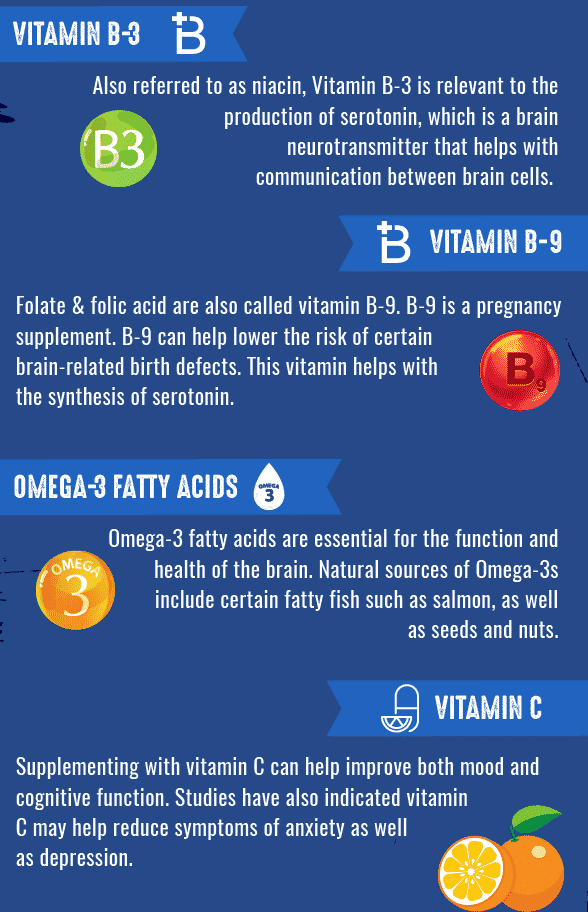
• Vitamin B-3. Also referred to as niacin, Vitamin B-3 is relevant to the production of serotonin, which is an important brain neurotransmitter that helps with the communication between brain cells. In people with depression, serotonin levels may be low. If someone has a deficiency of vitamin B3, they may see a negative effect on their mood. For people with depressive symptoms, a dose of 20 mg of B-3 each day can be helpful.
- 비타민 B3(나이아신)은 세로토닌 생성과 연관되어 우울증에 중요한 역할을 함.
- 우울증이 있을때 나이아신을 매일 20mg복용 권장함.
• Vitamin B-9. Folate and folic acid are also called vitamin B-9. Vitamin B-9 is something pregnant women are advised to supplement with, and even women who aren’t actively trying to become pregnant but could are often told to take it as a supplement. During pregnancy, vitamin B-9 can help lower the risk of certain brain-related birth defects. This vitamin is also important for mood regulation because it helps with the synthesis of serotonin.
- 비타민 b9(엽산)은 임신초기에 중요한 역할을 하고 세로토닌 합성에 도움을 주기 때문에 우을증에 효과적임.
Vitamins for Seasonal Depression
Seasonal depression is something many people experience. Also known as seasonal affective disorder (SAD), this mental health condition is linked to changes in seasons. Many people will start to experience symptoms of SAD in the fall, and these symptoms may continue through the winter. Someone with SAD may feel moody, fatigued or low in energy.
Some of the reasons a person may experience seasonal depression include low serotonin levels that may be related to reduced exposure to sunlight and changes in a person’s biological rhythms that can occur in the fall and winter. If someone has major depression or bipolar disorder, their symptoms may become worse in the fall and winter, and people who live further from the equator may be more likely to have this disorder.
Treatments for seasonal depression can include medication, exposure to light and therapy. Vitamins for seasonal depression can also help alleviate or reduce symptoms. Vitamin D is one vitamin in particular that a doctor may recommend for someone experiencing seasonal depression. Vitamin D is produced by the body after sunlight exposure. During fall and winter months when sunlight exposure may be minimal, supplementing vitamin D can improve mood and reduce the symptoms of SAD.
Along with vitamins, other supplements could be useful to treat symptoms of SAD. These supplements include 5-hydroxytryptophan, or 5-HTP. This nutritional supplement can help increase the brain’s production of serotonin, alleviating general symptoms of depression. Tyrosine is another supplement that may help the brain create chemicals called enkephalins that can boost mood.
Melatonin helps the body know when to sleep and when to be awake. Imbalanced melatonin levels can contribute to symptoms of seasonal depression and fatigue. While this hormone is created in the body naturally, it can also be taken in supplement form to reduce symptoms of SAD.
St. John’s Wort is another herbal supplement that has long been used to help with symptoms of depression and SAD. However, because St. John’s Wort may interfere with the effectiveness of certain medications, it’s important to consult with a medical professional before using it.
Other Natural Vitamins for Depression
Along with the vitamins and supplements listed above, other natural vitamins for depression may include:
• Omega-3 fatty acids. Omega-3 fatty acids are essential for the function and health of the brain. Natural sources of Omega-3s include certain fatty fish such as salmon, as well as seeds and nuts.
- 오메가 3 지방산은 뇌에 중요한 역할을 함.
• Magnesium. According to the Nutrition Reviews journal, nearly half of all adults in the U.S. experience some level of magnesium deficiency. This deficiency can cause sleep problems like insomnia, constipation and muscle tension. It can also cause symptoms of depression and other mood disorders because magnesium is important for the production of feel-good hormones in the brain.
- 마그네슘 부족은 불면, 변비, 근육긴장을 일으킴. 또한 우울증을 일으킴.
• Vitamin C. Supplementing with vitamin C can help improve both mood and cognitive function. Studies have also indicated vitamin C may help reduce symptoms of anxiety as well as depression.
While depression is a serious medical condition, it is fortunately treatable. Vitamins for depression shouldn’t be used as a replacement for medical treatment, but they can be used in conjunction with professional treatment to improve its effectiveness. Nutrition often plays a critical role not only in physical but also mental health.
In many cases, depression occurs alongside alcohol or drug addiction. If you or a loved one are experiencing symptoms of co-occurring addiction and depression or other issues with mental health, we encourage you to contact our team at The Recovery Village®. The Recovery Village® offers treatment for substance abuse and co-occurring disorders, including depression.
Review
Molecular Mechanisms of Depression: Perspectives on New Treatment StrategiesAbstract |
Introduction
Depression is a common disorder, which occurs in all genders, ages, in all social backgrounds and also in animals. According to the World Health Organization, depression is the leading cause of disability as measured by disability adjusted live years and the 4th leading contributor to the global burden of disease in 2000, with tendency to rise up to 2020.
It presents with depressed mood, loss of interest, loss of drive and pleasure, feelings of guilt, poor concentration, low self-esteem, sleep disturbances and increased or decreased appetite. These problems can become chronic or recurrent and lead to substantial impairments in an individual's ability to take care of his or her everyday responsibilities. At its worst, depression can lead to suicide, a tragic fatality associated with the loss of about 850.000 lives every year.
Depression is a multifaceted disorder with diverse causes and has been associated with the risk to develop severe medical disorders, i.e. depression increases the risk for cardiovascular disorders by 1.5-2 fold [1], for stroke by 1.8 fold [2], for Alzheimers Disease by 2.1 fold [3], for epilepsy by 4-6 fold [4], for diabetes by 60% [5], for cancer by 1.3-1.8 fold [6] (Fig. 1).

Conventional treatment of depression with antidepressant medications and cognitive behavioral therapy can be effective in 60-80% of patients. However, fewer than 25% of those affected have access to effective treatment. Moreover, treatment resistant depression occurs in up to 40% of patients. However, antidepressant therapy has a variety of undesirable side effects such as sedation, decrease of blood pressure, increase of weight, indigestion or sexual dysfunction. This often results in patients' poor compliance resulting in a break-up of medication with recurrence of depressive symptoms and increased suicidal risk [7].
Therefore, (1) the prevention of depressive episodes by focusing on different possible physiologically relevant mechanisms beyond the neurotransmitter hypothesis and (2) the treatment of depression with alternative, causative or also easy available treatment strategies beyond serotonin and noradrenaline reuptake inhibition might be a major topic of future psychiatric care.
In this review, an attempt is made to overview new molecular concepts of the disease and search for perspectives on antidepressant treatment strategies beyond approved medications.