BEYOND REASON
영양의학
미량원소 치유의학의 세계
암세포는 '발효된 포도당'(설탕, 단순포도당)을 에너지로 사용하기 때문에
설탕을 금지하는 것이 중요!!
정상세포와는 다르게 암세포는 에너지를 낭비하는 형태의 소비를 함.
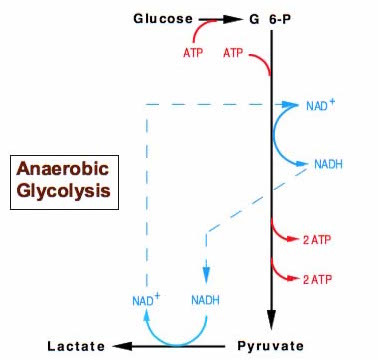
- 암세포는 설탕분자만을 에너지로 사용함. 암세포는 첫번째 스텝 glycolysis 만 이용하고 다음스텝인 크렙스회로, 산화적 인산화과정을 사용하지 않음.
- 이 과정은 글루코스에서 오직 2개의 atp만 만드는 과정임. 그 결과 암세포는 더 많은 설탕분자를 에너지로 필요로 함.
- 오토 바르크부르크는 독일 과학자로서 이 현상을 밝혀 노벨의학상을 받음.

암은 한 사람이 지금까지 어떤 식사와 생활습관을 가지고 살아왔는지에 대한 총체적인 결과라고 할 수 있다. 따라서 암에 걸린 사람은 지금까지 살아온 것과 반대로 하면 치료가 가능하다.
원인
암은 혈액의 오탁, 산소부족, 스트레스, 가공식품, 영양결핍, 설탕과다, 면역력약화, 항산화제 결핍 등에의해 생김.
1931년 노벨의학상을 수상한 독일 생리학자 오토 바르부르크(Otto Warburg)의 이론에 의하면 '암세포는 산소를 사용하지 않고 발효된 포도당을 사용하여 에너지를 만들고 증식'함. 이처럼 산소가 부족하고 탄산가스와 젖산이 많아지면 혈액이 약한 알카리(pH 7.35~7.5)로 유지하조 못하고 자주 산성화(pH 6.0)됨. 즉 암세포는 산성화된 체질에서 잘 생김.
--> 암세포의 에너지 사용법때문에 몸이 산성화되는 결과

Metabolism
Introduction: Normal Cell Metabolism
Cellular respiration describes the series of steps that cells use to break down sugar and other chemicals to get the energy we need to function. Energy is stored in the bonds of glucose (like a stretched rubber band), and when glucose is broken down, much of that energy is released. Some of it is captured in a form that can be used to do work in cells - a molecule called adenosine triphosphate or ATP. The energy that is not captured in ATP is usually given off as heat (one of the things that helps us maintain our normal body temperature).
- 세포호흡은 세포들이 설탕과 다른 chemical을 break down(잘게 쪼깸)하고 우리가 필요한 에너지를 얻는 일련의 과정으로 묘사함.
- 에너지는 글루코스 다발형태로 저장되어 있고 글루코스가 잘게 쪼개지면서 에너지가 방출됨.
The process of cellular respiration is similar to a car using gasoline as fuel. As gasoline is the fuel for a car, glucose is the fuel for a cell. A car burns gasoline and uses the energy released for movement. Similarly, a cell ‘burns’ glucose to capture the energy and create ATP. ATP is the primary form of energy that cells use to function.
- 세포호흡과정은 에너지로 가솔린을 이용하는 과정과 비슷함.
- 인체세포는 글루코스를 태워 에너지를 만들고 atp를 생산함. ATP는 세포가 사용하는 첫번째 형태의 에너지임.
The first step of respiration is called glycolysis. In a series of steps, glycolysis breaks glucose into two smaller molecules - a chemical called pyruvate. A small amount of ATP is also formed during this process. The process can be likened to a waterslide. A person has more energy at the top and loses it as they slide down. Most healthy cells continue the breakdown in a second process, called the Kreb's cycle. The Kreb's cycle allows cells to “burn” the pyruvates made in glycolysis to get more ATP.
- 세포호흡의 첫번째 단계는 Glycolysis라고 함. glycolysis는 글루코스를 피루베이트(pyruvate)라 불리는 작은 분자로 쪼개는 과정임. 이 과정에서 작은 양의 ATP가 나옴. .. 대부분 건강한 세포는 다음단계 Krebs cycle 크렙스 회로라 불리는 다음 단계를 거침. 크렙스 회로는 세포가 피루베이트를 burn시켜 더 많은 ATP를 만드는 과정임.

The last step in the breakdown of glucose is called oxidative phosphorylation (Ox-Phos). It takes place in specialized cell structures called mitochondria. This process produces a large amount of ATP. Importantly, cells need oxygen to complete oxidative phosphorylation. If a cell completes only glycolysis,only 2 molecules of ATP are made per glucose. However, if the cell completes the entire respiration process (glycolysis - Kreb's - oxidative phosphorylation), about 36 molecules of ATP are created, giving it much more energy to use. Further information on the topics on this page can also be found in most introductory Biology textbooks, we recommend Campbell Biology, 11th edition. 1
- 글루코스 쪼갬의 마지막 단계는 oxidative phosphorylation(산화적 인산화) 과정임. 이 과정은 미토콘드리아에서 일어남. 이 과정에서 더 많은 ATP를 만듬.
- 세포들은 산화적 인산화를 마치기 위해 많은 산소가 필요함.
- 만약 세포가 Glycolysis를 마치면 글루코스에서 단지 2개의 ATP를 만듬. 그러나 전체 호흡과정(glycolysis, 크렙스 회로, 산화적 인산화)를 다 거치면 36개의 ATP를 만듬.
What Cancer Cells Do Differently
Unlike healthy cells that "burn" the entire molecule of sugar to capture a large amount of energy as ATP, cancer cells are wasteful. Cancer cells only partially break down sugar molecules. They overuse the first step of respiration, glycolysis. They frequently do not complete the second step, oxidative phosphorylation. This results in only 2 molecules of ATP per each glucose molecule instead of the 36 or so ATPs healthy cells gain. As a result, cancer cells need to use a lot more sugar molecules to get enough energy to survive. 2
- 정상세포와는 다르게 암세포는 에너지를 낭비하는 형태의 소비를 함.
- 암세포는 설탕분자만을 break down함. 암세포는 첫번째 스텝 glycolysis 만 이용하고 다음스텝인 크렙스회로, 산화적 인산화과정을 사용하지 않음.
- 이 과정은 글루코스에서 오직 2개의 atp만 만드는 과정임. 그 결과 암세포는 더 많은 설탕분자를 에너지로 필요로 함.
Otto Warburg, a German scientist, was the first to describe this unusual behavior of cancer cells. He won the Nobel Prize in 1931 for his work. He noticed that cancer cells only complete glycolysis (and NOT Ox-Phos), even when oxygen is present (a process called aerobic glycolysis). The presence of oxygen should allow them to complete the entire process of respiration. An abnormal dependence on glycolysis as the sole source of ATP creation, even in the presence of oxygen is seen in many cancer cells and is commonly called the 'Warburg effect'. 3
- 오토 바르크부르크는 독일 과학자로서 이 현상을 밝혀 1931년 노벨의학상을 받음.
Some cancer cells may not be able to complete the entire respiration process due to defects caused by changes in their DNA(mutations), but that is not the whole story. Using only glycolysis may provide cancer cells with some advantages. The products of glycolysis (bicarbonic acid and lactic acid) may be used to build products that help cancer cells to survive and grow.
- 암세포는 에너지 전체생산의 과정을 이용하지 않는 것은 DNA 돌연변이...
- 암세포가 Glycolysis로 에너지로 사용하는 것에는 몇가지 이점이 있음.
- glycolysis 생성물(bicarbonic acid and 젖산)은 암세포의 생존과 성장에 도움을 주는 물질을 만들어낼 수 있음.
Research has also suggested that using aerobic glycolysis may help cancer cells avoid being recognized and killed by cells of the immune system. 2

Hypoxia and the Tumor Environment
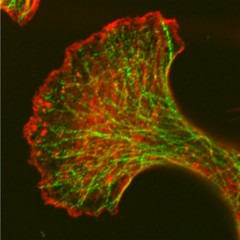
The environment within a tumor is stressful for the normal cells living there. The blood vessels (vasculature) in a tumor are not formed properly and are often twisted and abnormal (convoluted) looking. The defective structure leads to a poor ability to deliver oxygen and results the development acidic conditions. Another result of the abnormal vessel distribution is that some parts of the tumor are far from blood vessels and do not receive enough nutrients and oxygen. 4hypoxic). Cells that only use glycolysis are not dependent on oxygen for survival. This may benefit cancer cells that are in environments low in oxygen.
-
In response to hypoxic conditions (aka. hypoxia), a protein called hypoxia induced factor 1-alpha (HIF1-α) is activated. The HIF1-α protein increases the rate of glycolysis and decreases the conversion of glucose to the products seen in normal cells. 5epithelial cells change into a type of cell that is able to move more easily is known as the epithelial-mesenchymal transition (EMT). Along with the ability to move, the EMT gives the cells additional ‘primitive’ capabilities that help protect the cancer cells and enhance the spread of cancer. 6
Genetic Changes and Cancer Cell Metabolism
Many DNA changes (mutations) occur in cancer cells that are not present in healthy cells. Some of these changes can lead to increased glycolysis. AKT, an oncogene involved in cell metabolism and survival, can be activated in response to hypoxia and HIF1-α. This can lead to increased survival of cancer cells. 5Other oncogenes, RAS and MYC, are often activated in cancer cells. Their proteins both contribute to the aerobic glycolysis seen in cancer cells. 7
In cancer cells, tumors suppressors that stop cancer cell growth and lead to cell death are often inactivated. The loss of the tumor suppressor p53 can trigger the Warburg effect and cells becoming "addicted" to glycolysis. 4
Aerobic glycolysis is also linked to the production/activity of another protein, the vascular endothelial derived growth factor (VEGF). VEGF causes blood vessel formation (angiogenesis). Tumors need to create new blood vessels to retain a nutrient supply as they grow. The abnormal metabolism seen in cancer cells may drive the creation of new blood vessels. 8
Researchers recently discovered another way that cancer cells produce the products they need to survive. The mitochondria in the cells use lactate to grow and fuel reactions. Multiple experiments were done on individual mitochondria in cancer cells, and the results confirmed that lactate is getting into the mitochondria and being used to create nutrients for the cancer cell.9
Metabolism in Tumor Detection and Treatment
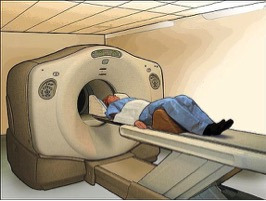
As mentioned, cancer cells often undergo aerobic glycolysis, a very inefficient way to obtain ATP. Cancer cells must therefore use a lot more glucose to generate enough ATP to survive. Positron emission tomography (PET) is a detection method that takes advantage of this situation to detect cancer. In PET imaging, patients are injected with a chemical, fluorodeoxyglucose (FDG) that is very similar to glucose. The presence of FDG in tissues can be detected by a PET machine. Tumors demonstrate an increased glucose and FDG uptake compared to normal tissue. PET can be used to stage tumors, assess responses to treatment, predict aggressiveness of tumors, and help to predict patient outcomes. 10
Cancer cell metabolism also provides clues to possible targets of treatment. Dichloroacetate (DCA)11
Lactate is always the end product of glycolysis
Abstract
Through much of the history of metabolism, lactate (La−) has been considered merely a dead-end waste product during periods of dysoxia. Congruently, the end product of glycolysis has been viewed dichotomously: pyruvate in the presence of adequate oxygenation, La− in the absence of adequate oxygenation. In contrast, given the near-equilibrium nature of the lactate dehydrogenase (LDH) reaction and that LDH has a much higher activity than the putative regulatory enzymes of the glycolytic and oxidative pathways, we contend that La− is always the end product of glycolysis. Cellular La− accumulation, as opposed to flux, is dependent on (1) the rate of glycolysis, (2) oxidative enzyme activity, (3) cellular O2 level, and (4) the net rate of La− transport into (influx) or out of (efflux) the cell. For intracellular metabolism, we reintroduce the Cytosol-to-Mitochondria Lactate Shuttle. Our proposition, analogous to the phosphocreatine shuttle, purports that pyruvate, NAD+, NADH, and La− are held uniformly near equilibrium throughout the cell cytosol due to the high activity of LDH. La− is always the end product of glycolysis and represents the primary diffusing species capable of spatially linking glycolysis to oxidative phosphorylation.
Anaerobic glycolysis is the transformation of glucose to lactate when limited amounts of oxygen (O2) are available. Anaerobic glycolysis is only an effective means of energy production during short, intense exercise, providing energy for a period ranging from 10 seconds to 2 minutes. The anaerobic glycolysis (lactic acid) system is dominant from about 10–30 seconds during a maximal effort. It replenishes very quickly over this period and produces 2 ATPoxidative phosphorylation
Anaerobic glycolysis is thought to have been the primary means of energy production in earlier organisms before oxygen was at high concentration in the atmosphere and thus would represent a more ancient form of energy production in cells.
In mammals, lactate can be transformed by the liver back into glucose; see Cori cycle
Fates of pyruvate under anaerobic conditions:
- Pyruvate is the terminal electron acceptor in lactic acid fermentation
When sufficient oxygen is not present in the muscle cells for further oxidation of pyruvate and NADH produced in glycolysis, NAD+ is regenerated from NADH by reduction of pyruvate to lactate. Pyruvate is converted to lactate by the enzyme lactate dehydrogenase[1] - Ethanol fermentation
Yeast and other anaerobic microorganisms convert glucose to ethanol and CO2 rather than pyruvate. Pyruvate is first converted to acetaldehyde by enzyme pyruvate decarboxylase in the presence of Thiamine pyrophosphate and Mg++. Carbon-dioxide is released during this reaction. Acetaldehyde is then converted to ethanol by the enzyme alcohol dehydrogenase. NADH is oxidized to NAD+ during this reaction.