This too shall pass.
미국의 50개 주는 각기 motto가 있고 slogan도 있다. 20여 개 주가 라틴어 표현을 고어체 그대로 사용하고 있고 나머지 20여 개 주는 쉬운 영어 표현을 사용한다. 학교나 직장은 물론 각 가정에도 명언을 철학으로 삼는 school motto나 family motto가 있다. 그런데 뉴욕주의 경우 state motto가 Excelsior!인데 이는 라틴어 표현을 그대로 쓰는 것이고 ‘Ever Upward!’(항상 위를 향하여)의 뜻인데 이를 기억하는 시민은 많지 않을 것이다.
그런데 영원 불변의 멋진 말을 인간의 욕망으로 만든 경우가 있다. 페르시안의 이슬람 수피교도(Persian Sufi) 시인들이 남긴 기록을 보면 당시 강력한 왕이 현명한 사람들을 모아
왕이 슬프거나 울적할 때 기분을 좋게 하는 반지(ring)를 만들도록 했다고 한다.
이들은 고민 끝에 왕에게 비교적 단순한 반지를 건네 주면서 거기에 ‘This too will pass’라는 의미의 문구를 써넣었다.
놀랍게도 그 효과가 좋았고 이런 얘기는 유대인의 전설이나 설화에도 쓰이면서 오늘날까지 전해진다. ‘This too shall pass’도 그 배경을 보면 1800년대 전반기에 서양에서 나돌던 ‘동양의 군주’ 얘기를 작가나 시인들이 인용한 것인데 Solomon’s Seal에 소개된 것을 보면 ‘This too will pass away’ 어구가 쓰였고 나중에 링컨 대통령도 당선되기 전에 이 말을 곧잘 인용했다고 한다.
또 다른 일설에 의하면 동양의 군주가 ‘영원 불멸의 명구’ 하나를 만들어 오라고 하달하였는데 현자들이 건넨 말은 ‘And this, too, shall pass away’였다고 한다. 그것을 부적에 쓰는 명구로 사용하든 철학이나 위로의 언어로 사용하든 시대를 넘으며 지금도 의미 있게 쓰이는 셈이다.
또 다른 명언에는 영화로도 유명해진 Carpe Diem이다. 로마의 시인 Horace가 그의 작품 Odes에서 사용한 이 말은 ‘Seize the day’의 뜻이고 ‘오늘을 잡으라’는 이 메시지는 하루 하루를 헛되이 살지 말고 의미 있게 살라는 복합적인 뜻이다.
이 말은 라틴어 시대에 나돌던 Memento Mori(=Remember that you have to die)를 연상시키고 현대판 슬로건 ‘You only live once’(=YOLO!)와 연결된다.
또 다른 라틴어 표현 중에는 ‘Thus passes the glory of the world’가 있다. ‘세상사 잠깐’이라는 철학적 의미인데, 알렉산더 대왕의 즉위식에도 쓰였고 교황 즉위식에서도 ‘Holy Father, so passes worldly glory!’가 쓰인 기록이 있다.
요즘에는 ‘This too shall pass’ 끝에 ‘just like a kidney stone’을 덧붙이기도 하고 ‘Take one day at a time’같은 말로 대신하기도 한다.
Kidney stones
Kidney stones form in your kidneys. As stones move into your ureters — the thin tubes that allow urine to pass from your kidneys to your bladder — signs and symptoms can result. Signs and symptoms of kidney stones can include severe pain, nausea, vomiting, fever, chills and blood in your urine.
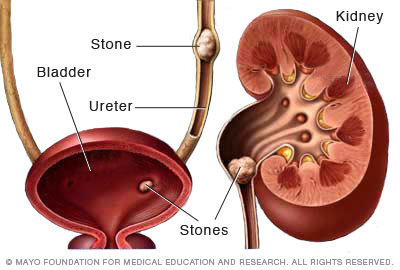
Kidney stones (renal lithiasis, nephrolithiasis) are hard deposits made of minerals and salts that form inside your kidneys.
Kidney stones have many causes and can affect any part of your urinary tract — from your kidneys to your bladder. Often, stones form when the urine becomes concentrated, allowing minerals to crystallize and stick together.
Mayo Clinic does not endorse companies or products. Advertising revenue supports our not-for-profit mission.
Passing kidney stones can be quite painful, but the stones usually cause no permanent damage if they're recognized in a timely fashion. Depending on your situation, you may need nothing more than to take pain medication and drink lots of water to pass a kidney stone. In other instances — for example, if stones become lodged in the urinary tract, are associated with a urinary infection or cause complications — surgery may be needed.
Your doctor may recommend preventive treatment to reduce your risk of recurrent kidney stones if you're at increased risk of developing them again.
Symptoms
A kidney stone may not cause symptoms until it moves around within your kidney or passes into your ureter — the tube connecting the kidney and bladder. At that point, you may experience these signs and symptoms:
Severe pain in the side and back, below the ribs
Pain that radiates to the lower abdomen and groin
Pain that comes in waves and fluctuates in intensity
Pain on urination
Pink, red or brown urine
Cloudy or foul-smelling urine
Nausea and vomiting
Persistent need to urinate
Urinating more often than usual
Fever and chills if an infection is present
Urinating small amounts
Pain caused by a kidney stone may change — for instance, shifting to a different location or increasing in intensity — as the stone moves through your urinary tract.
When to see a doctor
Make an appointment with your doctor if you have any signs and symptoms that worry you.
Seek immediate medical attention if you experience:
Pain so severe that you can't sit still or find a comfortable position
Pain accompanied by nausea and vomiting
Pain accompanied by fever and chills
Blood in your urine
Difficulty passing urine
Causes
Kidney stones often have no definite, single cause, although several factors may increase your risk.
Kidney stones form when your urine contains more crystal-forming substances — such as calcium, oxalate and uric acid — than the fluid in your urine can dilute. At the same time, your urine may lack substances that prevent crystals from sticking together, creating an ideal environment for kidney stones to form.
Types of kidney stones
Knowing the type of kidney stone helps determine the cause and may give clues on how to reduce your risk of getting more kidney stones. If possible, try to save your kidney stone if you pass one so that you can bring it to your doctor for analysis.
Types of kidney stones include:
Calcium stones. Most kidney stones are calcium stones, usually in the form of calcium oxalate. Oxalate is a naturally occurring substance found in food and is also made daily by your liver. Some fruits and vegetables, as well as nuts and chocolate, have high oxalate content.
Dietary factors, high doses of vitamin D, intestinal bypass surgery and several metabolic disorders can increase the concentration of calcium or oxalate in urine.
Calcium stones may also occur in the form of calcium phosphate. This type of stone is more common in metabolic conditions, such as renal tubular acidosis. It may also be associated with certain migraine headaches or with taking certain seizure medications, such as topiramate (Topamax).
Struvite stones. Struvite stones form in response to an infection, such as a urinary tract infection. These stones can grow quickly and become quite large, sometimes with few symptoms or little warning.
Uric acid stones. Uric acid stones can form in people who don't drink enough fluids or who lose too much fluid, those who eat a high-protein diet, and those who have gout. Certain genetic factors also may increase your risk of uric acid stones.
Cystine stones. These stones form in people with a hereditary disorder that causes the kidneys to excrete too much of certain amino acids (cystinuria).
Risk factors
Factors that increase your risk of developing kidney stones include:
Family or personal history. If someone in your family has kidney stones, you're more likely to develop stones, too. And if you've already had one or more kidney stones, you're at increased risk of developing another.
Dehydration. Not drinking enough water each day can increase your risk of kidney stones. People who live in warm climates and those who sweat a lot may be at higher risk than others.
Certain diets. Eating a diet that's high in protein, sodium (salt) and sugar may increase your risk of some types of kidney stones. This is especially true with a high-sodium diet. Too much salt in your diet increases the amount of calcium your kidneys must filter and significantly increases your risk of kidney stones.
Being obese. High body mass index (BMI), large waist size and weight gain have been linked to an increased risk of kidney stones.
Digestive diseases and surgery. Gastric bypass surgery, inflammatory bowel disease or chronic diarrhea can cause changes in the digestive process that affect your absorption of calcium and water, increasing the levels of stone-forming substances in your urine.
Other medical conditions. Diseases and conditions that may increase your risk of kidney stones include renal tubular acidosis, cystinuria, hyperparathyroidism, certain medications and some urinary tract infections.