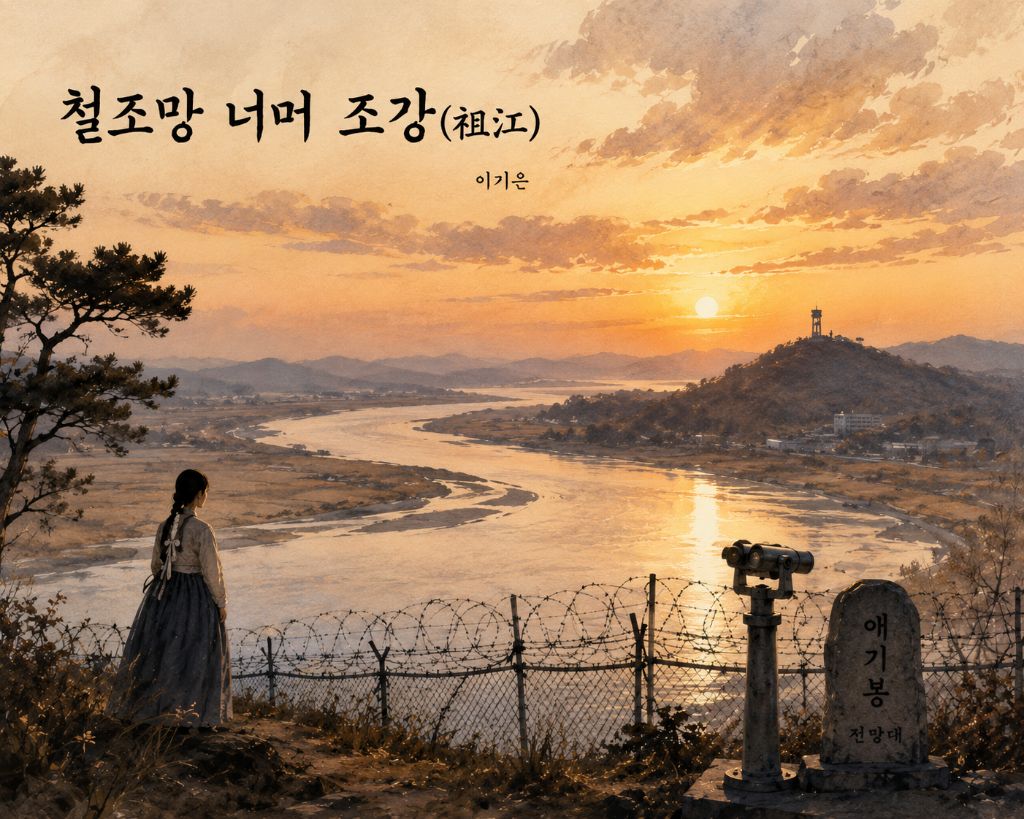
《철조망 너머 조강(祖江)》
이기은
철조망 너머 흐르는 강아
임진강과 한강을 품은 채
오늘도 건너지 못한 이름으로
흐르는구나
사모하는 임을 기다렸으나
이 넓은 강을 건널 수 없어
쑥갓머리산 꼭대기에서
한을 묻어야만 했던 애기(愛妓)*가
봉(峰)이 되어 기다린다
임을 앗아간 병자호란의 한은
한국전쟁의 포화 속에서도
끝내 이 언덕을 떠나지 않았다
지금은
이름도 잊혀지고
건너갈 수도 없어지고
그저 흘러서,
바다 물결 품은 강
조강아!
너는 언제 다시 이름을 찾아
그 슬픈 인연을 달래 주려느냐
철조망은 더욱 높아져
이제는 건널 수도 없으니
언덕 위 망원경만이 애기를 대신하여
돌아오지 않는 사람들을 기다리며
오늘도 북녘을 바라보는구나
---
[시작노트]
고향 파주에서 자랐지만 조강이라는 이름을 제대로 생각해 본 것은 오래되지 않았다.
통일전망대 철조망 너머로 보이는 강은 늘 그 자리에 있었지만, 분단의 세월 속에서 사람들의 기억에서는 조금씩 잊혀 가고 있었다.
어느 날 애기봉에 서서 조강과 애기봉에 얽힌 이야기를 떠올리며 생각했다.
병자호란의 이별도, 한국전쟁의 상처도, 아직 끝나지 않은 분단의 기다림도 결국 같은 강가에 남아 있는 것은 아닐까.
이 시는 그 강을 바라보며 떠올린 기다림과 그리움의 기록이다.
---
*애기(愛妓): 병자호란 때 청나라에 끌려간 평양감사를 기다리다 생을 마쳤다는 전설 속의 기생. 애기봉 지명의 유래로 전해진다.
✨️ ✨️ ✨️
《Beyond the Barbed Wire: The Jogang River (祖江)》
By Lee Ki-eun
O river flowing beyond the barbed wire,
Holding both the Imjin and the Han within your embrace,
You still flow today
Bearing a name that can no longer cross.
She waited for the one she loved,
Yet could not cross this wide river.
Upon the summit of Ssukgatmeori Hill,
Aegi*, who buried her sorrow there,
Remains, transformed into a peak,
Still waiting.
The grief born of the Manchu invasion,
The sorrow of a love taken away,
Did not leave this hill
Even through the fires of the Korean War.
Now,
Its name is forgotten,
Its crossing forbidden,
Yet it continues to flow,
Carrying within it
The tides of the sea.
O Jogang River!
When will you reclaim your name
And comfort these sorrowful bonds?
The barbed wire has grown ever higher,
And crossing is no longer possible.
Only the telescope upon the hill,
Taking Aegi's place,
Waits for those who never returned,
Gazing still
Toward the North.
---
Author's Note
Though I grew up in Paju, I had rarely paused to think about the name Jogang.
The river beyond the fences of the observatory had always been there, yet through the long years of division it gradually faded from people's memory.
One day, standing on Aegibong Hill and recalling the stories woven around the hill and the river, I found myself wondering:
Could the separation of the Manchu invasion, the wounds of the Korean War, and the waiting of a nation still divided all be lingering along the same riverbank?
This poem is a record of that waiting and longing, born while gazing upon the river.
---
*Aegi (愛妓): A legendary courtesan said to have waited all her life for the governor of Pyongyang after he was taken away during the Manchu invasion of Korea. Her story is believed to be the origin of the name Aegibong ("Aegi Peak").