2026.6.26.금.(온라인) ORT발표/Science1-25/ WR42/JB5~6/한국어.한국문화(서강2A7#48)
작성자김영임 Kona작성시간26.06.15조회수14 목록 댓글 0
■ 일시 (Date): 2026. 6. 26. 금. 저녁 7:30pm-9:30pm 줌 온라인
■ 장소 (Venue): KONA Zoom 교실
https://naver.me/GcnxAlFH
■ 단체명 (Organization):
코나스토리북센터 유네스코 코나 자원봉사단 (UNESCO KONA Volunteers of KONA Storybook Center)
■ 수요처 (Source of Demand): 코나스토리북센터 (KONA Storybook Center)
■ 봉사자 (Volunteers) 및 참여자(Participants)
| 팀 | 자원봉사교사 | 참가자 / 역할 | 비고 | ||||||||||||||
| 1 | Jerabelle (미국) Neha (인도)-참관 | 조현제(초5) 노유주(초3) 이예솔(초3) 손채원(초4) 강민서(초2) 정유현(초3) 한수호(초2) | |||||||||||||||
| 2 | Jule (독일) -불참 | ||||||||||||||||
| 3 | Jennah (미국) Neha (인도)-참관 김영임 | 강민서(초2) 정유현(초3) 한수호(초2) 세계국기사전 녹화 과학 녹화 도움이 필요한 멘티 | |||||||||||||||
| 4 | Yoshiko (일본) | 영어동화멘토링 코나영어자원봉사코칭방법안내 세계국가 영.한 자료 제작 누리세종학당 한국어 자료 pdf 카페 업로드 자원봉사실적 보고서 정리 자원봉사 동영상 제작 | |||||||||||||||
| 5 | 김영임 Jerabelle (미국) Jennah (미국) | 총괄 + 자료 제작 영어동화멘토링 코나영어자원봉사 총괄 및 코칭방법안내 세계국가 영.한 자료 제작 사회동화, 과학동화 비디오 제작, 업로드 자원봉사실적 보고서 정리(김영임) | |||||||||||||||
| 6 | |||||||||||||||||
| 참관 | |||||||||||||||||
■ 교육 내용(Volunteering Details)
| Mentors | Oxford Reading Tree (Today) | Oxford Reading Tree (Next Week) | |
| 수업전 동아리 코나아동멘토 | [읽고 말하기 Reading & Speaking] Wacky Ricky 42 Jack & the Beanstalk 5~6 | ||
| 수업전 1. 김영임 Yoshiko(일본) | [다독과 퀴즈 ER & Quiz Extensive Reading & Quiz] 1. 세계명작 3단계 2. 서강한국어2A | ||
| 2. Jerabelle(미국) Neha(인도) -참관 | [Recording녹화] 조현제-Jack & the Beanstalk 노유주-The Den 이예솔-The Wedding 손채원-King of the Castle | [Reading읽기] 조현제-The Magic Pot 노유주-The Scarf 이예솔-Poor Mom 손채원-At the Pool 강민서-Dad's Jacket 정유현-The Big Egg 한수호-A Sinking Feeling | |
| 3. Jule(독일) - 불참 | [Recording녹화] | [Reading읽기] | |
| 4. Yoshiko(일본) 김영임 Neha (인도) | [Recording녹화] 강민서-Wet Paint 정유현-At the Pool 한수호-Bull's Eye [Reading듣가,읽기,평가] 도움이 필요한 멘티 다음 스토리맵 E-book 읽기지도 | [Reading읽기] 다음 스토리맵/영어동화책읽기 | |
| 5 Jennah (미국) 김영임 | [Recording녹화] Science 1 녹화-S1-41-46 [한국어 읽기] 국가 녹화 : 라트비아 룩셈부르크 | ||
| Science 1-25 | Rocks and Minerals | ||
| 7/10 ORT | 조현제-The Magic Key 노유주-Look Smart 이예솔-The Seal Pup 손채원-Monkey on the Car 강민서-Stuck in the Mud 정유현-Kipper's Birthday-사진X 한수호-What a Bad Dog | ||
■ 자료(Resources) : Science 1-25
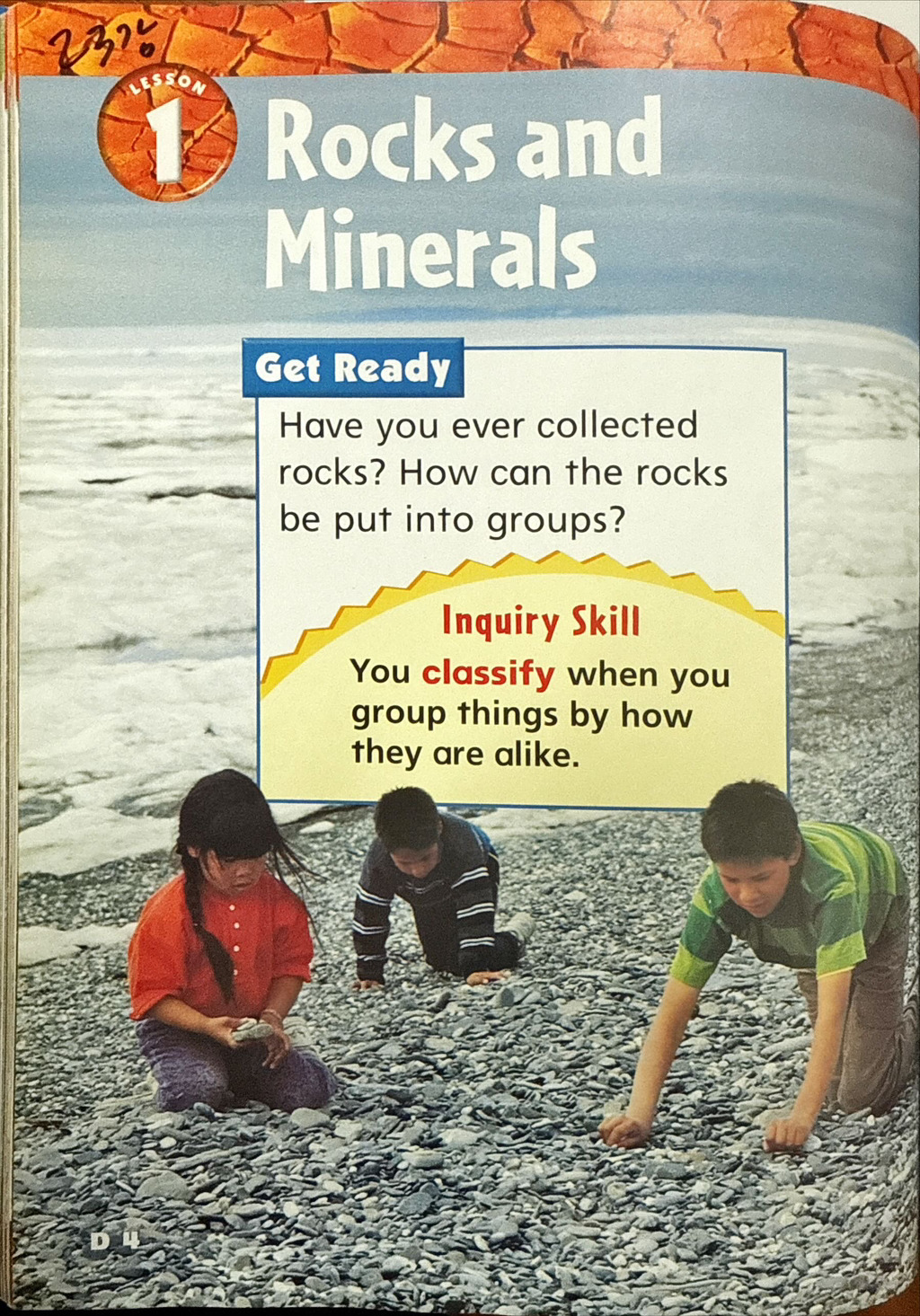
1-25 Rocks and Minerals
What are rocks and minerals?
Rocks are nonliving things.
Earth is mostly rock.
바위와 광물은 무엇인가요?
바위는 생명이 없는 무생물이에요.
지구는 대부분 바위로 이루어져 있어요.
Rocks are made of minerals.
They give rocks their color.
Some rocks are made of many minerals.
Other rocks are made of only one.
바위는 광물로 만들어졌어요.
광물은 바위에 색깔을 입혀 주지요.
어떤 바위는 여러 가지 광물로 되어 있어요.
어떤 바위는 딱 한 가지로만 되어 있어요.
mineral / 광물
---
Rocks may be big or small.
They may be smooth or rough.
They may be different colors, too.
바위는 클 수도 있고 작을 수도 있어요.
매끈매끈할 수도 있고 거칠거칠할 수도 있죠.
색깔도 아주 다양해요.
Tell how these rocks are alike and different.
Children should discuss observed similarities and
differences in color, size, shape, or texture.
이 바위들의 공통점과 차이점을 이야기해 보세요.
관찰한 색깔, 크기, 모양, 그리고 질감이 어떻게 비슷하고 다른지 서로 이야기해 보세요.
granite / marble / sandstone / limestone / obsidians
화강암 / 대리석 / 사암 / 석회암 / 흑요석
---
Why are rocks and minerals important?
Rocks are a natural resource.
So are minerals and land.
A natural resource is something from Earth that people use.
We use rocks to build things.
Roads and buildings can be made from rocks.
바위와 광물은 왜 중요할까요?
바위는 천연자원이에요.
광물과 땅도 마찬가지죠.
천연자원이란 사람들이 사용하는 지구에서 얻는 자원이에요.
우리는 물건을 만들기 위해 바위를 사용해요.
도로와 건물은 바위로 만들 수 있어요.
---
We use minerals to make glass and jewelry.
We use the minerals in sand to make glass.
We use the mineral gold to make rings.
We even eat some minerals. Salt is a mineral that we eat.
Salt is a mineral that we eat.
우리는 유리나 보석을 만드는 데 광물을 사용해요.
모래 속에 있는 광물로 유리를 만들죠.
금이라는 광물로는 반지를 만들어요.
심지어 어떤 광물은 먹기도 해요.
우리가 먹는 소금이 바로 광물이에요.
How are rocks and minerals used?
Rocks are used to build roads and buildings;
minerals are used to make glass and jewelry;
we also eat minerals.
암석과 광물은 어떻게 사용되나요?
암석은 도로와 건물을 만드는 데 사용되고,
광물은 유리 와 보석을 만드는 데 사용되며,
우리는 광물을 먹기도 해요.
■ 자료(Resources) : 서강 한국어 2A7
#48
듣고 말하기
큰 배낭 있으면 좀 보여주세요.
A: 어서 오세요. 뭐 찾으세요, 손님?
B: 배낭 있어요?
A: 네, 이쪽으로 오세요.
B: 외국에 여행을 가려고 하는데요, 큰 배낭 있으면 좀 보여 주세요.
A: 네. 이거 어떠세요? 크고 가벼워요. 그리고 주머니가 있어서 편리해요.
B: 이거 튼튼해요?
A: 물론이지요. 또 방수가 돼서 비가 올 때에도 문제가 없어요.
B: 얼마예요?
A: 10만 원이에요.
B: 10만 원이요? 너무 비싼데요. 더 싼 거 없어요?
A: 더 싼 거는 여기 있어요. 이건 6만 원이에요.
B: 저거보다 작아 보여요.
A: 아니에요. 크기는 같아요. 그런데 주머니가 없어서 그래요.
B: 네. 이 배낭도 튼튼해요?
A: 그럼요. 가볍고 아주 튼튼해요. 그런데 방수가 안 돼요.
B: 방수가 안 돼요?
A: 그래도 값이 싸서 손님들이 많이 사 가요.
B: 값은 괜찮지만 방수가 안 돼서 마음에 안 들어요.
A: 그럼 저걸로 하세요.
B: 글쎄요. 좀 더 보고 올게요.
A: 그러세요, 손님.
B: 안녕히 계세요.
A: 안녕히 가세요.
Listening and Speaking
If you have a large backpack, could you show me one?
Welcome.
What are you looking for today?
Do you have any backpacks?
Yes, please come this way.
I’m planning to travel abroad, so if you have a large one, could you show me one?
Sure.
How about this one? It’s big and lightweight. Plus, it has pockets, so it’s convenient.
Is it durable?
Of course. It’s also waterproof, so it’s fine even if it rains.
How much is it?
It’s 100,000 won.
100,000 won? That’s a bit expensive. Do you have a cheaper one?
Here’s a less expensive option. This one is 60,000 won.
It looks smaller than the other one.
Not at all. They’re the same size. It just looks smaller because it doesn’t have pockets.
I see. Is this one durable too?
Of course! It’s lightweight and very sturdy. But it’s not waterproof.
It’s not waterproof?
Still, because of the lower price, many customers buy it.
The price is fine, but I don’t like that it’s not waterproof.
Then go with the other one.
Hmm...
I’ll look around a bit more and come back.
Sure, no problem.
Goodbye.
Take care.
===============================================
큰 배낭 있으면 좀 보여주세요.
→ If you have a large backpack, could you show me one?
A: 어서 오세요. 뭐 찾으세요, 손님?
→ Welcome. What are you looking for today?
B: 배낭 있어요?
→ Do you have any backpacks?
A: 네, 이쪽으로 오세요.
→ Yes, please come this way.
B: 외국에 여행을 가려고 하는데요, 큰 배낭 있으면 좀 보여 주세요.
→ I’m planning to travel abroad, so if you have a large one, could you show me one?
A: 네. 이거 어떠세요? 크고 가벼워요. 그리고 주머니가 있어서 편리해요.
→ Sure. How about this one? It’s big and lightweight. Plus, it has pockets, so it’s convenient.
B: 이거 튼튼해요?
→ Is it durable?
A: 물론이지요. 또 방수가 돼서 비가 올 때에도 문제가 없어요.
→ Of course. It’s also waterproof, so it’s fine even if it rains.
B: 얼마예요?
→ How much is it?
A: 10만 원이에요.
→ It’s 100,000 won.
B: 10만 원이요? 너무 비싼데요. 더 싼 거 없어요?
→ 100,000 won? That’s a bit expensive. Do you have a cheaper one?
A: 더 싼 거는 여기 있어요. 이건 6만 원이에요.
→ Here’s a less expensive option. This one is 60,000 won.
B: 저거보다 작아 보여요.
→ It looks smaller than the other one.
A: 아니에요. 크기는 같아요. 그런데 주머니가 없어서 그래요.
→ Not at all. They’re the same size. It just looks smaller because it doesn’t have pockets.
B: 네. 이 배낭도 튼튼해요?
→ I see. Is this one durable too?
A: 그럼요. 가볍고 아주 튼튼해요. 그런데 방수가 안 돼요.
→ Of course! It’s lightweight and very sturdy. But it’s not waterproof.
B: 방수가 안 돼요?
→ It’s not waterproof?
A: 그래도 값이 싸서 손님들이 많이 사 가요.
→ Still, because of the lower price, many customers buy it.
B: 값은 괜찮지만 방수가 안 돼서 마음에 안 들어요.
→ The price is fine, but I don’t like that it’s not waterproof.
A: 그럼 저걸로 하세요.
→ Then go with the other one.
B: 글쎄요. 좀 더 보고 올게요.
→ Hmm... I’ll look around a bit more and come back.
A: 그러세요, 손님.
→ Sure, no problem.
B: 안녕히 계세요.
→ Goodbye.
A: 안녕히 가세요.
→ Take care.
'