CAFE

거대사 그루

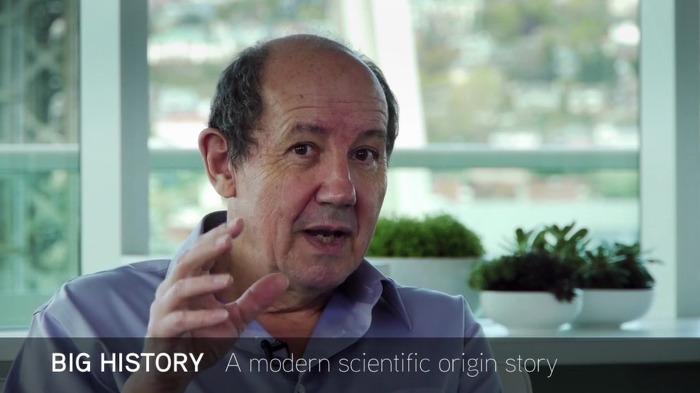
Big History Project - <What is Big History?> by David Christian

작성자봄돌아빠|작성시간14.03.19|조회수50 목록 댓글 0


WHAT IS BIG HISTORY?


Big history puts forward one large story that helps explain how everything got to be the way it is, where we fit in, and where this may lead. In this lecture David Christian explains big history, the scale of its 13.7 billion year timeline, the many approaches to knowledge it involves, and how it fits within a long-running human tradition of creating origin stories. After reading the text below and watching the video lecture, you should be able to define big history, identify what makes it challenging, and explain why it’s worth the trouble.


Key questions


1. What is big history?


2. Why should you care? 


빅 히스토리란 무엇인가?


빅 히스토리는 하나의 거대한 이야기로, 이 세상 모든 것이 어떻게 해서 오늘날과 같이 되었으며 그 이야기 속에 우리는 어디에 위치해 있고, 그 모든 것들이 어떻게 될 것인지를 설명하는 데 도움이 되는 이야기다. 이 장에서, 데이비드 크리스천 교수는 빅 히스토리의 정의, 137억 년의 빅 히스토리 타임라인, 빅 히스토리 관련 지식에 대한 여러 접근 방법, 그리고 빅 히스토리가 세상 모든 것의 기원 이야기를 창조해낸 인류의 오랜 전통과 어떤 관계가 있는지를 설명한다. 여러분은 빅 히스토리가 무엇인지 정의할 수 있게 될 것이며, 왜 빅 히스토리가 배울 만한 것인지, 왜 애써서 살펴볼 만한 것인지를 알게 될 것이다.


핵심 질문


1. 빅 히스토리란 무엇인가요? 


2. 왜 빅 히스토리를 공부해야 하나요?


데이비드 크리스천 교수의 동영상 강의 <What is Big History?> : http://youtu.be/zLLPh5daY84


이 동영상은 'Big History Project'를 주도하고 있는 '데이비드 크리스천(David Christian)'교수의 강의 영상입니다.

아래에 동영상의 원문 스크립트와 우리말 해석을 텍스트로 편집하여 올리도록 하겠습니다.
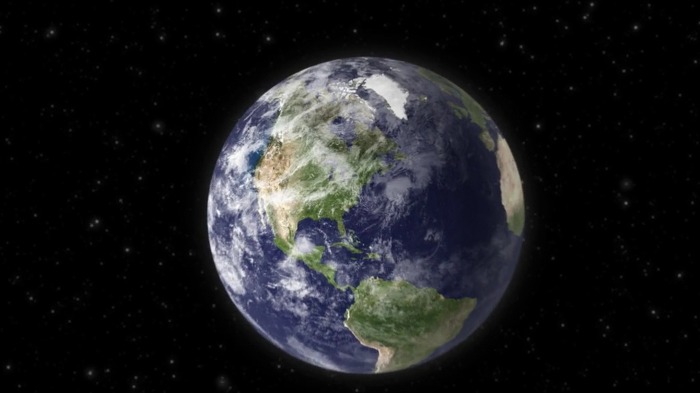


Earth is the place we humans call home. It’s a very beautiful place with staggering variety : gorgeous landscapes from mountains to rivers to oceans; a staggering variety of different species from redwoods to swallows to beavers to spiders; and, of course, 7 billion other humans like you and me - perhaps the weirdest species of all.


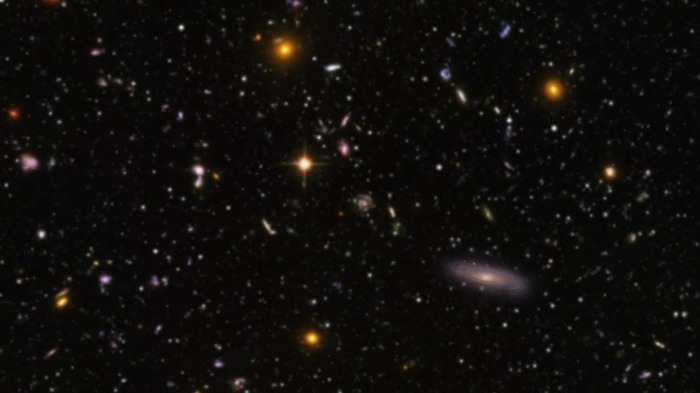
Look above us and we see the Sun, the battery of life on Earth. It’s one of 100 billion stars in our galaxy, the Milky Way; and the Milky Way is just one of 100-200 billion galaxies in the Universe.

지구는 우리 인류가 '집(home)'이라고 부르는 곳입니다. 지구는 경이로움이 가득한 매우 아름다운 곳입니다. 지구에는 산과 강, 그리고 바다로 펼쳐지는 눈부신 풍경이 있습니다. 지구는 삼나무에서 제비, 비버, 거미, 그리고 아마도 가장 불가사의한 종이겠지만 여러분과 저와 같은 70억명의 인류에 이르기까지 경이로울 정도로 다양한 종이 사는 곳입니다.


눈을 들어 태양을 한번 바라보세요. 태양은 지구의 생명 에너지입니다. 태양은 우리의 은하, 은하수에 있는 1000억 개의 별 중의 하나입니다. 그리고 우리 은하는 우주 전체의 1000~2000억 개의 은하 중의 하나입니다.


So, how did things get to be the way they are? How was the Universe created? Why does it work the way it does? Why are stars so big? Why are you and I so small? Why do we find ourselves in this particular part of the Universe, on this tiny planet buzzing with life? Why are humans so powerful? What does it mean to be “human”?


These are wonderful questions and they have been asked by people in all societies. They have also been asked by a lot of people with great expertise: geologists ask them; biologists ask them; astronomers, physicists, historians, and anthropologists ask them.

What we want to do in this course is to take the expert answers and try to blend them into a single coherent story that will explain how everything came to be the way it is, how we fit in, and where, perhaps, everything is going.

우주는 어떻게 오늘날과 같이 되었을까요? 어떻게 우주가 만들어졌을까요? 우주는 어떻게 오늘날과 같이 작동하게 되었을까요? 왜 별들은 클까요? 여러분과 저는 왜 작을까요? 왜 우리는 거대한 우주 속의 이 작지만 특별한 곳에, 생명들로 가득한 이 작은 행성에 자리를 잡게 되었을까요? 왜 인간은 그토록 강력한 힘을 가지게 되었을까요? '인간'이란 무엇일까요?


이 질문들은 훌륭한 질문이며, 동서고금에 걸쳐 계속해서 제기된 질문입니다. 그리고 이 질문들은 고도의 전문지식을 가진 많은 사람들이 제기한 것들입니다. 지질학자, 생물학자, 천문학자, 물리학자, 역사학자, 인류학자들이 계속 이 질문들을 제기해왔습니다. 


여기에서 전문적인 답변과 함께, 그것들을 일관성 있는 하나의 이야기로 통합하여 어떻게 세상 모든 것들이 오늘날과 같이 되었는지, 그 이야기 속에 우리는 어디에 위치해 있으며 모든 것들이 어떻게 될 것인지를 설명할 것입니다.


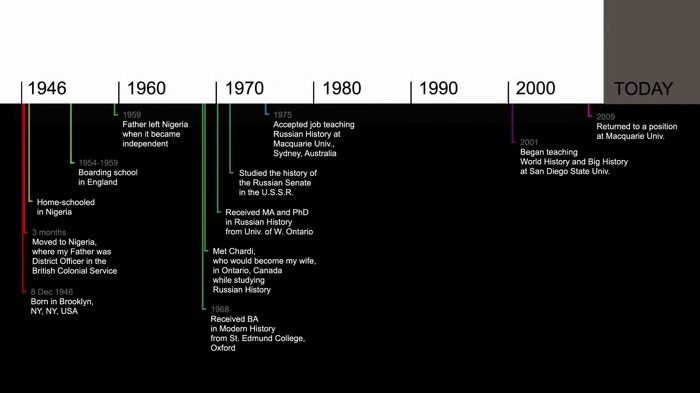
Take a look at this timeline.


It shows my own journey through time. What I’ve done is placed on it events that seem important in my own life. We can think of them as thresholds, or crucial turning points in my life.


For example, at the age of 3 months I traveled to Nigeria. I went to Canada, where I met my wife. I went to university to train as a Russian historian and I got my first job in Australia. All of those things were important.


Now, I carry three passports because I’ve traveled so much. And the trouble is, I’m not really sure, in a sense, what country I belong to or, in a sense, who I am. I was never really content just to learn or teach the history of one country. (Russia, in my case.)

여기의 타임라인을 보세요.


이 타임라인은 여러분에게 시간 순서대로 제 삶의 여정을 보여줍니다. 저는 이 타임라인에 제가 무엇을 했는지를 적어놓았습니다. 제 삶에서 중요하다고 생각되는 사건들이 적혀 있습니다. 이 사건들은 제 생애의 중요한 전환점 혹은 임계국면(threshold)이라고 간주할 수 있습니다.


저는 태어난 지 3개월이 되었을 때 나이지리아로 갔습니다. 그리고 저는 캐나다에 가서 아내를 만났습니다. 또 영국의 대학으로 가서 러시아사 연구자로 훈련을 받았고, 오스트레일리아에서 첫 직장을 잡았습니다. 이 모든 일들, 전환점들이 제게 소중합니다.


저는 해외여행을 많이 다녔고, 현재 3개국의 여권을 가지고 있습니다. 그래서 생기는 문제는 내가 어느 나라의 국민인지 혹은 나는 누구인지 정말 확신을 가질 수 없다는 것입니다. 진실로 저는 한 국가의 역사(제 경우에는 러시아 역사)를 배우거나 가르치는 일에 만족한 적이 결코 없습니다.


What I wanted to know was the history of humanity as a whole. That question forced me back. If you want to know about humanity, you have to ask about how humans evolved from primates. You could push that back and ask about how primates evolved. Back and back and back until, eventually, you’re talking about the origins of life on Earth. Once you’re doing that, why not ask about the origin of Earth and the whole Universe.


Now, these questions are huge but they seemed really important to me because asking them gave me a sense of understanding what I am and what it is I am a part of.

저는 전체 인류의 역사에 대해 알고 싶었습니다. 이 질문은 계속 사라졌다가도 되돌아오곤 했습니다. 만약 여러분이 인류에 대해 알고 싶다면, 인류가 유인원에서 어떻게 진화했는지에 대해 질문해야 합니다. 더 거슬러 올라가 어떻게 유인원으로 진화하였는가를 질문할 수도 있습니다. 마침내 지구 상에 생명의 기원에 대해 이야기할 때까지 거슬러 올라갈 수 있습니다. 일단 이렇게 거슬러 올라가게 되면, 여러분은 지구의 기원은 물론 우주 전체의 기원에 대해 묻지 않을 수 없게 됩니다.


이 질문들은 거대한 것이지만, 제게는 정말 중요한 것이었습니다. 이 질문들을 던짐으로써 나는 누구인지 무엇의 한 부분인지 알게 되었기 때문입니다.


I realized that all human societies have asked these same questions, I think for the same reason I did, but their answers are very diverse. Some say the Universe appeared very recently; others that it’s always been there. Some say that the Universe has always existed, some say it was created very recently. Some say it was made by the gods, some say it arose out of a sort of cosmic mush.


And each of these stories then goes on to explain the origins of the stars, the Sun and Moon, the mountains and seas, the plants, the animals, and, of course, you and me.


Big history is a modern version of all these stories. It’s based on the best information available in our society, but of course it’s not perfect. New information keeps appearing, and as a result, we have to keep adjusting the story and improving it. There are many areas to which we don’t have perfect answers - we’re really not sure. So, the story keeps changing in small ways and that, frankly, is one of the things that make it so exciting.

저는 모든 사회가 이 질문들을 동일하게 제기해왔다는 것을 깨달았고, 그 똑같은 이유 때문에 이 질문들을 던졌습니다. 그러나 대답은 매우 다양합니다. 어떤 사람은 우주가 최근에 출현했다고 주장하고, 어떤 다른 사람은 우주가 항상 존재해왔다고 주장합니다. 어떤 이들은 우주가 하느님 혹은 일단의 여러 신들에 의해 창조되었다고 말하며, 어떤 이들은 우주에 퍼져 있던 일종의 균일한 죽에서 출현했다고 말합나다.


그리고 이러한 이야기들은 각각 별, 태양과 달, 산과 바다, 식물과 동물, 그리고 당연히 여러분과 나의 기원에 관해 설명합니다.


빅 히스토리는 이러한 이야기들의 현대적 버전입니다. 빅 히스토리는 완벽한 것은 아니지만, 오늘날 우리 사회에서 활용할 수 있는 가장 믿을 만한 지식에 근거한 것입니다. 새로운 지식이 계속 나오고 있으며, 그 결과 우리는 빅 히스토리의 이야기를 계속 조정하고 향상시켜야 합니다. 빅 히스토리 안에는 우리가 완벽한 대답을 제시할 수 없는, 그래서 우리가 확신할 수 없는 부분도 많습니다. 그래서 빅 히스토리는 계속 작게나마 갱신되고 있고, 솔직히 말한다면 이런 갱신은 빅 히스토리를 더 흥미롭게 만드는 것들 중의 하나입니다.


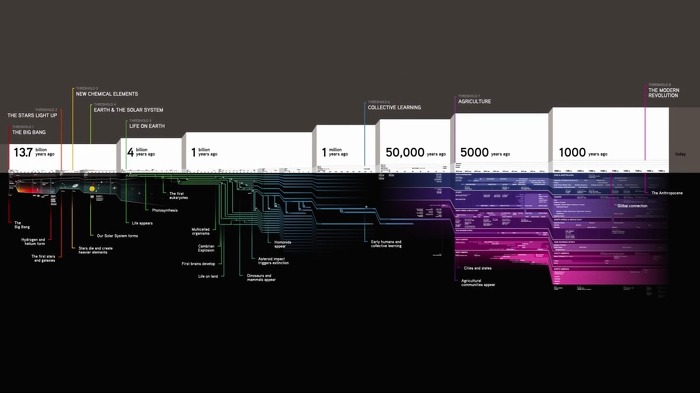
Now, you’ve seen my personal timeline. You can think of it as a sort of personal origin story and you can all write timelines of your own. To some of you it may seem pretty long, but if you want to look for a long timeline, think about the history of the Universe’s - that timeline is 13.7 billion years long! Take time out to get your mind around that figure. If you were to count numbers, each number a second, and you counted up to a million, how long would it take you? It would take you about 11.5 days. To count to a billion it would take you 1,000 times as long, about 32 years. And to count to 13.7 billion would take you over 400 years.

자, 여러분은 저의 개인사적인 타임라인을 보았습니다. 여러분은 이 타임라인을 일종의 개인사적인 기원 이야기라고 간주할 수 있으며, 여러분 모두가 자기 자신의 타임라인을 작성할 수도 있을 것입니다. 어떤 사람들의 경우 그 타임라인이 매우 길 수도 있습니다. 그러나 만약 여러분이 긴 타임라인을 살펴보기를 원한다면, 우주의 역사, 즉 137억 년과 같이 매우 긴 타임라인을 생각할 수도 있습니다! 천천히 그 숫자가 의미하는 바를 생각해보세요. 만약 그 숫자를 세기를 원한다면, 1초에 숫자 하나를 센다고 하고 100만을 센다면, 얼마나 걸릴까요? 이 경우, 11.5일이 걸립니다. 10억을 센다고 한다면, 1000배 즉 약 32년이 걸릴 것입니다. 137억을 센다면, 400년이 넘게 걸릴 것입니다.


That’s a huge story, but that’s the story we’re going to tell in this course.


It’s a fantastic story. It’s got lots of twists and turns, lots of unanswered questions, lots of fascinating ideas and stories in it.


One of the things we’re really going to focus on is the idea of increasing complexity. Over 13.7 billion years, what we see is that gradually there appear in the Universe - at what we’ll call “threshold” moments - new things, more complex things with entirely new qualities. We’ll focus on eight of these thresholds, and they culminate in today’s world. The last threshold is today’s world, and that is one of the most complex things we know.


By the end of this course, you will have surveyed the whole history of the Universe and you’ll know how you fit into it.


So, let’s get started.

이것은 엄청나게 긴 시간 동안의 스토리입니다. 그러나 바로 이 스토리가 여러분과 함께 나누고자 하는 스토리 입니다.


이것은 놀라운 스토리입니다. 이 스토리에는 많은 굴곡과 변곡점들이 있고, 해결하지 못한 의문들이 많이 있으며 놀라운 아이디어들과 이야기들이 있습니다.


우리가 진정으로 관심을 가지고 있는 관점들 중의 하나는 복잡성의 증가라는 것입니다. 137억 년이라는 시간 속에서, 우주에서 완전히 새로운 특징을 가진 새로운 것들, 새로운 복잡한 것들이 점진적으로 출현했습니다. 우리는 특히 이를 '임계국면'이라고 부르는 전환점을 통해 살펴보려는 것입니다. 마지막 임계국면은 오늘날의 세계이며, 이 세계는 우리가 현재 알고 있는 것들 가운데 가장 복잡한 것입니다.


이제 여러분은 우주의 전 역사를 살펴보게 될 것이고 여러분 자신들이 그 속에 어느 곳에 위치해 있는지를 알게 될 것입니다.


자, 시작해봅시다.

다음검색
현재 게시글 추가 기능 열기

댓글

댓글 리스트
맨위로

카페 검색

카페 검색어 입력폼