Romantic lie and Novelistic truth(영어판 공식 제목: Deceit, Desire, and the Novel)
작성자석수작성시간25.10.19조회수27 목록 댓글 0낭만적 거짓과 소설적 진실
Romantic lie and Novelistic truth
그러나 르네 지라르의
"낭만적 거짓과 소설적 진실"의 영어판 공식 책 제목은 "Deceit, Desire, and the Novel(속임수, 욕망, 그리고 소설)"입니다.
■낭만적 : 들뜬
'낭만적'은 현실에 얽매이지 않고 감상적이고 이상적으로 사물이나 사람을 대하는 태도, 혹은 그런 분위기를 뜻합니다. 이는 '실현 가능성이 적고 매우 정서적이며 이상적인 것'을 의미하며, 현실적이고 합리적인 것과 대비되는 개념입니다.
현실을 벗어난 이상 추구: 현실의 제약에 얽매이지 않고 꿈이나 이상을 좇는 태도입니다.
감상적이고 이상적인 태도: 사물이나 사람을 감성적이고 이상적인 관점에서 바라봅니다.
실현 가능성이 낮은 것: 이루어지기 어려운 꿈이나 이상을 뜻하기도 합니다.
'현실적'과 대비: 합리성이나 효율성을 우선하는 '현실적'인 것과는 반대되는 의미로 사용됩니다.
어원: 'romance'를 일본식 한자로 음차한 것으로, '낭(浪)'과 '만(漫)'이라는 한자의 원래 뜻과는 직접적인 관련이 없습니다.
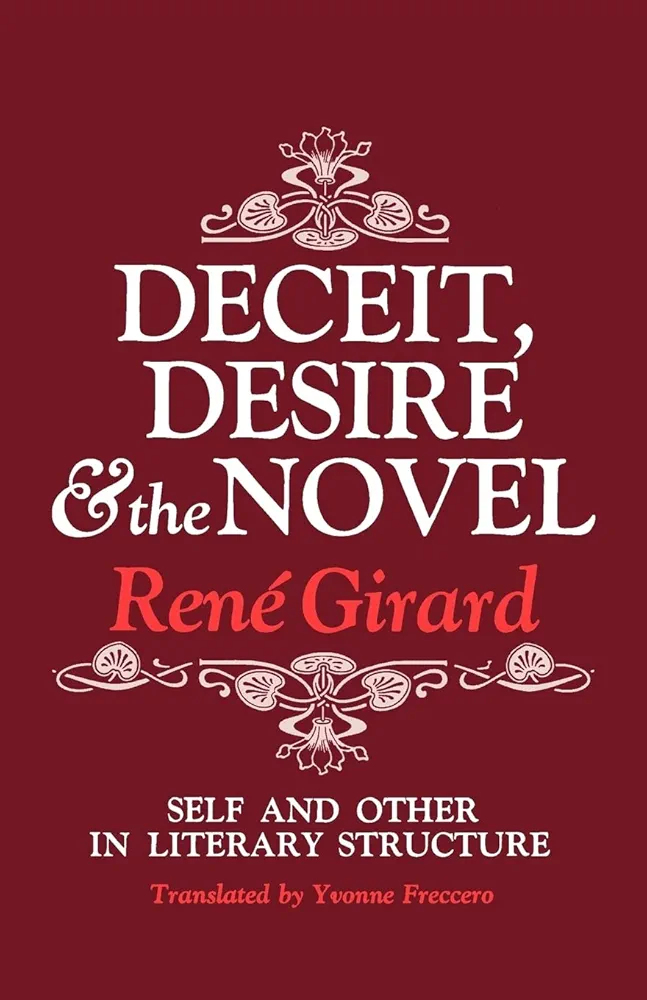
This study extends beyond the scope of literature into the psychology of much of our contemporary scene, including fashion, advertising, and propaganda techniques. In considering such aspects, the author goes beyond the domain of pure aesthetics and offers an interpretation of some basic cultural problems of our time."
르네 지라르의 첫 번째 저서로, 문학 작품을 통해 인간의 욕망이 어떻게 작동하는지 분석한 비평서입니다.
책 제목: Deceit, Desire, and the Novel
저자: 르네 지라르 (René Girard)
주요 내용:
인간의 욕망은 직접적인 것이 아니라 타인(중개자)의 욕망을 모방함으로써 생긴다는 '욕망의 삼각형' 이론을 제시합니다.
《돈키호테》, 《적과 흑》 등 고전 소설들을 분석하며 이 이론을 설명합니다.
문학 사회학 분야의 고전으로 여겨지는 작품입니다.
소설적'은 영어로 "novelistic" 또는 문맥에 따라 **"fictional"**로 번역할 수 있습니다.
"Novelistic"은 소설의 특징을 가지고 있거나 소설과 관련된 것을, "fictional"은 허구적이라는 의미로 사용됩니다.
Novelistic: 소설과 같은, 소설적인 성격을 지닌 것을 묘사할 때 사용합니다.
예시: "a novelistic description" (소설적인 묘사)
Fictional: 허구의, 사실이 아닌 것을 의미하며, 소설과 같은 창작물에 대한 일반적인 형용사로 사용됩니다.
예시: "a fictional story" (허구적인 이야기)
"Romantic lie and novelistic truth" are concepts from René Girard's theory of mimetic desire, where the romantic lie is the belief that desire is spontaneous and authentic, while novelistic truth is the revelation that desire is imitative and influenced by others.
Novelistic truth exposes the romantic lie by showing that what we want is often an imitation of what others want, a pattern frequently depicted in realist novels.
The romantic lie
Definition: The belief that our desires are individual, spontaneous, and unique to us. It's the illusion that when we desire something (or someone), we are the sole, original source of that desire.
Manifestations: This lie applies not only to romance but to all aspects of life, such as consumer culture, fashion, and taste in music. We desire a particular brand of car because of its supposed unique appeal, but in reality, we are imitating the desire of others for that same car.
Example: The belief that one's love for another is completely unique and that a single, perfect union will bring complete happiness.
Novelistic truth
Definition: The literary and psychological discovery that desire is not spontaneous but is instead "mimetic" or imitative. It reveals that desire is often a "triangular desire," involving a model or mediator.
Mechanism: It exposes the "romantic lie" by showing how we imitate the desires of others. The realist novel, according to Girard, is a genre that reveals this truth by showing this "triangular desire" in action, as seen in the works of authors like Stendhal, Flaubert, and Proust.
Outcome: By renouncing the romantic lie, one can achieve a new relationship with others based on a more truthful understanding of desire.
Girard's theory
Context: Girard introduced these concepts in his book Deceit, Desire and the Novel (French title: Mensonge romantique et vérité romanesque), using literary analysis to explore human psychology and society.
Application: His theory extends beyond literature to explain phenomena like advertising, fashion, and even conflict, as it suggests that mimetic desire is a fundamental driver of human behavior.