[34~35] 다음 글의 주제로 가장 적절한 것을 고르시오.
34. Living things naturally return to a state of balance. When we are disturbed by forces acting on us, our inner machinery kicks in and returns us to a balanced state of equilibrium. Homeostasis is the word we use to describe the ability of an organism to maintain internal equilibrium by adjusting its physiological processes. Most of the systems in animal and human physiology are controlled by homeostasis. We don’t like to be off balance. We tend to keep things in a stable condition. This system operates at all levels. Our blood stays the same temperature. Except for extraordinary exceptions, when people find
ways to intervene using methods more powerful than our tendency to equilibrium, our habits, behaviors, thoughts, and our quality of life stay pretty much the same too.
① physical balance needed for mental equilibrium
② inner mechanisms to enhance the quality of life
③ general tendency of organisms to keep equilibrium
④ major differences in animal and human physiology
⑤ biological processes resulting from habitual behaviors
정답: ③
접근 방법: 문단의 구조 파악(두괄식) - 첫 문장 이후 내용을 전환하는 연결사 등이 발견되지 않으므로 첫 문장 이후는 이를 설명하는 구조이다.
첫 문장 "생명체들은 저절로 균형 상태로 돌아온다."가 글의 주제문이다.
해석:
생명체들은 저절로 균형 상태로 돌아간다. 우리에게 영향을 미치는 힘에 의해 우리가 방해를 받을 때, 우리의 내부 조직이 작동하여 우리를 평형이라는 균형이 잡힌 상태로 돌아오게 한다. ‘항상성’은 생리적인 과정들을 조절하여 내적인 평형상태를 유지하는 생명체의 능력을 묘사하기 위해서 우리가 사용하는 단어이다. 동물과 사람의 생리 체계의 대부분은 항상성에 의해서 조절된다. 우리는 균형이 깨지는 것을 좋아하지 않는다. 우리는 안정된 상태로 유지하는 경향이 있다. 이러한 체계는 모든 수준에서 작용한다. 우리의 혈액은 동일한 온도를 유지한다. 사람들이 평형을 이루는 경향성보다도 더 강력한 방법들을 사용하여 개입하는 방식들을 알아내는 특별한 예외들을 제외하고는, 우리의 습관, 행동, 사상, 그리고 삶의 질은 거의 동일하게 유지된다.
35. All of us use the cultural knowledge we acquire as members of our own society to organize our perception and behavior. Most of us are also naive realists: we tend to believe our culture mirrors a reality shared by everyone. But cultures are different, and other people rarely behave or interpret experience according to our cultural plan. For example, an American anthropologist attempted to tell the classic story of Hamlet to Tiv elders in West Africa. She believed that human nature is pretty much the same the whole world over; at least the general plot and motivation of the great tragedy would always be
clear. But, at each turn in the story when she told it, the Tiv interpreted the events and motives in Hamlet using their own cultural knowledge. The result was a very different version of the classic play.
① cultural differences in perception and interpretation
② tragic characteristics of classic West African plays
③ the positive function of culture as a mirror of reality
④ human nature and its role in developing culture
⑤ the process of acquiring cultural knowledge
정답: ①
접근 방법: 전환의 연결어 파악(3번째 문장의 But을 통해 글의 핵심 내용 파악)
But cultures are different, and other people rarely behave or interpret experience according to our cultural plan. 각 문화는 다르며, 우리의 문화를 통해 행동하거나 해석하지 않는다.
해석:
우리는 모두 자신의 사회의 구성원으로서 우리가 획득하는 문화적 지식을 우리의 인식과 행동을 구성하는 데 사용한다. 우리들 대부분은 또한 순진한 현실주의자들이다. 우리는 우리의 문화가 모든 사람에 의해서 공유되는 현실을 반영한다고 믿는 경향이 있다. 하지만 문화들은 서로 다르며, 다른 사람들이 우리의 문화적 모형에 맞추어서 행동하거나 경험을 해석하는 일은 거의 없다. 예를 들어, 미국의 한 인류 학자가 <햄릿>이라는 고전적 이야기를 서아프리카의 티브 족 노인들에게 들려주려고 시도했다. 그녀는 인간의 본성이 세계 전역에서 아주 많이 비슷할 거라고 믿었다. 최소한 그 위대한 비극 작품의 일반적인 줄거리나 동기는 항상 분명할 것이라고 생각했다. 하지만 그녀가 그것을 들려주었을 때 이야기가 전환될 때마다, 티브족 사람들은 <햄릿>에 나오는 사건들과 모티브들을 그들 자신의 문화적 지식을 사용하여 해석하였다. 결과적으로 그 고전적 희곡 작품의 매우 다른 버전이 나오게 되었다.
36. 다음 도표의 내용과 일치하지 않는 문장은?
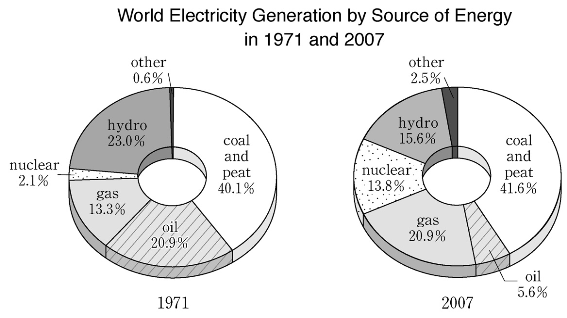
The graphs above show the percentage of world electricity generation by sources of energy for 1971 and
2007. ① According to the graphs, the primary source of electricity generation in both 1971 and 2007 was coal and peat, accounting for over 40% of the total electricity generation. ② Oil showed the biggest decrease in electricity generation, which fell from 20.9% in 1971 to 5.6% in 2007. ③ The source that showed the biggest increase was nuclear, which rose from 2.1% in 1971 to 13.8% in 2007. ④ In 1971, hydro was the second biggest source of electricity generation, but in 2007, gas was the second biggest, accounting for more than 20% of the total electricity generation. ⑤ Besides coal and peat, hydro was the only source that accounted for more than 20% of the total electricity generation in both 1971 and 2007.
정답: ⑤
접근 방법: 일일이 도표와 대입하며 파악한다. ⑤에서 수력은 2007년에는 20%에 이르지 못함
해석:
위 그래프는 1971년과 2007년의 전력 생산의 에너지원에 따른 비율을 보여준다. 그래프에 따르면 1971년과 2007년 모두 전력 생산의 주된 에너지원은 석탄과 토탄이었는데, 전체 전력 생산의 40퍼센트 이상을 차지했다. 석유는 전력 생산에서 가장 큰 감소를 보여주었는데, 1971년 20.9퍼센트에서 2007년 5.6퍼센트로 떨어졌다. 가장 큰 증가를 보여준 에너지원은 원자력이었는데, 1971년 2.1퍼센트에서 2007년 13.8퍼센트로 올라갔다. 1971년에 수력은 두 번째로 큰 전력 생산 에너지원이었지만, 2007년에는 가스가 두 번째로 큰 에너지원이었으며, 전체 전력 생산의 20퍼센트 이상을 차지했다. 석탄과 토탄을 제외하고, 수력은 1971년과 2007년 모두에서 전체 전력 생산의 20퍼센트 이상을 차지한 유일한 에너지원이었다.