Effects on Soil
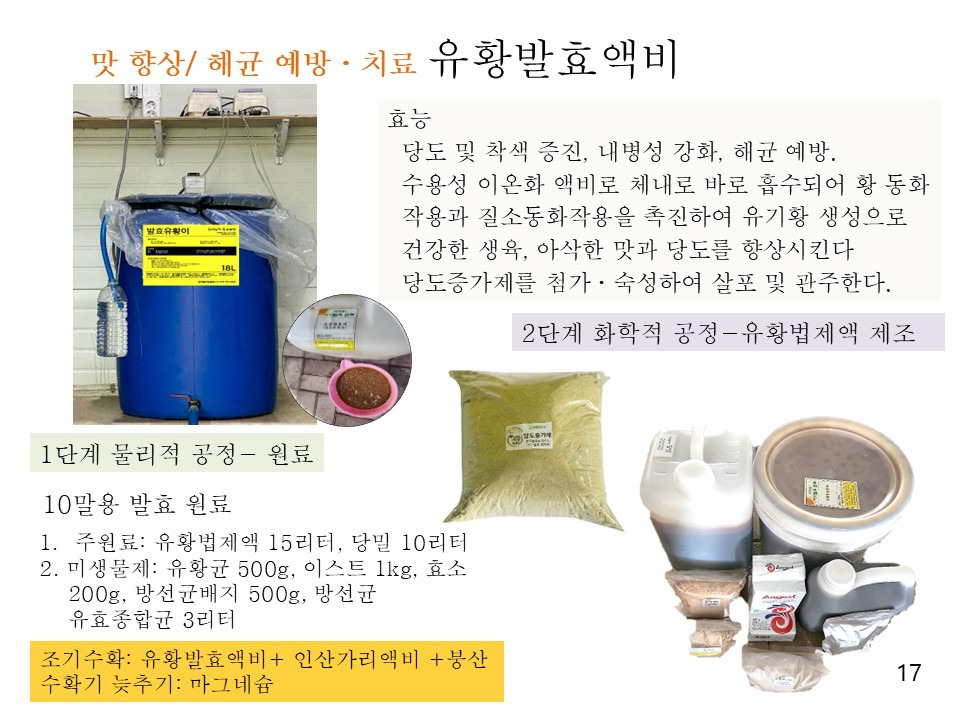
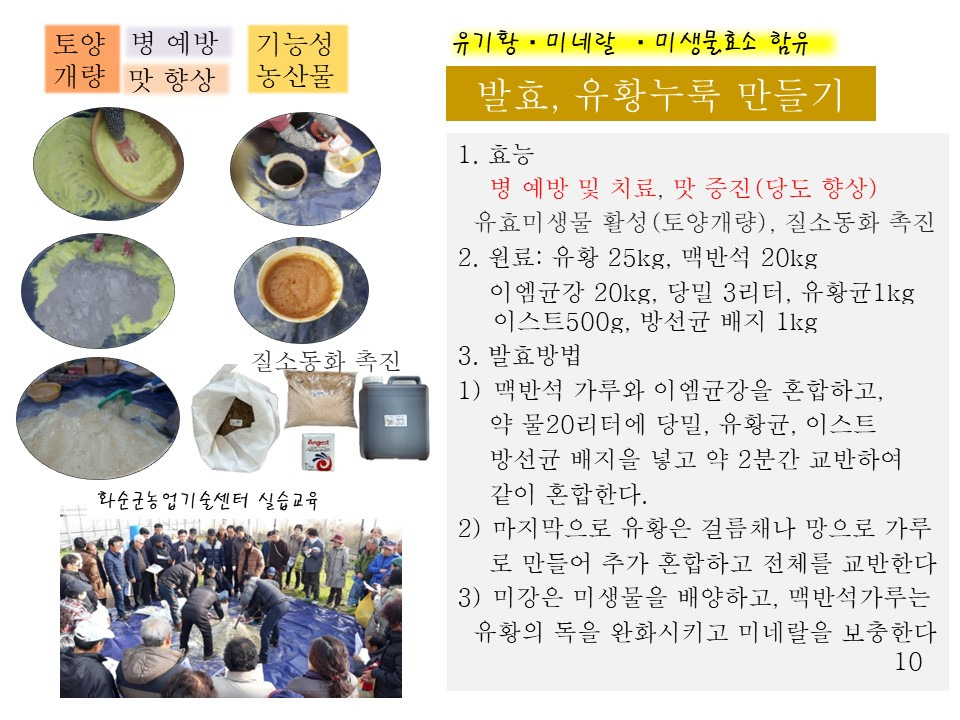
유황발효액비의 토양에 미치는 영향
| 1. Lowers Alkaline pH: Soil microbes convert elemental sulfur into sulfuric acid. This naturally reduces the pH of problematic alkaline and calcareous soils. 알칼리성 pH를 낮춤: 토양 미생물은 원소 황을 발효과정에서 황산으로 전환합니다. 이는 자연스럽게 문제가 되는 알칼리성 및 석회질 토양의 pH를 낮춥니다. 2. Increases Nutrient Availability: A lower soil pH solubilizes locked-up phosphorus, iron, zinc, and manganese. This makes them easily absorbable by plant roots. 영양소 가용성 증가: 토양 pH가 낮을수록 불용성 인산, 철, 아연, 망간이 용해됩니다. 이것은 식물 뿌리가 쉽게 흡수할 수 있습니다. 3. Suppresses Soil Pathogens: The fermentation process generates antimicrobial compounds. These compounds inhibit harmful soil fungi, nematodes, and bacteria. 토양 병원균 억제: 발효 과정에서 항균 화합물이 생성됩니다. 이러한 화합물은 유해한 토양 곰팡이, 선충, 박테리아를 억제합니다. 4. Improves Soil Structure: It promotes the flocculation of clay particles in sodic soils. This enhances water infiltration and aeration. 토양 구조 개선: 이는 염분이 많은 토양에서 점토 입자의 응집을 촉진합니다. 이는 수분 침투와 통기를 향상시킵니다. 5. Stimulates Beneficial Microbes: The fermented organic base feeds native saprophytic bacteria and mycorrhizal fungi. This drives faster organic matter decomposition. 유익한 미생물을 자극: 발효된 유기 염기는 토착 부생균과 균근 균류를 먹이로 합니다. 이는 유기물 분해 속도를 높입니다. |
 |  |
출처: 구글AI, 번역: 유황발효 발명특허권자 김현남
유황발효 정기교육 & 교육 신청: 한국발효농업연구소 교육장 055)331-6631
다음검색