Greetings, netizens. We’ve all had a busy couple of weeks as the G-20 has come and gone, but while the gingko trees lining the street to my residence and the Embassy are still bright gold, I wanted to continue telling you a bit more about my autumn travels. I began writing earlier about a trip last month to Korea’s southwestern province of Jeollanamdo where we learned to make salt, kimchi and bean curd.
Our Team Embassy biking group then went to Naju, a historically important city in the province of Jeollanamdo 전라남도 ('Na' in Naju comes from the second character in Jeon-ra(na)-nam-do. Likewise, 'jeon' in Jeonju comes from the first character in Jeon-ra-nam-do). Naju is known for its pears, and for its regard for traditional ways. In fact, I was told that in the late Choseon Dynasty the men of Naju refused Seoul’s orders to cut their hair in the “modern” way.
I don’t know all the facts about Naju’s history, but we did experience a lot of the best of traditional Korea there. We enjoyed not only the delicious pears, but also the artistry of the city’s musicians, calligraphers and chefs. We even overnighted at the traditional Korean “han-ok” which had been the governor’s residence - the Naju Moksanea Geumhakheon. While there are now throughout Korea a number of “han-ok” where visitors can stay, I understand the Naju residence is the only former governor’s residence open to the public for overnight stays. And I’m told the “poong-su” (or feng-shui, as we sometimes call it in English), is especially good there.
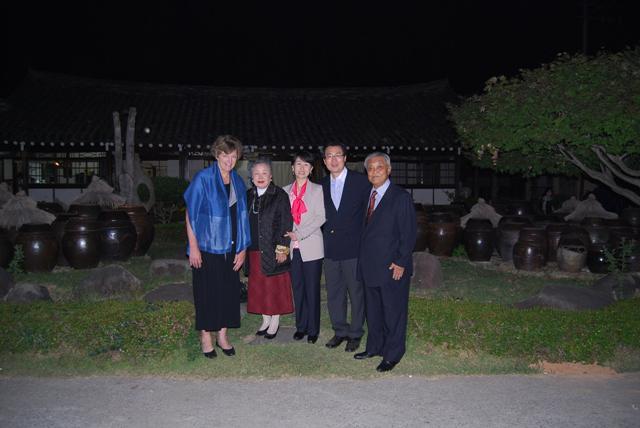
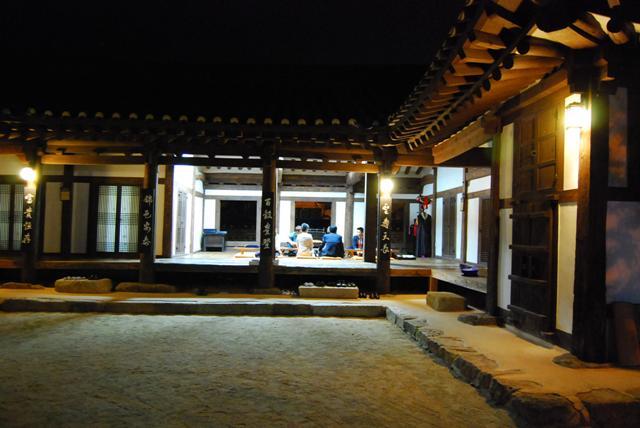
Having tea at the former governor's residence in Naju. The individual rooms have heated ondol floors in the traditional style. I highly recommend this place for those who want to experience the comfort and beauty of staying in a traditional "han-ok."
Another place that was new to me on this trip was
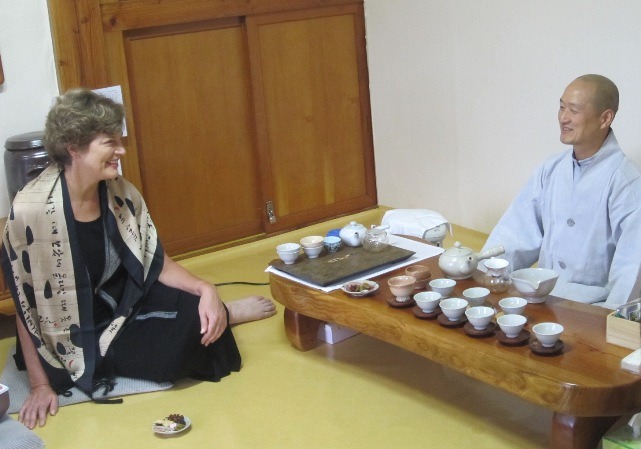
Unjusa Temple’s Head Monk Jeong-haeng served tea and told us about the temple’s history.
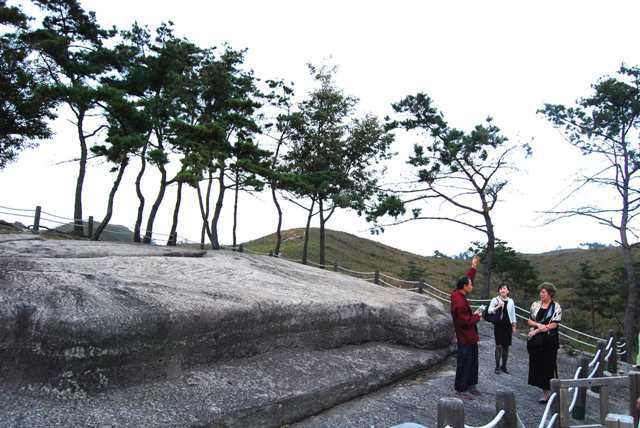
Professor Seo Sun-bok showed us one of the lying stone Buddhas; we were intrigued by the mystery and beauty of the stone carvings
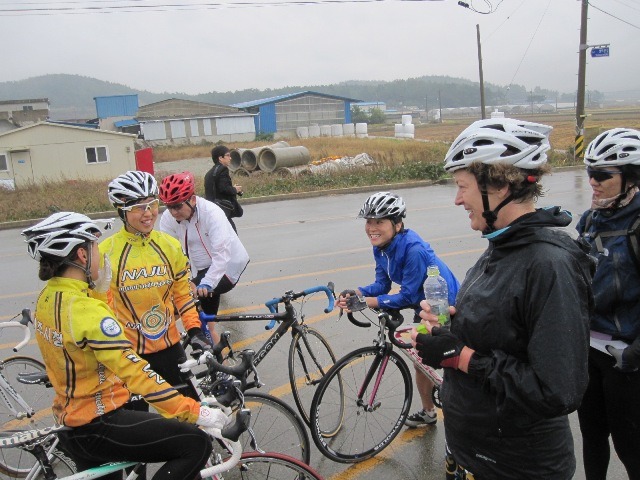
The next morning, after a hearty breakfast of Naju’s famous gom-tang, we were joined by five young women training for the Asia Games with the Naju Women’s Cycling Team. We rode together along country roads, empty of traffic on an early Sunday morning, talking about their training program and their hopes and dreams. Our ride from Naju to Yeongam was a lazy Sunday pedal for these world-class athletes, until we put them in front to set the pace. For about twenty kilometers we rode tightly as a team, with me and the rest of Team Embassy “drafting” behind the pacesetting athletes. What fun! I enjoyed talking to these young women, who are training for the upcoming Asian Games in
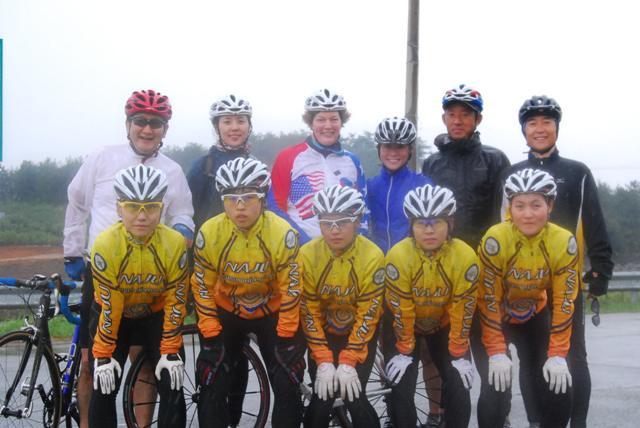
Team Embassy and the Naju Women’s Cycling Team
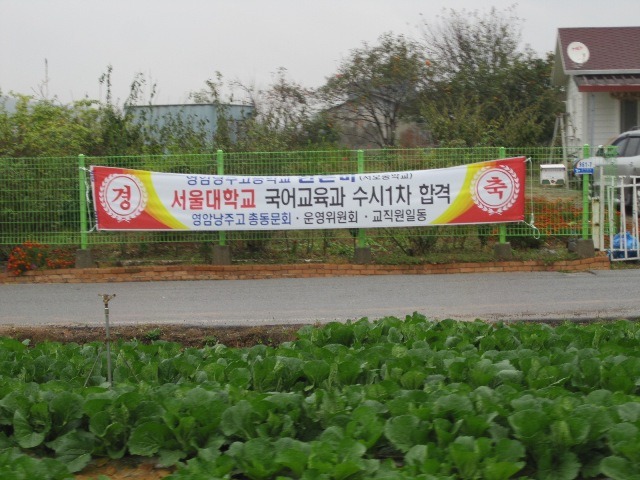
I like this picture, taken while biking in the rural reaches of Yeongam. It says, “Congratulations on Early Admittance to Seoul National University, Department of Korean Language Education“, and shows the pride of the community in the achievement of a local student.
The ride with the Naju Women’s Cycling Team ended in Yeongam. Riding in some of the most remote countryside in
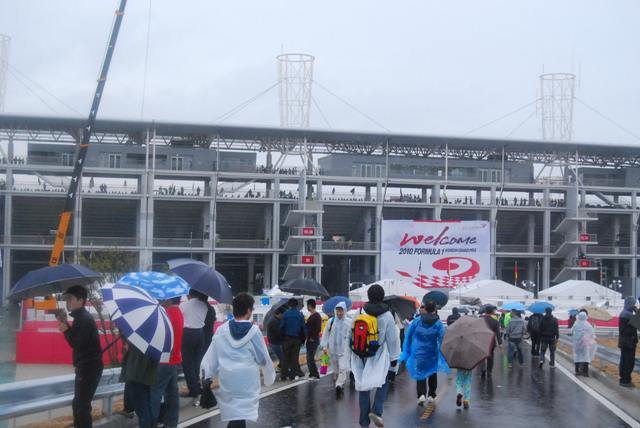
Entering the F1 race track. Fans filled the stands, despite the rain.

