What is the Essence of Healing Others through Martial Arts Training?
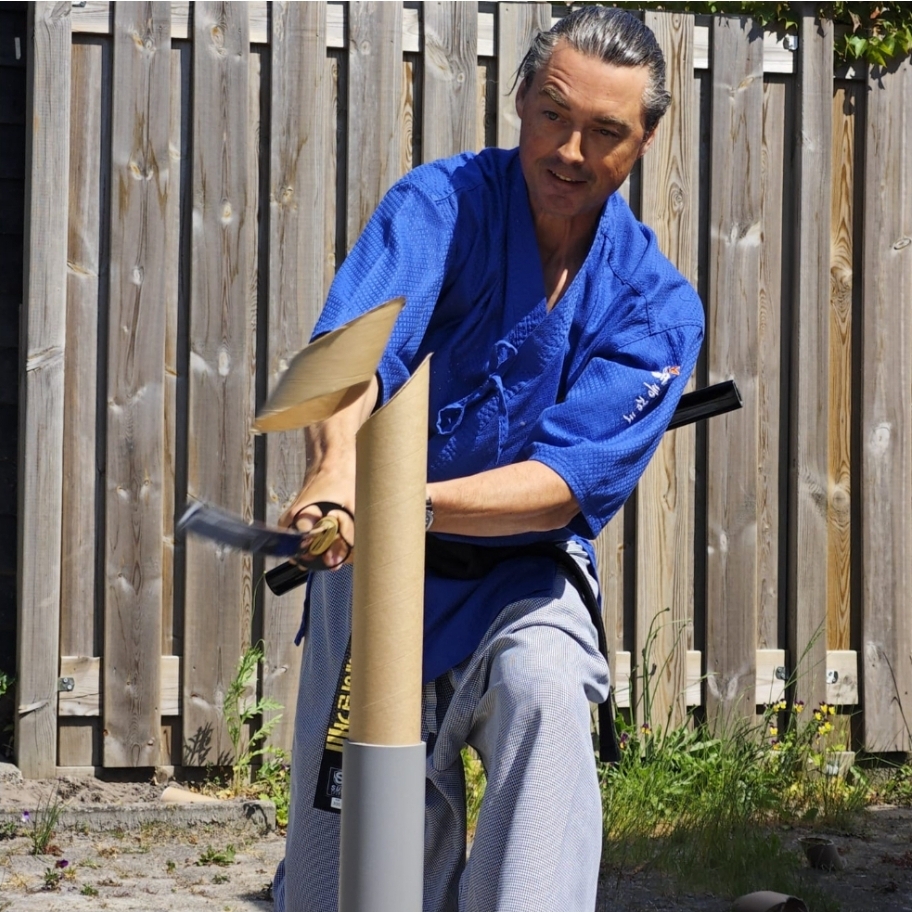
Written by: Frank Heininga
4th Dan Candidate
May 14th, 2025
Table of Contents:
Introduction
Chapter 1 – The Nature of Haedong Kumdo – Jinyoung Ssangkum Ryu
Chapter 2 – What is Healing?
Chapter 3 – How Healing Happens in Jinyoung Ssangkum Ryu
Chapter 4 – Real-Life Examples and Testimonials
Chapter 5 – The Essence of Healing in this Martial Art
Conclusion
Introduction
“I remember the first time I truly felt the healing power of this practice—it was during a solo sword form session after a particularly stressful period. With each breath and swing of the sword, I could feel the tension melt away, as though the form itself was guiding me back to balance.”
In today’s world, where stress, trauma, and disconnection are widespread, more and more people are searching for healing methods beyond traditional therapy or medicine. One such method can be found in traditional martial arts. While martial arts are often linked to self-defense and physical skill, they also hold a deeper potential: personal transformation and healing. A powerful expression of this can be found in the Korean sword art of Haedong Kumdo, specifically in the style known as Jinyoung Ssangkum Ryu.
This sword art isn’t about defeating an external enemy, but about overcoming inner struggles. Jinyoung Ssangkum Ryu—which means “two-sword style”—focuses on developing body awareness, breathing, energy flow, and the integration of mind and movement. Through ritual sword forms, meditation, and breathing, the practice becomes a path where healing isn’t the goal, but a natural outcome of deep inner alignment.
This thesis explores the healing potential of training in Haedong Kumdo – Jinyoung Ssangkum Ryu, and how this art can help others on their journey of mental, emotional, and spiritual recovery. What happens to a person who commits to this martial path? How do forms, breath, energy work, and tradition contribute to healing—and what makes this system different from other martial arts?
Chapter 1 – The Nature of Haedong Kumdo – Jinyoung Ssangkum Ryu
Haedong Kumdo is a Korean sword martial art with roots in the warrior traditions of the ancient Goguryeo kingdom. Jinyoung Ssangkum Ryu is a modern style within this tradition that focuses not only on martial technique, but on the inner development of the practitioner. The name Ssangkum—"two swords"—refers to training with a sword in each hand. This creates a unique physical dynamic and demands deep balance, coordination, and inner harmony.
Developed by Grandmaster Kim Jeong Seong, this style places great importance on breath, body awareness, ki (life energy), and harmony between mind and movement. Training is often done solo, using ritual forms (gumbop) not to defeat an opponent, but to transform inner conflict. As such, this martial art is also viewed as a meditative and healing practice.
Chapter 2 – What is Healing?
Healing is a layered and complex process that can occur on physical, mental, emotional, and spiritual levels. In Western medicine, healing is often seen as simply recovering from physical symptoms. In Eastern traditions, including Korean ones, healing is understood as restoring balance and harmony between body, mind, and energy.
From this broader perspective, healing isn’t just about symptoms disappearing—it’s about calming the whole system. This happens through releasing tension, quieting the mind, and allowing natural energy flow to resume. Healing can also involve processing trauma, rediscovering direction in life, or reconnecting with oneself.
Chapter 3 – How Healing Happens in Jinyoung Ssangkum Ryu
Breath and Ki Circulation
A core element of this style is conscious ‘even’ breathing. Through breathwork (Goleunhoheub), practitioners learn to release tension, calm the mind, and let Ki (energy) flow.
“You may learn to follow the flow of energy and control your mind’s functioning; then you may gain body health and peace of Mind.”
— Grandmaster Kim Jeong Seong
Deep, mindful breathing connects the body and mind, forming the foundation of all movement. Natural breathing is encouraged throughout training to support recovery, vitality, and mental clarity.
Physical and Energetic Integration
Training with two swords builds symmetry and balance between the left and right sides of the body and brain. This supports integration between both hemispheres of the brain, contributing to emotional stability and mental clarity. The ongoing challenge of learning more complex forms creates new neural pathways in the brain. This may help prevent mental decline with age and improve focus, memory, and concentration in the present.
Ritual, Form, and Focus
Repeating forms (gumbop) has a meditative effect. Focusing on precision, rhythm, and intention makes each training session a kind of ritual. This structure creates safety and stability, especially helpful for people recovering from trauma or mental unrest. Various levels of technique are repeated to build a solid foundation for the next level—sparring, sword forms, or cutting. Clear guidelines for each belt level provide structure and motivation, guiding the practitioner to accumulate more physical and mental power.
Jinyoung Ssangkum Ryu is designed so all components of the Art work in synergy to achieve a balanced Body and Mind, resulting in more vitality. Vitality can be invested in other areas of life, so the Art because a catalyst for the practitioner to gain more health and happiness.
The Role of the Teacher
The teacher (sabomnim) is not just an instructor, but a guide in the process of inner transformation. Through example, presence, and guidance, the teacher creates a space where healing becomes possible. From my experience teaching thousands of classes, I’ve noticed that students leave feeling not only physically energized but also mentally at peace. Their spirit is lifted, and they connect more easily and joyfully with others. In other words, even a “regular class” can become a healing session—especially when your lesson plan encourages energy flow and awareness. Every class can support students’ vitality by the fluid and effective movements of the Art.
Chapter 4 – Real-Life Examples and Testimonials
Interviews with other practitioners revealed that many began training in Haedong Kumdo because of stress, physical complaints, or a desire for inner peace. One student said that after burning out, training helped him reconnect with his breath and body. “It felt like coming home to myself,” he said.
I’ve also witnessed healing firsthand during international events where Grand Master Kim, Jeong Seong offered Vipassana Acupuncture healing sessions. He treated students individually with acupuncture, energy work, light physical therapy, and lifestyle advice. Many students have shared their improvements in forums, books, and articles about Grandmaster Kim’s treatment methods which you can find in the resources of the essay.
Personally, I experience a powerful healing effect from practicing Ki-Mu, the energetic foundation of our style—literally, “energy in martial arts.” These beautiful, flowing movements activate my energy in a way that leaves me physically and mentally renewed. When I feel tired or overwhelmed, I immerse myself in Ki-Mu. After a while, I feel energy flow more strongly through my body and hands. My mind quiets down, and I feel grounded and content. I’m ready to take on the day or I extend my practice with single and double sword techniques, fueled with more inner strength.
Chapter 5 – The Essence of Healing in this Martial Art
The heart of healing in Haedong Kumdo – Jinyoung Ssangkum Ryu lies in restoring inner balance and to connect with nature. This is achieved through physical training, conscious breathing, ritual, and connection to something greater. The practice creates a space where people can release, integrate, and recover—without needing direct confrontation or deep psychological analysis.
What makes this martial art unique is the combination of:
Energy training with self-acquirement: body magnetization
Powerful and fluid physical expression through sword techniques
Breath & practice by Muwi
Meditation with breathing & Enlightenment by Muwi
Healing practice by Muwi
Muwi means ‘action without intention’—a state of flow similar to what athletes call ‘the zone,’ where movement feels effortless and guided by something greater than oneself. The reality of Muwi is the Energy of Nature that controls and moves all things in heaven and earth.
All unique characteristics of Jinyoung Ssangkum Ryu as stated above are rooted in a philosophy centered on harmony and respect.
Healing here doesn’t come from focusing on problems, but from training the body and mind to regulate themselves again. This transforms martial arts into a form of active meditation and a path of personal transformation.
“Any kinds of healing systems in Jinyoung Ssangkum Ryu will be treated and implemented by ‘LOVE’. I must be able to build up, given from nature. Love is a strength described as Light of Nature. Whatever we do in life, especially healing depends on my Mind Disposition and Appearence of Mind. That is why human beings should hone their body and mind mentally and physically. Jinyoung Ssangkum Ryu teaches to train it.”
— Grandmaster Kim Jeong Seong
Conclusion
Haedong Kumdo – Jinyoung Ssangkum Ryu is far more than a martial art: it’s a path of healing. It brings people back to their breath, their body, and their inner stillness. Through breath, meditation, and fluid sword techniques you can allow the energy to flow freely, so that stress, trauma, and emotional turbulance can be transformed into vitality, calm, and clarity.
The essence of healing in this style is not about curing illness, but about restoring connection—to body, mind, and life itself. This martial art offers a unique bridge between Eastern wisdom and today’s urgent need for deep, lasting healing.
Resources
Student Testimonials: Read personal stories and reflections shared by practitioners in the Introduction section of the Haedong Kumdo Facebook page.
Introduction to Ki-Mu: Explore the foundational energy practice of our art in Thinking Out of the Box Through Haedong Kumdo – Vol. 1.
Healing System Overview: Gain deeper insight into the healing philosophy of Jinyoung Ssangkum Ryu in Searching for the Forgotten Half in Martial Arts – Vol. 2.
Workshop Photo Gallery: View images from international events and healing sessions I’ve attended, available at Galerie van de Krijger.