조류 모험가들: 호주 조류보호협회 2022년 캘린더 Avian adventurers: BirdLife Australia 2022 calendar – in pictures
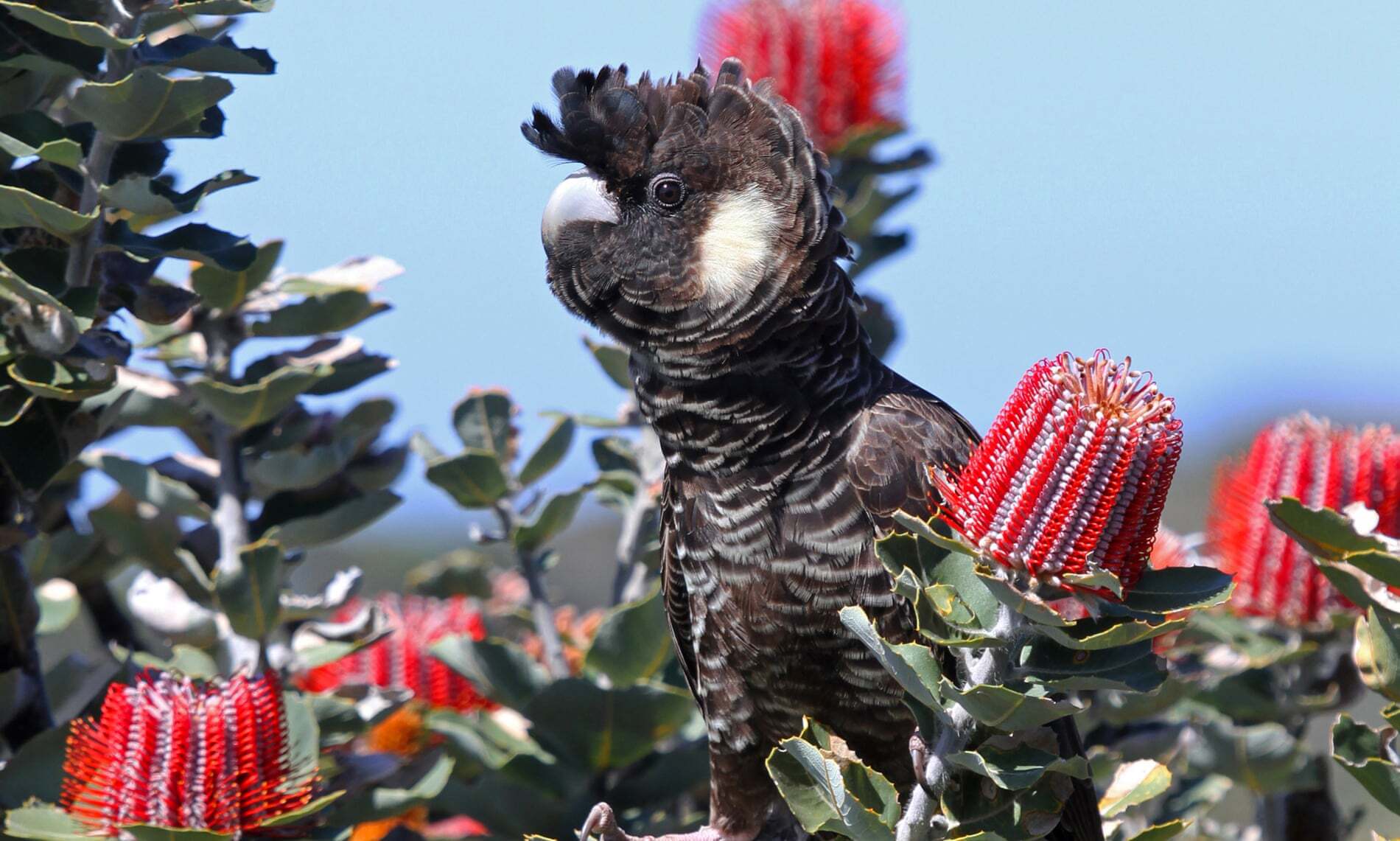
▲ July: For Perth locals, Carnaby’s black-cockatoos wheeling across the city skyline is a familiar sight as they migrate to the Swan Coastal Plain from early summer. # Photograph: Raeline Smith 7월: 퍼스 주민들에게는 초여름부터 백조 해안 평원으로 이동하는 짧은부리검은유황앵무(Zanda latirostris)가 도시의 스카이라인을 가로지르는 것은 익숙한 광경이다. 해외 여행이 거의 불가능했던 시기에 호주 조류보호협회는 2022년 달력에서 호주의 가장 강력하고 가장 위협받는 철새에 대해 주목하고 있다. At a time when international travel has been mostly out of reach, BirdLife Australia is turning the spotlight on some of the country’s mightiest and most threatened migratory birds in its 2022 calendar. 호주 조류보호협회의 이동하는 조류 2022년 캘린더는 19.95 호주 달러에 구입할 수 있다. BirdLife Australia’s Birds on the Move 2022 calendar is available for A$19.95. Sat 13 Nov 2021 19.00 GMT
1. January: Papuan pitta. These small, ground-dwelling birds migrate from New Guinea to breed in the humid rainforests of the northern Cape York Peninsula during the wet season (between December and March). Despite their bright plumage, these secretive birds are more easily heard than seen ‒ but can be spotted alone or in pairs, foraging among the leaf litter for prey. # Photograph: Laurie Ross 1월: 파푸아 팔색조. 땅에 사는 이 작은 새들은 우기(12월~3월 사이) 동안 뉴기니에서 이동하여 북부 케이프 요크 반도의 습한 열대우림에서 번식한다. 밝은 깃털에도 불구하고 이 비밀스러운 새들은 보는 것보다 더 쉽게 들을 수 있다. 그러나 먹이를 찾기 위해 나뭇잎 사이에서 먹이를 찾는 홀로 또는 쌍으로 발견될 수 있다. ♣ 파푸아 팔색조(Erythropitta macklotii)는 팔색조의 일종이다. 이 새는 이전에 붉은배 팔색조(red-bellied pitta)의 아종으로 간주되었다. 아루 제도(Aru Islands), 뉴기니(New Guinea), 북부 케이프 요크 반도(Northern Cape York Peninsula)에서 발견된다. 자연 서식지는 아열대 또는 열대의 습한 저지대 숲이다. 서식지 손실로 위협받고 있다.
2. February: Dollarbird. Named after the large pale spot on each wing that resembles a silver coin, dollarbirds arrive in northern and eastern Australia to breed from September, before returning to New Guinea and Indonesia at the end of summer. These high-flying rollers are often seen on exposed perches like dead branches or powerlines, from which they launch in skilled pursuit of their insect prey. # Photograph: Mark Sanders 2월: 파랑새(학명: Eurystomus orientalis). 은화와 비슷한 각 날개의 커다란 창백한 반점의 이름을 따서 명명된 파랑새는 9월부터 번식을 위해 호주 북부와 동부에 도착한 후 여름이 끝날 때 뉴기니와 인도네시아로 돌아온다. 이 높이 날아가는 파랑새과(Roller)는 죽은 가지나 전력선과 같은 노출된 횃대에서 흔히 볼 수 있으며, 곤충 먹이를 능숙하게 추적하기 위해 출발한다. ♣ 파랑새(학명: Eurystomus orientalis)는 파랑새과(Roller)에 속하는 새로서 날개에 독특한 옅은 파란색 또는 흰색의 동전 모양 반점이 있어 이름이 붙여졌다. 호주에서 한국, 일본, 인도까지 찾아볼 수 있다.
3. March: Eastern curlew. The world’s largest shorebirds, eastern curlews leave their breeding grounds in Russia and China each year to make an epic journey to the coasts of Australia, using the Earth’s magnetic field to navigate as they trace invisible flyways in the sky. Eastern curlews are found only in the east Asian-Australasian flyway. But the mudflats they depend on along their migration route are being destroyed ‒ and curlew numbers have declined by more than 80% in just over 30 years. # Photograph: Shelley Pearson 3월: 극동 마도요새(Numenius madagascariensis). 세계에서 가장 큰 도요 물떼새인 극동 마도요새는 매년 러시아와 중국의 번식지를 떠나 호주 해안으로 장대한 여행을 하며 지구의 자기장을 이용하여 하늘에서 보이지 않는 이동 경로를 따라 이동한다. 극동 마도요는 동아시아-호주 이동 경로에서만 발견된다. 그러나 이동 경로를 따라 의존하는 갯벌이 파괴되고 있으며 마도요 개체 수는 불과 30년 만에 80% 이상 감소했다. ♣ 극동 마도요새(Numenius madagascariensis)는 긴부리 마도요와 모양이 가장 비슷하지만 약간 더 크다. 이 새는 대부분 갈색이며, 일반, 무늬가 없는 갈색 밑부분에 의해 다른 마도요와 구별된다. 길이 60~66cm(24~26인치), 날개 길이 110cm(43인치)로 가장 큰 마도요일 뿐만 아니라 아마도 세계에서 가장 큰 도요새일 것이다. 몸은 565–1,150g(1.246–2.535lb)이며, 이는 유라시아 마도요와 맞먹는다고 한다. 길이가 12.8–20.1cm(5.0–7.9인치)인 매우 긴 부리는 도요새 중 가장 긴 부리로서 밀접하게 관련된 긴부리 마도요의 부리 크기에 필적한다. 극동 마도요는 시베리아에서 캄차카, 몽골을 포함한 동북 아시아에서 번식기를 보낸다. 번식 서식지는 습지와 늪지대 습지와 호숫가로 구성된다. 대부분의 개체는 호주 해안에서 겨울을 나며 일부 개체는 한국, 태국, 필리핀, 뉴질랜드로 향하여 강어귀, 해변 및 염습지에 머물게 된다. 이동하는 동안 극동 마도요는 일반적으로 황해(黃海)를 통과한다.
4. April: Cape petrel. The cape petrel is a regular visitor to southern Australian waters in the colder months, where they roam the seas in search of krill, fish and small squid. These unmistakeable black-and-white seabirds breed in colonies in Antarctica and on subantarctic islands, where they nest on cliffs or on flat ground. While nesting, they are notoriously aggressive, spraying a foul-smelling stomach oil, both as a defence against predators and an energy-rich food source for their chicks. # Photograph: Larry Litke 4월: 케이프 페트렐(슴새과, Daption capense). 케이프 페트렐은 추운 계절에 호주 남부 해역을 정기적으로 방문하며, 크릴새우, 물고기, 작은 오징어를 찾아 바다를 배회한다. 이 틀림없는 흑백 바닷새는 남극 대륙과 아남극 섬의 서식지에서 번식하며 절벽이나 평평한 땅에 둥지를 틀고 있다. 둥지를 트는 동안 포식자에 대한 방어 수단이자 새끼를 위해 에너지가 풍부한 음식 공급원으로 악취가 나는 위유를 뿌릴 정도로 공격적이다. ♣ 케이프 페트렐(슴새과, Daption capense)은 케이프 비둘기, 핀타도 페트렐 또는 케이프 풀마라고도 하며 남극해에서 흔히 볼 수 있는 슴새과(Procellariidae)의 바닷새이다. Daption 속의 유일한 구성원이며 풀마 페트렐(fulmarine petrels) 및 자이언트 페트렐(Giant petrels)와 동맹을 맺고 있다. 그들은 약 2백만의 추정 개체수를 가진 매우 흔한 바닷새이다.
5. May: Orange-bellied parrot. The critically endangered orange-bellied parrot is one of the world’s rarest birds, and one of only a few migratory species of parrots. Every year, these small parrots breed in south-western Tasmania during summer before making the long journey across Bass Strait to spend the winter in coastal Victoria and South Australia. Five years ago, orange-bellied Parrots were teetering on the edge of extinction ‒ their numbers had plunged to just 17 birds ‒ but today, through careful management, their population is steadily increasing. # Photograph: Matt Wright 5월: 주황배 앵무새. 비판적으로 멸종 위기에 처한 주황배 앵무새는 세계에서 가장 희귀한 새 중 하나이며 몇 안 되는 철새 종의 하나이다. 매년 이 작은 앵무새는 여름철 태즈메이니아 남서부에서 번식하며 배스 해협을 건너 빅토리아 해안과 남호주에서 겨울을 보내기 위해 긴 여행을 한다. 5년 전 주황배 앵무새는 멸종 위기에 처해 있었다. 그 수는 겨우 17마리로 줄었지만 오늘날에는 신중한 관리를 통해 개체 수가 꾸준히 증가하고 있다.
6. June: Pink robin. If on a still day you hear the tik, tik, tik of what sounds like a twig snapping, you might be eavesdropping on the quiet chatter of the picture-perfect pink robin. BirdLife Australia’s national bird monitoring program, Birdata, shows pink robins are regular winter visitors to the lowlands and foothills of south-eastern Australia, where they breed in dark, damp eucalypt gullies or cool temperate rainforests. In the winter, they often move into drier, more open habitats, including woodland. # Photograph: Deepak Karra 6월: 분홍울새(Petroica rodinogaster). 고요한 날 틱, 틱, 틱, 나뭇가지가 부러지는 소리가 들린다면 사진처럼 완벽한 분홍울새의 조용한 수다를 엿듣고 있는 것일 수 있다. 호주 조류보호협회(BirdLife Australia)의 국가 조류 모니터링 프로그램인 버대타(Birdata)에 따르면 분홍울새는 겨울에 정기적으로 호주 남동부의 저지대와 산기슭을 방문하며 어둡고 축축한 유칼립투스 협곡이나 서늘한 온대림에서 번식한다. 겨울에는 종종 삼림지대를 포함하여 더 건조하고 개방된 서식지로 이동한다. ♣ 분홍울새(Petroica rodinogaster)은 호주 남동부에 서식하는 작은 통과 새이다. 자연 서식지는 오스트레일리아 남동부의 서늘한 온대림이다. 오스트레일리아울새과(Petroicidae)의 많은 밝은색 울새와 마찬가지로 성적으로 이형이다. 길이가 13.5cm(5.3인치)인 울새 작고 얇은 검은색 부리와 짙은 갈색 눈과 다리를 가지고 있다. 수컷은 독특한 흰색 이마 반점과 분홍색 가슴을 가지고 있으며 회색-검정색 상부, 날개 및 꼬리가 있다. 배는 흰색이다. 암컷은 회갈색 깃털을 가지고 있다.
7. August: Swift parrot. The critically endangered swift parrot is one of only a few migratory parrots in Australia. Twice a year, these remarkable birds cross Bass Strait ‒ one of the world’s most treacherous bodies of water ‒ migrating from their Tasmanian breeding grounds to south-eastern Australia. On the mainland, swift parrots cover great distances in search of food. In Canberra and Melbourne, they’ve become frequent visitors to suburban parks and woodlands, and sometimes backyards. But urban areas pose many threats, including habitat loss, roads, windows, pollution and predation by cats. # Photograph: Tony Clark 8월: 스위프트 앵무새(Lathamus discolor). 비판적으로 멸종 위기에 처한 스위프트 앵무새는 호주에서 몇 안되는 철새 앵무새 중 하나이다. 일년에 두 번 이 놀라운 새들은 세계에서 가장 위험한 수역 중 하나인 배스 해협을 건너 태즈메이니아 번식지에서 호주 남동쪽으로 이동한다. 본토에서는 스위프트 앵무새가 먹이를 찾아 먼 거리를 이동한다. 캔버라와 멜버른에서는 교외 공원과 삼림지대, 때로는 뒷마당을 자주 방문한다. 그러나 도시 지역은 서식지 손실, 도로, 창문, 오염 및 고양이의 포식을 포함하여 많은 위협을 제기한다. ♣ 스위프트 앵무새(Lathamus discolor)는 호주 남동부에서만 발견되는 넓은꼬리 앵무새의 일종이다. 이 종은 여름에 태즈메이니아에서 번식하고 뉴사우스웨일스주 그리피스-와리알다에서 북쪽으로 호주 본토 남동쪽으로 이동하고 겨울에는 서쪽으로 애들레이드로 이동한다. 정해진 지역에서 이동을 하며 먹이가 있을 때만 그 지역에 정착한다.
8. September: Pink-eared duck. Nicknamed zebra ducks, pink-eared ducks are easily recognised by their racing-stripe plumage. Their oddly-shaped bills allow them to suck water through the tip of their bill, then expel it through the grooves along the side, which filter out the tiny invertebrates they feed on.Like many inland waterbirds, Pink-eared Ducks are nomadic ‒ they go wherever there is food and water, moving irregularly in response to rainfall. Huge flocks sometimes congregate on large open wetlands, but they can appear anywhere there’s standing water. # Photograph: Rob Solic 9월: 분홍귀오리(Malacorhynchus membranaceus). 얼룩말 오리라는 별명을 가진 분홍귀오리는 레이싱 줄무늬 깃털로 쉽게 알아볼 수 있다. 그들의 이상한 모양의 부리는 부리 끝으로 물을 빨아들인 다음 측면에 있는 홈을 통해 물을 내보낸다. 그러면 그들이 먹는 작은 무척추동물이 걸러진다. 많은 내륙 물새와 마찬가지로 분홍귀오리는 유목 생활을 한다. 음식과 물이 있는 곳이면 어디든지 가고, 비에 반응하여 불규칙하게 움직인다. 거대한 무리는 때때로 넓은 습지에 모이지만 고인 물이 있는 곳이면 어디든 나타날 수 있다. ♣ 분홍귀오리(Malacorhynchus membranaceus)는 호주에서 발견되는 오리의 일종이다. 호주 넓적부리(Australasian shoveler)처럼 큰 주걱 부리를 가지고 있지만 길이가 38-40cm로 더 작다. 갈색 등받이와 왕관, 검은색과 흰색의 줄무늬가 있는 옆면과 흰색 얼굴에 있는 검은색 눈 패치는 이 새를 틀림없이 보이게 만든다. 새끼는 약간 둔하지만, 그렇지 않으면 모든 깃털이 비슷하다. 그것의 고유 이름은 검은 머리 패턴에 의해 형성된 모서리의 분홍색 반점을 나타낸다. 그러나 근거리에서만 눈에 띄기 때문에 거의 사용되지 않는 얼룩말 오리의 호주 이름이 더 적절하다.
9. October: Rufous fantail. The aerial acrobatics of the rufous fantail are a sight to behold. Occurring mostly in rainforests and wet forests, these dainty birds feed in the air ‒ diving and twisting about in a blur of colour as they catch flying insects. These restless birds are constantly on the move and in the spring they migrate to south-eastern Australia to breed, before heading back north in the cooler months. While on migration, they can appear in unexpected places like urban parks and gardens. # Photograph: Michael Fuhrer 적갈색부채꼬리딱새(Rhipidura rufifrons). 적갈색부채꼬리딱새의 공중 곡예는 볼만한 광경이다. 열대우림과 습한 숲에서 주로 발생하는 이 우아한 새들은 공중에서 먹이를 먹는다. 다이빙을 하고 날아다니는 곤충을 잡기 위해 흐릿한 색으로 뒤틀린다. 이 안절부절 못하는 새들은 끊임없이 이동하며 봄이 되면 번식을 위해 호주 남동부로 이주한 후 서늘한 달에는 북쪽으로 돌아간다. 이동하는 동안 도시 공원 및 정원과 같은 예기치 않은 장소에 나타날 수 있다.
10. November: Buff-breasted paradise-kingfisher. In November, the spectacular buff-breasted paradise-kingfisher migrates from New Guinea to its breeding grounds in the wet tropics of north Queensland where they nest in termite mounds or rotting logs. Despite their brilliant plumage, they are shy and surprisingly difficult to spot ‒ listen for their loud piping ‘chop’ call, each note accompanied by a flick of their long tail streamers. # Photograph: Linda Joseph 담황가슴 긴꼬리호반새(Tanysiptera sylvia). 11월에 멋진 담황가슴 긴꼬리호반새가 뉴기니에서 북부 퀸즐랜드의 습한 열대 지방의 번식지로 이동하여 흰개미 언덕이나 썩어가는 통나무에 둥지를 틀고 있다. 화려한 깃털에도 불구하고 수줍음이 많고 발견하기가 놀라울 정도로 어렵다. 각 음에는 긴꼬리 깃털이 휘날리며 시끄러운 삑삑하는 소리가 들린다.
11. December: Crimson chat. In most years, crimson chats are winter visitors to northern Australia and summer visitors to the south. But when drought hits hard and the saltbush stops fruiting, resulting in fewer insects, crimson chats irrupt ‒ arriving in large flocks in places they’re seldom recorded ‒ in search of food and water. Down south, flashes of crimson among golden fields of canola may be a sight to behold, but it’s a worrying indicator of the severity of the drought they’re escaping. # Photograph: Ambika Bone 12월: 진홍가슴새(Epthianura tricolor). 대부분의 해에 진홍가슴새는 호주 북부의 겨울 방문객과 남부의 여름 방문객이다. 그러나 가뭄이 심하게 닥치고 갯능쟁이가 열매를 맺지 않아 곤충이 줄어들면 음식과 물을 찾아 거의 기록되지 않는 곳에 큰 무리를 지어 도착하는 진홍색 잡담이 시작됩니다. 남쪽으로 내려가면 황금빛 카놀라 밭 사이로 번쩍이는 진홍빛이 장관을 연출할 수 있지만, 이는 그들이 탈출하려는 가뭄의 심각성을 우려하는 지표이다. |