The Origin of Dongyi Martial Arts , Kimu, & the Global Transmission of JSKR
작성자진영작성시간26.01.07조회수1,035 목록 댓글 0In Korean
https://m.cafe.daum.net/enlightenment-k/dcM5/572?svc=cafeapp

Subject: The Origin of Dongyi Martial Arts (東夷武藝), Kimu (氣武), and the Global Transmission of
Jinyoung Ssangkum Ryu Haedong Kumdo

<Annotated Notes>
♧ For the reader’s understanding, concise annotated notes were first presented in the introduction, explaining Dongyi martial arts, Cheonbugyeong, Samilsingo, Chamjeon Gyegyeong, and the concept of Chisin Deukdo as transmitted through the Three Generations—Hwanin, Hwanung, and Dangun.
☆ Dongyi (東夷) Martial Arts
An ancient Northeast Asian tradition predating written history, characterized by the integrated cultivation of body, energy (Ki), and awareness of natural order. It represents a pre-civilizational martial and bodily culture rather than a system of combat techniques.
☆ Cheonbugyeong (천부경, Cosmological Scripture)
A concise ancient text expressing the principles of cosmic order, harmony, and the numerical structure of the universe, often regarded as a foundational cosmological philosophy of early Korea.
☆ Samilsingo (삼일신고, Teaching of the Threefold Unity)
A spiritual text emphasizing moral cultivation, human completeness, and harmony between Heaven, Earth, and Humanity.
☆ Chamjeon Gyegyeong (참전계경, Canon of Governance and Cultivation)
A text concerned with ethical conduct, social harmony, and self-regulation, often linked to practical cultivation and governance.
☆ Chisin Deukdo (治身得道)
“Governing the body to attain the Way.” A core principle transmitted through the Three Generations—Hwanin, Hwanung, and Dangun—emphasizing bodily cultivation as the foundation of human completion and realization of the Dao.
------------
Subject: The Origin of Dongyi Martial Arts (東夷武藝), Kimu (氣武), and the Global Transmission of Jinyoung Ssangkum Ryu Haedong Kumdo
Some time ago, I offered a comparative reflection on Japanese Samurai sword culture and Korean Seonbi culture.
Ref)
https://m.cafe.daum.net/enlightenment-k/dcM5/542?svc=cafeapp

In this essay, I turn instead to the origins of Korean martial arts and Chinese martial arts, examining their differences through a historical and chronological lens.
This article is one of a series I have chosen to address one by one as we enter the New Year.
The historical materials and references concerning ancient Korean history are drawn from Korean Ancient Martial Arts History (Ko Dong-young, Han-ppuri Publishing, 1993).
The purpose of this text is not to emphasize historical debate or chronology for its own sake.
Rather, it seeks to clarify the meaning of Kimu (氣武) as the origin of martial arts and to explain the practical method through which this principle is transmitted today via Jinyoung Ssangkum Ryu Haedong Kumdo.
Accordingly, this essay focuses on two central points:
That Kimu (氣武) constitutes the origin of Dongyi (東夷) martial arts, and
That the core of Jinyoung Ssangkum Ryu lies in transmitting this principle in a living, practical form.
One may ask why it is necessary to revisit ancient history at all.
The reason is simple: within more recent historical records, there is insufficient evidence to clearly identify the origin of this training.
Texts such as Cheonbugyeong, Samilsingo, and Chamjeon Gyegyeong contain references to cultivation, yet their descriptions remain abstract and general rather than practical or embodied.
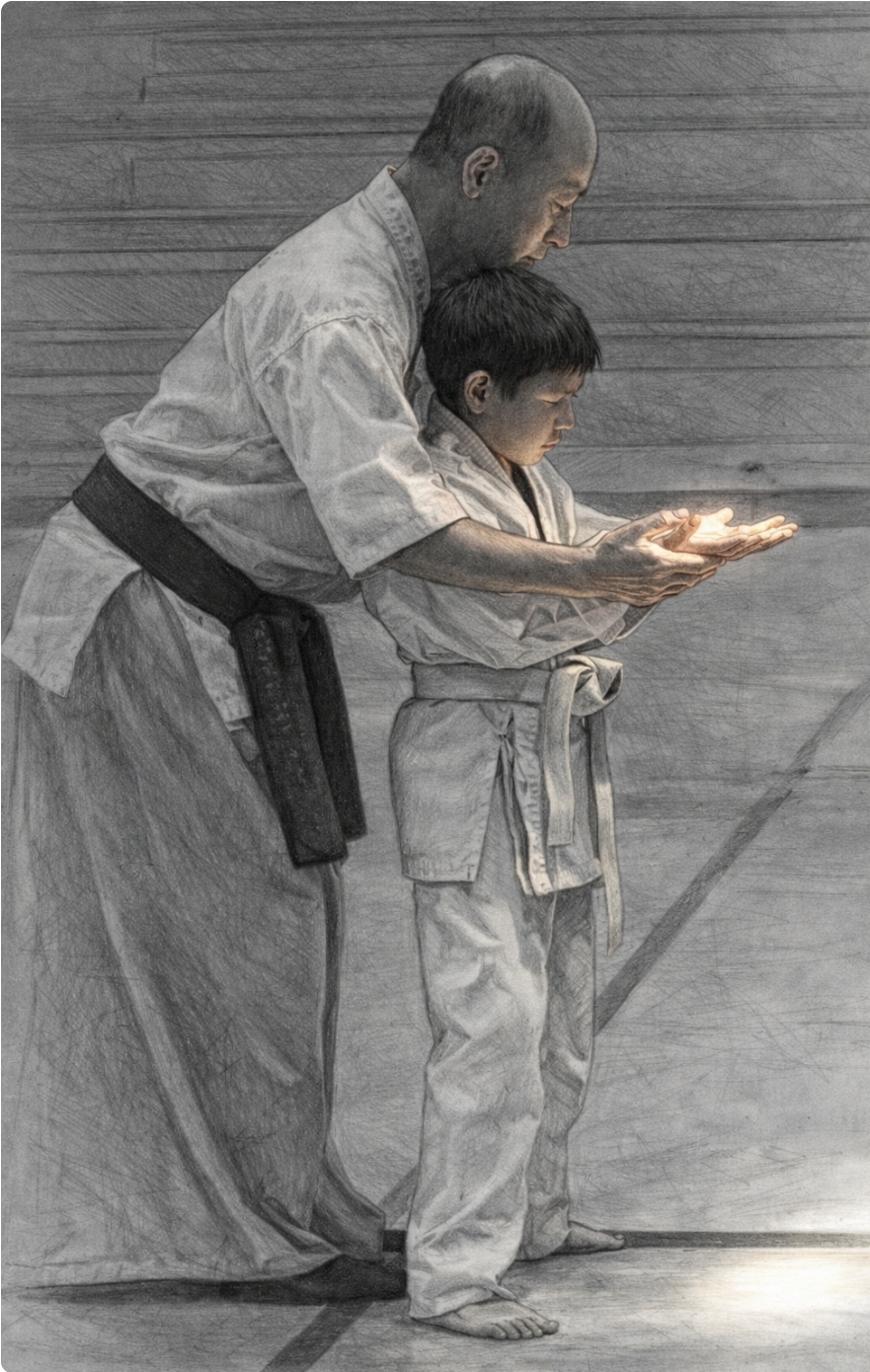
By contrast, the explanation of "LIGHT"—which I encountered by chance many years ago and later described in my published work—was referred to as Wonbanggakgyeong below.
Ref)
https://m.cafe.daum.net/enlightenment-k/dcM5/427?svc=cafeapp

Although expressed in simple language, its meaning is extraordinarily difficult to grasp without embodied experience.
Through it, I once explained the harmony between light and the divine, and because its expression was so vivid and realistic, I later offered a modern interpretation online.
Using the historical and cultural background of ancient Korean martial arts and Dongi traditions as reference points, this essay explains:
the validity, efficiency, and actual methods of Kimu training,
how this training forms the root of martial practice,
how it becomes the foundation of healing,
and how technique, philosophy, and healing were originally unified.
This perspective helps clarify why I have repeatedly stated that Jinyoung Ssangkum Ryu Kimu training is appearing, in a formalized way, for the first time in the 21st century.
To say this is to say that one underlying principle has been recognized—a principle that remains the same regardless of what domain it is applied to.
The essential core of human life in ancient Korean civilization is here systematically articulated for the first time in a structure and language that the 21st-century human body can understand and practice.
The Lineage of Dongyi Martial Arts and Kimu (氣武)
Dongi martial arts represent a branch of ancient martial traditions formed within the Dongi cultural sphere, characterized by an integrated tradition of body, martial practice, and thought.
Pre-literate bodily culture (Ancient Martial Arts)
└ Dongyi Martial Arts (Northeast Asian lineage)
└ Kimu (氣武) of Chiwoo Cheonwang
(Primordial archetype and symbolic stage of Dongyi martial arts)
Flow of Transmission
Perception of natural flow
↓
Dongi Martial Arts (unity of body–energy–nature)
↓
Chiwoo Cheonwang (symbol of archetypal tactical awareness)
↓
Gojoseon · Goguryeo (state-level systematization)
↓
Disruption and distortion (technique-centered transmission)
↓
Jinyoung Ssangkum Ryu
(restoration of Kimu, Muwi, and Pyeongsangsim)
Jinyoung Ssangkum Ryu does not inherit Dongyi martial arts as a set of techniques.
Rather, it restores the philosophy of awakening to natural order through the body, returning it to the lived reality of 21st-century human life.
1. Historical Legitimacy: The 9,000-Year Context of Chisin Deukdo (治身得道)
According to ancient texts such as Hwandangogi and Samilsingo, the origin of Dongyi martial arts traces back to the era of Hwanin (circa 7087 BCE).
The narrative of Hwanin, Hwanung, and Dangun is not a story of conquest.
It presents a model of human completion through the cultivation of the body as the path to the Way.
The Origin of Ki (氣):
The cultivation of Ki—the foundational basis of Mu (武)—was already systematized in this era and constituted the core capability of the Dongi people, who influenced vast regions prior to the age of Yao and Shun.
Many martial traditions now labeled as “Chinese martial arts” can be understood as later branches diverging from this vast Dongi root.
2. Philosophical Core: The Union of Threefold Cultivation and Kimu (氣武)
The defining feature of Dongyi martial arts lies in a refined system of mind–body cultivation known as Threefold Practice:
regulation of perception,
regulation of breath,
regulation of emotional response.
Here, martial practice is not a tool for acquiring technique; it is the cultivation itself.
Jinyoung Ssangkum Ryu’s Kimu training reunites forgotten inner principles (mind, Ki, philosophy) with outward technique (body, skill), embodying the spirit of the Three Heavenly Seals and expressing a modern revival of the Way of Saving Life, not Taking It.
3. Core Concept of Jinyoung Ssangkum Ryu
The essence of this training rests on three fundamental recognitions:
My body is not truly mine.
The energy that moves it is not mine.
The energy of nature is alive and possesses awareness.
When these recognitions permeate the practitioner’s body, one gains the ability to observe oneself from the perspective of a third party—nature itself.
This capacity for continual self-observation elevates the martial artist from technician to seeker of the Way, leading through repeated experience to genuine reflection, renewed resolve, and deep gratitude.
4. 21st-Century Formalization: Integration of Technique, Philosophy, and Healing
Jinyoung Ssangkum Ryu articulates its system through a modern framework:
Relax – Feel it
Focus – See it
Realize – Do it
Within this structure, ancient principles are preserved while being adapted to contemporary understanding.
The Essence of Sword Training:
The sword follows the body.
The body follows the mind.
The mind follows the energy of nature.
Thus, every cut reveals the degree to which one’s body and mind are aligned with natural order.
Technique follows the flow of Ki.
Philosophy becomes daily practice.
Healing returns the body to proper governance (Chisin).
5. Reflection on a Forgotten Origin
Modern martial arts discourse often assumes Chinese martial arts as the origin of all Eastern traditions.
This is a historical inversion.
The true root lies in the Dongi civilization—one of humanity’s oldest spiritual cultures—whose embodied wisdom predates continental civilizations.
This work seeks to restore the forgotten half of martial arts and reestablish its legitimacy based on fundamental principles.
6. Conclusion: Dongyi Martial Arts as a New Global Reference Point
Jinyoung Ssangkum Ryu Haedong Kumdo represents a training system formally articulated for the first time in the 21st century, containing the essential worldview of ancient Korean civilization.
It offers a paradigm in which martial arts are understood not as techniques, but as a path toward human completion.
As presented in Searching for the Forgotten Half in Martial Arts, this teaching serves as a guidepost for restoring the modern human body and mind, opening a true path of martial cultivation aligned with nature.
This is why my publications subject bears the title “Searching for the Forgotten Half in Martial Arts.”
---------
Jeong Seong Kim
Founder & President, United World Haedong Kumdo Federation
Jinyoung Ssangkum Ryu Haedong Kumdo
Wednesday, January 7, 2026 · 11:00 PM (KST)
-------------
Ref)
https://m.cafe.daum.net/enlightenment-k/dcM5/456?svc=cafeapp

https://m.cafe.daum.net/enlightenment-k/dcM5/465?svc=cafeapp
📘 Summary of the Integrated Philosophy Series In Jinyoung SsangkumRyu (4-Part Edition)

https://m.cafe.daum.net/enlightenment-k/dcM5/465?svc=cafeapp
📘 Summary of the Integrated Philosophy Series In Jinyoung SsangkumRyu (4-Part Edition)

https://m.cafe.daum.net/enlightenment-k/dcM5/553?svc=cafeapp

https://m.cafe.daum.net/enlightenment-k/dcM5/567?svc=cafeapp